361st Fighter Group Wall Art Preserved at RAF Molesworth

The Eighth Wall Art Conservation Society was an active group in Cambridgeshire in the 1980s. The EWACS, as they styled themselves, saved many works of art from the Second World War from derelict buildings on abandoned airfields. They preserved these works for us today, and while some are available to be viewed by the public, others have been hidden away and forgotten.  

At the Bottisham Airfield Museum, one can view a mural of the RMS Queen Mary which was saved by EWACS in the 1980s. The men of the 361st Fighter Group sailed on the Queen Mary from the United States to England in 1943 and one of the airmen painted an image of the ship directly on the brick walls of one of the airfield’s buildings. This mural eventually found its way to the museum to be appreciated by all.

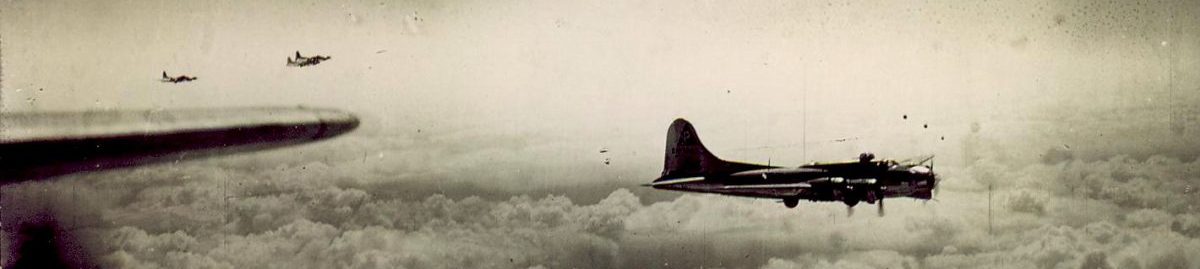
Originally prepared in 1940 as a satellite of RAF Waterbeach, RAF Bottisham was at first a grass relief field for the Cambridge based de Havilland Tiger Moths of No.22 Elementary Flying Training School. As the war went on, several other RAF aircraft would fly from the field which gradually grew and expanded. In 1943, Bottisham was turned over to the U.S. Army Air Forces’ 361st Fighter Group. The 361st Fighter Group’s squadrons first flew the Republic P-47 Thunderbolt but transitioned to the North American P-51 Mustang in May 1944. The fighters from the 361st Fighter Group, recognizable with their yellow painted engine cowlings, escorted the bombers of the 8th Air Force to their targets in occupied Europe, including the Boeing B-17 Flying Fortresses of the 303rd Bomb Group based at RAF Molesworth.

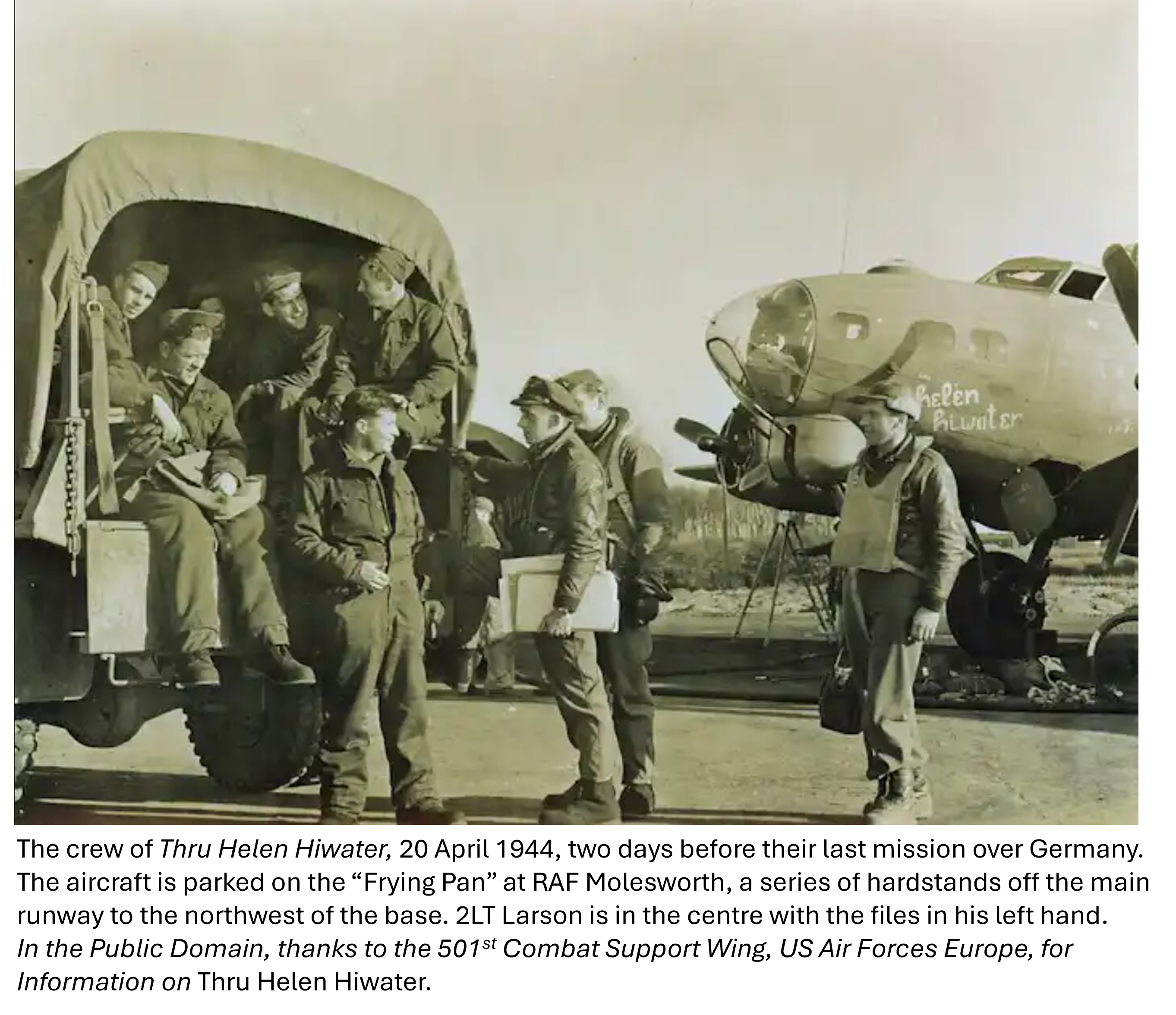
This may seem a winding thread: the EWACS, RAF Bottisham, the 361st Fighter Group, and RAF Molesworth – but in the March 1983, the EWACS volunteers, supported by U.S. airmen stationed in the area, rescued several paintings from the old enlisted men’s club at RAF Bottisham before the building’s demolition. At the time, the Bottisham Airfield Museum did not exist and these volunteer conservators sought out a home for this saved art and turned to a growing U.S. Air Force base in the area: RAF Molesworth. 

At Molesworth, in a small break room, the EWACS installed three saved pieces of wall art from RAF Bottisham: a mural of a B-17 with a Messerschmitt Bf-109 diving in pursuit, two glasses of wine coming together in a cheer, and a slogan painted in cursive. The slogan, painted across the bricks reads: “Here’s a toast to those who love the vastness of the sky.” Sadly, these murals can only be seen regularly by the men and women stationed at RAF Molesworth as part of the U.S. Visiting Forces and are not regularly available to the public.

One of EWACS saved wall paintings ended up at the Imperial War Museum branch at RAF Duxford in Cambridgeshire.  At Duxford, the wall mural  “Poddington Big Picture” is displayed in Hangar No. 3, it displays a expertly detailed B-17 from the 92nd Bomb Group which flew from RAF Podington in Bedfordshire. One of the few signed pieces of wall art, we know the “Poddington Big Picture” was painted by George C. Waldschmidt. A few additional saved murals were shipped to the 8th Air Force Museum at Barksdale Air Force Base, Louisiana, USA. Others are dispersed in museums and displayed throughout East Anglia.

While it is a pity that these beautiful murals at RAF Molesworth are not available for the public to view, we are thankful for the volunteers of the EWACS who worked to save and conserve these beautiful pieces of Cambridgeshire’s aviation history almost forty years ago.  In 1983, Dick Nimmo, Bill Espie, and Brian Cook, all volunteers with EWACS removed and brought these works of art to RAF Molesworth before the derelict enlisted club at RAF Bottisham was demolished. We owe them a debt.

To read more about wall art from the Second World War: https://heritagecalling.com/2019/05/17/war-art-military-and-civilian-murals-from-the-second-world-war/

The Guardian published an article in May 2014 regarding USAAF art from the war with some excellent pictures: https://www.theguardian.com/artanddesign/gallery/2014/may/17/art-usa

The Airfield Museum at RAF Bottisham houses the mural of the Queen Mary and many other fascinating items, for more information about the museum: https://www.bottishamairfieldmuseum.org.uk/

To learn more about the USAAF at RAF Bottisham during the Second World War, visit: https://www.americanairmuseum.com/archive/place/bottisham

For more information on RAF Molesworth, visit: https://www.americanairmuseum.com/archive/place/molesworth

For more information on RAF Waterbeach’s museum, which is certainly worth a visit: http://www.waterbeachmilitarymuseum.org.uk/index.html

For the murals at the 8th Air Force Museum in Louisiana, a few photos are available at their website: https://8afmuseum.com/

Trench Art: Christmas 1917 and the Machine Gun Corps

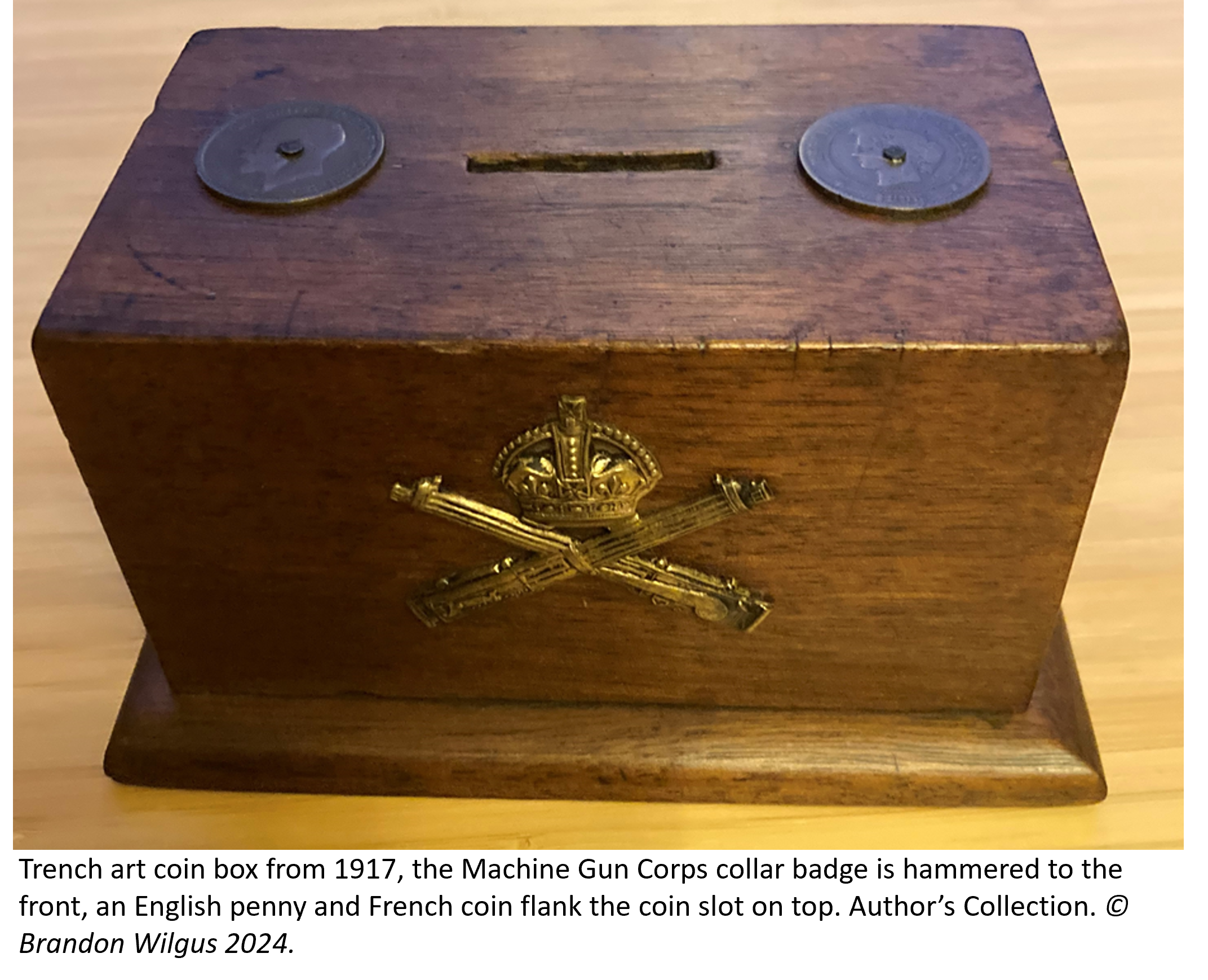
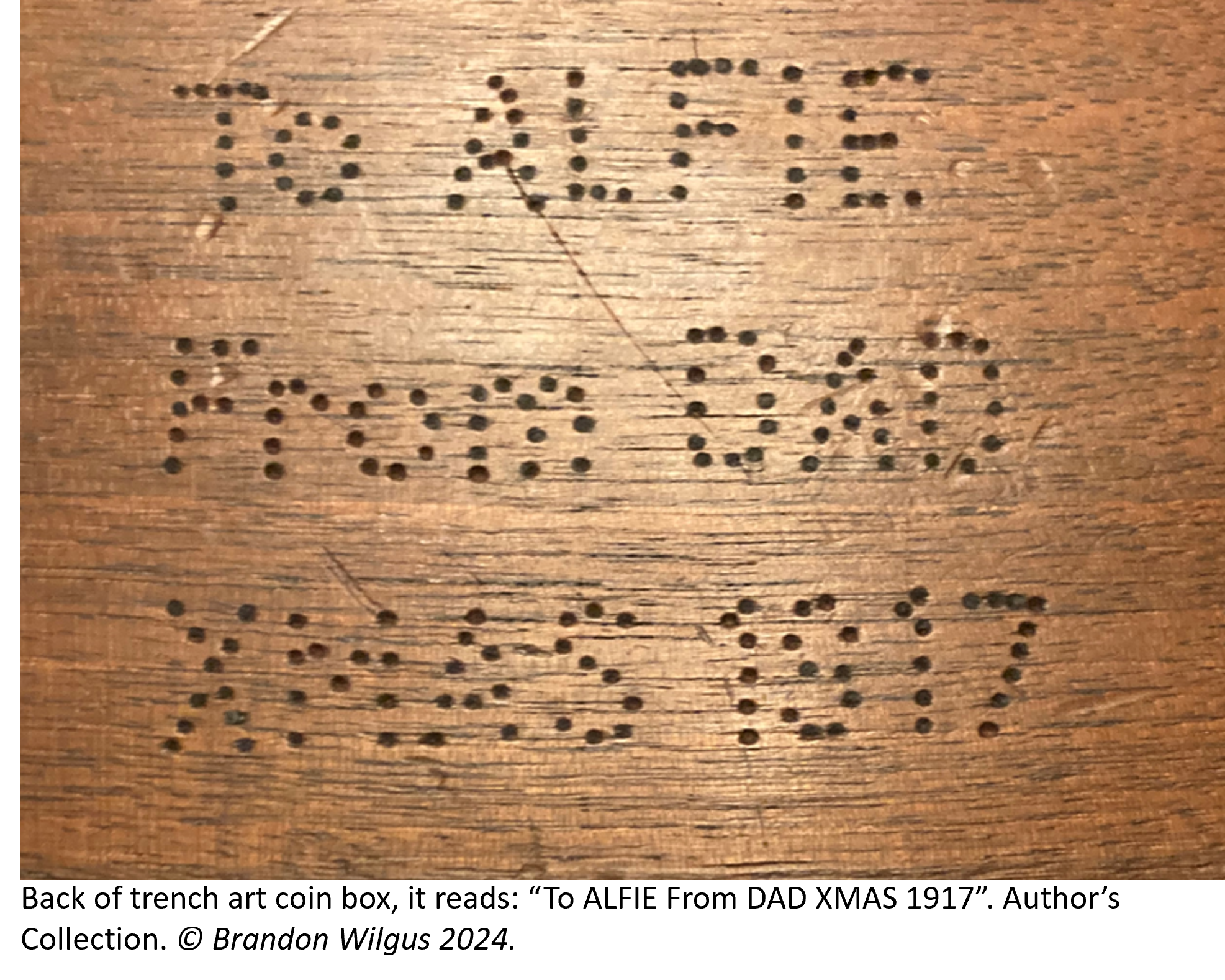
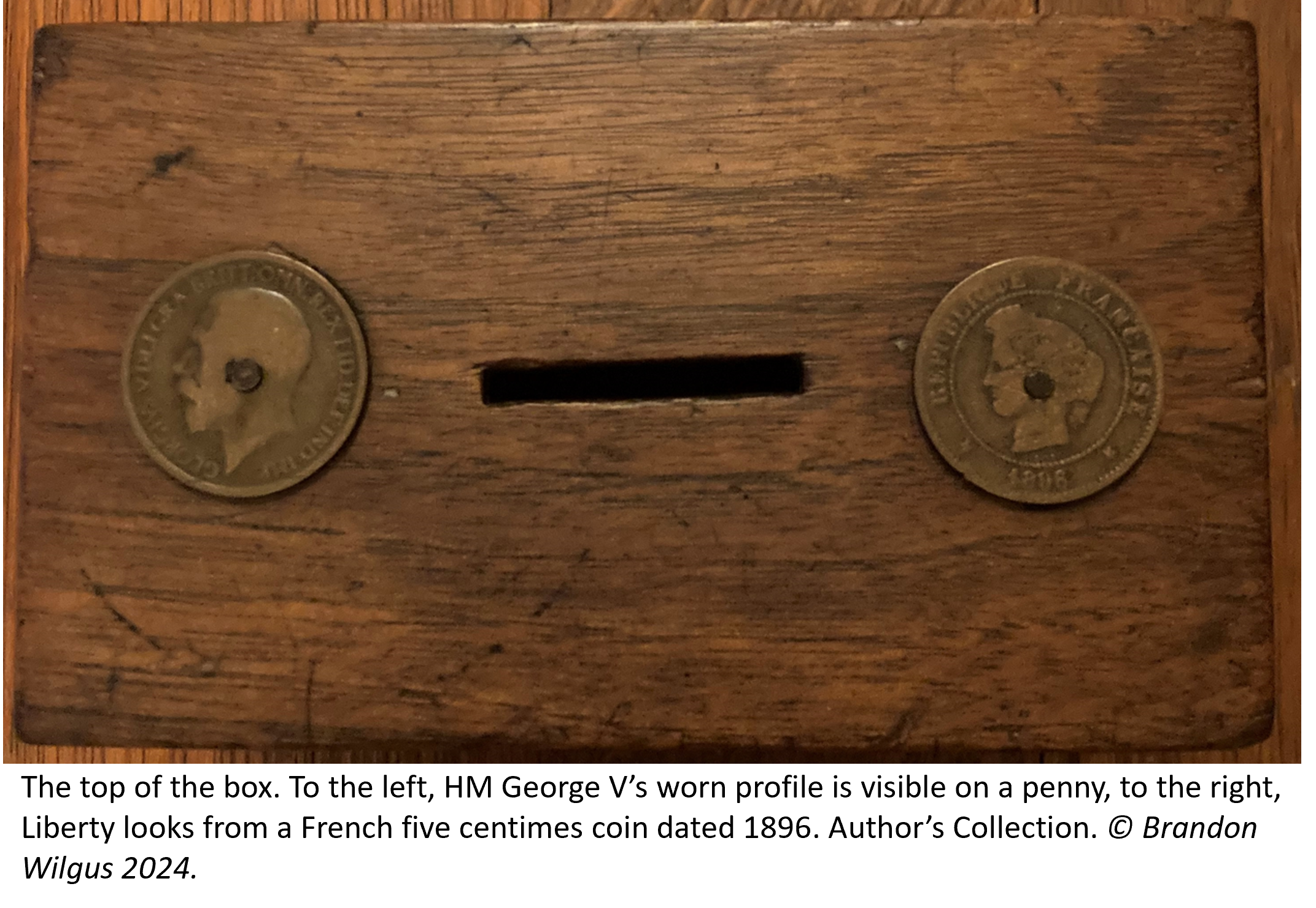
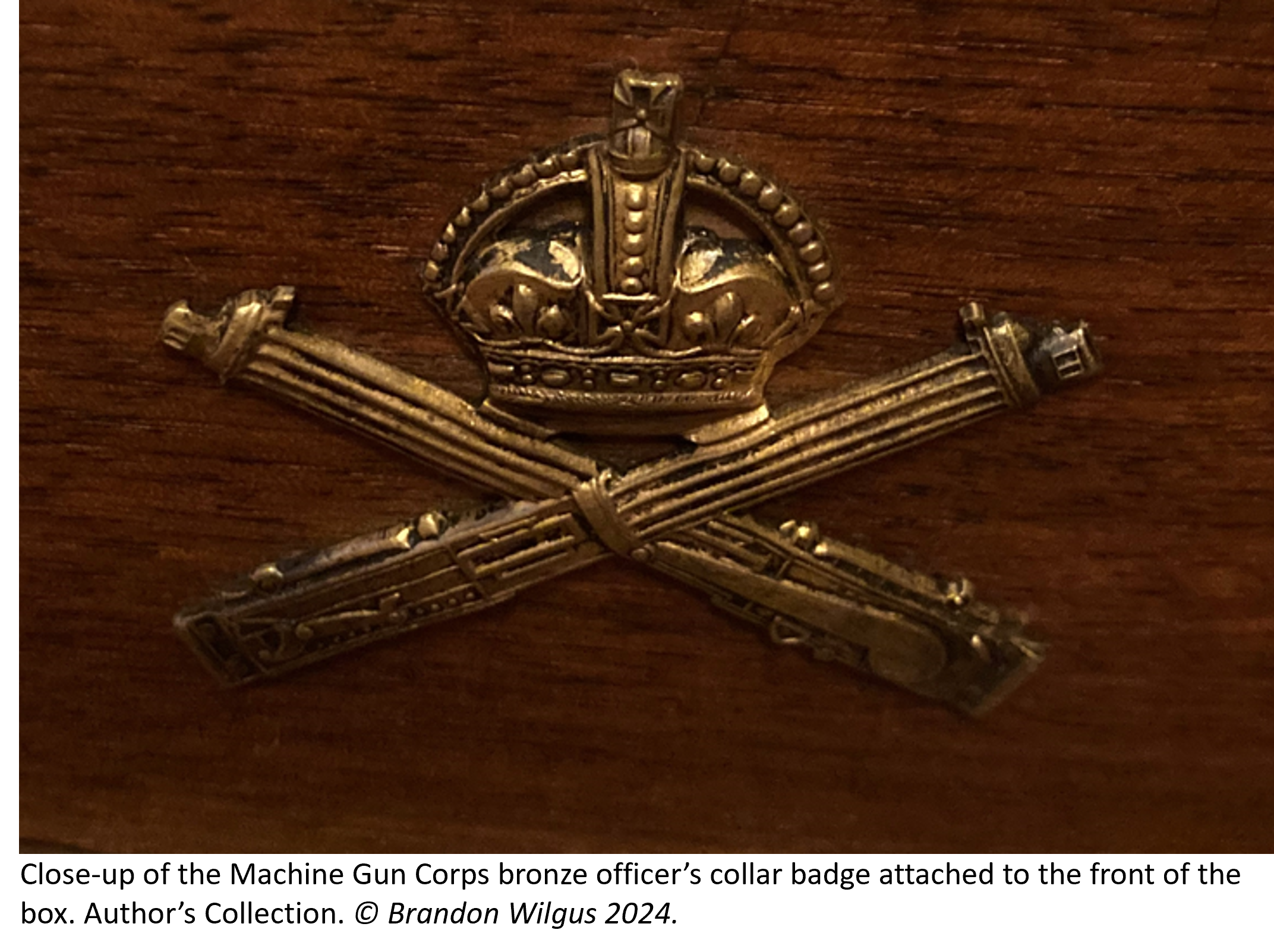
It was October or November 1917, a British soldier in the Machine Gun Corps took some scraps of wood, possibly duckboards or pieces of an ammunition container, and crafted them into a money box for his son back home in England.  He found a way, and time, to cut the wood, screw the pieces together, sand and varnish the box, and then hammered an English and French coin to the top, flanking the slot he chiseled out.  He then took an extra collar badge of the Machine Gun Corps, the organization of which he was undoubtedly proud to belong, and softly hammered it into the wood on the front of the box – the hammer taps are still visible in the bronze. Finally, after the varnish had finally set in the cold and wet of the Western Front – one imagines the box in a place of honour, drying by a stove in the muck and mire of a dugout – he turned the box around and hammered a note to his son with a nail point: “To ALFIE from DAD XMAS 1917”. He sent it off in the post, hopefully to arrive safely by Christmas for his son Alfie in England.

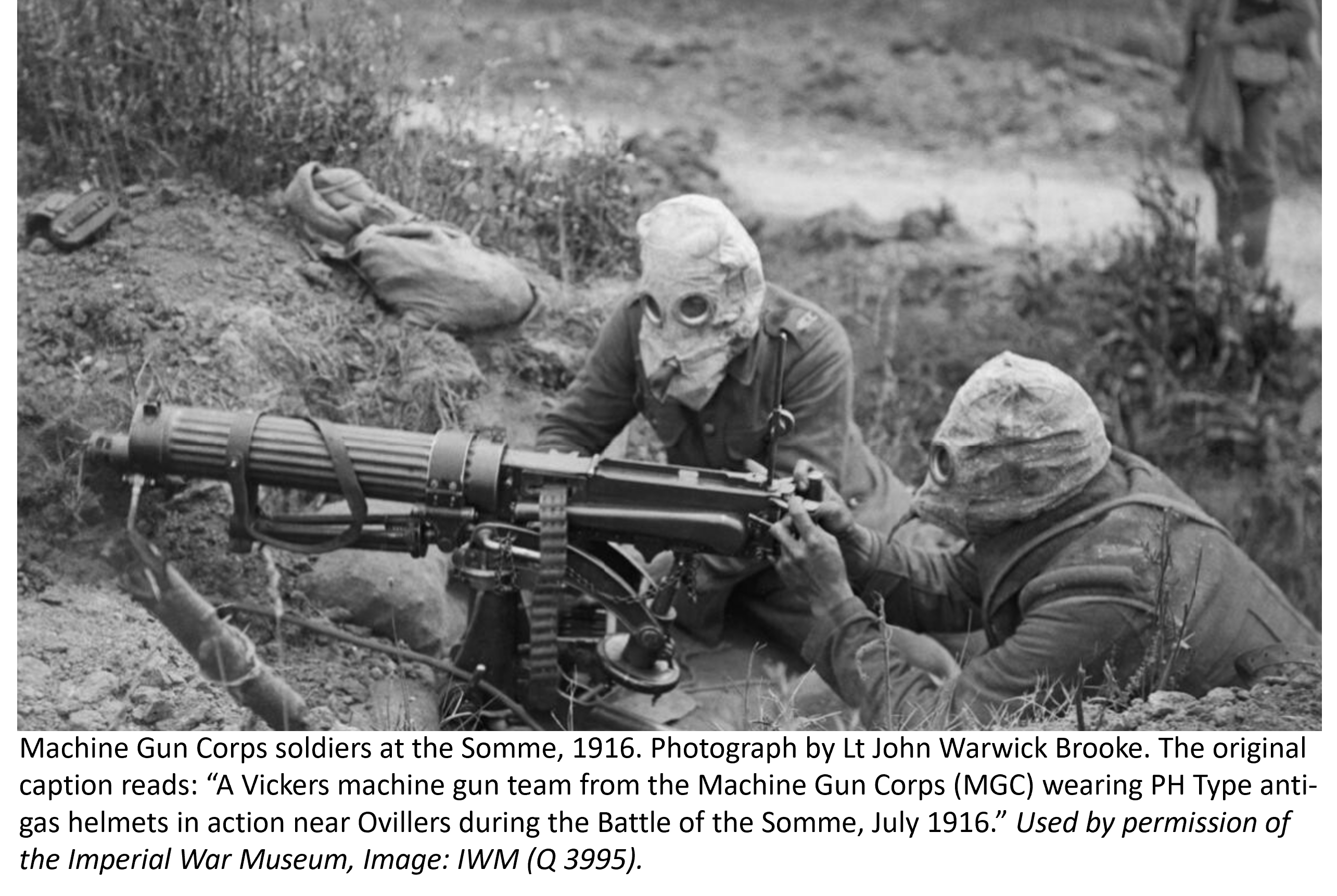
Alfie’s father was a member of the Machine Gun Corps. This prestigious force was formed in late 1915 with the aim to improve the effectiveness of the use of crew-operated machine guns in support of Allied infantry and cavalry units on all fronts. In 1914, each infantry battalion or cavalry regiment went to war with two machine guns embedded in the unit, this was quickly raised to four. By 1915, the Army realised that machine guns were being employed in a sub-optimal fashion, and a correction was in order. The Machine Gun Corps was formed in October 1915 by taking the Maxim and Vickers gun sections from all infantry regiments and consolidating the force to provide specialized training and specific marksmanship to crews to improve the use the machine guns on the front. By 1916, the Machine Gun Corps was divided into four branches: infantry, cavalry, motorized, and heavy.  Most machine gunners were trained on the grounds of Belton House, a stately home just north of Cambridgeshire, near Grantham in Lincolnshire and would go on to support the infantry.

Life in the Machine Gun Corps was not easy – its members served on all fronts in the Great War – and the force was nicknamed “the suicide club” due to its heavy casualties.  The enemy, observing the importance of the machine gun sections to both defensive and offensive operations, specifically targeted machine gun positions, mainly through artillery fires. By the war’s end, 170,500 officers and men served in the Machine Gun Corps, 62,049 became casualties, just over 36 percent of total strength. 12,498 members of the Machine Gun Corps died during the war. Seven members of the Machine Gun Corps were awarded the Victoria Cross, two posthumously. The machine gunner’s grit and bravery was unquestioned.

The Machine Gun Corps was short lived. It was disbanded in 1922 to save money after the war, but its legacy lives on in the Royal Tank Regiment. The heavy branch of the Machine Gun Corps was the first to operate tanks in combat on the Western Front, forming the Tank Corps when seperated from the Machine Gun Corps in July 1917. This force became the Royal Tank Corps in 1923 and now forms the Royal Tank Regiment.

This box, this gift from a father to his son at a time when at least one of the two realised they might not meet again, is the most precious and sentimental type of trench art. It was a gift to a family member made with what was available and at hand at the time. It leads to more questions than it answers: did the father make it home by the next Christmas, in 1918, after the war ended?  Did Alfie, who received the box 107 Christmases ago, keep and cherish this gift from his father?  Did Alfie ever learn of the experiences, the suffering, the pain that his father must have experienced while in France with the Machine Gun Corps?  What became of the box after the Christmas of 1917?

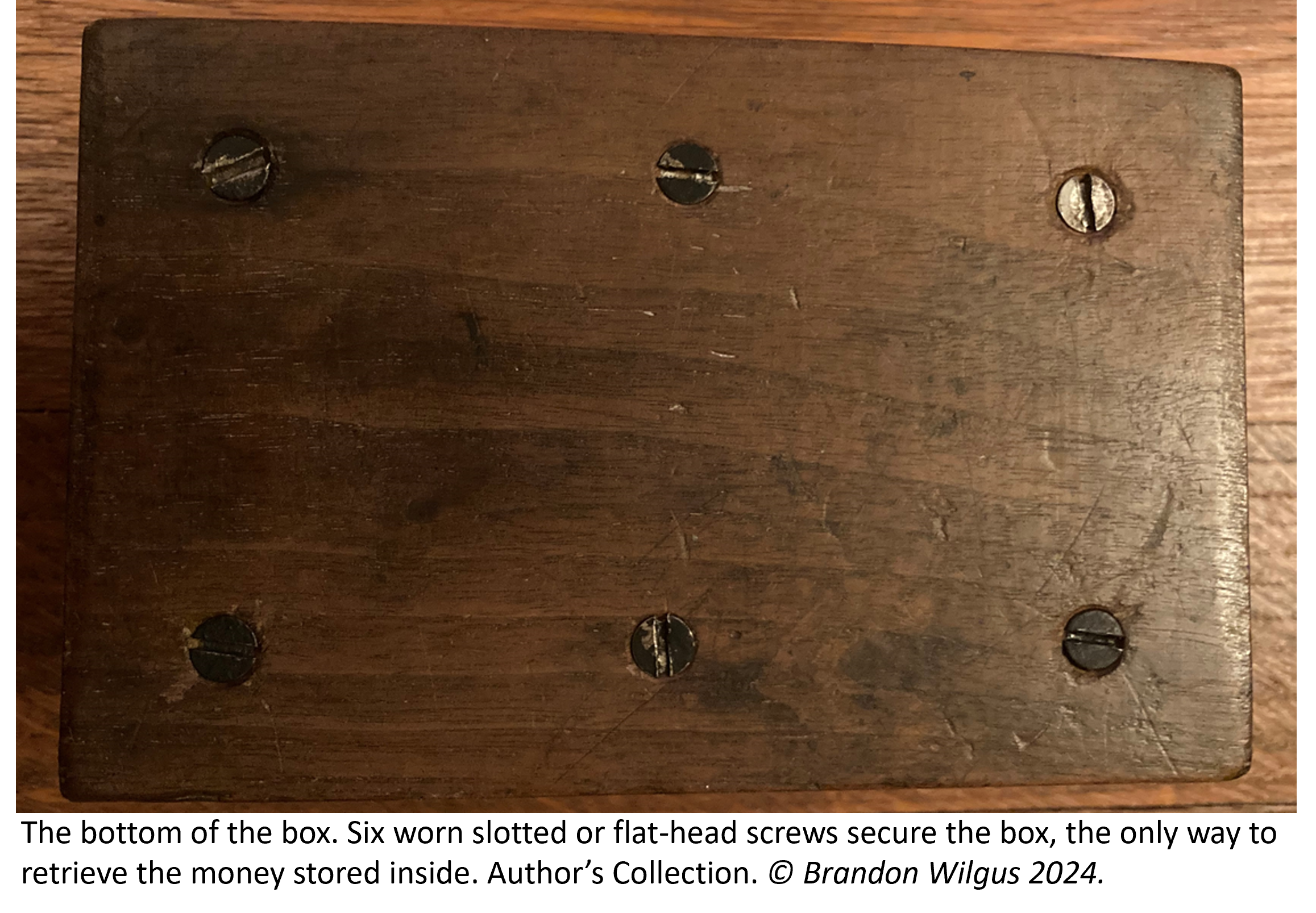
I can answer some of the last question.  The box was obviously used to save coins for a long time, the slot on top is worn from the rough edges of many coins dropped through. The screws on the bottom – the old-fashioned slotted or flat head screws that one sees in Victorian or Edwardian furniture – have been taken out and screwed back many, many times.  It was the only way for Alfie, or others, to retrieve the money they had saved.

What about the father?  I assume he was commissioned, for the collar badge is an officer’s: it is bronze. Besides that, there is very little to learn of him.

The box eventually ended up in an antique store in Tewkesbury, a market town in Gloucestershire, and came to me for a few pounds. It now sits proudly on my shelf, as I am certain it once did on Alfie’s.

Recently, as my family was decorating for Christmas, I found myself hoping once more that Alfie’s father made it home from France a year after he made this box and was rejoined safely with his family. I hope that Alfie, and his father, shared many Christmases together in later years. Maybe a bit sentimentally, I wonder if 107 years ago, as this box was being assembled in the cold and misery of France in 1917, if its maker could have imagined it would be cared for and kept by a different family in England over a century later?

While a box like this will always spur more questions than it answers, I would like to tell you how I appreciate the questions and comments you send my way through the year, a very Merry Christmas and a Happy New Year to you all!

RAF Little Staughton: Home of the Pathfinders of No. 109 and No. 582 Squadrons

During the Second World War a large Royal Air Force Station operated several types of aircraft and served both the Royal Air Force and the U.S. Army Air Corps near the village of Little Staughton, on the border between Bedfordshire and Cambridgeshire. In 1942, RAF Little Staughton was designed as a Class A airfield, able to support the heavies — multi-engine bombers such as Boeing B-17s, Consolidated B-24s, and Avro Lancasters.  Once complete, the airfield was set aside as a depot, more specifically, the 2nd Advance Air Depot of the US Army Air Corps, under the 1st Bomb Wing at RAF Brampton Grange (see my posting about this headquarters). B-17s, damaged or in need of maintenance that could not be provided at their home station were flown to RAF Little Staughton for repairs.  

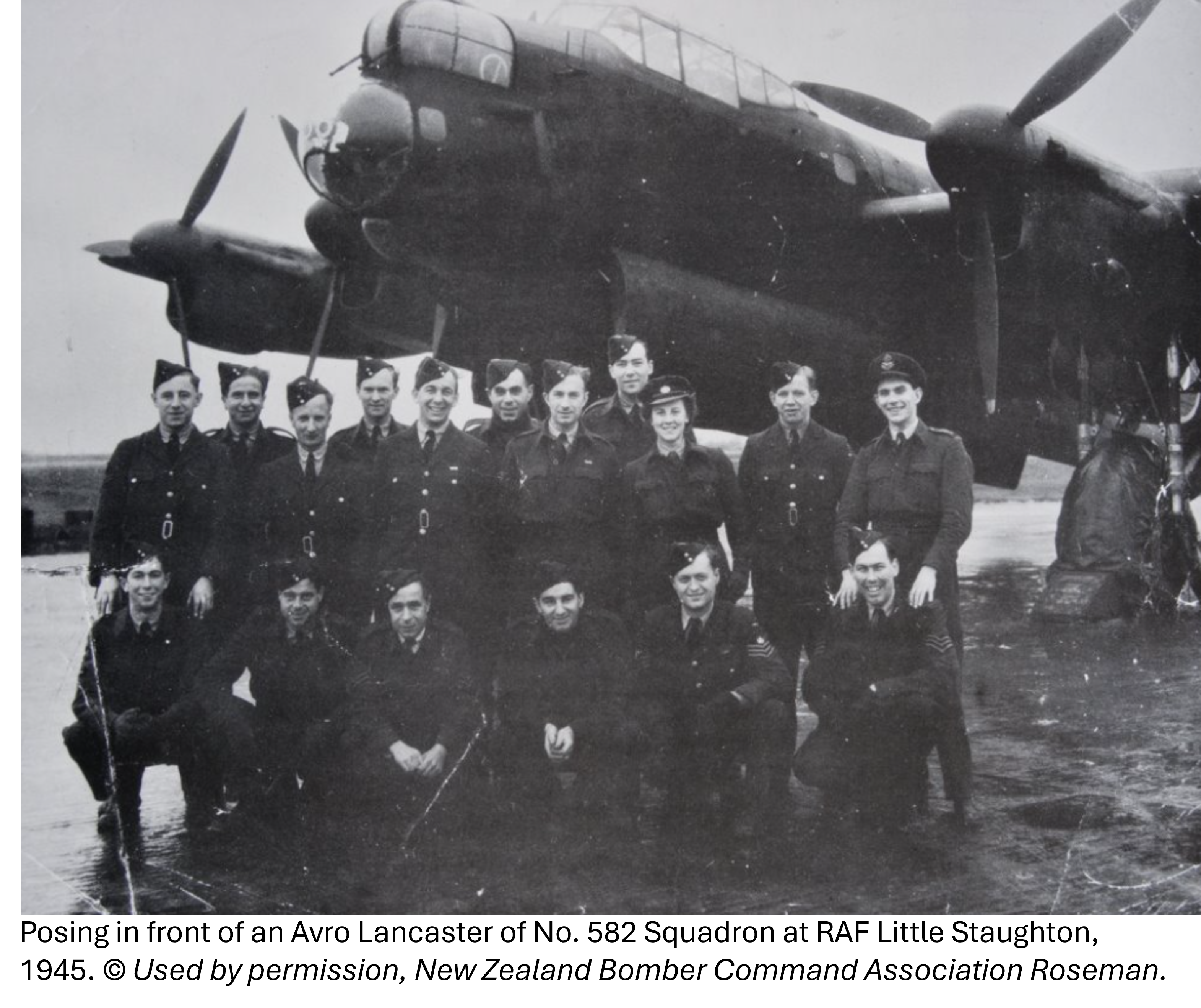
On 1 March 1944, the U.S. Air Force returned the facility to RAF use, and it became the home of two squadrons of Pathfinder Force Group 8 – No. 109 Squadron flying the de Havilland Mosquito XVIs, and No. 582 Squadron flying Avro Lancaster Mark Is and IIIs.

In the last year of the war, the Pathfinders flew 2,100 sorties from RAF Little Staughton in 165 separate missions against Germany and occupied Europe. Over 120 medals for courage and gallantry were awarded to the officers and men flying from RAF Little Staughton, along with two Victoria Crosses:  Squadron Leader Robert A. M. Palmer, VC DFC with Bar and Captain Edwin “Ted” Swales, VC DFC.  The two men were close friends and both pilots in 582 Squadron.  

Squadron Leader Palmer was 24 years old on 23 December 1944 when he was the Master Bomber – in command of the lead bomber on a raid of 30 aircraft – over Cologne, Germany.  Despite heavy clouds and several losses enroute to the target, Palmer continued the run despite an order having gone out to break up the formation and for the bombers to drop their ordnance visually. His Lancaster damaged by German anti-aircraft fire, with two engines erupting in flames, Palmer stayed on target and dropped his bombs as the lead plane, fulfilling his role as a Pathfinder, before his aircraft spiralled out of control.  Only the tail gunner escaped from Palmer’s Lancaster. He was posthumously awarded the Victoria Cross.  Six of the 30 RAF aircraft on the 23 December 1944 raid on Cologne were lost.

Captain Swales, a South African pilot, was 29 years old on 23 February 1945 when he was the Master Bomber in a Lancaster leading a bombing raid on Pforzheim, Germany of 367 Lancasters and 13 Mosquitos. Swales successfully found the target and marked it for the several hundred bombers following his lead.  After dropping his bomb load, Swales’ Lancaster was critically damaged by a Messerschmidt Bf-110.  With the fuel tanks ruptured and two engines lost, Swales held the plane in the air as his crew all successfully bailed out over France.  He attempted to bring down the Lancaster over friendly territory, but it stalled and crashed near Valenciennes.  Like his friend Palmer, Swales was posthumously awarded the Victoria Cross. His Lancaster was one of 12 lost in the raid.

28 Lancasters from No. 582 Squadron would be lost from April 1944 until VE day. 23 Mosquitos of No. 109 Squadron were lost during the same period.  The sacrifices of these men, working to protect their nation and liberate Europe, in such a short period of time is stunning.

In September 1945, RAF Little Staughton was put into a care and maintenance status.  However, its days as a flying airfield were not finished. In the 1950s, the U.S. Air Force expanded and lengthened the main runway to 3,000 yards so that RAF Little Staughton could serve as a divert for RAF Alconbury’s North American B-45 Tornado multi-engine jet bombers and the Douglas B-66 Destroyer light bombers which were then flown by the 85th Bombardment Squadron.

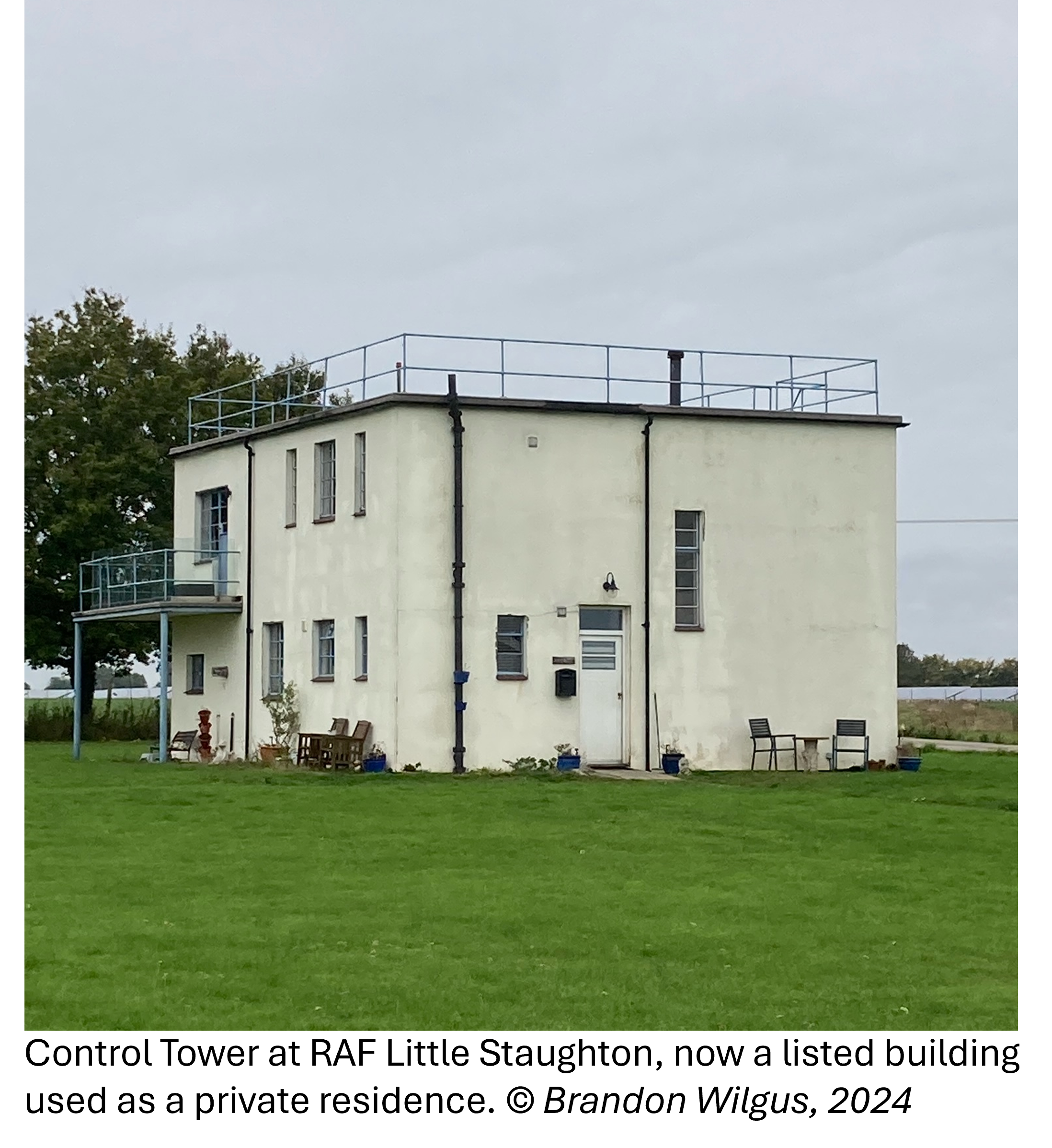
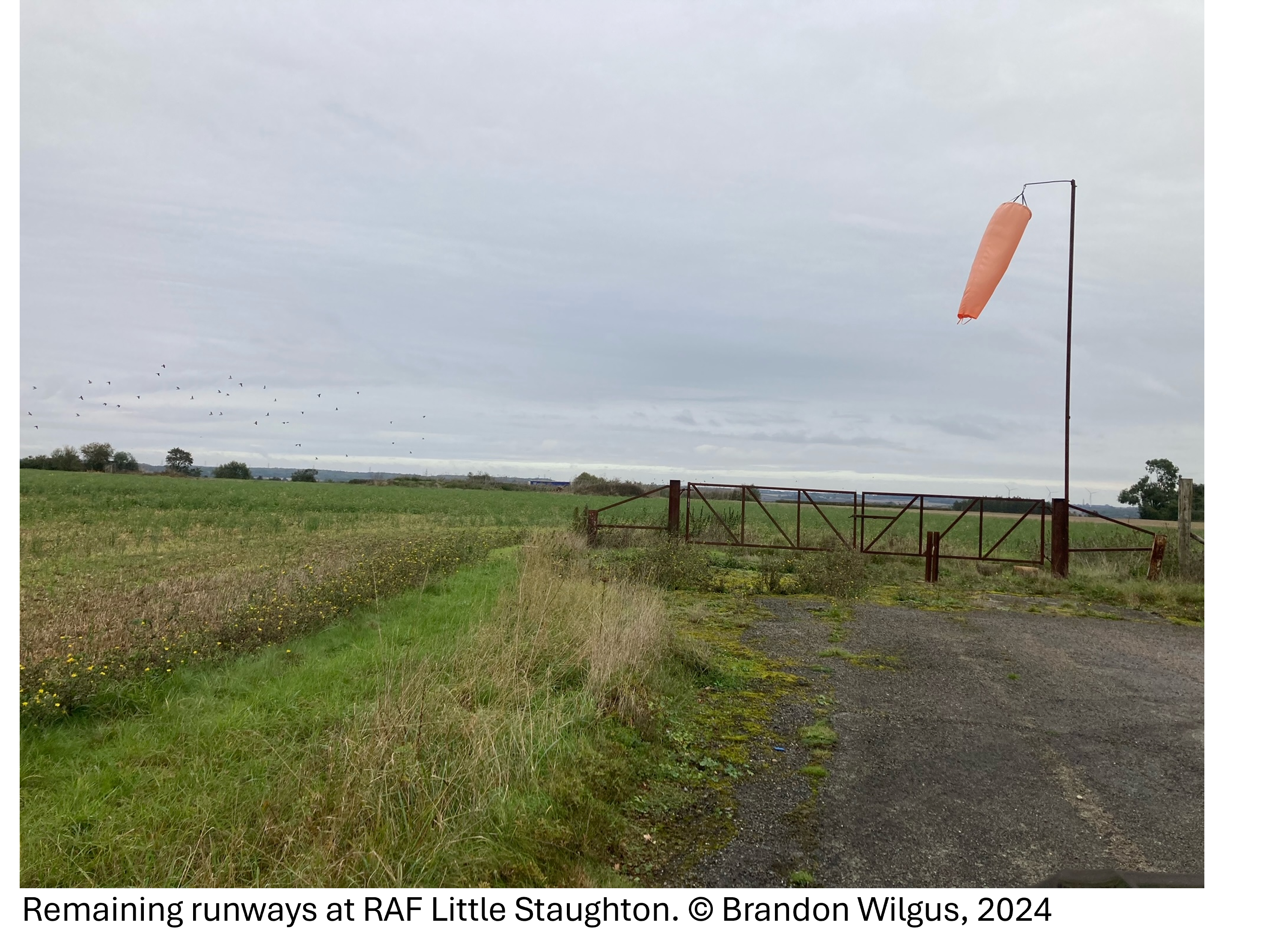
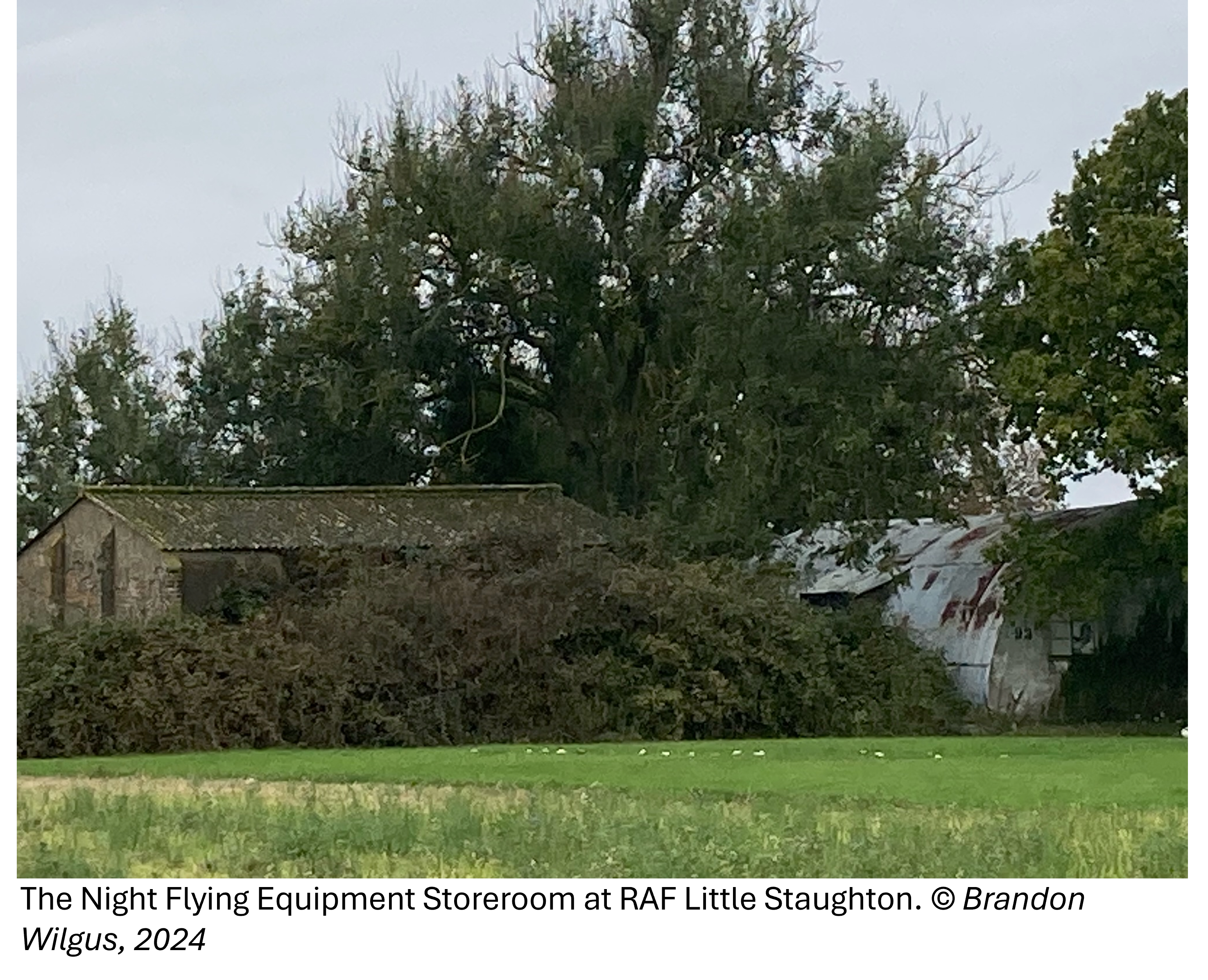
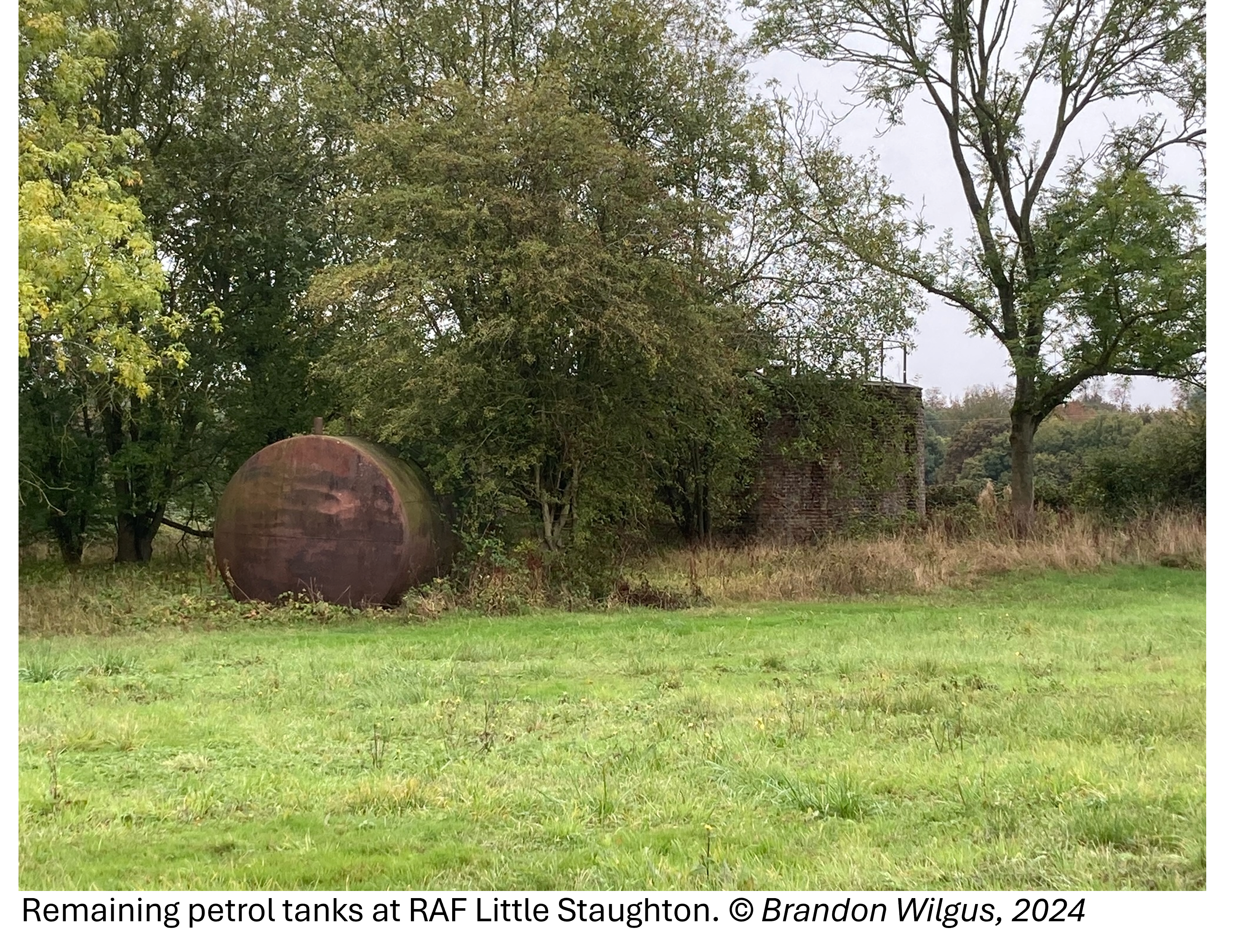
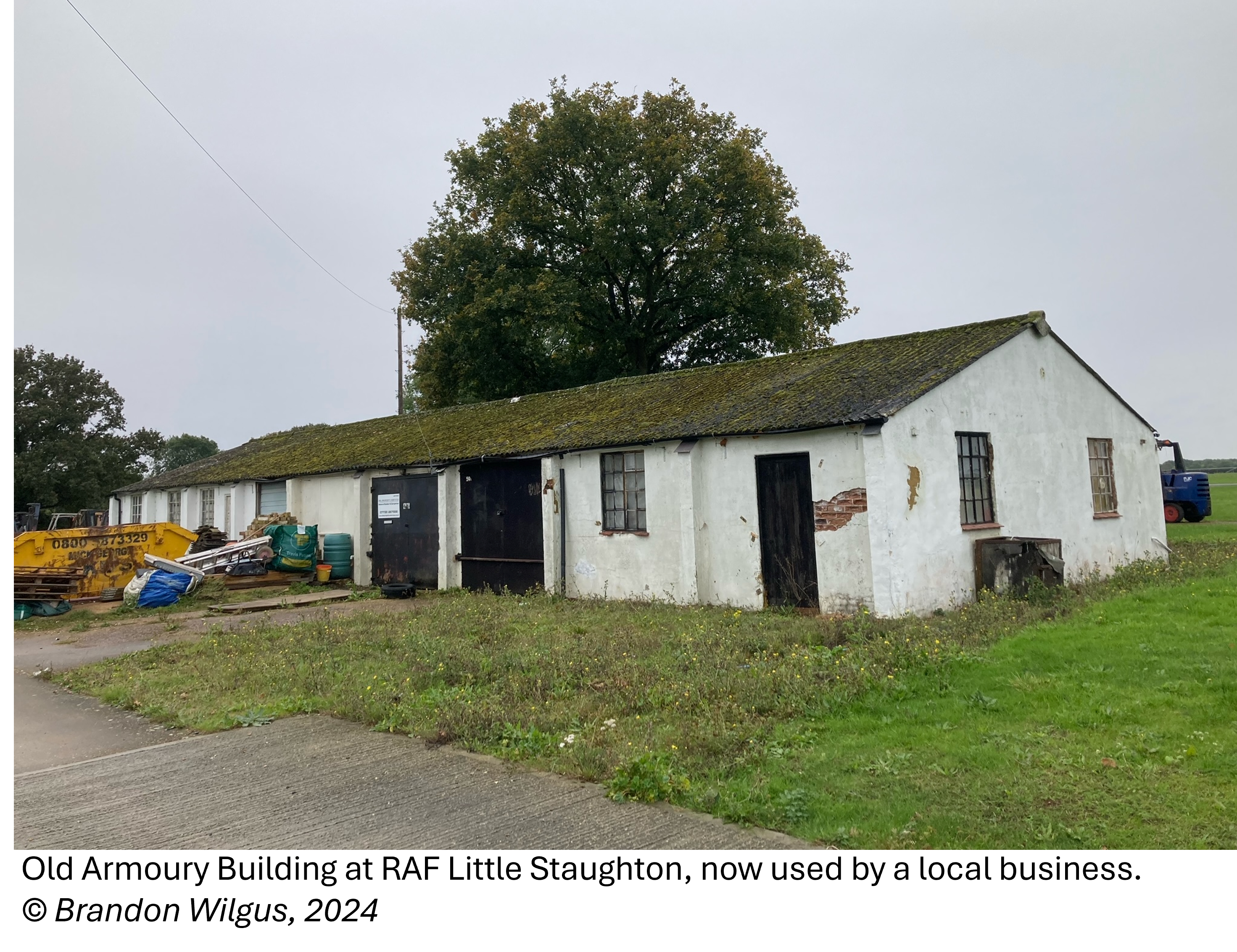
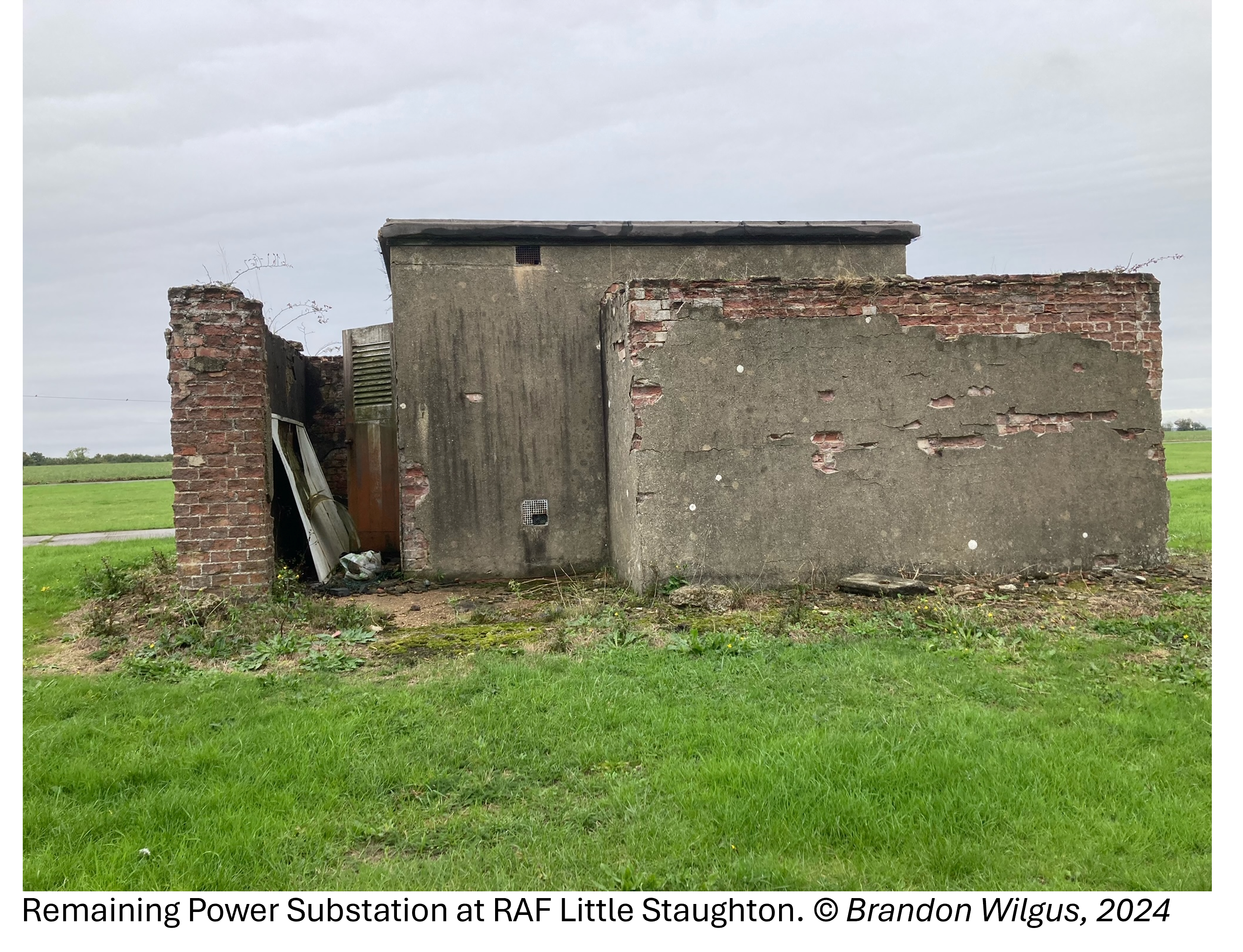
Today, light industry dots the former airfield and many of the original buildings, storage areas, hangars, and the control tower still stand. A solar power farm covers much of the land which once was the Royal Air Force station. Overgrown and scattered around the site are several old blast shelters, bomb dumps, petrol storage tanks and more. Hangars and barracks are still used by small businesses. Light, general aviation craft fly from the old runways.  Maybe, best of all in terms of preservation, the World War II control tower still stands and is in excellent shape, it is now a private residence. In fact, RAF Little Staughton is one of the best-preserved airfields I’ve visited, not that it has been kept as a museum, but its ongoing use has maintained the facility in an impressive state of repair after almost a century.

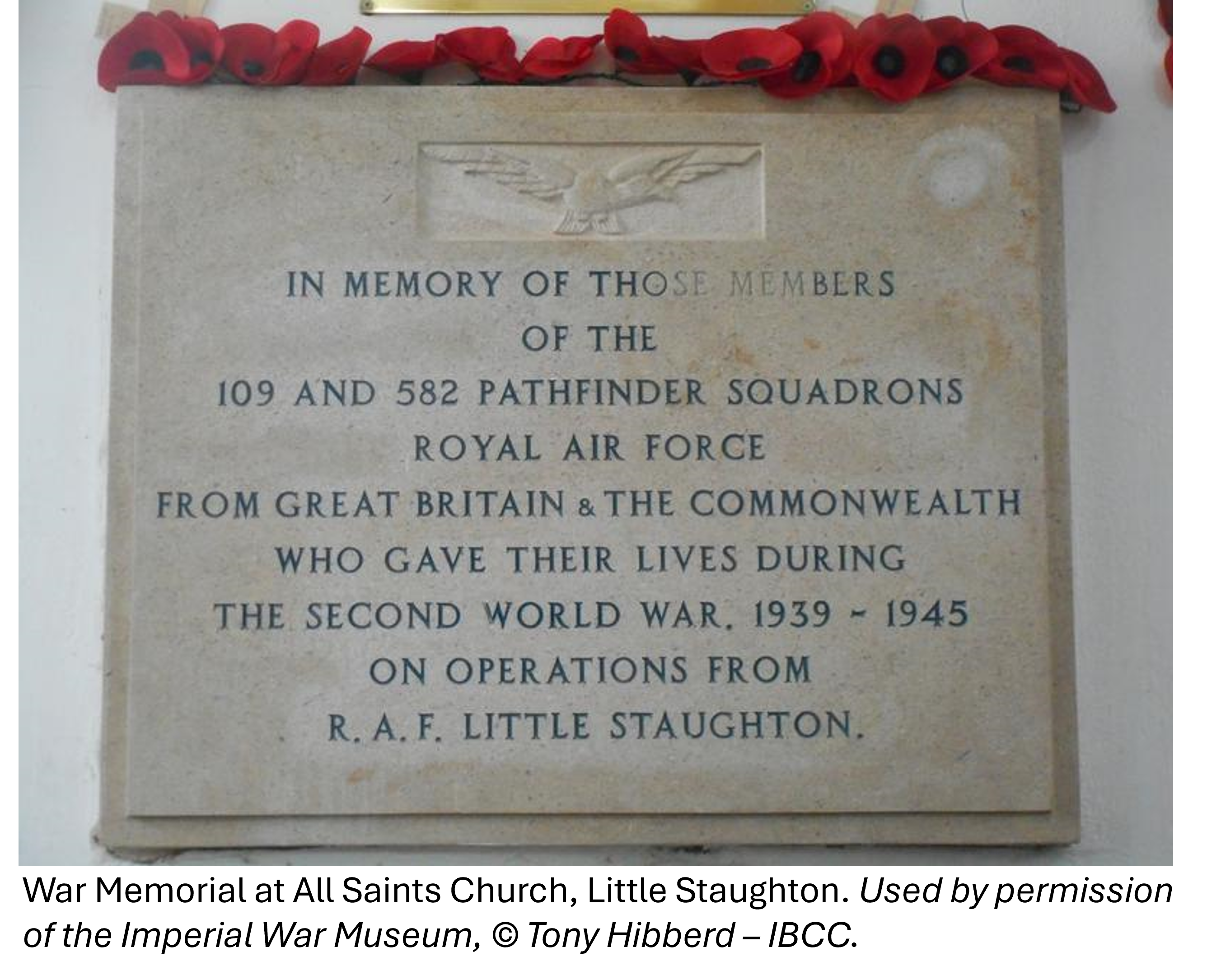
A mile or so from the former air station lies the Parish Church of All Saints, Little Staughton.  Interestingly, the church lies a bit distant from the village, as the original village was abandoned after a bought of bubonic plague and the survivors farther away from its original location in the Middle Ages.  A memorial in the Church on the south wall honours the men from 109 and 582 Pathfinder Squadrons who lost their lives, and the airfield’s Roll of Honour is on display as well. (Although the church is open on Saturdays and Sundays in the summer, you can ring ahead and arrange a time to visit throughout the year, just check the parish website.)

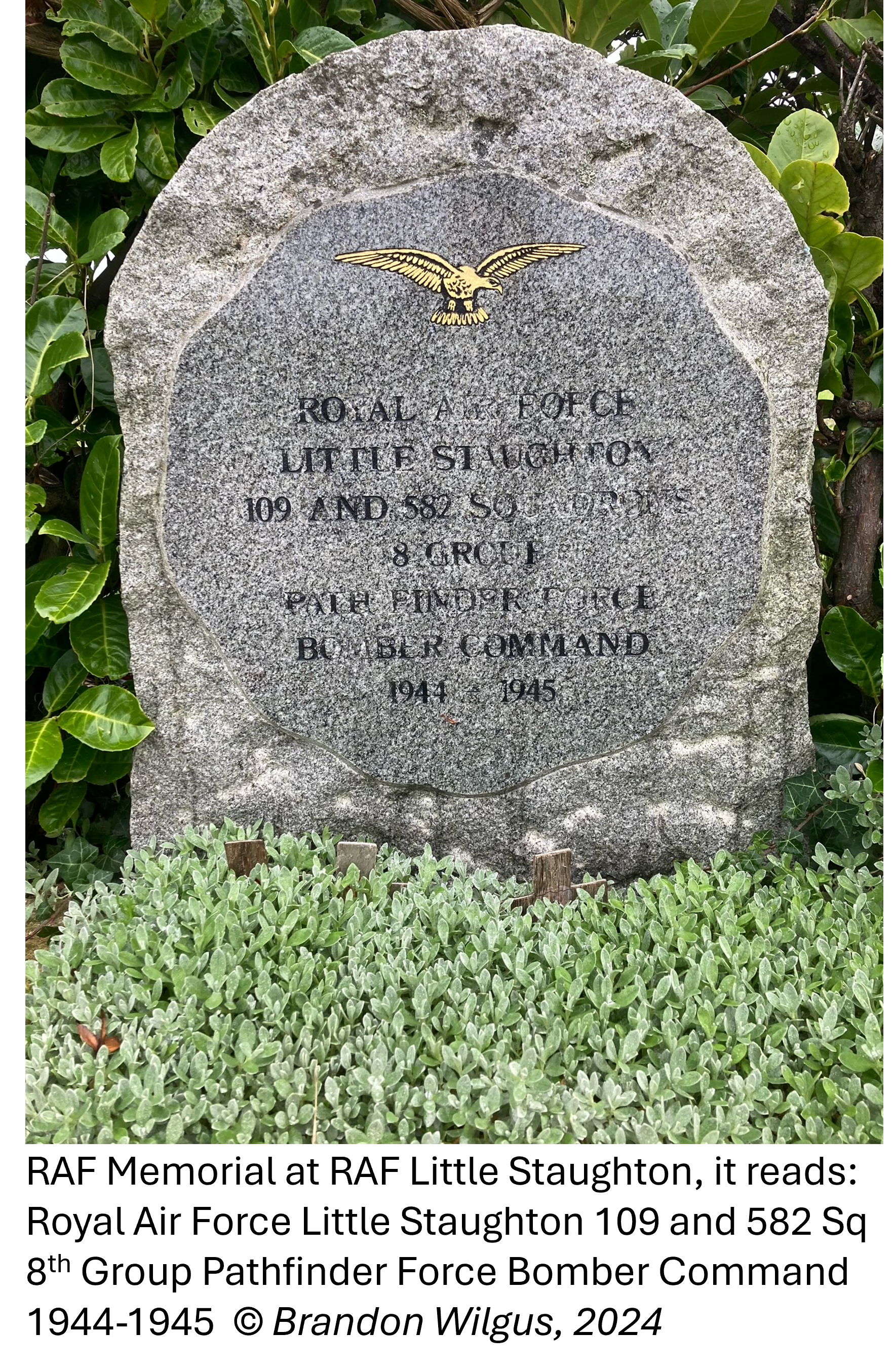
Located near the end of the runway is the RAF Little Staughton Airfield Memorial, obviously well cared for by the village. It recognized the sacrifice of the airmen who once flew from this field and lies on the cracked concrete which once made up the runway.

HMT Cambridgeshire (FY-142), an Armed Trawler during the Second World War

While several Royal Navy vessels throughout history have been named after the City of Cambridge and people from the area, there has only been one ship named after the entire county: His Majesties Trawler Cambridgeshire, a submarine chaser from the Second World War. Laid down as a 442-ton fishing vessel and launched in 1935, she was requisitioned by the Royal Navy in August 1939. Her conversion into a warship occurred in the desperate months of rapid military expansion before the invasion of Poland by Nazi Germany. She was converted by the Royal Navy into an anti-submarine role by removing her fishing gear and converting her storage holds into crew berthing and a magazine, adding a 4-inch deck gun forward, and installing depth charge racks to drop explosives off the stern of the ship. She was armed with a navy crew. By the end of the war, over 200 armed trawlers like HMT Cambridgeshire would be hunting submarines, laying and sweeping mines, and patrolling the approaches to the United Kingdom and the waters around Europe. A dangerous but important role was played by these small vessels: the Royal Navy lost 72 Armed Trawlers during the war and hundreds of sailors were lost. 

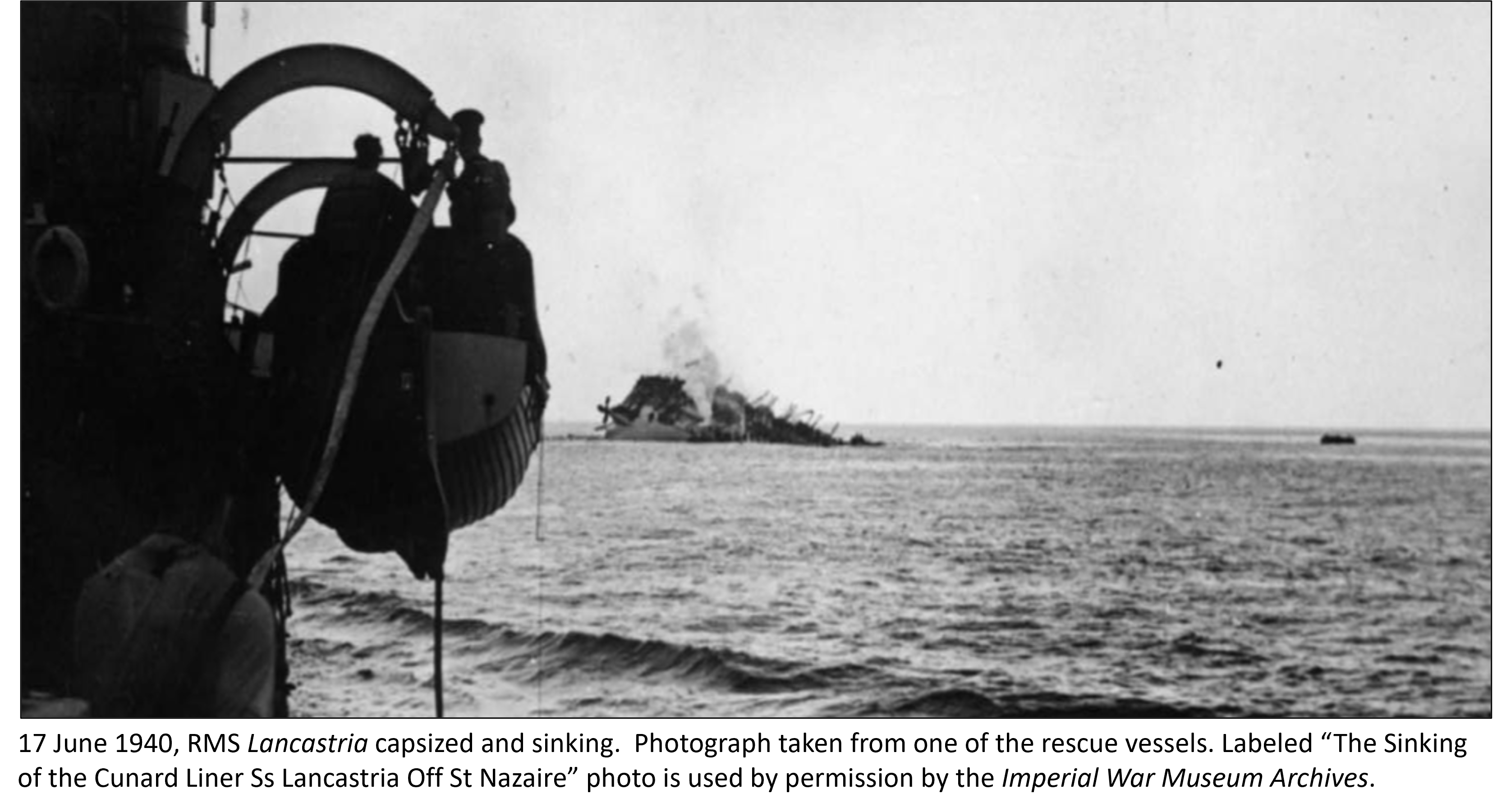
HMT Cambridgeshire would likely be remembered only as one of the many capable but largely forgotten small combatants from the Second World War except for her experience on 17 June 1940, when she rescued over 800 civilians and soldiers from the RMS Lancastria, sunk by the German Luftwaffe during the desperation evacuation of France.    

The RMS Lancastria, a passenger liner which had been converted into a troop ship, loaded several thousand fleeing civilians and soldiers in her hold, throughout her interior, and along her weather decks as part of Operation AERIAL – the evacuation of remaining Allied military personnel from Western France. The panic in St. Nazaire, France, as the Nazis rapidly approached and the French Government was capitulating led to a frenzied loading of all available ships for evacuation to England. RMS Lancastria, designed to hold 2,180 passengers and 330 crew was part of this evacuation. Her Captain felt the ship could hold up to 3,000, but in the desperation to load and depart St. Nazaire an estimated 5,500 and 7,200 people were brought onboard – no ships manifest was recorded, time was too short. The RMS Lancastria set sail and was almost immediately under attack by German Ju 88 bombers. She was hit by several bombs and sunk within 20 minutes.  It is still unknown, but somewhere between 4,000-7,000 refugees, military personnel, and crew may have died in the sinking. The overloading of the ship ensured people could not escape. There were not enough lifeboats, there were far too few life preservers. The loss of the RMS Lancastria is the worst maritime catastrophe in the history of the United Kingdom. 

Thankfully, 2,477 men, women, and children were rescued by local ships coming to the rescue, with HMT Cambridgeshire saving more than any other.  She brought between 800 to 900 survivors out of the cold waters and choking fuel, bringing them onboard over several hours under fire. Captain W. G. Euston, the Cambridgeshire’s Commanding Officer, maneuvered the ship while under machine gun fire from strafing German aircraft.  He later recommended many of his sailors for decorations, specifically Stanley Kingett, who kept maneuvering the ship’s launch away from enemy planes to save hundreds of lives, and William Perrin who maintained machine gun fire on low-flying German planes, buying time for the Cambridgeshire’s rescue efforts. In fact, the ship’s machine gunners later claimed to have shot down one German aircraft during the rescue. Later that evening, still covered in discarded clothing, bunker fuel, and the discarded items of the hundreds she had rescued, HMT Cambridgeshire returned to St. Nazaire to take the Commander of the British Expeditionary Force, Lieutenant General Alan Brooke, and his staff from France.

HMT Cambridgeshire would later participate in Operation NEPTUNE, the naval portion of the D-Day landings in June 1944.  She hunted for submarines as the British, Canadian, American, and Free French forces landed across Normandy, assisting in the return of British forces to France whom she had helped evacuate just four years earlier.

After Victory in Europe Day, the Royal Navy sold HMT Cambridgeshire at the end of 1945, and she converted back to a humble fishing ship. The proud warship’s name was changed to the Kingston Sapphire. She fished the North Sea and Atlantic until she was finally scrapped in Brugges, Belgium in 1954.