Norman Cross: Prisoner Art from the Napoleonic Wars

West of Peterborough, along the Great North Road in Cambridgeshire, the first purpose-built prisoner of war camp was constructed near the hamlet of Norman Cross in 1796.  Designed to hold prisoners from the French Revolutionary Wars, and later Napoleonic Wars, Norman Cross Depot averaged interring around 5,500 prisoners from across Europe before it was demolished in 1816. The site covered almost 15 hectares, surrounded by brick walls and guard towers. The prisoners lived in wooden barracks crowded throughout the site, at one time holding almost 7,000. Conditions were not grim, but it was a prison.
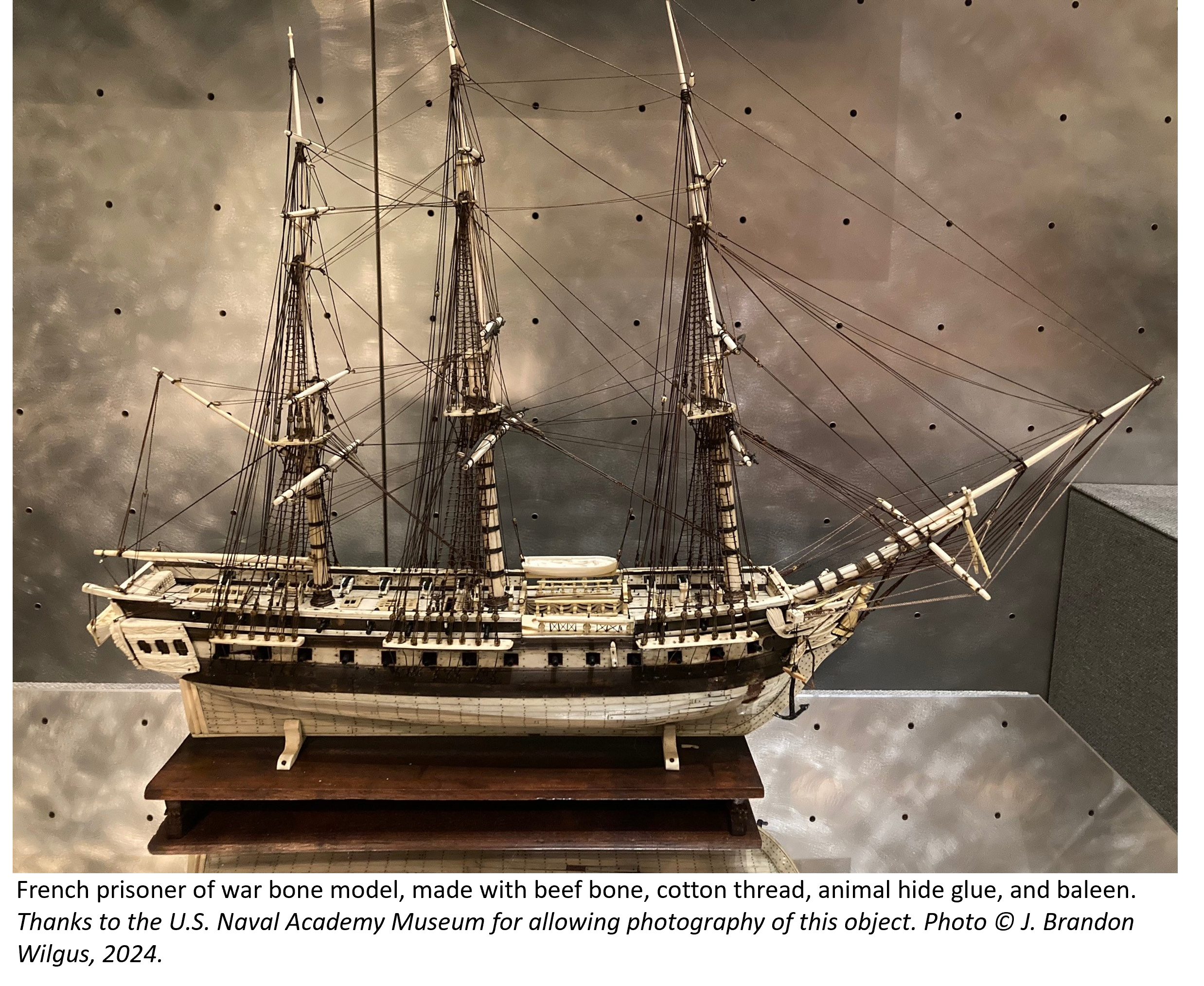
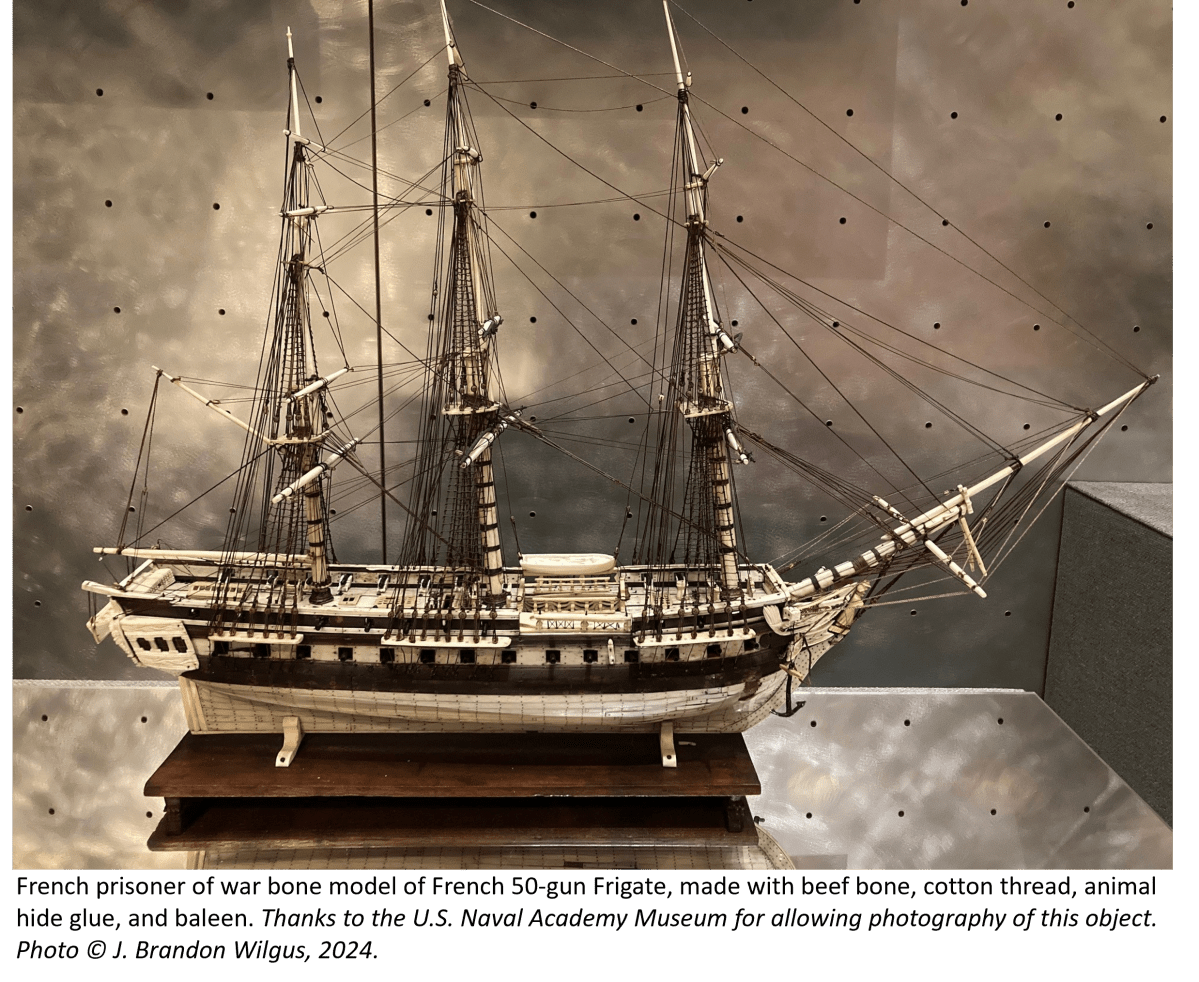
French, Spanish, Dutch, Italians, Germans, and Poles all ended up in the camp, guarded by local Cambridgeshire militia. Many of the prisoners were French, Spanish, and Dutch sailors, captured from Royal Navy victories on the high seas. Administered by the Admiralty, it may not surprise you that the Royal Navy recruited sailors from the Norman Cross Depot, seeing an opportunity to address manning shortfalls with knowledgeable seamen – and many of the captives were happy to leave. However, most of the prisoners stayed for years in the camp seeking ways to pass the time, keep busy, and possibly make some money. During its twenty years of existence, the prisoners of Norman Cross made beautiful art, mainly from the soup bones, straw, baleen, and wood they could find or acquire around the prison or from locals.  These men, to pass the time and to make art which they could sell, created magnificent pieces which are highly prized today. This artwork, a type of scrimshaw or an early version of trench art can be seen at various museums and in private collections from the United Kingdom to the United States.  

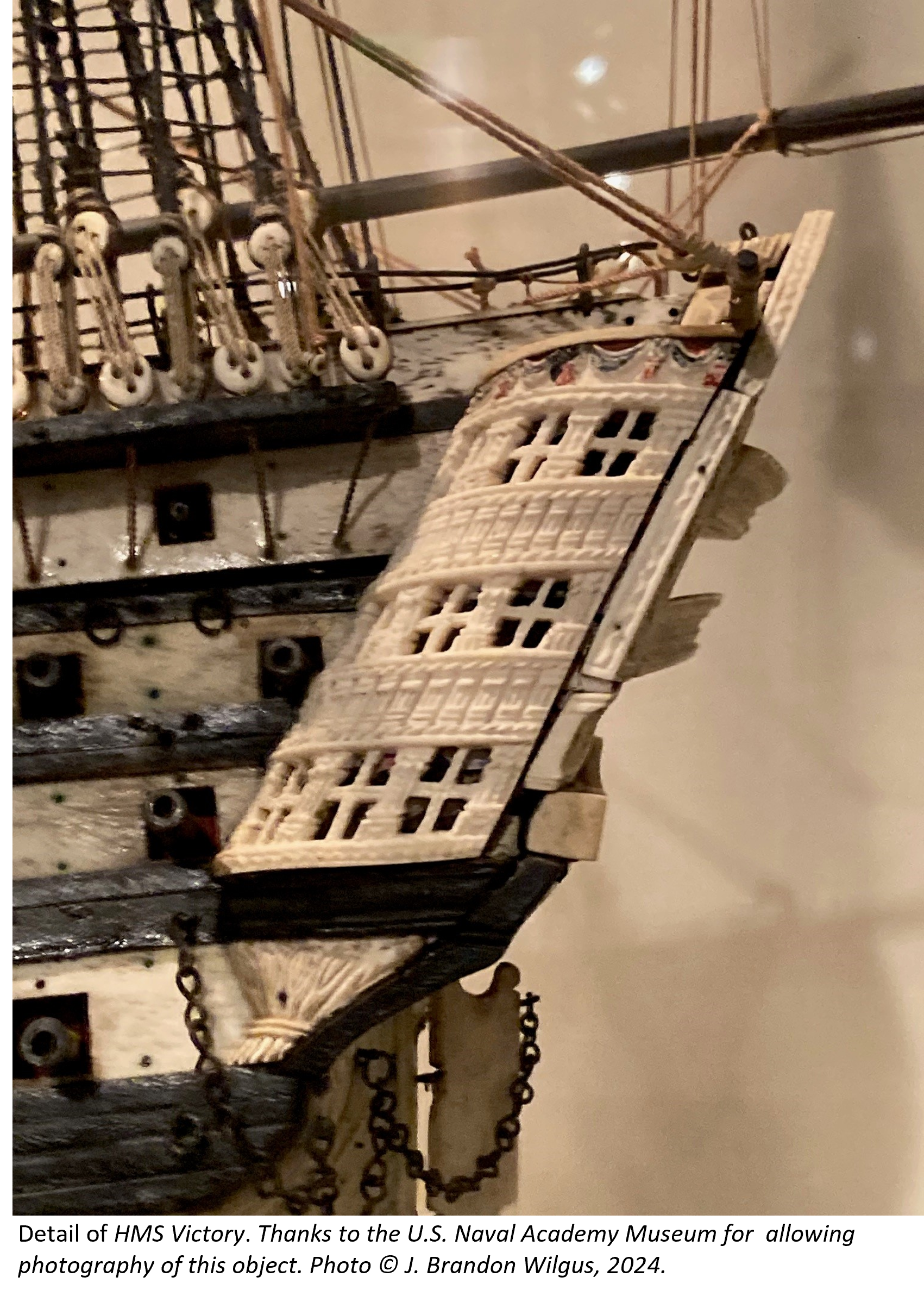
Although I have wanted to write about the artwork made at Norman Cross for several years, many outstanding examples of this craft found their way to the United States in the late 19th Century, with important pieces ending up at the U.S. Naval Academy in Anapolis, Maryland. It was only recently that I was able to visit the Museum at the U.S. Naval Academy where I could see these works – and the treasured masterpiece which emerged from the skilled hands several French sailors – the model of HMS Victory which holds pride of place in Annapolis.
The Art.

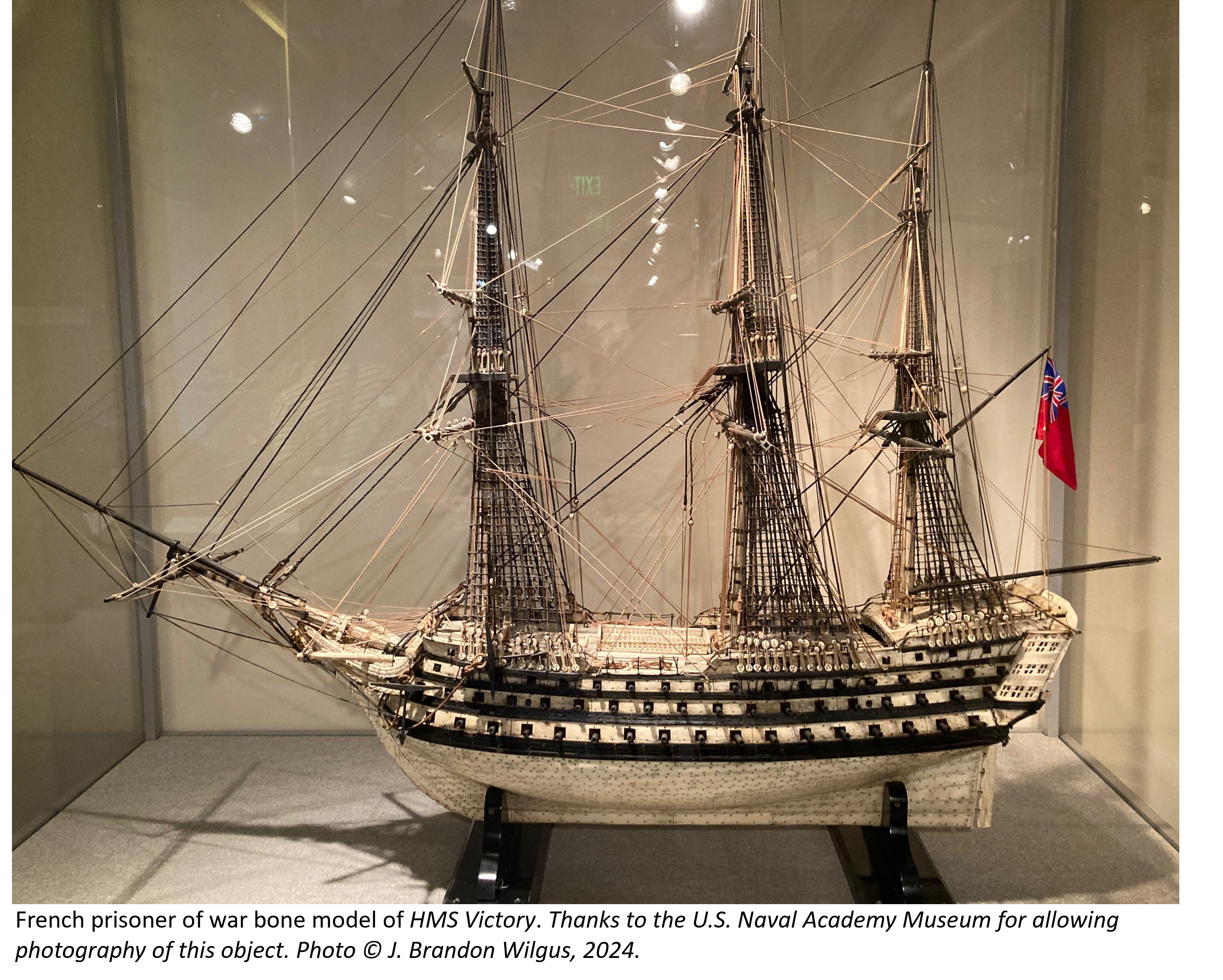
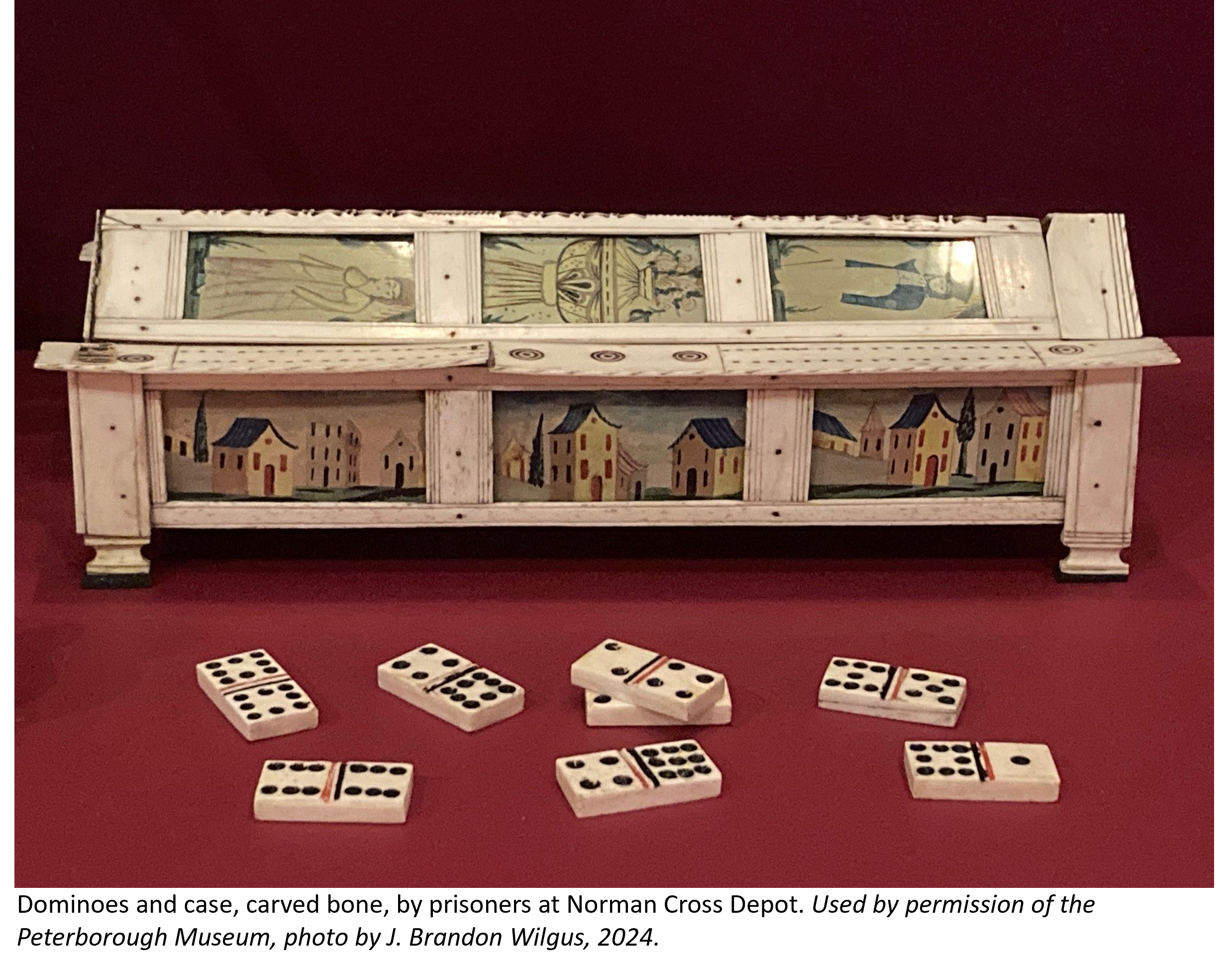
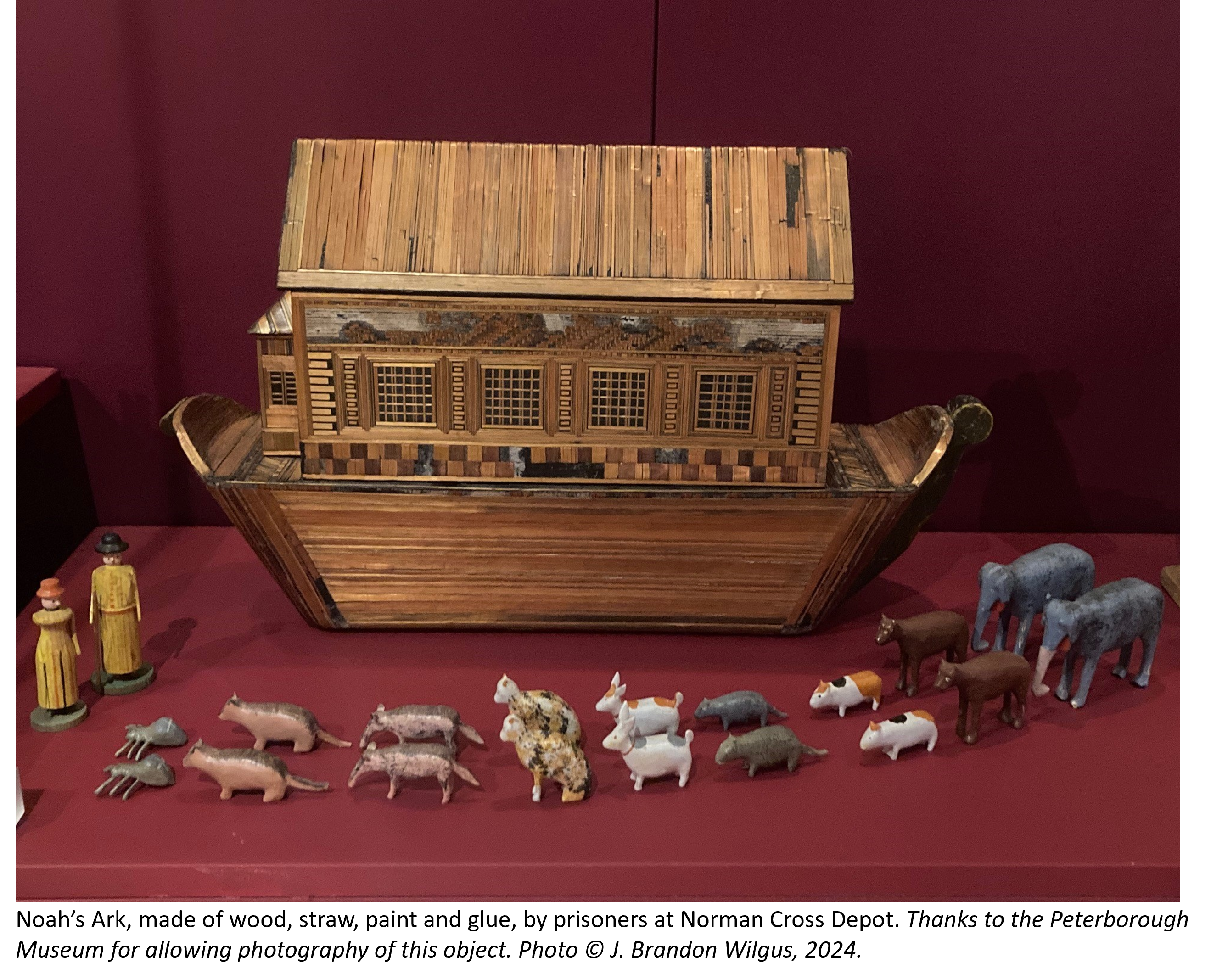
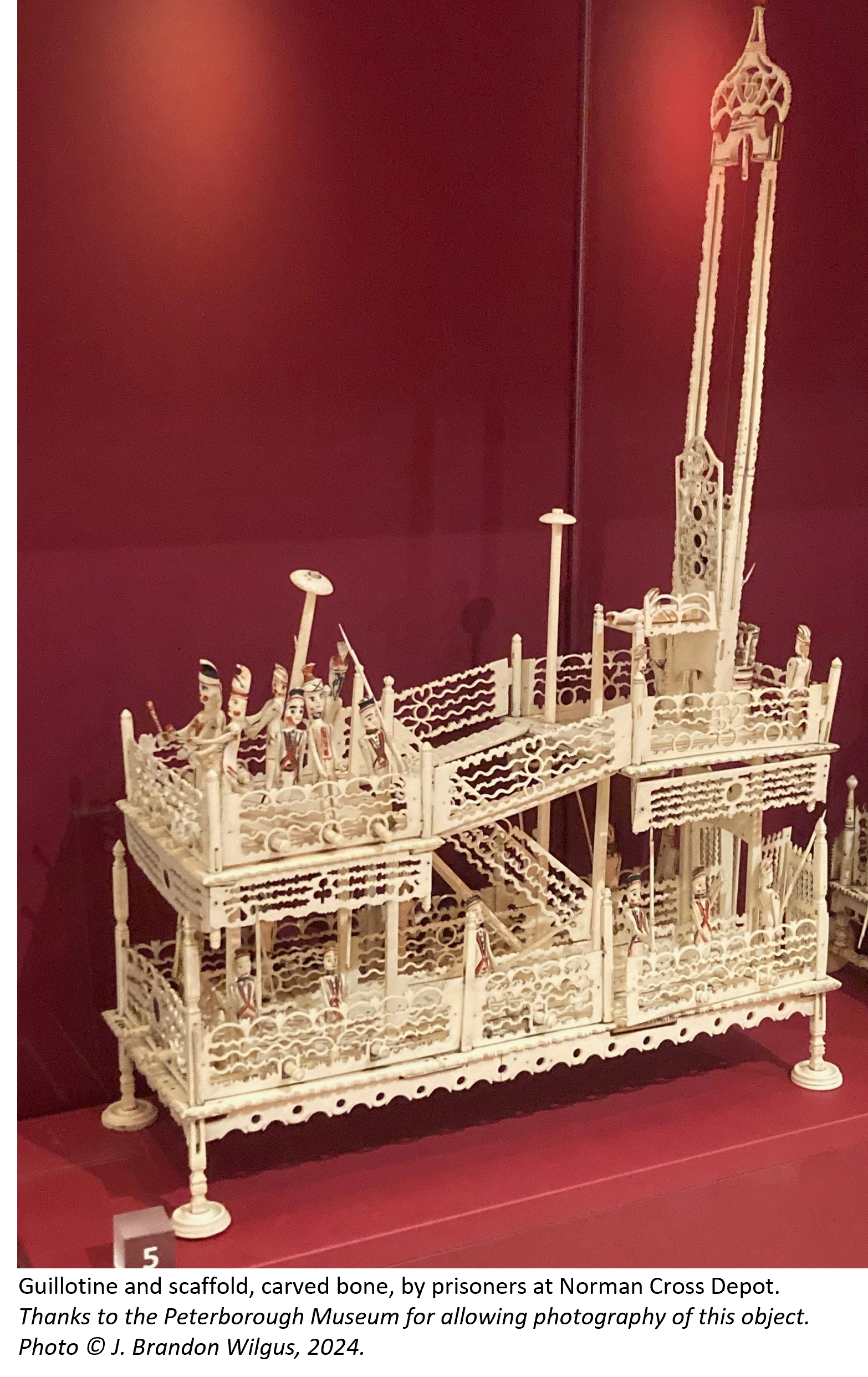
The prisoners carved and sculpted with materials on hand: bones, straw, wood, turning these everyday items into fabulous pieces of art. The prisoners carved what they knew, or remembered of their home and ships they sailed on, with an aim of selling their artworks in a local market which became popular around the camp.  Sailors carved bones into ships, often with their yardarms shortened so that the models would fit nicely on a mantlepiece. Rigging was made from memory, often incorrectly and sometimes even overly complicated to show off the intricacies of their craftmanship. Straw and wood were split and dyed, then glued into exquisite marquetry.  Scaffolds with guillotines, dollhouses, games, and even automatons were created and then sold.  This flourishing of prisoner art came to an abrupt end after Waterloo in 1815, when the prisoners were sent home and the camp demolished a year later and returned to farmland.
HMS Victory.

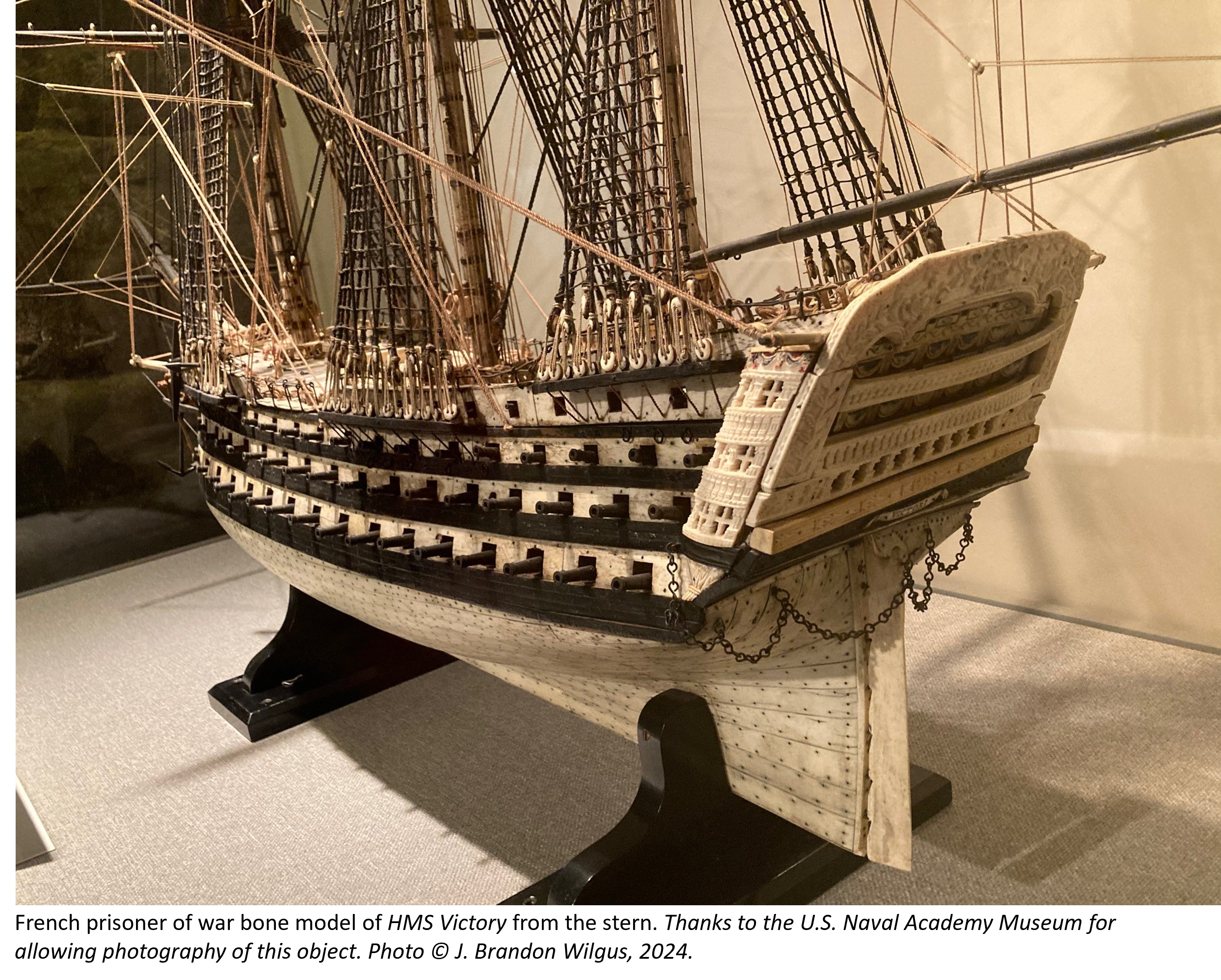
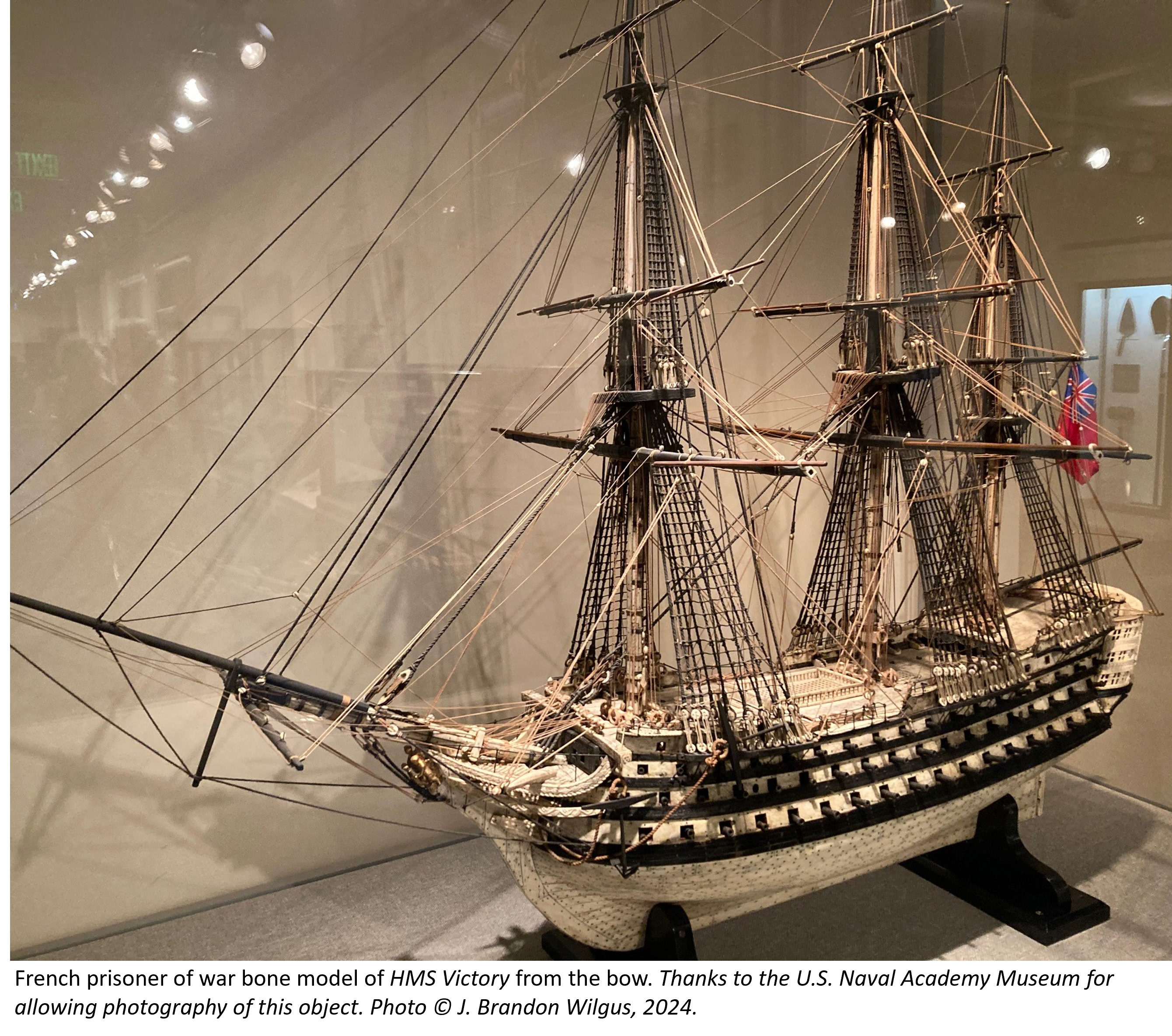
As mentioned before, the largest, most exquisite item created at Norman Cross Depot is undoubtedly the model of HMS Victory. According to the curators of the US Naval Academy Museum, after the defeat of the combined French and Spanish Navies at Trafalgar on 21 October 1805, fifteen French prisoners of war began the model of Nelson’s triple-decked flagship. It took them two years to complete the ship, aided only by prints from newspapers and their own memories of general ship’s design. In 1807, the model was complete and at several feet tall was seen as a wonder at the time. The Lords of the Admiralty organised the purchase of the model from the French prisoners, the amount paid is forgotten, and then presented the model to HM George III. The King then had the model placed on top of Nelson’s tomb – the hero of Trafalgar who died onboard HMS Victory – in the crypt of St. Paul’s Cathedral, London, where it sat for 27 years, before it was removed and cleaned in 1834. Once it was removed, it was never returned to Nelson’s crypt. In 1915, during the height of the First World War, an American millionaire financier and sailing enthusiast, Edward Francis Hutton, purchased the model and brought it to the United States where it set in his private collection. In 1980, the model was in the posession of the Maitland family which gave HMS Victory to the U.S. Naval Academy where it now resides.
How to visit the old prisoner of war camp:
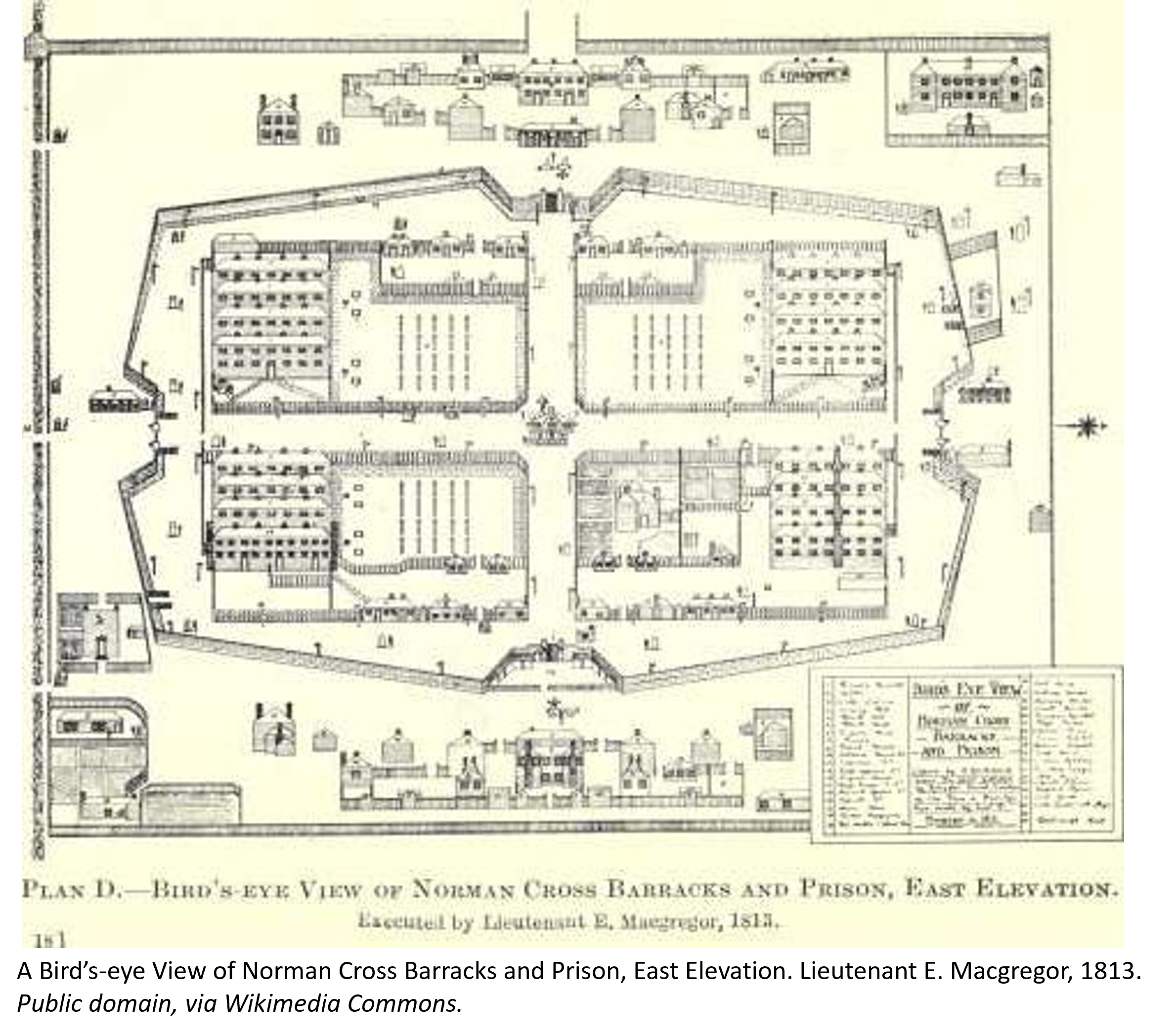
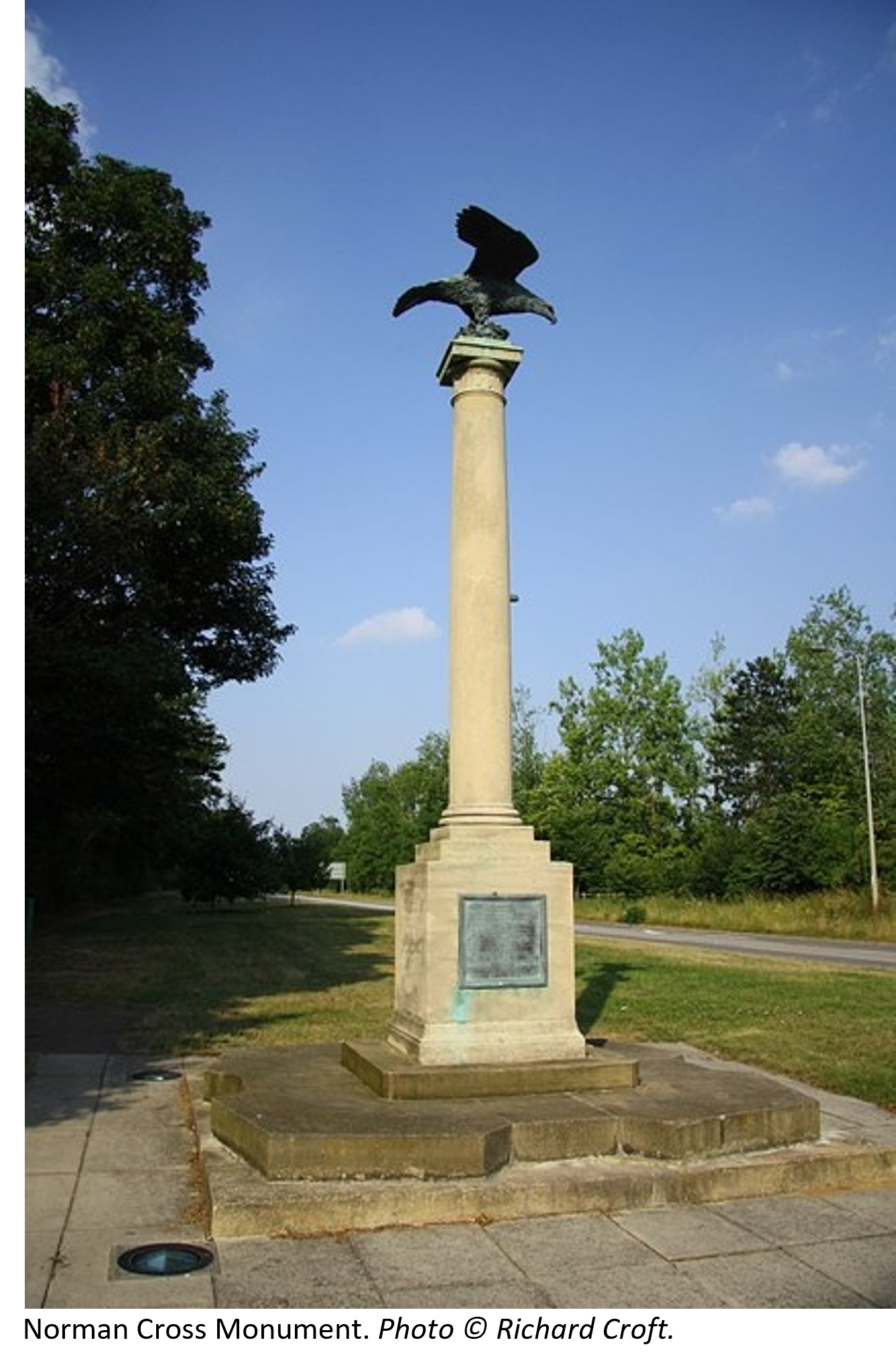
The site of the Prisoner of War Camp lies about six miles west of Peterborough. Exit the A1(M) on the A15 and head east toward Yaxley. At the southwest corner of the old camp, there is a large column, the Norman Cross Monument, crested by a bronze Napoleonic Eagle. Built and sited in 1914 by the Entente Cordiale Society, the monument was sadly toppled and the eagle stolen in 1990.  An appeal was made, and the column was repaired and moved due to the A1 being expanded in the late 1990s. Now rebuilt, a bronze replica of the Napoleonic eagle was restored to the column.  His Grace, the Duke of Wellington, unveiled the monument on 31 October 1998. The monument is dedicated to the 1,770 prisoners who died at the camp between 1796 and 1816. In the winter of 1800 to 1801, a typhoid epidemic swept through the camp, leading to the death of 1,020 prisoners, and several hundred others would pass away over the years the camp was open. This monument honors these men’s demise. There is parking available as well as an information board at the column.  

To the North and East of the old camp, now agricultural land, were burial sites for the prisoners who died at Norman Cross. In 2009, Wessex Archeology joined with the archeologists of Channel 4’s Time Team, led by Tony Robinson, to dig at Norman Cross. The team of archeologists discovered graves, carved items, and even a set of dominos. The episode titled “Death and Dominoes: The First POW Camp” aired on 3 October 2010 and is worth watching. The Wessex Archaeology report can be viewed here as well.

Part of the brick prison wall still stands nearby but is incorporated into the private property of residents.

To view the prisoner’s artwork:

Visit the Peterborough City Museum, Priestgate, Peterborough PE1 1LF. There is no parking at the museum, so I’d recommend parking at the Queen’s Gate shopping center’s car park and walking. Navigate to: PE1 2AA. The Museum is also an easy walk from the Peterborough train station. For more information, see their website: https://peterboroughmuseum.org.uk/. The museum is free and has a fine collection.

If you are in Annapolis, Maryland, in the United States, the U.S. Naval Academy’s Preble Hall is the location of the museum, one of the world’s great naval collections. The prisoner’s artwork is located on the top floor.  For more information, see their website: https://www.usna.edu/Museum/index.php where several other pieces of prisoner art can be viewed. The museum is free.
Trench Art: Christmas 1917 and the Machine Gun Corps

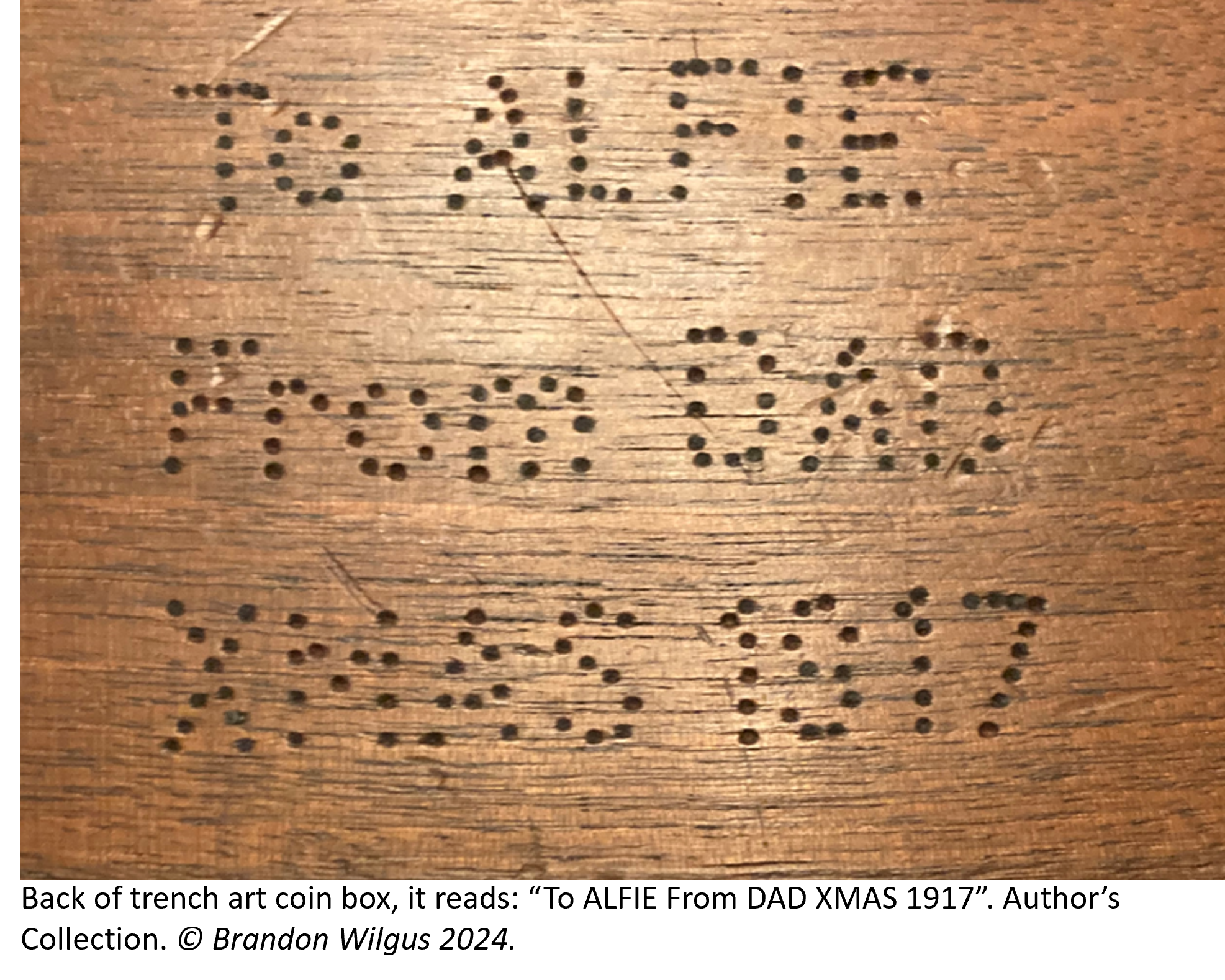
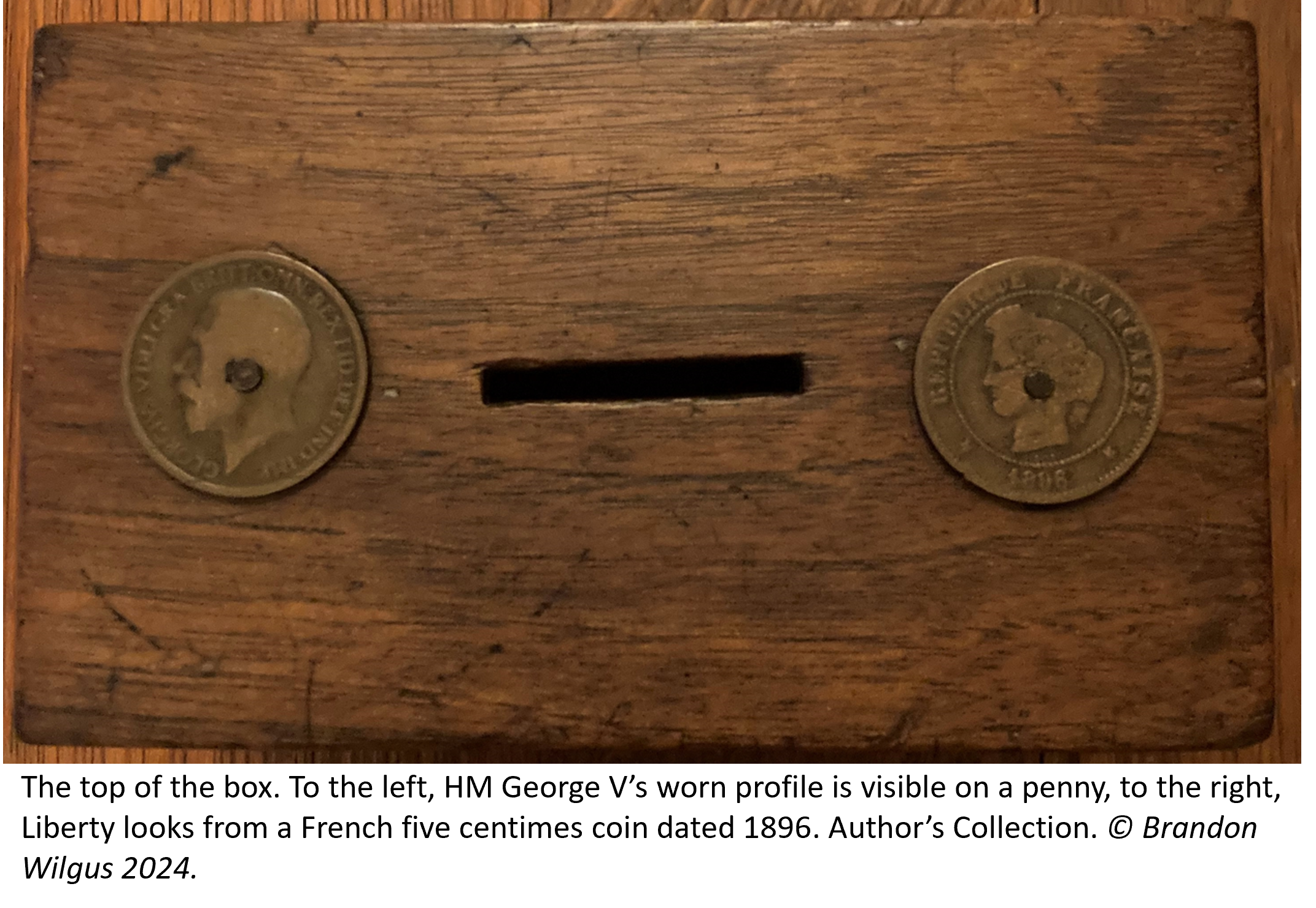
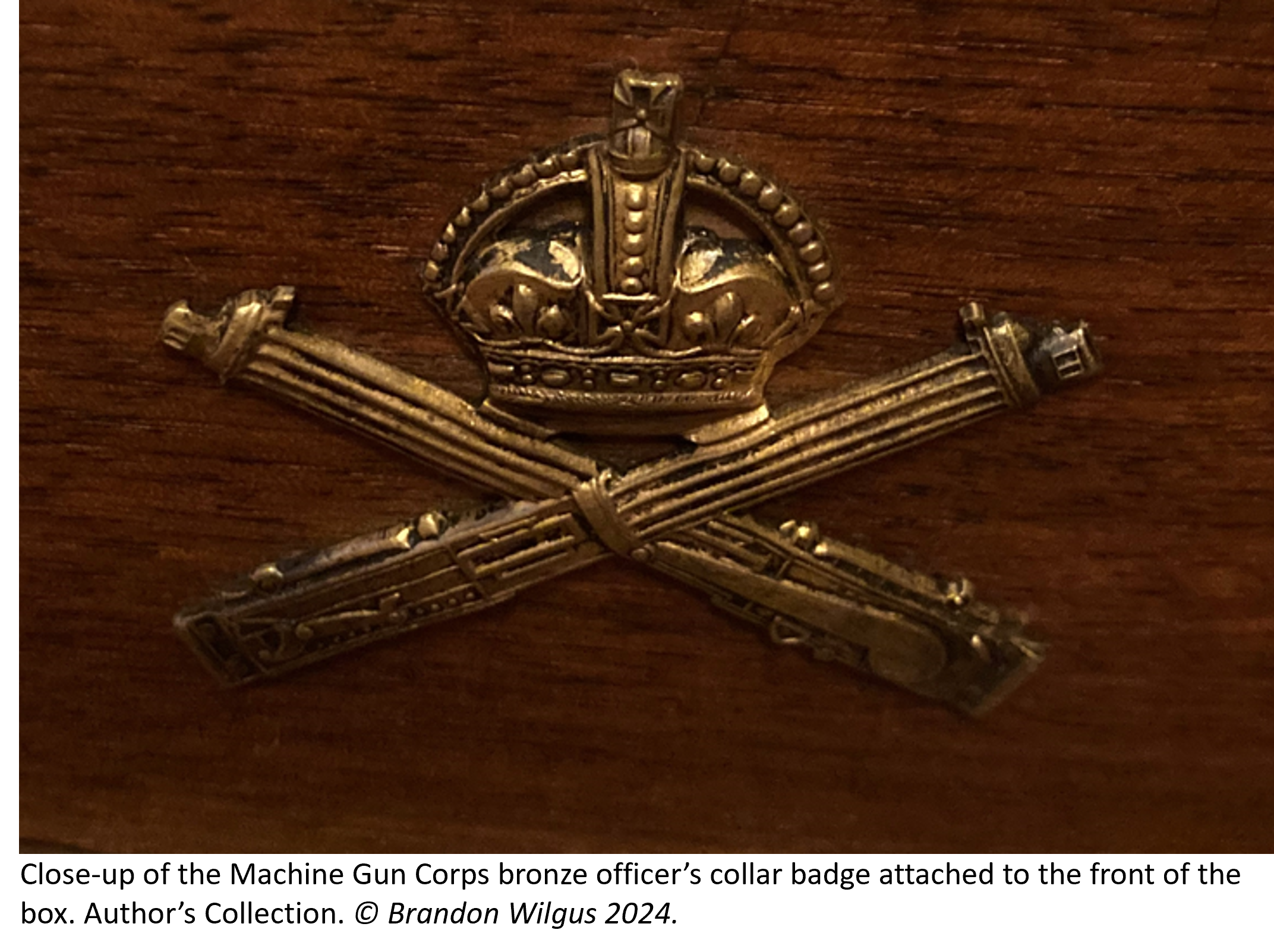
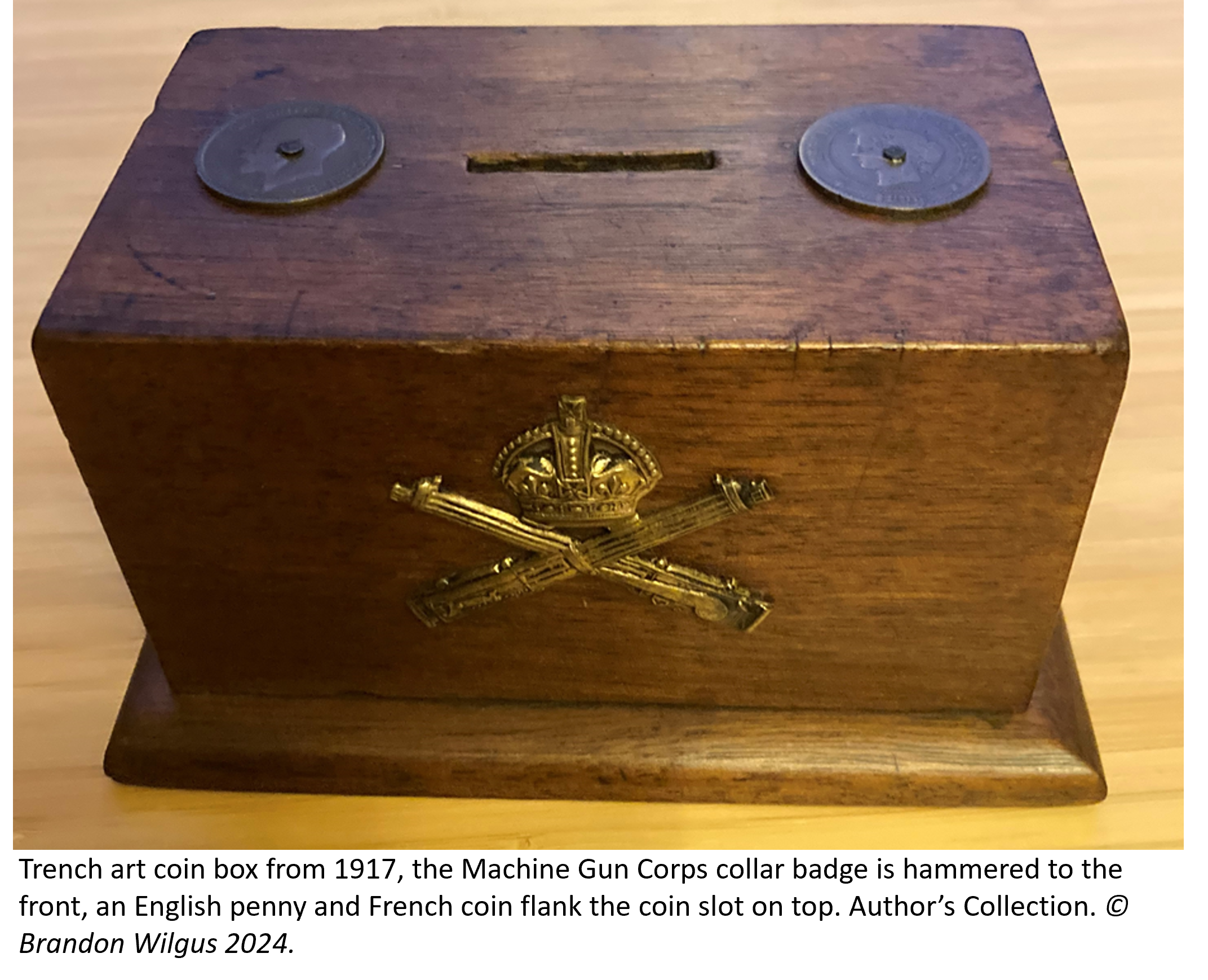
It was October or November 1917, a British soldier in the Machine Gun Corps took some scraps of wood, possibly duckboards or pieces of an ammunition container, and crafted them into a money box for his son back home in England.  He found a way, and time, to cut the wood, screw the pieces together, sand and varnish the box, and then hammered an English and French coin to the top, flanking the slot he chiseled out.  He then took an extra collar badge of the Machine Gun Corps, the organization of which he was undoubtedly proud to belong, and softly hammered it into the wood on the front of the box – the hammer taps are still visible in the bronze. Finally, after the varnish had finally set in the cold and wet of the Western Front – one imagines the box in a place of honour, drying by a stove in the muck and mire of a dugout – he turned the box around and hammered a note to his son with a nail point: “To ALFIE from DAD XMAS 1917”. He sent it off in the post, hopefully to arrive safely by Christmas for his son Alfie in England.

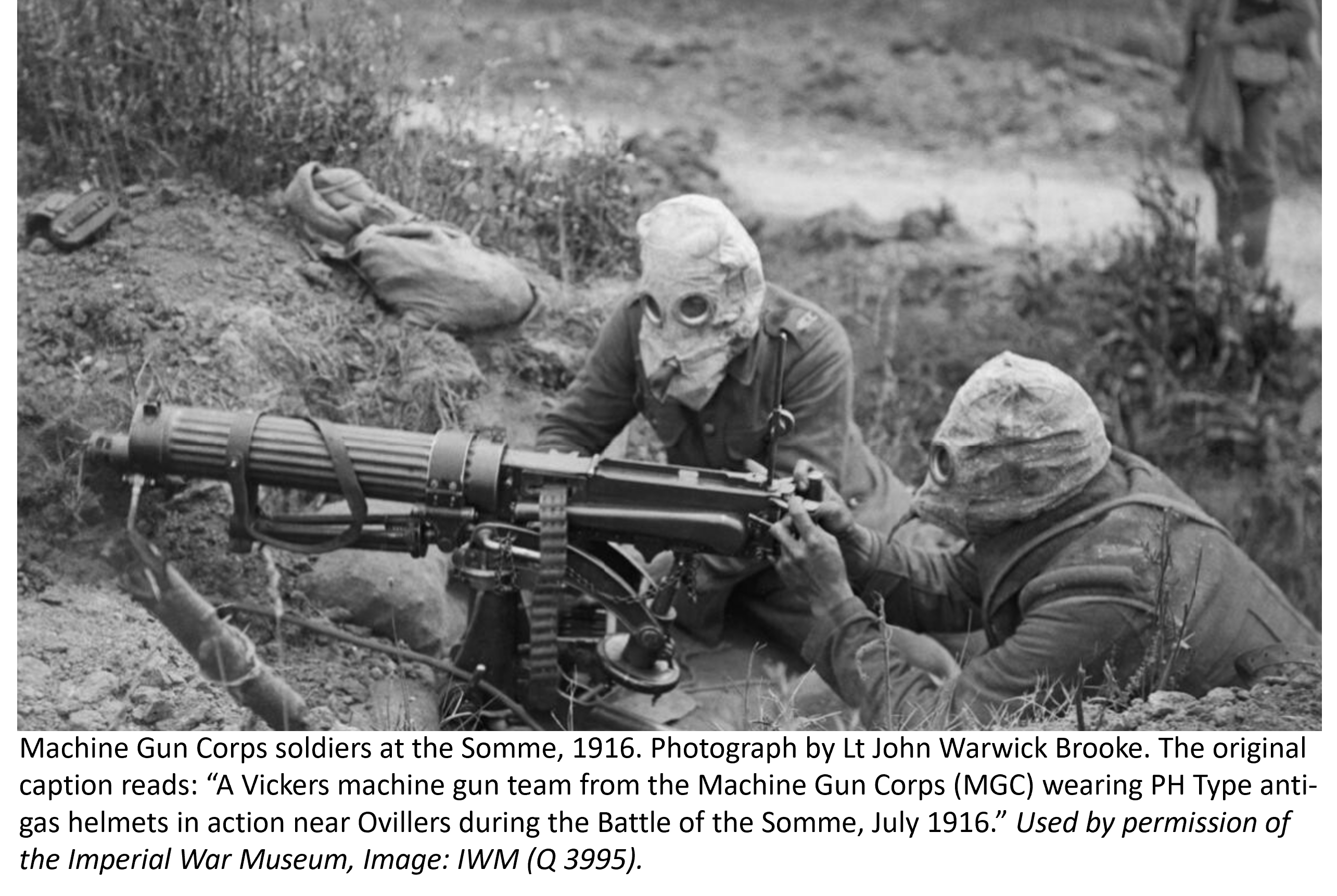
Alfie’s father was a member of the Machine Gun Corps. This prestigious force was formed in late 1915 with the aim to improve the effectiveness of the use of crew-operated machine guns in support of Allied infantry and cavalry units on all fronts. In 1914, each infantry battalion or cavalry regiment went to war with two machine guns embedded in the unit, this was quickly raised to four. By 1915, the Army realised that machine guns were being employed in a sub-optimal fashion, and a correction was in order. The Machine Gun Corps was formed in October 1915 by taking the Maxim and Vickers gun sections from all infantry regiments and consolidating the force to provide specialized training and specific marksmanship to crews to improve the use the machine guns on the front. By 1916, the Machine Gun Corps was divided into four branches: infantry, cavalry, motorized, and heavy.  Most machine gunners were trained on the grounds of Belton House, a stately home just north of Cambridgeshire, near Grantham in Lincolnshire and would go on to support the infantry.

Life in the Machine Gun Corps was not easy – its members served on all fronts in the Great War – and the force was nicknamed “the suicide club” due to its heavy casualties.  The enemy, observing the importance of the machine gun sections to both defensive and offensive operations, specifically targeted machine gun positions, mainly through artillery fires. By the war’s end, 170,500 officers and men served in the Machine Gun Corps, 62,049 became casualties, just over 36 percent of total strength. 12,498 members of the Machine Gun Corps died during the war. Seven members of the Machine Gun Corps were awarded the Victoria Cross, two posthumously. The machine gunner’s grit and bravery was unquestioned.

The Machine Gun Corps was short lived. It was disbanded in 1922 to save money after the war, but its legacy lives on in the Royal Tank Regiment. The heavy branch of the Machine Gun Corps was the first to operate tanks in combat on the Western Front, forming the Tank Corps when seperated from the Machine Gun Corps in July 1917. This force became the Royal Tank Corps in 1923 and now forms the Royal Tank Regiment.

This box, this gift from a father to his son at a time when at least one of the two realised they might not meet again, is the most precious and sentimental type of trench art. It was a gift to a family member made with what was available and at hand at the time. It leads to more questions than it answers: did the father make it home by the next Christmas, in 1918, after the war ended?  Did Alfie, who received the box 107 Christmases ago, keep and cherish this gift from his father?  Did Alfie ever learn of the experiences, the suffering, the pain that his father must have experienced while in France with the Machine Gun Corps?  What became of the box after the Christmas of 1917?

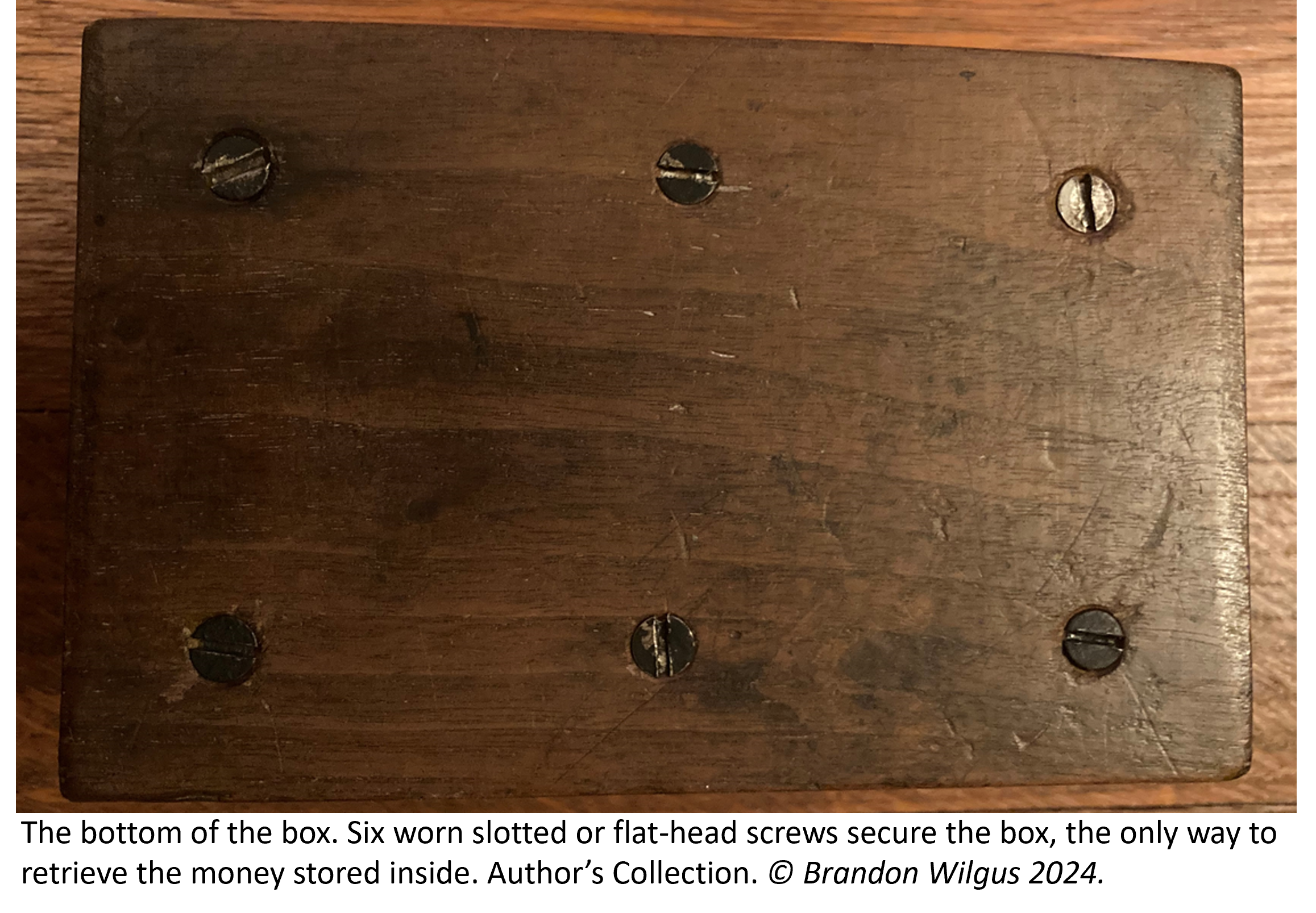
I can answer some of the last question.  The box was obviously used to save coins for a long time, the slot on top is worn from the rough edges of many coins dropped through. The screws on the bottom – the old-fashioned slotted or flat head screws that one sees in Victorian or Edwardian furniture – have been taken out and screwed back many, many times.  It was the only way for Alfie, or others, to retrieve the money they had saved.

What about the father?  I assume he was commissioned, for the collar badge is an officer’s: it is bronze. Besides that, there is very little to learn of him.

The box eventually ended up in an antique store in Tewkesbury, a market town in Gloucestershire, and came to me for a few pounds. It now sits proudly on my shelf, as I am certain it once did on Alfie’s.

Recently, as my family was decorating for Christmas, I found myself hoping once more that Alfie’s father made it home from France a year after he made this box and was rejoined safely with his family. I hope that Alfie, and his father, shared many Christmases together in later years. Maybe a bit sentimentally, I wonder if 107 years ago, as this box was being assembled in the cold and misery of France in 1917, if its maker could have imagined it would be cared for and kept by a different family in England over a century later?

While a box like this will always spur more questions than it answers, I would like to tell you how I appreciate the questions and comments you send my way through the year, a very Merry Christmas and a Happy New Year to you all!

Trench Art: Hand Worked Shell Vase from 1917

I have been fascinated by Trench Art for several years.  I was first exposed to numerous examples of decorated shells, paperweights, desktop items, and trinkets made in the areas around Mons and Ypres, Belgium where we lived some time ago.  Some of these items I acquired and began a small collection.  First though, what is Trench Art?  At its most basic level, it is handcrafted artwork made by soldiers and sailors who find themselves with free time and materials to create original works of art.  This was often men stuck in the trenches of the First World War, or in Prisoner of War (POW) camps from the Napoleonic Wars through World War II. Items were made as souvenirs to post home or carry back on leave, to trade, or to simply occupy time in a dangerous and horrifying situation. One feels that a soldier felt very little control over his circumstances and fate, surrounded by destruction, but could find a release through an act of creation.  There are numerous items one can find: decorated brass shell casings are common, but also letter openers, desk items, regimental items, matchbook holders, ash trays, models of ships, aeroplanes, ships, and so on.  The beauty of Trench Art is in its originality, its story, the story of its materials, who might have made it, and why?

According to Nicholas Saunders, who has written on the history and variety of Trench Art, there are four real categories of the craft: items made by soldiers in war; items made by POWs; items made by civilians at the front with access to materials; and finally, purely commercial items.  The first three categories are the most interesting to me; however, around Belgium one often finds examples of the fourth category. Often one finds decorated shells made to sell to families traveling to Flanders in the 1920s – the Menin Gate or some other poignant memorial often is depicted on these items.

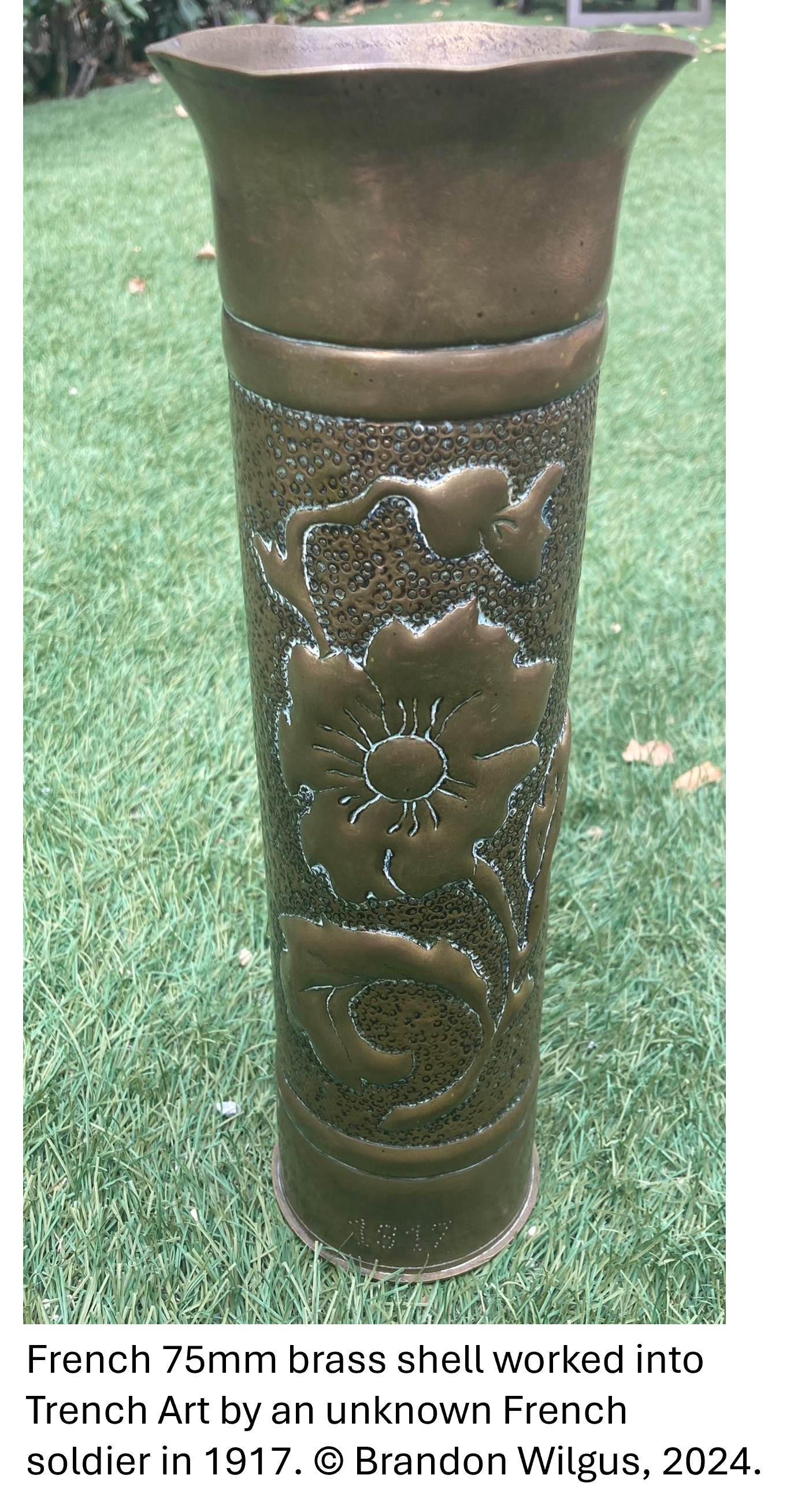
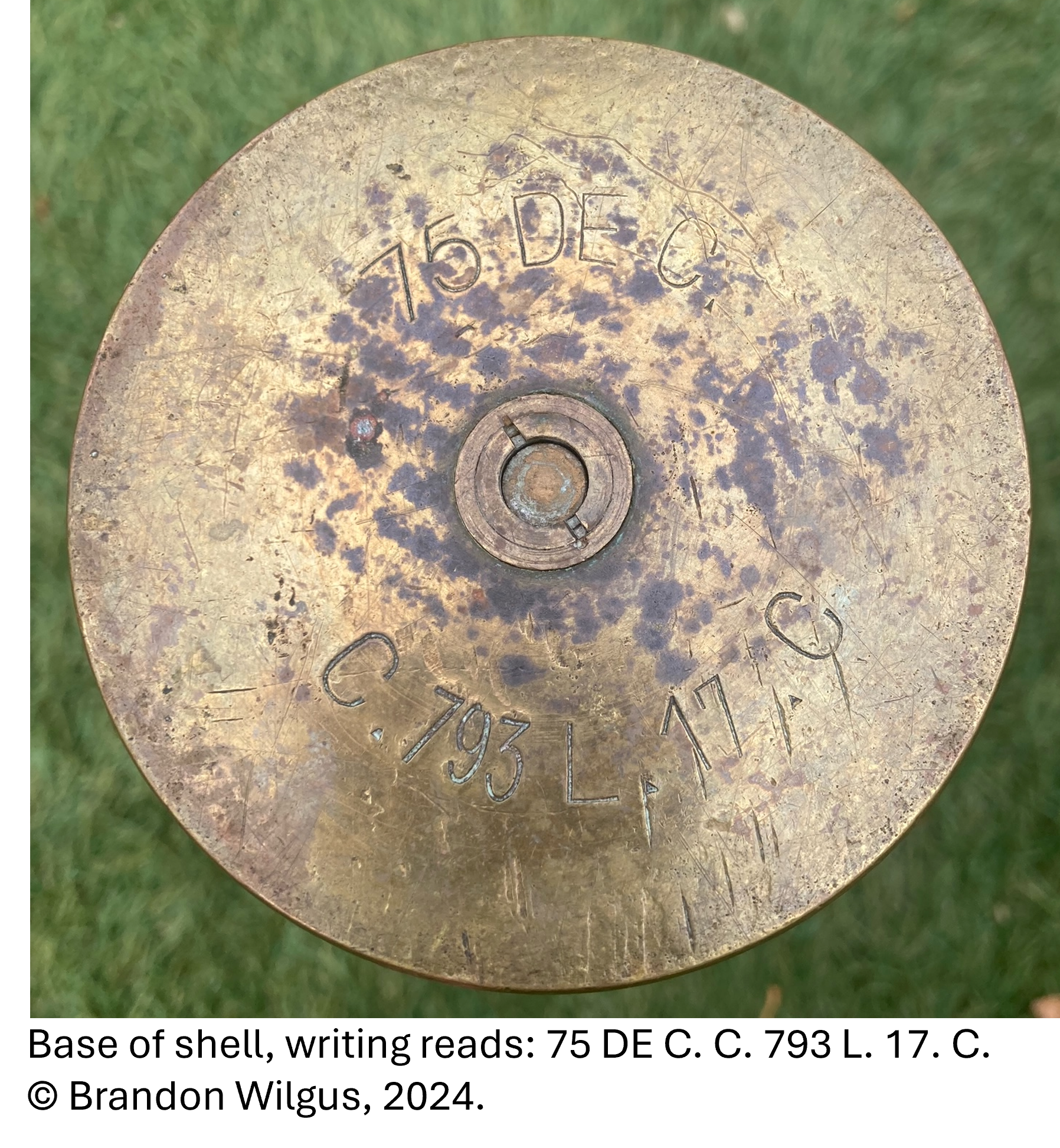
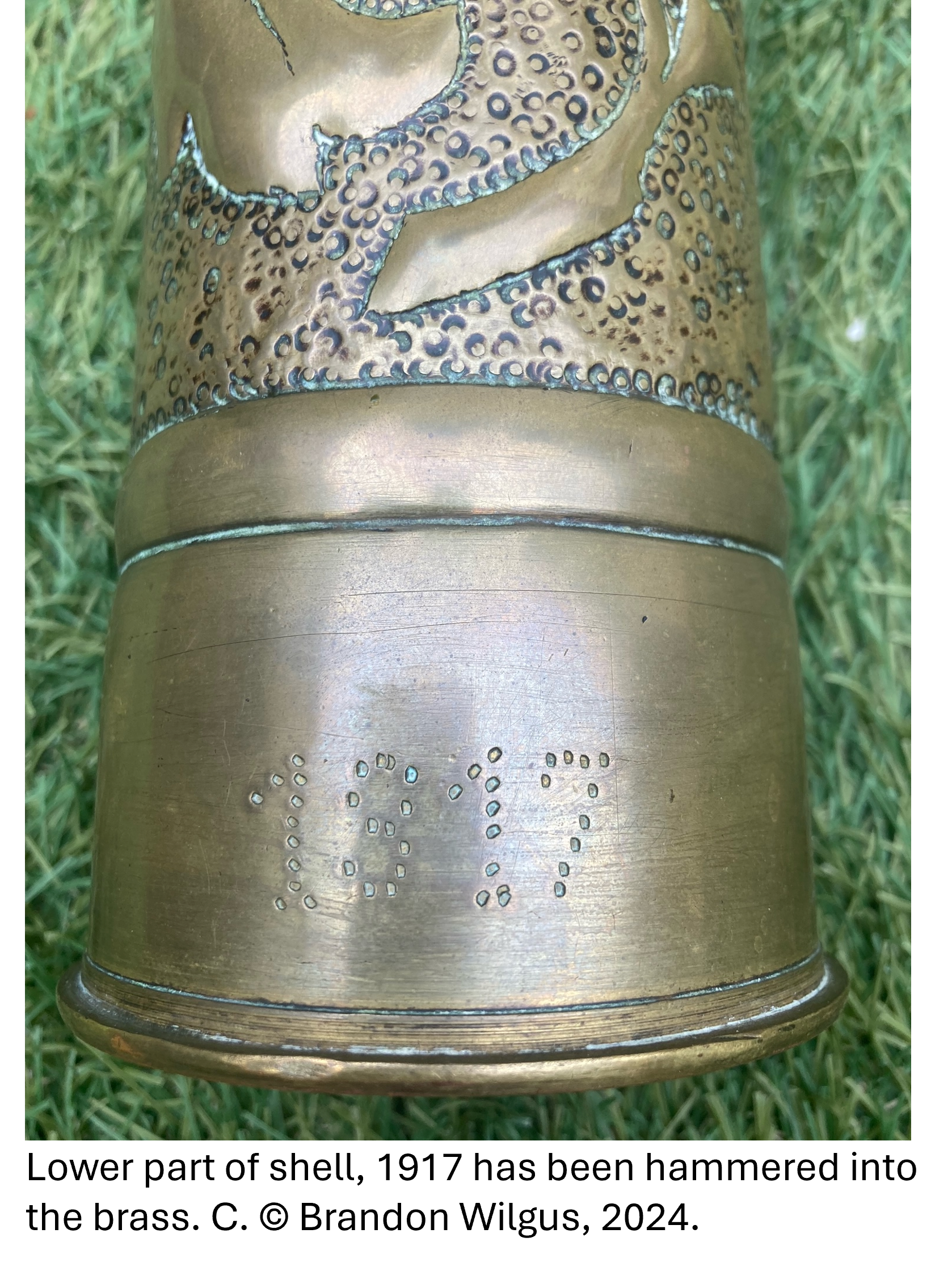
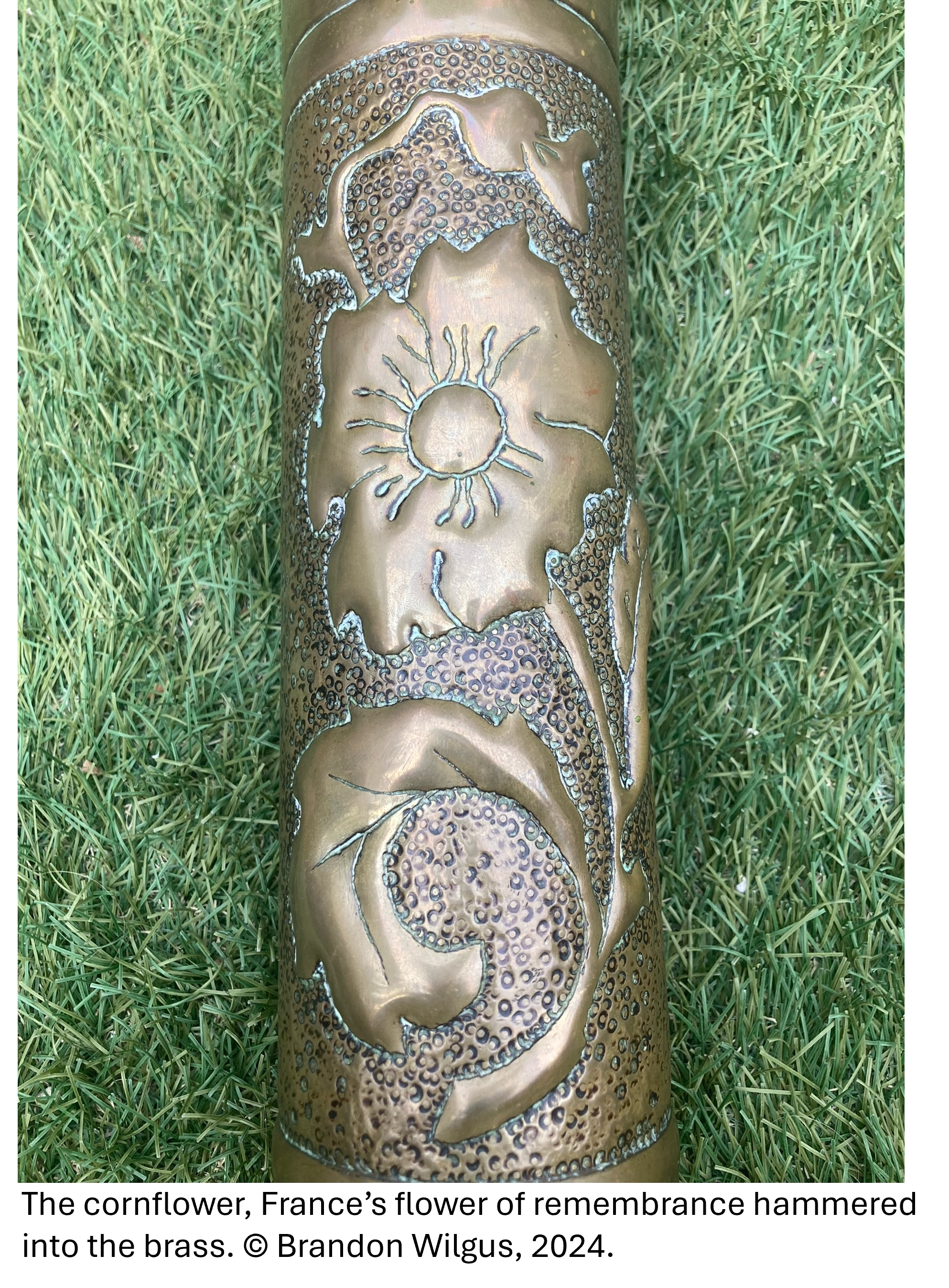
We are currently traveling in southern France on holiday.  While exploring a local marché aux puces, a flea market, I found a decorated French 75-millimetre brass shell, with 1917 hammered into the lower part of the vase below a stylized cornflower.  The cornflower in light blue is the symbol for remembrance in France, like the red poppy in the United Kingdom and the Commonwealth Nations, or the gold star or yellow ribbon in the United States.  The base of the shell reads: “75 DE C, C. 793 L. 17 C”.  As time has gone by, these markings have become harder to decipher, but the “75 DE C” means 75 canon de compagne, or the 75mm quick-firing field gun, which is the gun for which the shell was made.  The “C. 793 L.” is the munitions manufacturer and the lot number, so C is for Castelsarrasin, Tarn-et-Garrone, which was the location of a major armaments factory in southwest France under the Compagnie Française des Métaux (CFM) concern. This shell in particular was part of that facilities’ 793rd lot of 1917.  The “17” is the year of manufacture, 1917. The final “C” is the initial for the foundry which made the brass for the shell, also CFM’s Castelsarrasin factory in this case. 

I find it interesting to delve into the history of these decorated items, these mementos made during such awful times. What makes this piece of Trench Art fascinating is that after this shell was manufactured and fired in 1917, a French soldier likely took the time to hammer a cornflower and the year into the brass, then blued the indentations. He almost certainly made this piece of art in 1917 soon after the shell was fired since the brass casings of fired rounds were collected, recycled and reforged by French armaments manufacturers desperate for raw materials late in the war.  The shell vase was then kept for 107 years until it came into my possession at a French flea market this week.  There are many questions which are unanswerable: where on the Front was this 75mm shell fired?  At whom or what?  Who made this specific piece of Trench Art? Did he survive the war? Was it a gift for a wife, a sweetheart, or family member? Maybe he made it to trade or to sell?  Who kept it, cherished it, and preserved it for over a century?  One question I can answer, the cost in 2024? 107 years after it was made on the Western Front, lovingly preserved, and eventually forgotten, it made it into a box of old bits of metal and cost me 8 Euros on a hot Saturday in southwest France.

For more information on Trench Art, I’d recommend an excellent book on the subject: Nicholas J. Saunders, Trench Art: A Brief History and Guide, 1914-1939. 2nd Ed., (Barnsley: Pen and Sword Books, 2011).