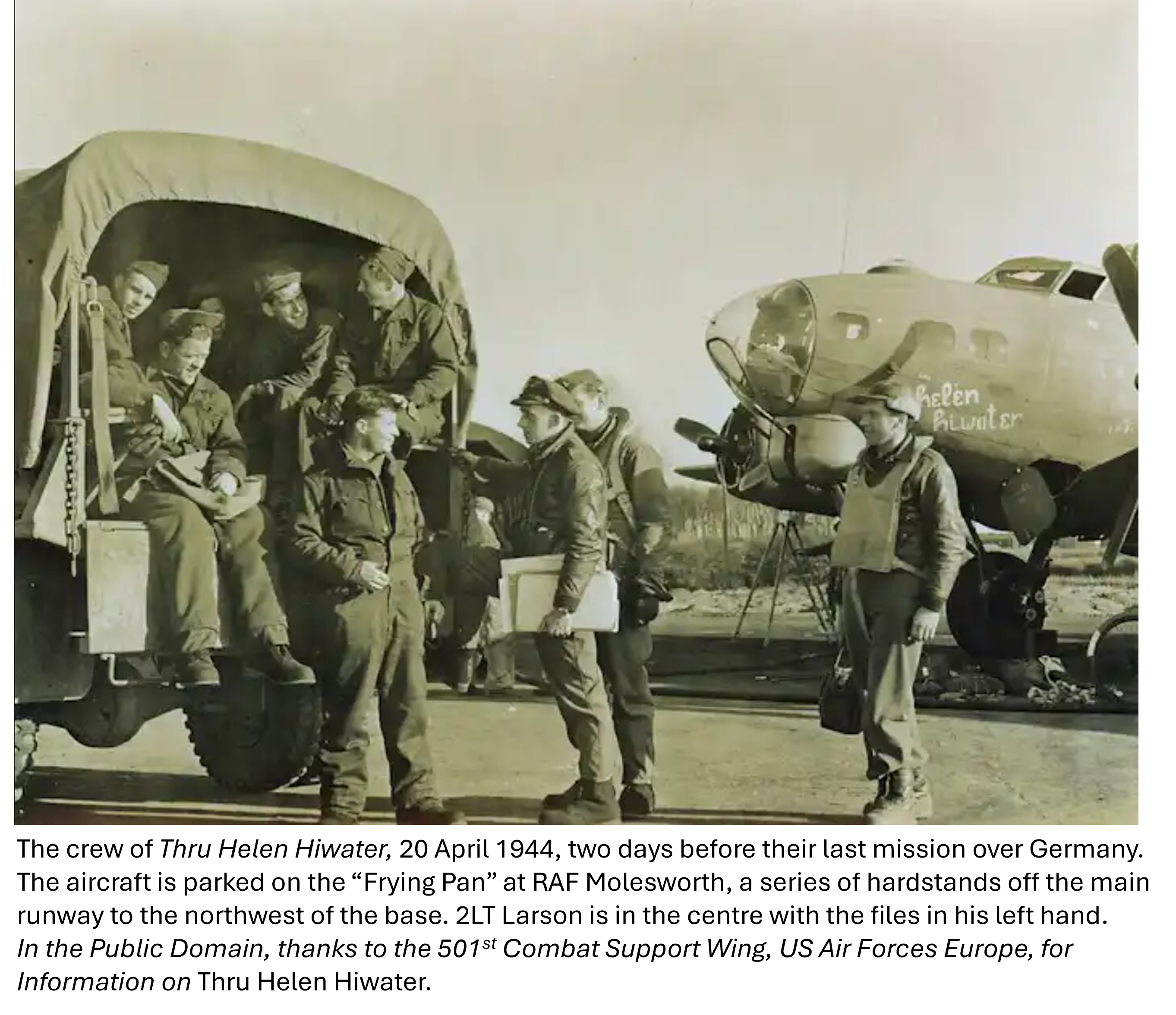
361st Fighter Group Wall Art Preserved at RAF Molesworth

The Eighth Wall Art Conservation Society was an active group in Cambridgeshire in the 1980s. The EWACS, as they styled themselves, saved many works of art from the Second World War from derelict buildings on abandoned airfields. They preserved these works for us today, and while some are available to be viewed by the public, others have been hidden away and forgotten.  

At the Bottisham Airfield Museum, one can view a mural of the RMS Queen Mary which was saved by EWACS in the 1980s. The men of the 361st Fighter Group sailed on the Queen Mary from the United States to England in 1943 and one of the airmen painted an image of the ship directly on the brick walls of one of the airfield’s buildings. This mural eventually found its way to the museum to be appreciated by all.

Originally prepared in 1940 as a satellite of RAF Waterbeach, RAF Bottisham was at first a grass relief field for the Cambridge based de Havilland Tiger Moths of No.22 Elementary Flying Training School. As the war went on, several other RAF aircraft would fly from the field which gradually grew and expanded. In 1943, Bottisham was turned over to the U.S. Army Air Forces’ 361st Fighter Group. The 361st Fighter Group’s squadrons first flew the Republic P-47 Thunderbolt but transitioned to the North American P-51 Mustang in May 1944. The fighters from the 361st Fighter Group, recognizable with their yellow painted engine cowlings, escorted the bombers of the 8th Air Force to their targets in occupied Europe, including the Boeing B-17 Flying Fortresses of the 303rd Bomb Group based at RAF Molesworth.

This may seem a winding thread: the EWACS, RAF Bottisham, the 361st Fighter Group, and RAF Molesworth – but in the March 1983, the EWACS volunteers, supported by U.S. airmen stationed in the area, rescued several paintings from the old enlisted men’s club at RAF Bottisham before the building’s demolition. At the time, the Bottisham Airfield Museum did not exist and these volunteer conservators sought out a home for this saved art and turned to a growing U.S. Air Force base in the area: RAF Molesworth. 

At Molesworth, in a small break room, the EWACS installed three saved pieces of wall art from RAF Bottisham: a mural of a B-17 with a Messerschmitt Bf-109 diving in pursuit, two glasses of wine coming together in a cheer, and a slogan painted in cursive. The slogan, painted across the bricks reads: “Here’s a toast to those who love the vastness of the sky.” Sadly, these murals can only be seen regularly by the men and women stationed at RAF Molesworth as part of the U.S. Visiting Forces and are not regularly available to the public.

One of EWACS saved wall paintings ended up at the Imperial War Museum branch at RAF Duxford in Cambridgeshire.  At Duxford, the wall mural  “Poddington Big Picture” is displayed in Hangar No. 3, it displays a expertly detailed B-17 from the 92nd Bomb Group which flew from RAF Podington in Bedfordshire. One of the few signed pieces of wall art, we know the “Poddington Big Picture” was painted by George C. Waldschmidt. A few additional saved murals were shipped to the 8th Air Force Museum at Barksdale Air Force Base, Louisiana, USA. Others are dispersed in museums and displayed throughout East Anglia.

While it is a pity that these beautiful murals at RAF Molesworth are not available for the public to view, we are thankful for the volunteers of the EWACS who worked to save and conserve these beautiful pieces of Cambridgeshire’s aviation history almost forty years ago.  In 1983, Dick Nimmo, Bill Espie, and Brian Cook, all volunteers with EWACS removed and brought these works of art to RAF Molesworth before the derelict enlisted club at RAF Bottisham was demolished. We owe them a debt.

To read more about wall art from the Second World War: https://heritagecalling.com/2019/05/17/war-art-military-and-civilian-murals-from-the-second-world-war/

The Guardian published an article in May 2014 regarding USAAF art from the war with some excellent pictures: https://www.theguardian.com/artanddesign/gallery/2014/may/17/art-usa

The Airfield Museum at RAF Bottisham houses the mural of the Queen Mary and many other fascinating items, for more information about the museum: https://www.bottishamairfieldmuseum.org.uk/

To learn more about the USAAF at RAF Bottisham during the Second World War, visit: https://www.americanairmuseum.com/archive/place/bottisham

For more information on RAF Molesworth, visit: https://www.americanairmuseum.com/archive/place/molesworth

For more information on RAF Waterbeach’s museum, which is certainly worth a visit: http://www.waterbeachmilitarymuseum.org.uk/index.html

For the murals at the 8th Air Force Museum in Louisiana, a few photos are available at their website: https://8afmuseum.com/

RAF Little Staughton: Home of the Pathfinders of No. 109 and No. 582 Squadrons

During the Second World War a large Royal Air Force Station operated several types of aircraft and served both the Royal Air Force and the U.S. Army Air Corps near the village of Little Staughton, on the border between Bedfordshire and Cambridgeshire. In 1942, RAF Little Staughton was designed as a Class A airfield, able to support the heavies — multi-engine bombers such as Boeing B-17s, Consolidated B-24s, and Avro Lancasters.  Once complete, the airfield was set aside as a depot, more specifically, the 2nd Advance Air Depot of the US Army Air Corps, under the 1st Bomb Wing at RAF Brampton Grange (see my posting about this headquarters). B-17s, damaged or in need of maintenance that could not be provided at their home station were flown to RAF Little Staughton for repairs.  

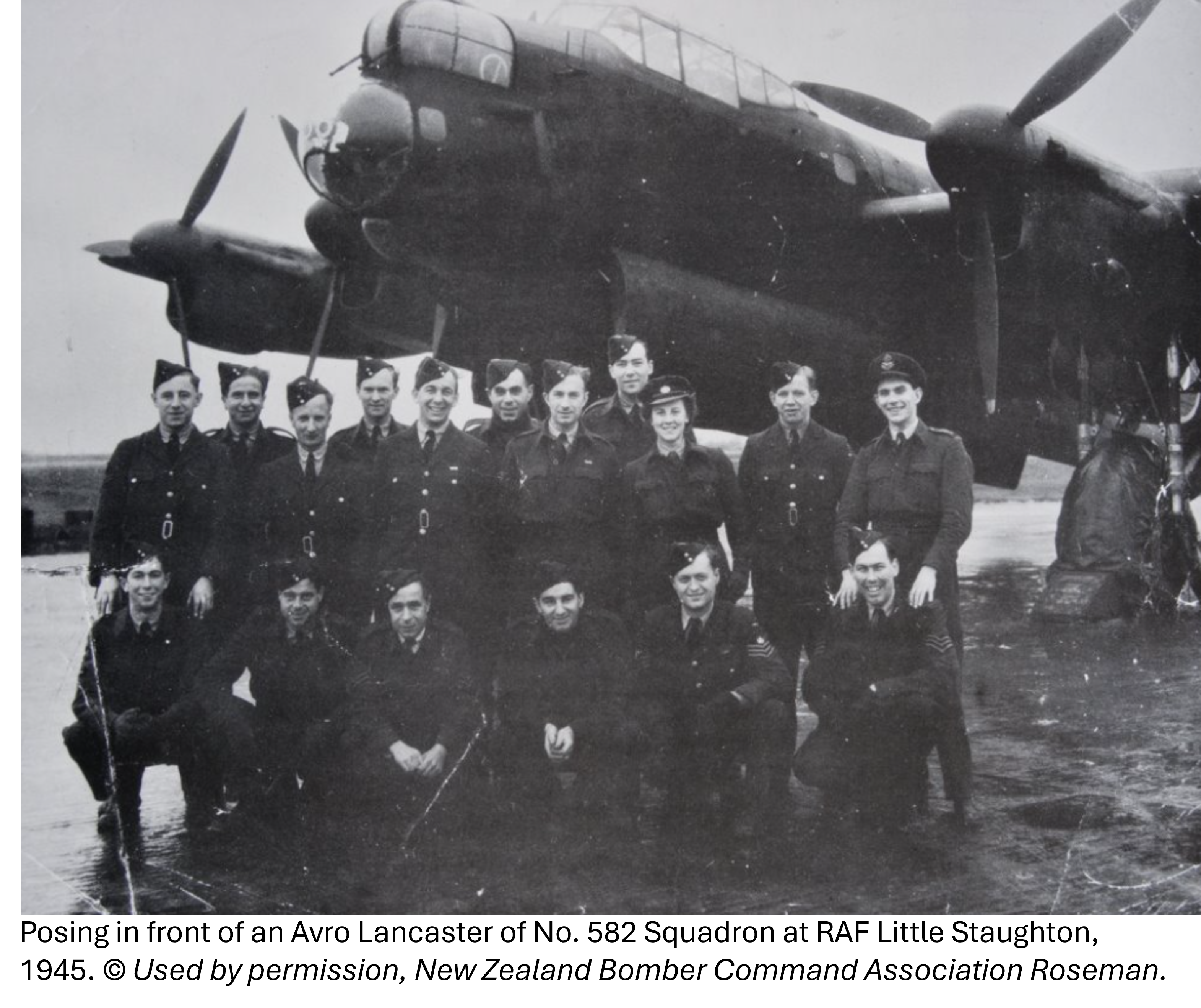
On 1 March 1944, the U.S. Air Force returned the facility to RAF use, and it became the home of two squadrons of Pathfinder Force Group 8 – No. 109 Squadron flying the de Havilland Mosquito XVIs, and No. 582 Squadron flying Avro Lancaster Mark Is and IIIs.

In the last year of the war, the Pathfinders flew 2,100 sorties from RAF Little Staughton in 165 separate missions against Germany and occupied Europe. Over 120 medals for courage and gallantry were awarded to the officers and men flying from RAF Little Staughton, along with two Victoria Crosses:  Squadron Leader Robert A. M. Palmer, VC DFC with Bar and Captain Edwin “Ted” Swales, VC DFC.  The two men were close friends and both pilots in 582 Squadron.  

Squadron Leader Palmer was 24 years old on 23 December 1944 when he was the Master Bomber – in command of the lead bomber on a raid of 30 aircraft – over Cologne, Germany.  Despite heavy clouds and several losses enroute to the target, Palmer continued the run despite an order having gone out to break up the formation and for the bombers to drop their ordnance visually. His Lancaster damaged by German anti-aircraft fire, with two engines erupting in flames, Palmer stayed on target and dropped his bombs as the lead plane, fulfilling his role as a Pathfinder, before his aircraft spiralled out of control.  Only the tail gunner escaped from Palmer’s Lancaster. He was posthumously awarded the Victoria Cross.  Six of the 30 RAF aircraft on the 23 December 1944 raid on Cologne were lost.

Captain Swales, a South African pilot, was 29 years old on 23 February 1945 when he was the Master Bomber in a Lancaster leading a bombing raid on Pforzheim, Germany of 367 Lancasters and 13 Mosquitos. Swales successfully found the target and marked it for the several hundred bombers following his lead.  After dropping his bomb load, Swales’ Lancaster was critically damaged by a Messerschmidt Bf-110.  With the fuel tanks ruptured and two engines lost, Swales held the plane in the air as his crew all successfully bailed out over France.  He attempted to bring down the Lancaster over friendly territory, but it stalled and crashed near Valenciennes.  Like his friend Palmer, Swales was posthumously awarded the Victoria Cross. His Lancaster was one of 12 lost in the raid.

28 Lancasters from No. 582 Squadron would be lost from April 1944 until VE day. 23 Mosquitos of No. 109 Squadron were lost during the same period.  The sacrifices of these men, working to protect their nation and liberate Europe, in such a short period of time is stunning.

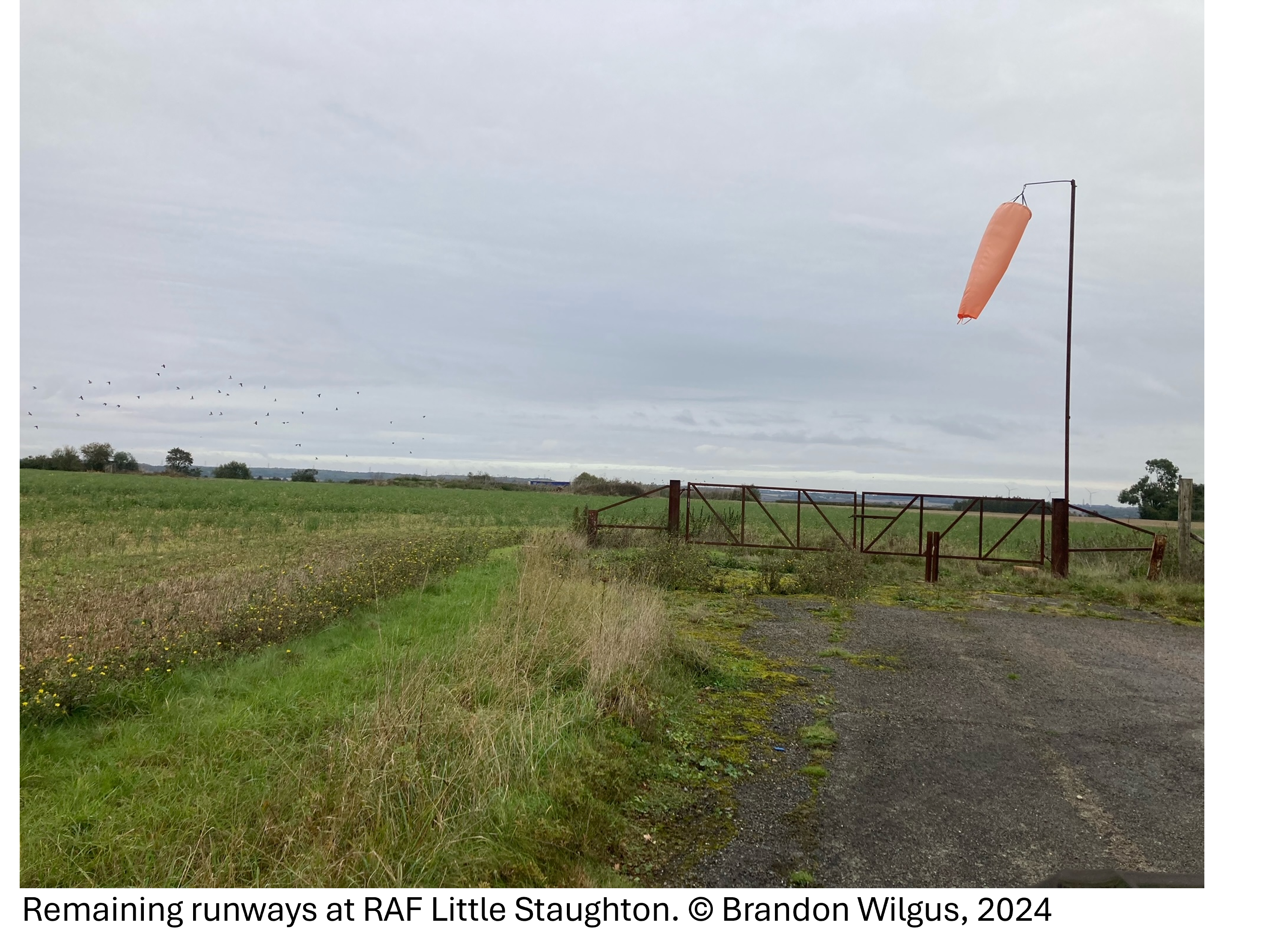
In September 1945, RAF Little Staughton was put into a care and maintenance status.  However, its days as a flying airfield were not finished. In the 1950s, the U.S. Air Force expanded and lengthened the main runway to 3,000 yards so that RAF Little Staughton could serve as a divert for RAF Alconbury’s North American B-45 Tornado multi-engine jet bombers and the Douglas B-66 Destroyer light bombers which were then flown by the 85th Bombardment Squadron.

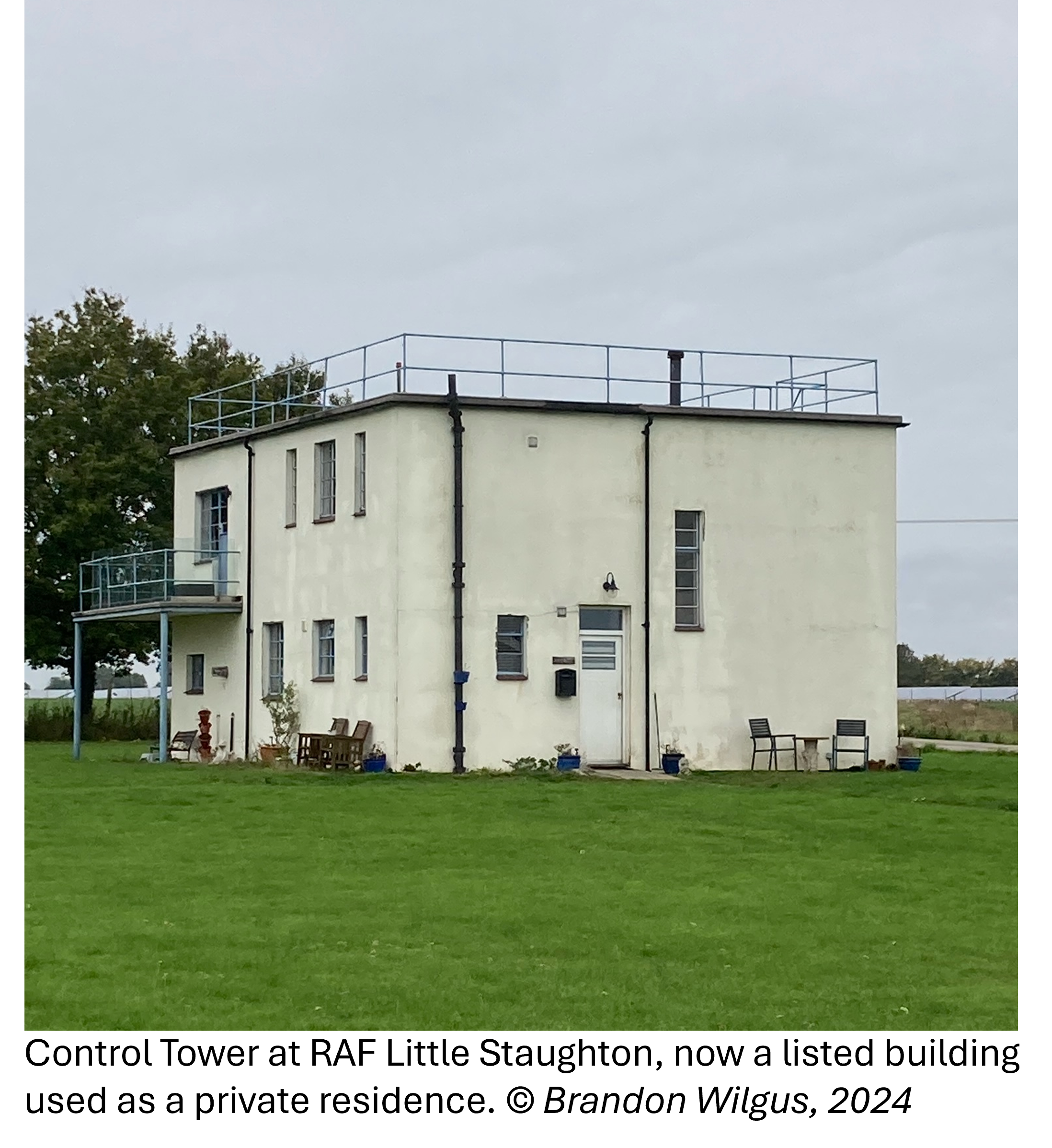
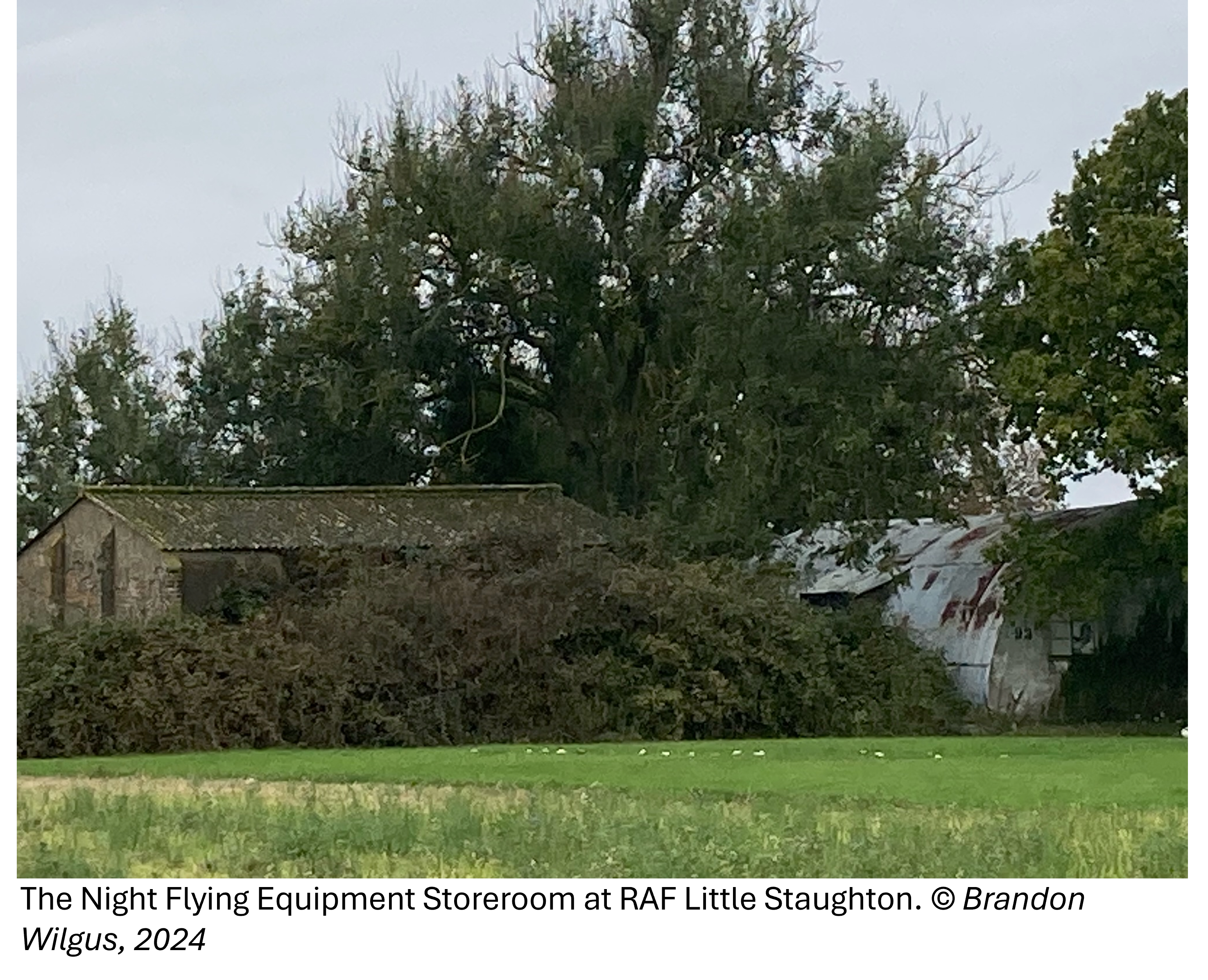
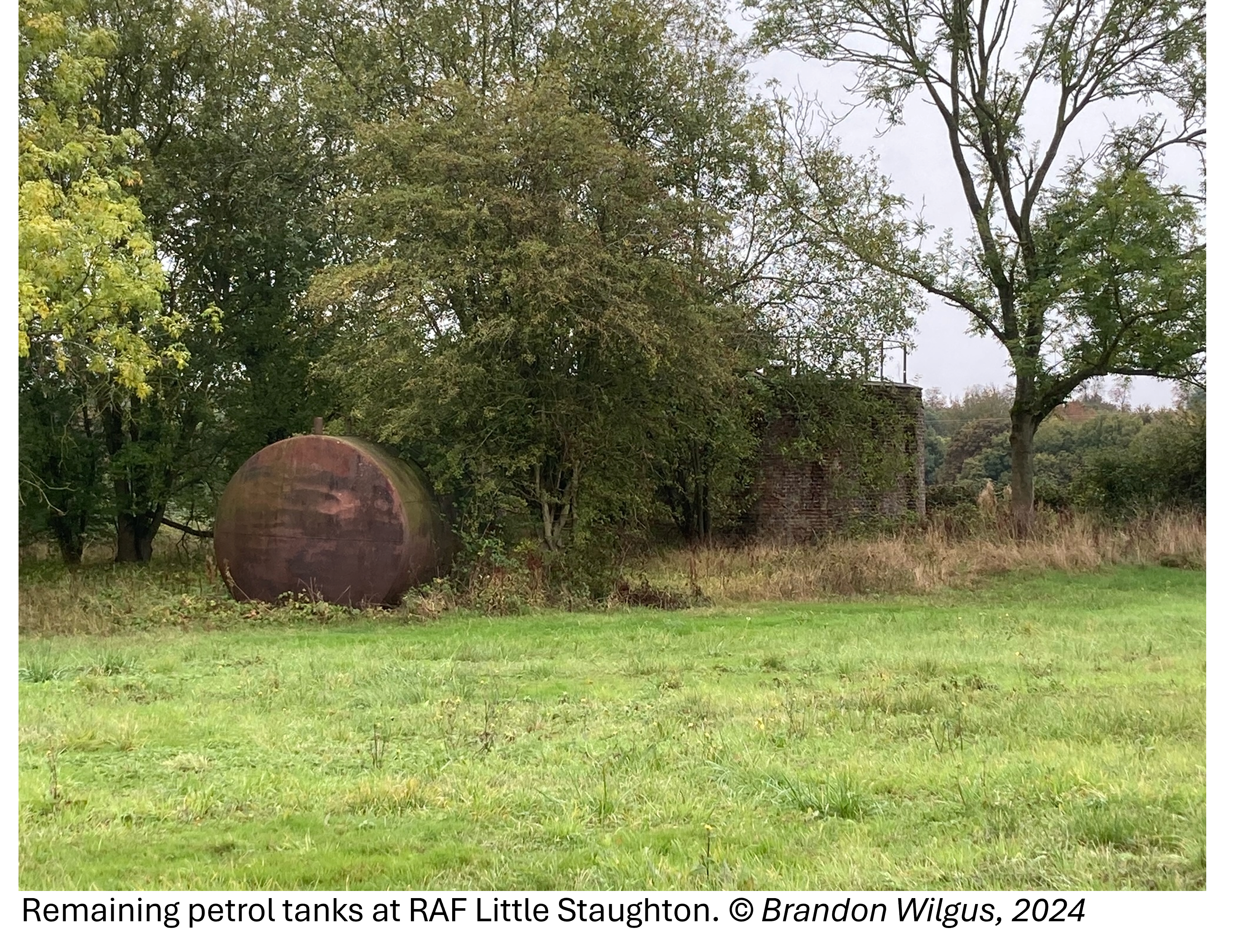
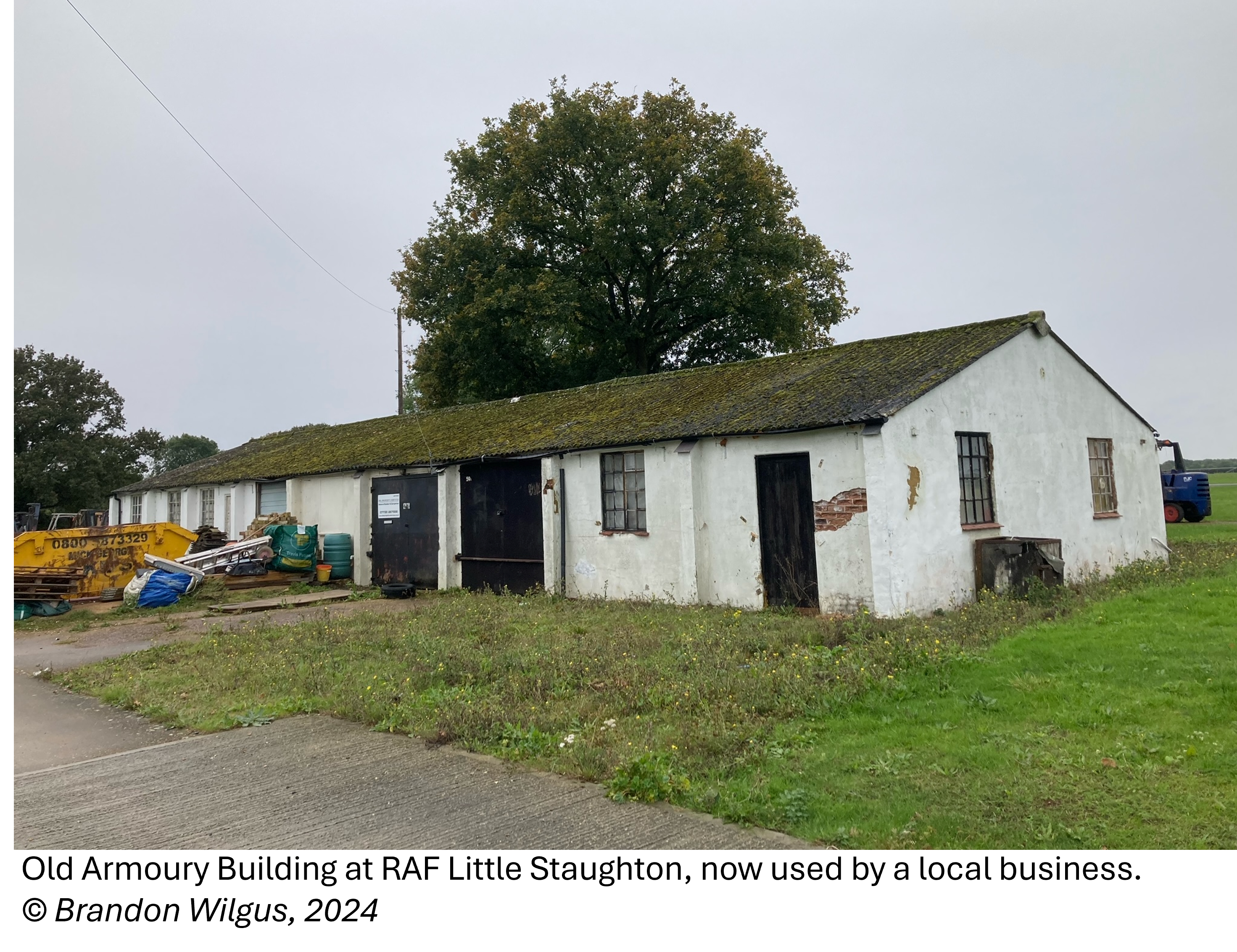
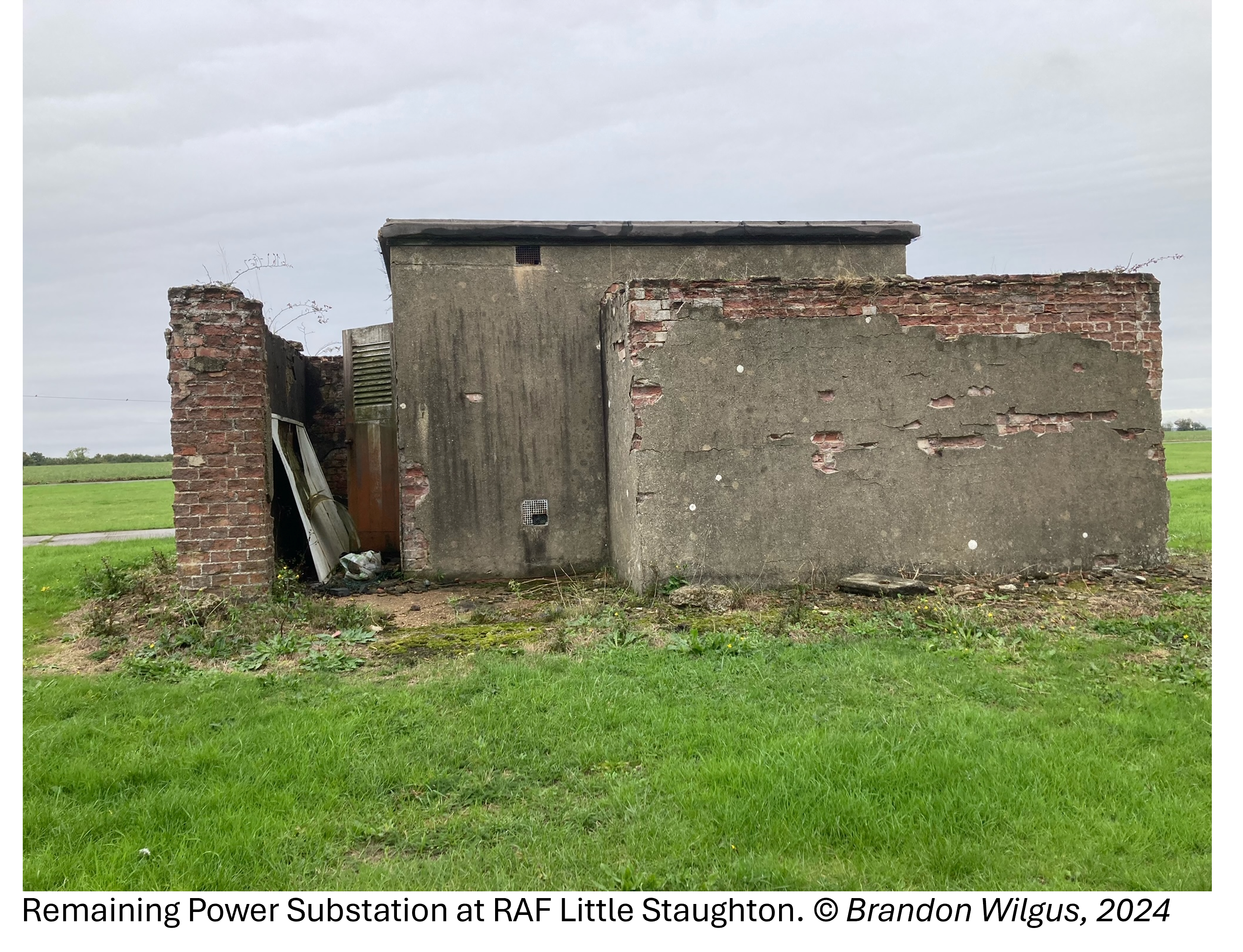
Today, light industry dots the former airfield and many of the original buildings, storage areas, hangars, and the control tower still stand. A solar power farm covers much of the land which once was the Royal Air Force station. Overgrown and scattered around the site are several old blast shelters, bomb dumps, petrol storage tanks and more. Hangars and barracks are still used by small businesses. Light, general aviation craft fly from the old runways.  Maybe, best of all in terms of preservation, the World War II control tower still stands and is in excellent shape, it is now a private residence. In fact, RAF Little Staughton is one of the best-preserved airfields I’ve visited, not that it has been kept as a museum, but its ongoing use has maintained the facility in an impressive state of repair after almost a century.

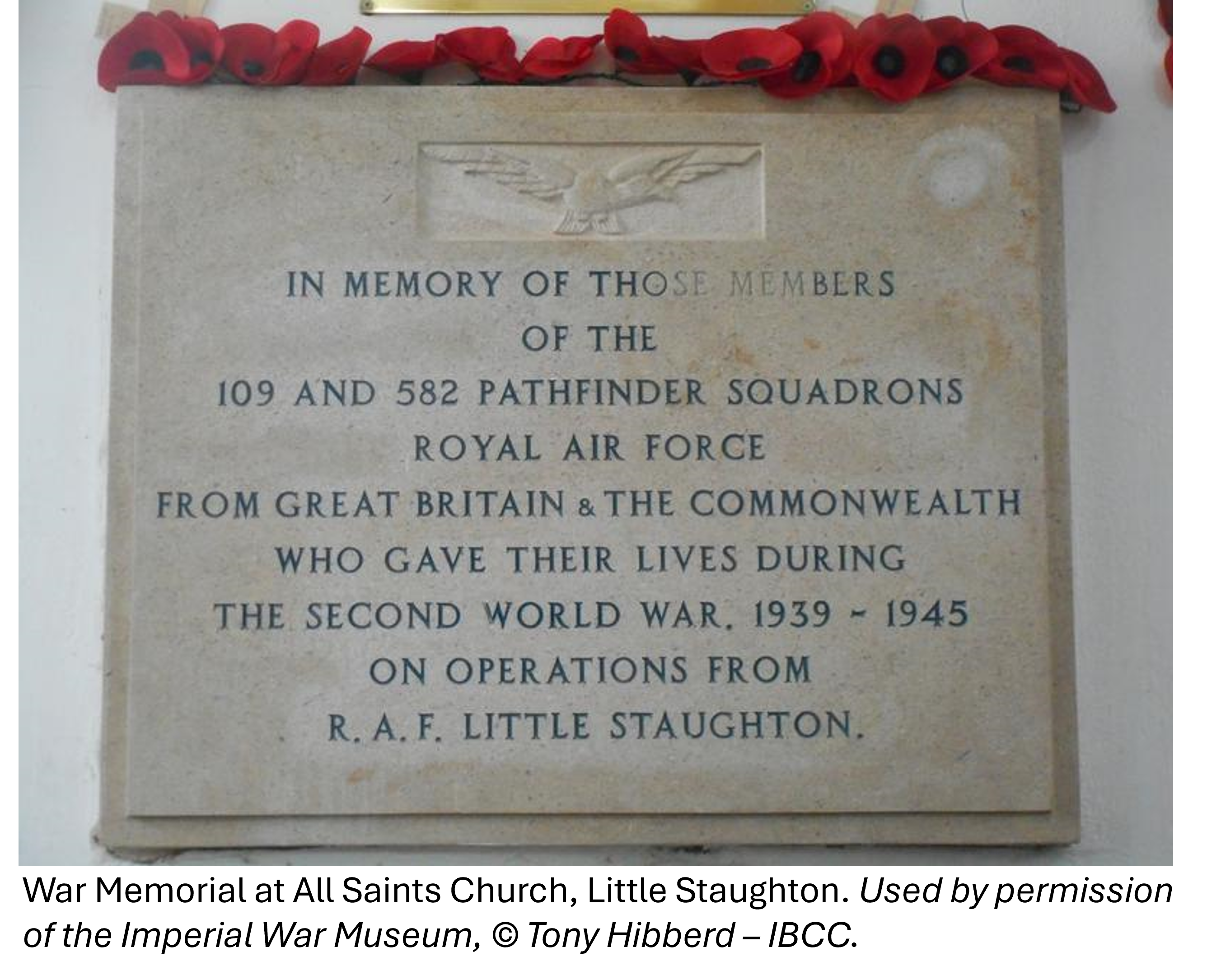
A mile or so from the former air station lies the Parish Church of All Saints, Little Staughton.  Interestingly, the church lies a bit distant from the village, as the original village was abandoned after a bought of bubonic plague and the survivors farther away from its original location in the Middle Ages.  A memorial in the Church on the south wall honours the men from 109 and 582 Pathfinder Squadrons who lost their lives, and the airfield’s Roll of Honour is on display as well. (Although the church is open on Saturdays and Sundays in the summer, you can ring ahead and arrange a time to visit throughout the year, just check the parish website.)

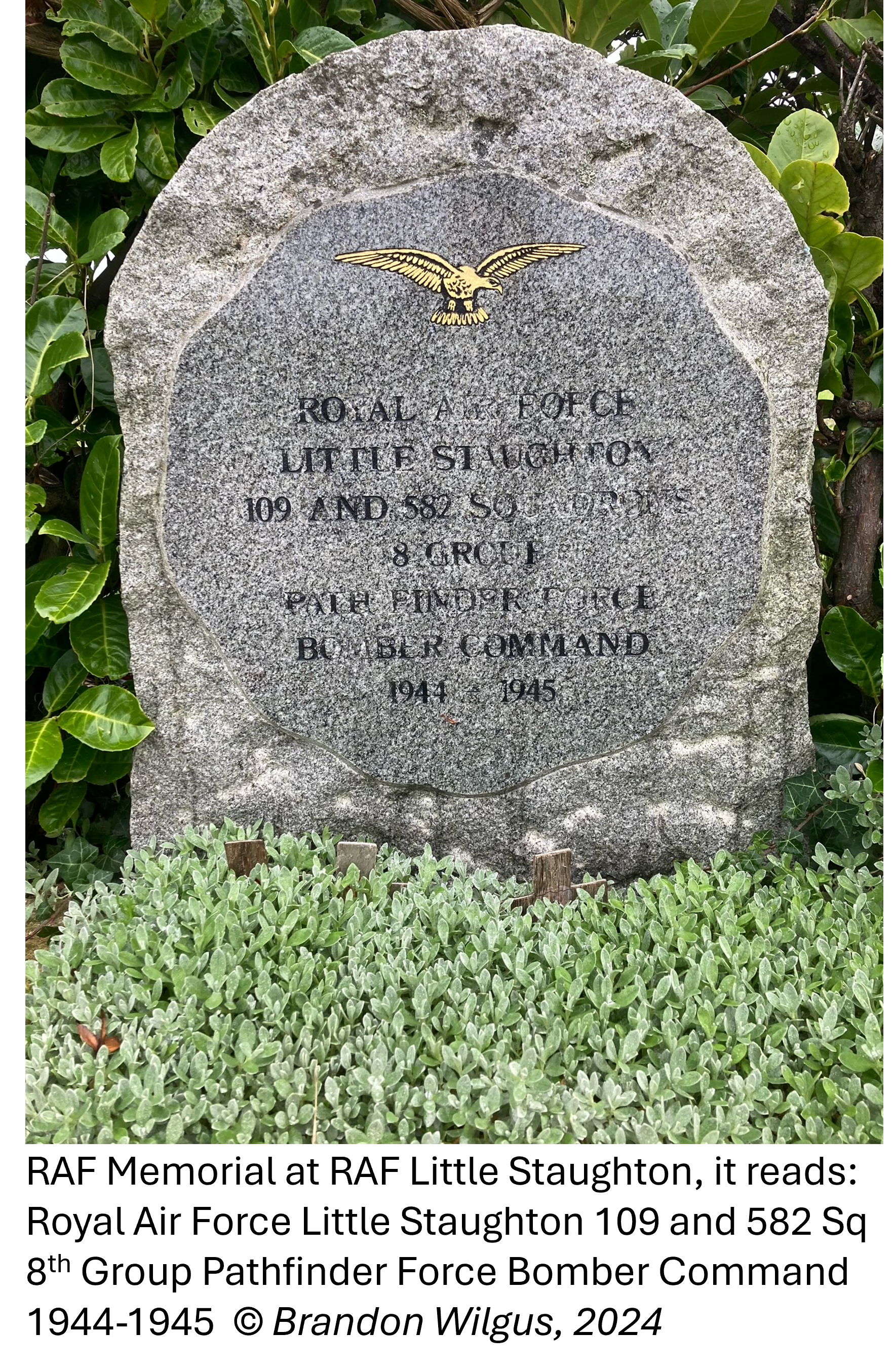
Located near the end of the runway is the RAF Little Staughton Airfield Memorial, obviously well cared for by the village. It recognized the sacrifice of the airmen who once flew from this field and lies on the cracked concrete which once made up the runway.

UPDATE: Aircraft Archeology: Mosquito Crash Site in the Dutch Countryside

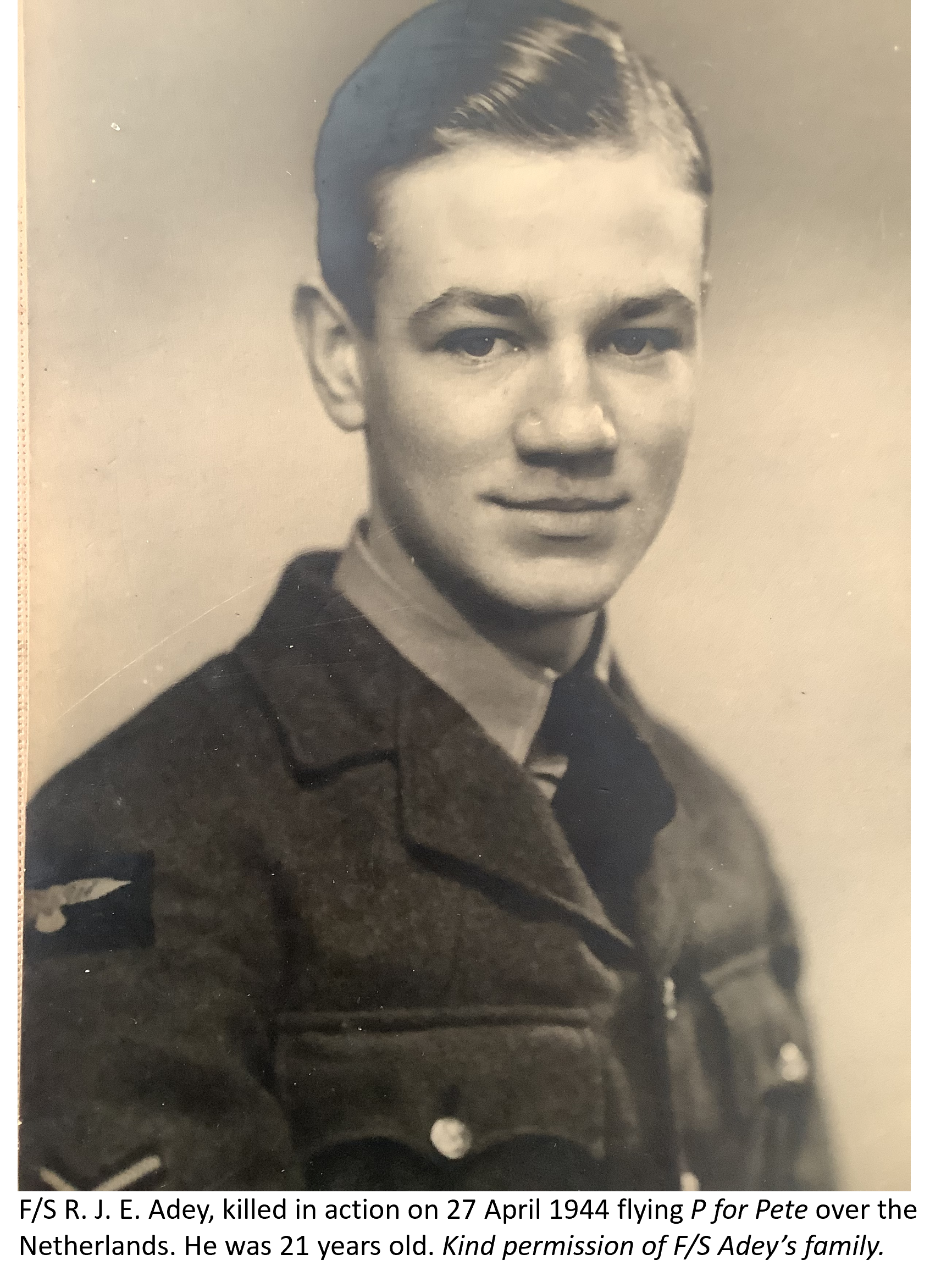
A few years ago, I wrote about the night of 27 April 1944, when an RAF Mosquito, P for Pete, was shot down along the Dutch-German border: you can read my original posting hereP for Pete was flown by Flight Sergeant Royston John Edward Adey with Flight Sergeant K. J. Pinnell as his navigator and co-pilot. The De Havilland Mosquito, a high-speed, two-engine, multi-role aircraft, mainly made of wood, was an exceptional aircraft during the war. During this evening, it was making a low-altitude, intruder bombing and strafing mission on Vliegbasis Twenthe (Dutch: Twente Airbase), a German fighter base in the eastern occupied Netherlands.   
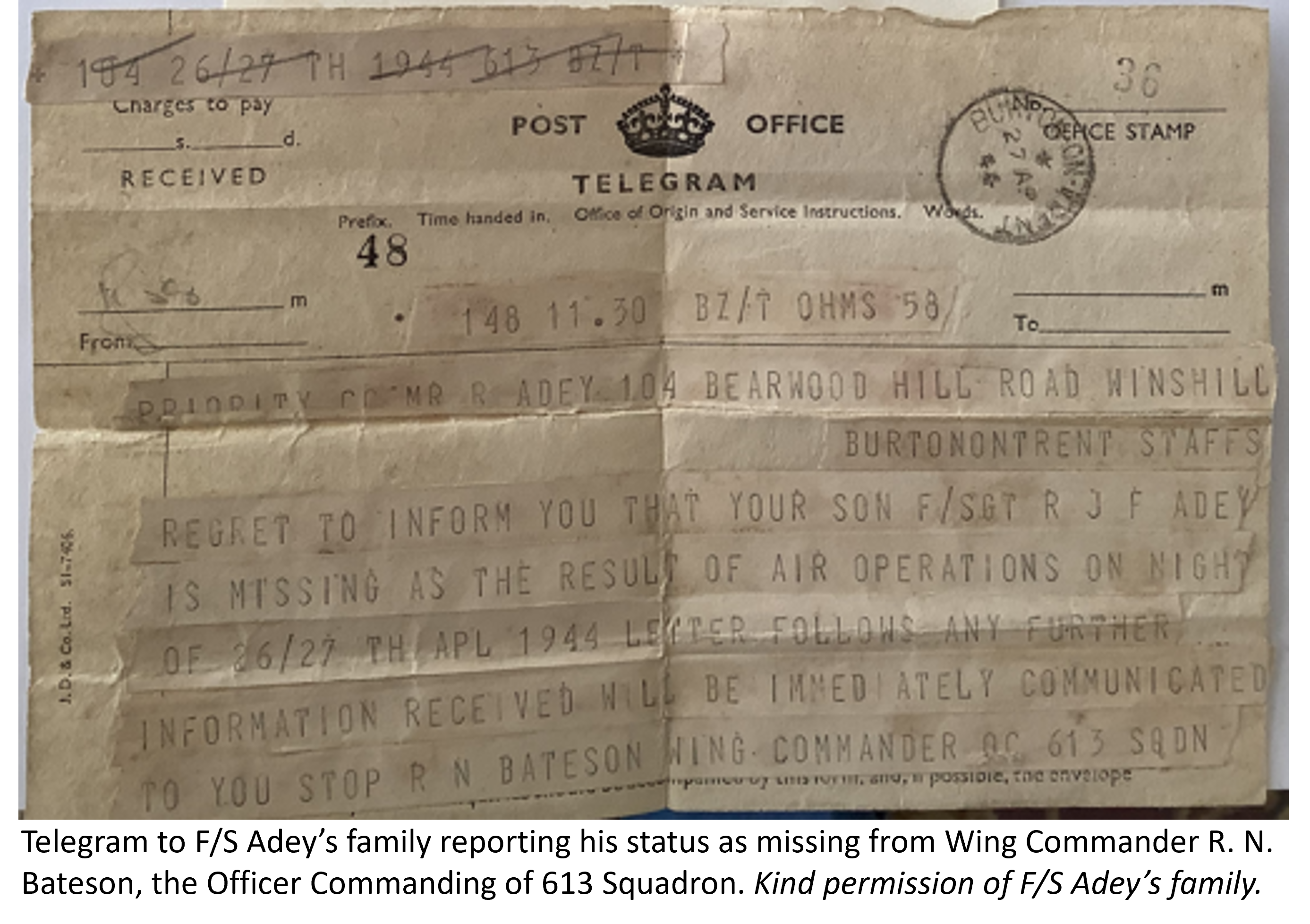
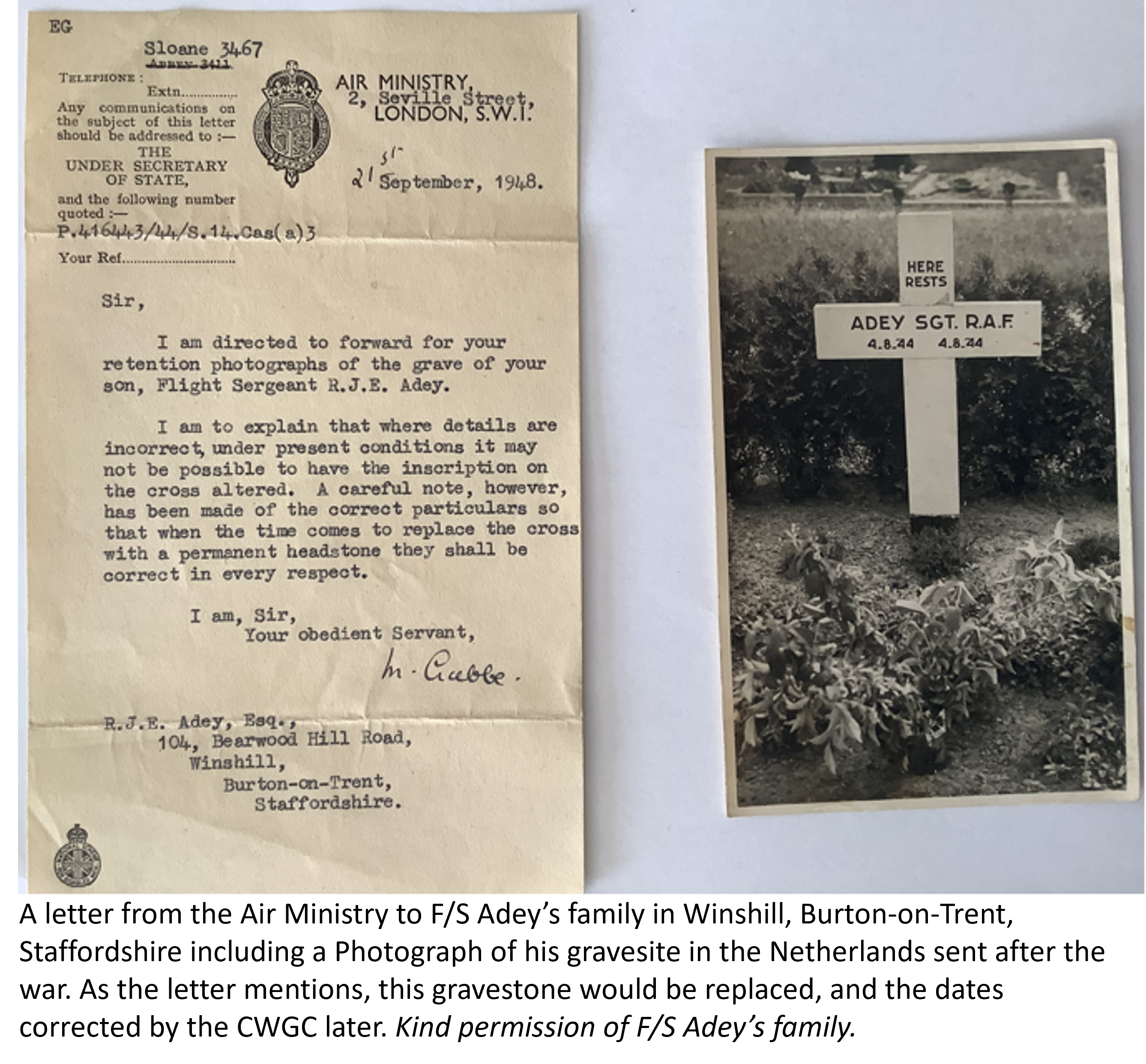
Both Flight Sergeant Adey and Flight Sergeant Pinnell were killed when their airplane crashed in the Haagse Bos (Dutch: Haagse Woods)After the crash, local Dutch farmers removed their bodies and they were both buried in a corner of the Enschede cemetery nearby, the Oosterbegraafplaats Enschede. The Commonwealth War Graves Commission (CWGC) maintains the two men’s graves in a quiet corner of the cemetery.  As I wrote a few years ago, Flight Sergeant R. J. E. Adey was 21 years old at the time of his death. His parents were Ronald John Edward Adey and Edith Rose Mary Adey, still living in their family home at Winshill, Burton-on-Trent in Staffordshire.  In Winshill, at St. Mark’s Parish Church there are two memorials marking the names of men from the village who fell in the First and Second World Wars, Flight Sergeant Adey’s name is honoured there.

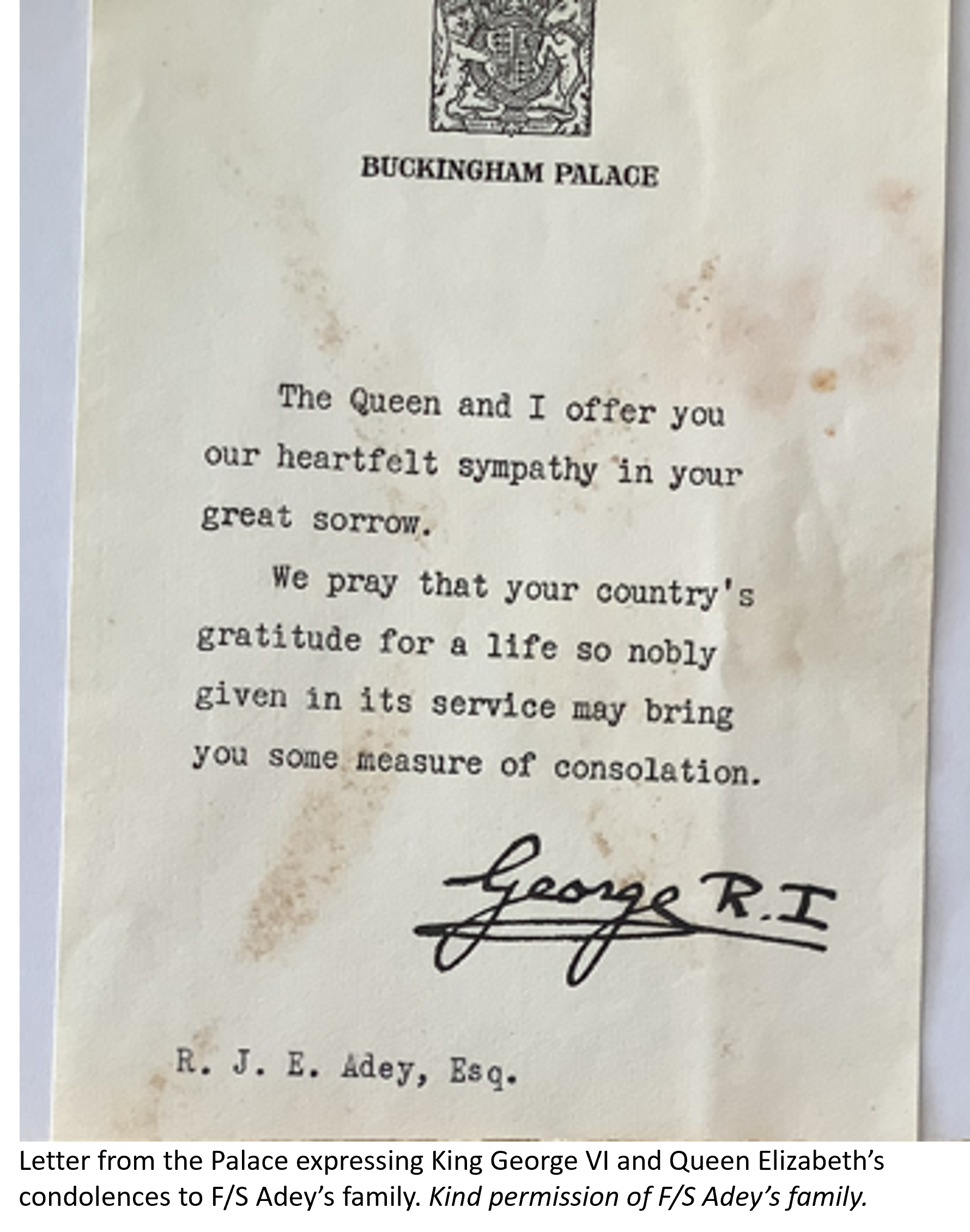
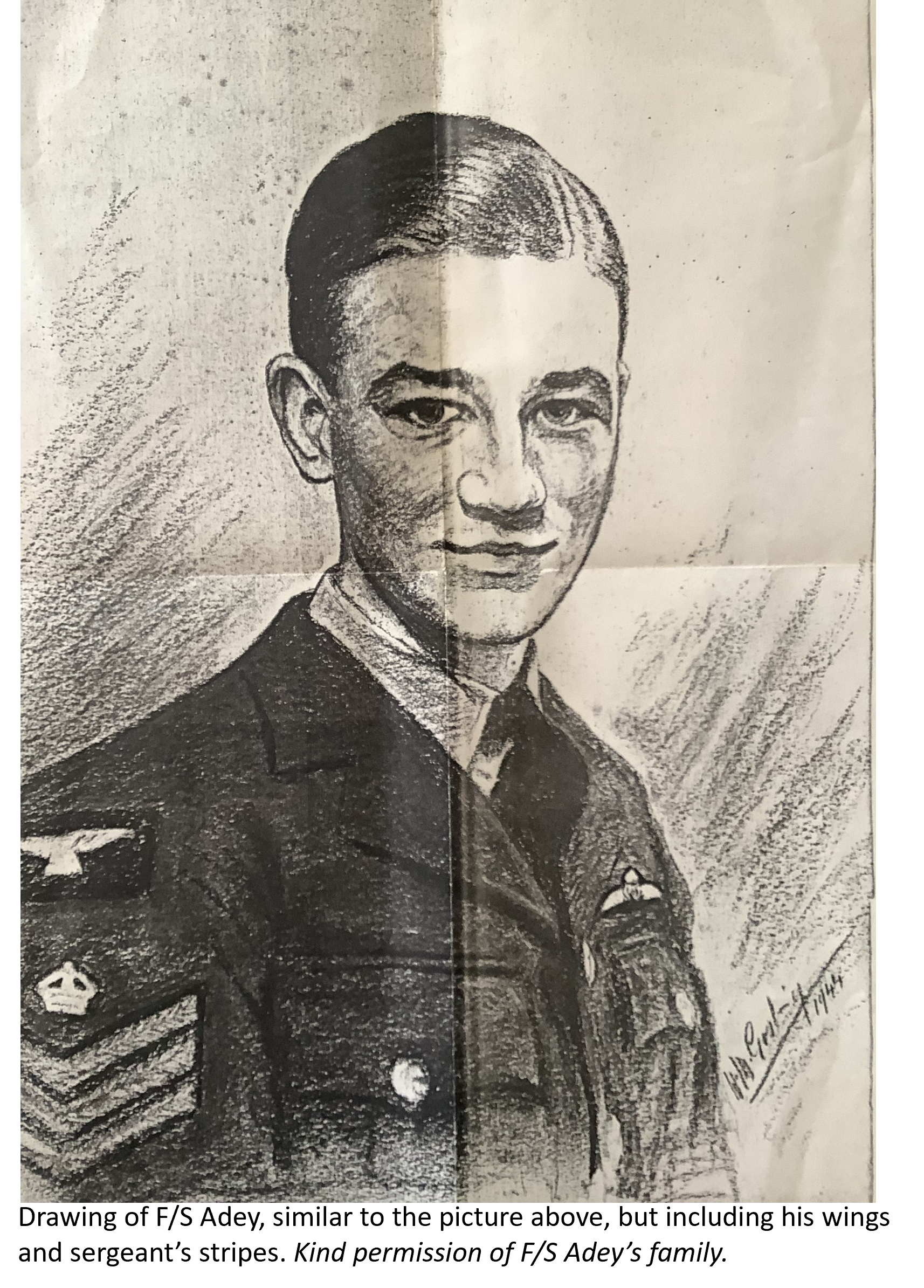
Recently, I received an email from a family member of Flight Sergeant Adey, Lt Colonel Mike Southworth, whose mother was Rosemary Adey, Flight Sergeant Adey’s sister. Colonel Southworth had several items relating to the loss of Flight Sergeant Adey during 1944, and kindly provided those important documents to be posted here in his memory.  A special thanks to Colonel Southworth and his niece Claire for letting me share these precious items with you.

HMT Cambridgeshire (FY-142), an Armed Trawler during the Second World War

While several Royal Navy vessels throughout history have been named after the City of Cambridge and people from the area, there has only been one ship named after the entire county: His Majesties Trawler Cambridgeshire, a submarine chaser from the Second World War. Laid down as a 442-ton fishing vessel and launched in 1935, she was requisitioned by the Royal Navy in August 1939. Her conversion into a warship occurred in the desperate months of rapid military expansion before the invasion of Poland by Nazi Germany. She was converted by the Royal Navy into an anti-submarine role by removing her fishing gear and converting her storage holds into crew berthing and a magazine, adding a 4-inch deck gun forward, and installing depth charge racks to drop explosives off the stern of the ship. She was armed with a navy crew. By the end of the war, over 200 armed trawlers like HMT Cambridgeshire would be hunting submarines, laying and sweeping mines, and patrolling the approaches to the United Kingdom and the waters around Europe. A dangerous but important role was played by these small vessels: the Royal Navy lost 72 Armed Trawlers during the war and hundreds of sailors were lost. 

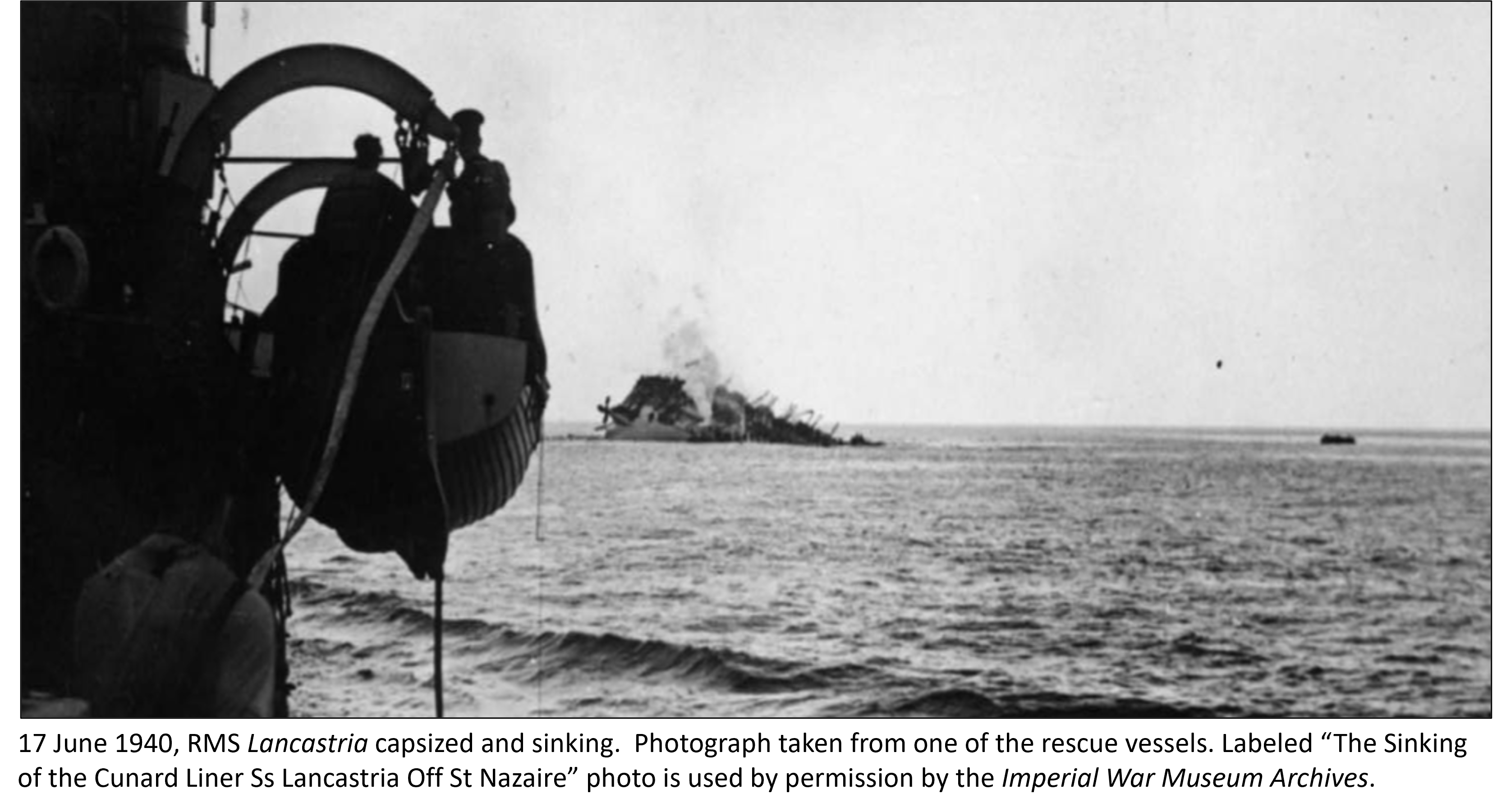
HMT Cambridgeshire would likely be remembered only as one of the many capable but largely forgotten small combatants from the Second World War except for her experience on 17 June 1940, when she rescued over 800 civilians and soldiers from the RMS Lancastria, sunk by the German Luftwaffe during the desperation evacuation of France.    

The RMS Lancastria, a passenger liner which had been converted into a troop ship, loaded several thousand fleeing civilians and soldiers in her hold, throughout her interior, and along her weather decks as part of Operation AERIAL – the evacuation of remaining Allied military personnel from Western France. The panic in St. Nazaire, France, as the Nazis rapidly approached and the French Government was capitulating led to a frenzied loading of all available ships for evacuation to England. RMS Lancastria, designed to hold 2,180 passengers and 330 crew was part of this evacuation. Her Captain felt the ship could hold up to 3,000, but in the desperation to load and depart St. Nazaire an estimated 5,500 and 7,200 people were brought onboard – no ships manifest was recorded, time was too short. The RMS Lancastria set sail and was almost immediately under attack by German Ju 88 bombers. She was hit by several bombs and sunk within 20 minutes.  It is still unknown, but somewhere between 4,000-7,000 refugees, military personnel, and crew may have died in the sinking. The overloading of the ship ensured people could not escape. There were not enough lifeboats, there were far too few life preservers. The loss of the RMS Lancastria is the worst maritime catastrophe in the history of the United Kingdom. 

Thankfully, 2,477 men, women, and children were rescued by local ships coming to the rescue, with HMT Cambridgeshire saving more than any other.  She brought between 800 to 900 survivors out of the cold waters and choking fuel, bringing them onboard over several hours under fire. Captain W. G. Euston, the Cambridgeshire’s Commanding Officer, maneuvered the ship while under machine gun fire from strafing German aircraft.  He later recommended many of his sailors for decorations, specifically Stanley Kingett, who kept maneuvering the ship’s launch away from enemy planes to save hundreds of lives, and William Perrin who maintained machine gun fire on low-flying German planes, buying time for the Cambridgeshire’s rescue efforts. In fact, the ship’s machine gunners later claimed to have shot down one German aircraft during the rescue. Later that evening, still covered in discarded clothing, bunker fuel, and the discarded items of the hundreds she had rescued, HMT Cambridgeshire returned to St. Nazaire to take the Commander of the British Expeditionary Force, Lieutenant General Alan Brooke, and his staff from France.

HMT Cambridgeshire would later participate in Operation NEPTUNE, the naval portion of the D-Day landings in June 1944.  She hunted for submarines as the British, Canadian, American, and Free French forces landed across Normandy, assisting in the return of British forces to France whom she had helped evacuate just four years earlier.

After Victory in Europe Day, the Royal Navy sold HMT Cambridgeshire at the end of 1945, and she converted back to a humble fishing ship. The proud warship’s name was changed to the Kingston Sapphire. She fished the North Sea and Atlantic until she was finally scrapped in Brugges, Belgium in 1954.

RAF Brampton Grange and the First Air Division in World War II

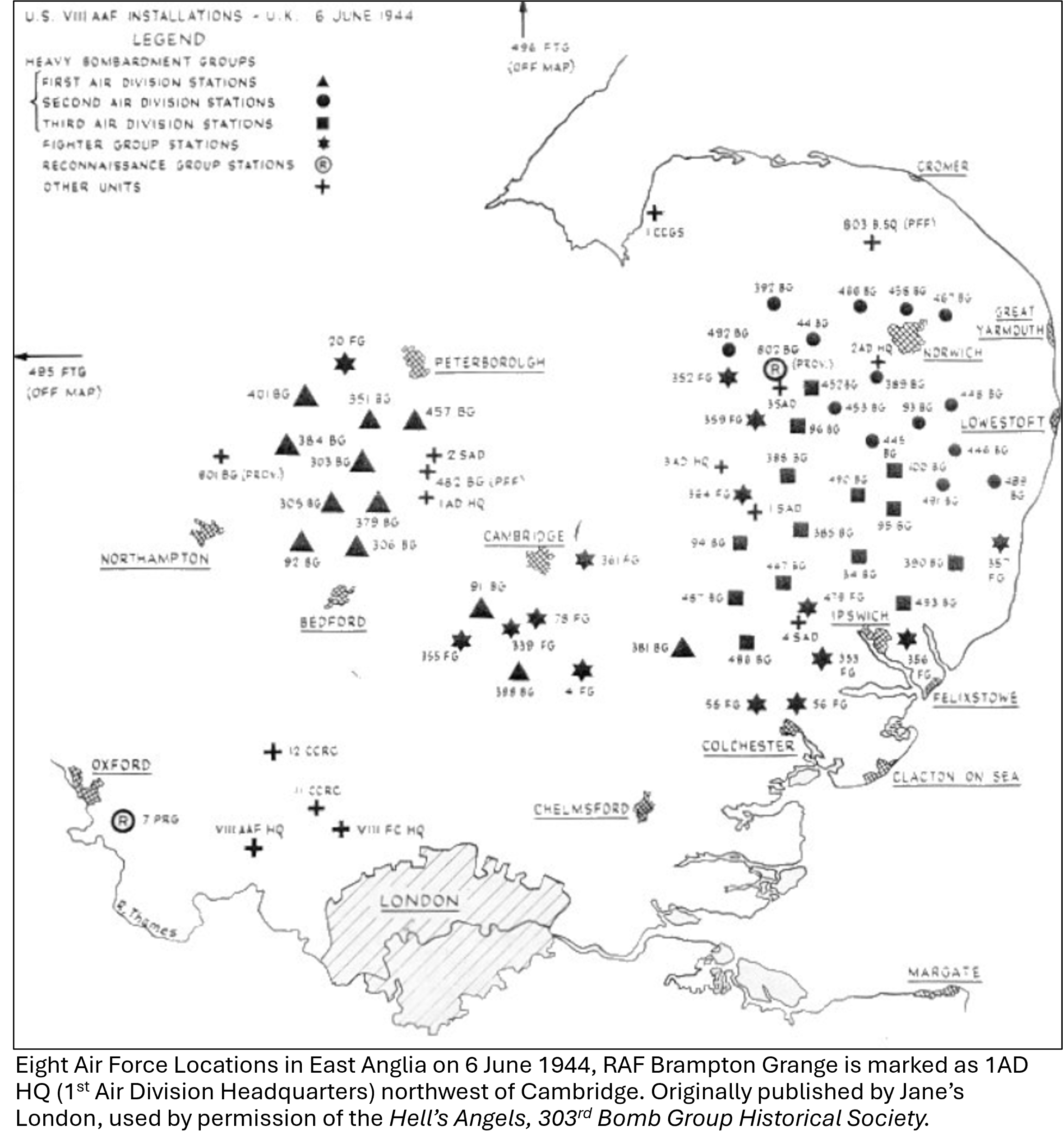
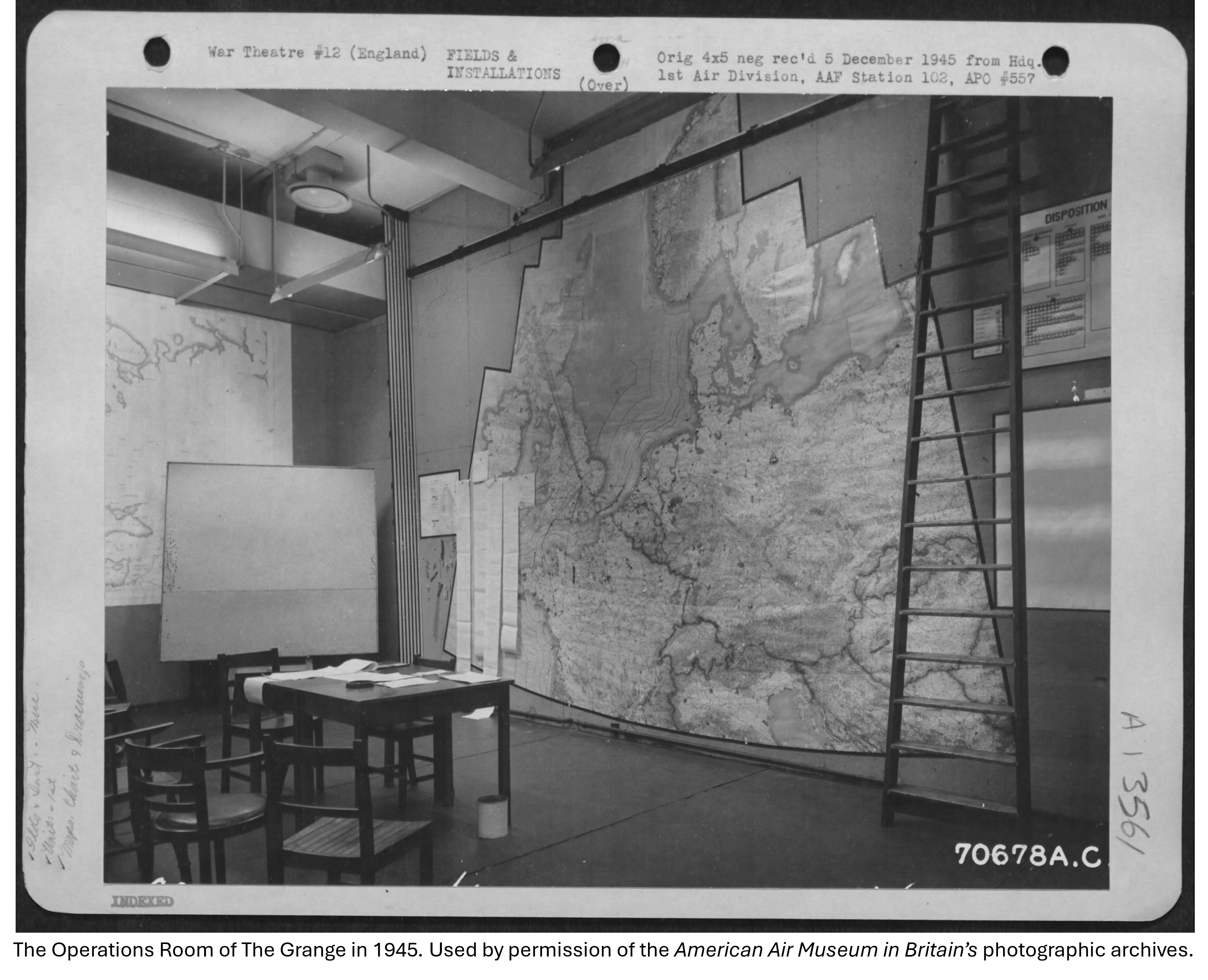
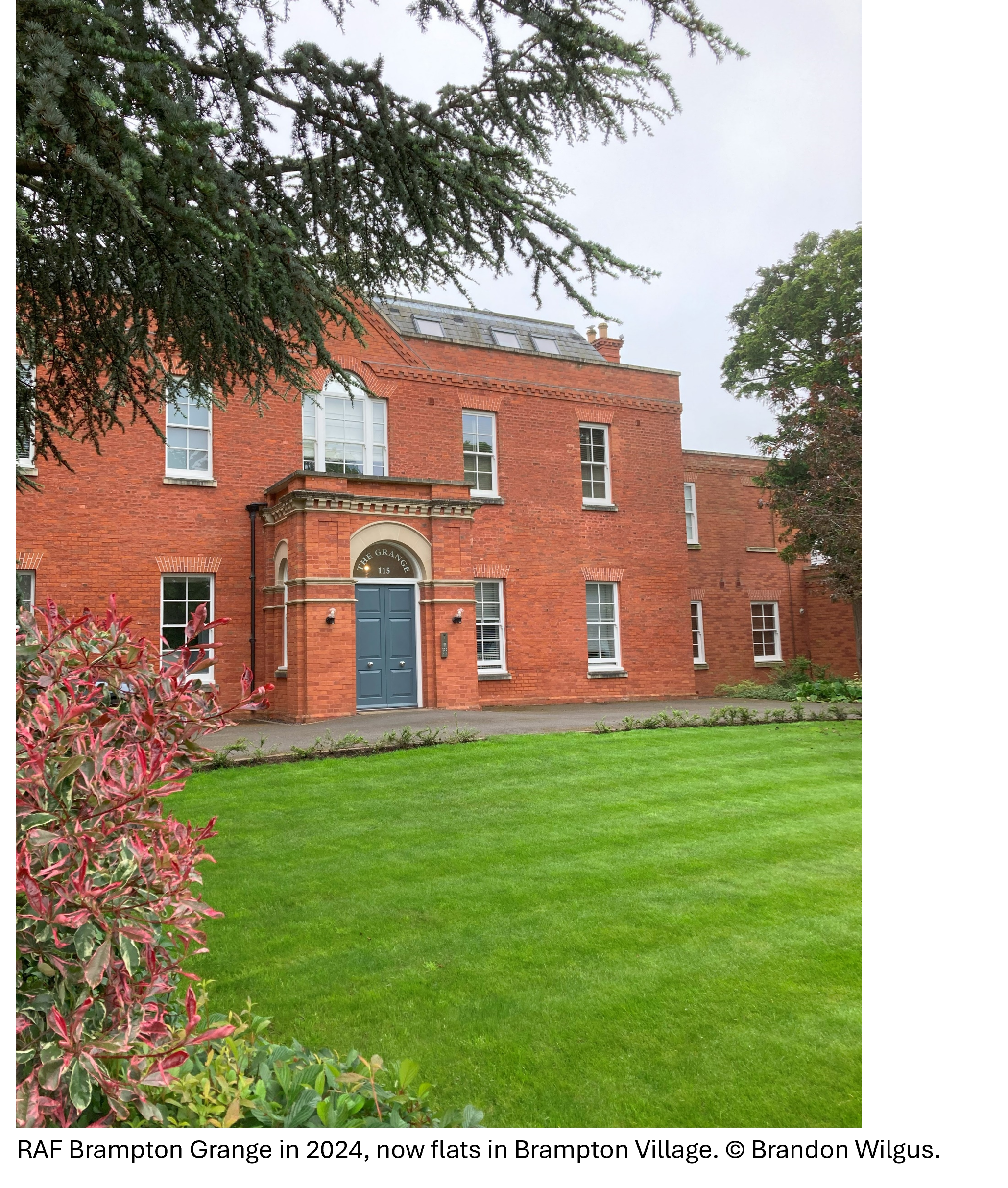
In the village of Brampton, Cambridgeshire lies a large, Georgian house built in 1773 called The Grange.  Despite its early use as a girl’s school in the 19th Century and its connections with Lady Olivia Sparrow, the philanthropist and early evangelist, it is the Grange’s use in the Second World War as the headquarters of the 8th Air Force’s 1st Air Division that most interests me.

Several years into the Second World War, the United States was attacked at Pearl Harbor and was quickly at war with the Axis Powers.  Settling on a Europe First policy, the US Army Air Corps immediately began moving heavy bombers to England, primarily the Boeing B-17 Flying Fortress and Consolidated B-24 Liberator, 4-engine bombers.  In coordination with RAF Bomber Command, it was decided that the RAF would focus on night bombing missions while the US Army Air Corps would focus on high-altitude, precision daylight bombing.  As forces and capacity grew, the goal was to move the combined British and United States strategic bombing campaign against Germany and occupied Europe into round-the-clock operations.  This obviously would require an enormous amount of planning, plus operational command and control to be effective, and that is where The Grange in Brampton played its part in World War II.

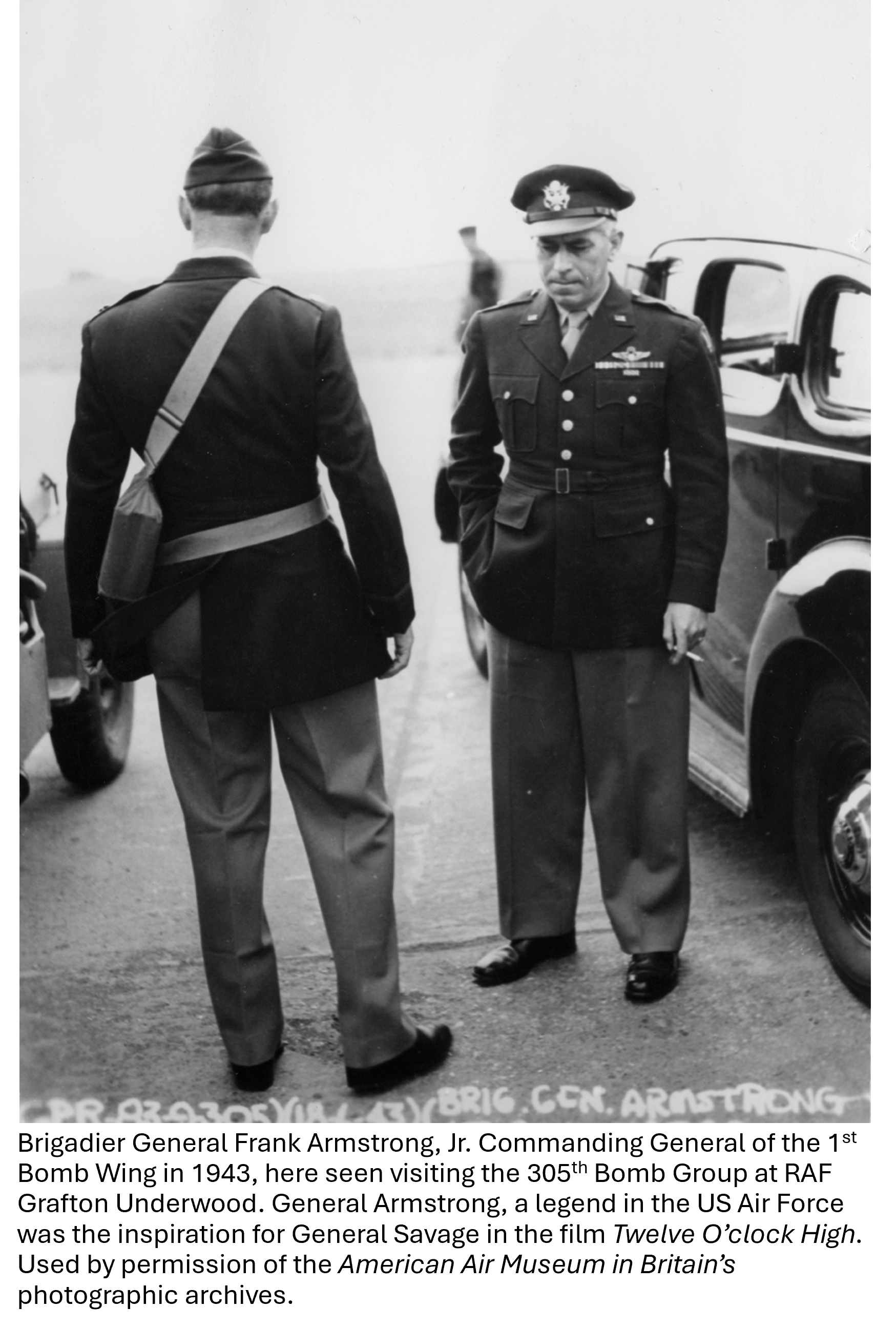
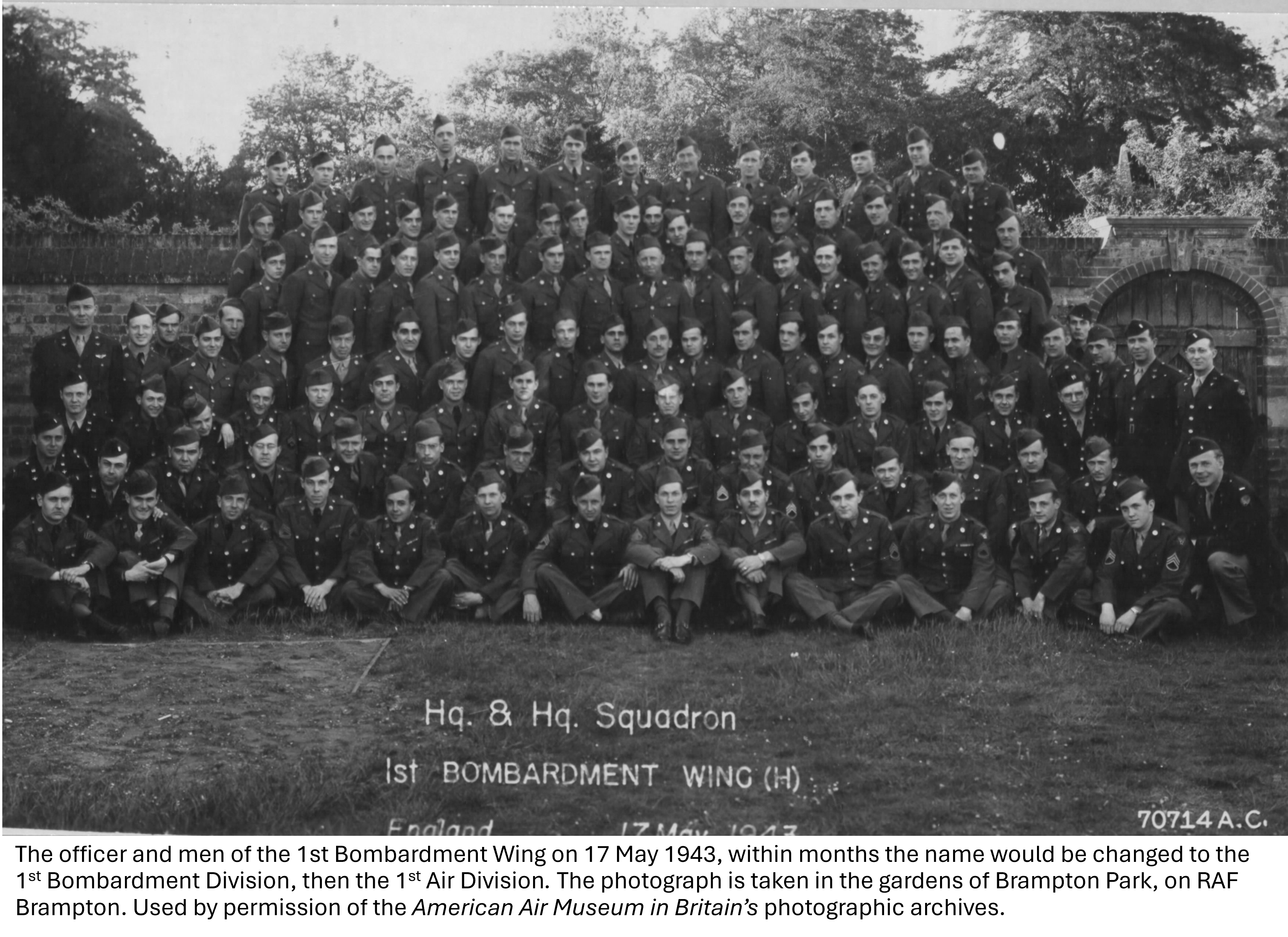
The US Army Air Forces in World War Two were organized under a Numbered Air Force (Lieutenant General, three-star Commander), then a Division (Brigadier General or Major General, one to two-star Commander), then a group (Colonel Commanding), and then squadrons (Major Commanding).  More specifically, the US Bombers in England were organized under the 8th Air Force at RAF Daws Hill located near Bomber Command at RAF High Wycombe. 8th Air Force was divided into three Divisions and the First Bomber Division was headquartered at the Grange in Brampton, referred to as RAF Brampton Grange in official documents beginning in 1943.

Almost all the bomber and fighter groups and squadrons in Cambridgeshire were commanded by the First Bomber Wing in Brampton, renamed the First Bomber Division, and finally renamed in 1944 the First Air Division.  By the war’s end, the 8th Air Force was spread over 112 airfields across East Anglia, flying B-17 and B-24 heavy bombers, B-26 Marauder medium bombers, P-38 Lightning, P-47 Thunderbolt, and P-51 Mustang fighters, as well as Spitfires and Mosquito bombers provided by the RAF.  Throughout the war, the 8th Air Force dropped 700,000 tons of bombs on Germany and occupied Europe, flew 600,000 bomber and fighter sorties, and destroyed over 15,000 enemy aircraft by air-to-air engagements, ground strafing, or by bomber crew engagement.  35,000 men and women would serve with the 8th Air Force during the war, with many thousands never returning home. Much of that enormous effort was planned and executed from the Grange in Brampton.

At the war’s end, the headquarters and staff were moved on 25 April 1945 from The Grange in Brampton to RAF Alconbury, a few miles away, where the US Air Force still operates a wing commanding several bases and facilities today. After 1945, The Grange operated as the RAF’s Technical Training Command, responsible for organizing aircraft maintenance and aircrew training. Then in 1980, released from the RAF, it became a restaurant and hotel in the village of Brampton for many years, before being converted into flats in 2013. 

Today, with no historical marker or blue disc to identify it, most people are unaware of the remarkable wartime history of The Grange in Brampton.  However, it is certainly worth a visit along the Brampton High Street new Huntingdon in Cambridgeshire.

Historical Photos from RAF Molesworth and the 303rd Bomb Group (Heavy)

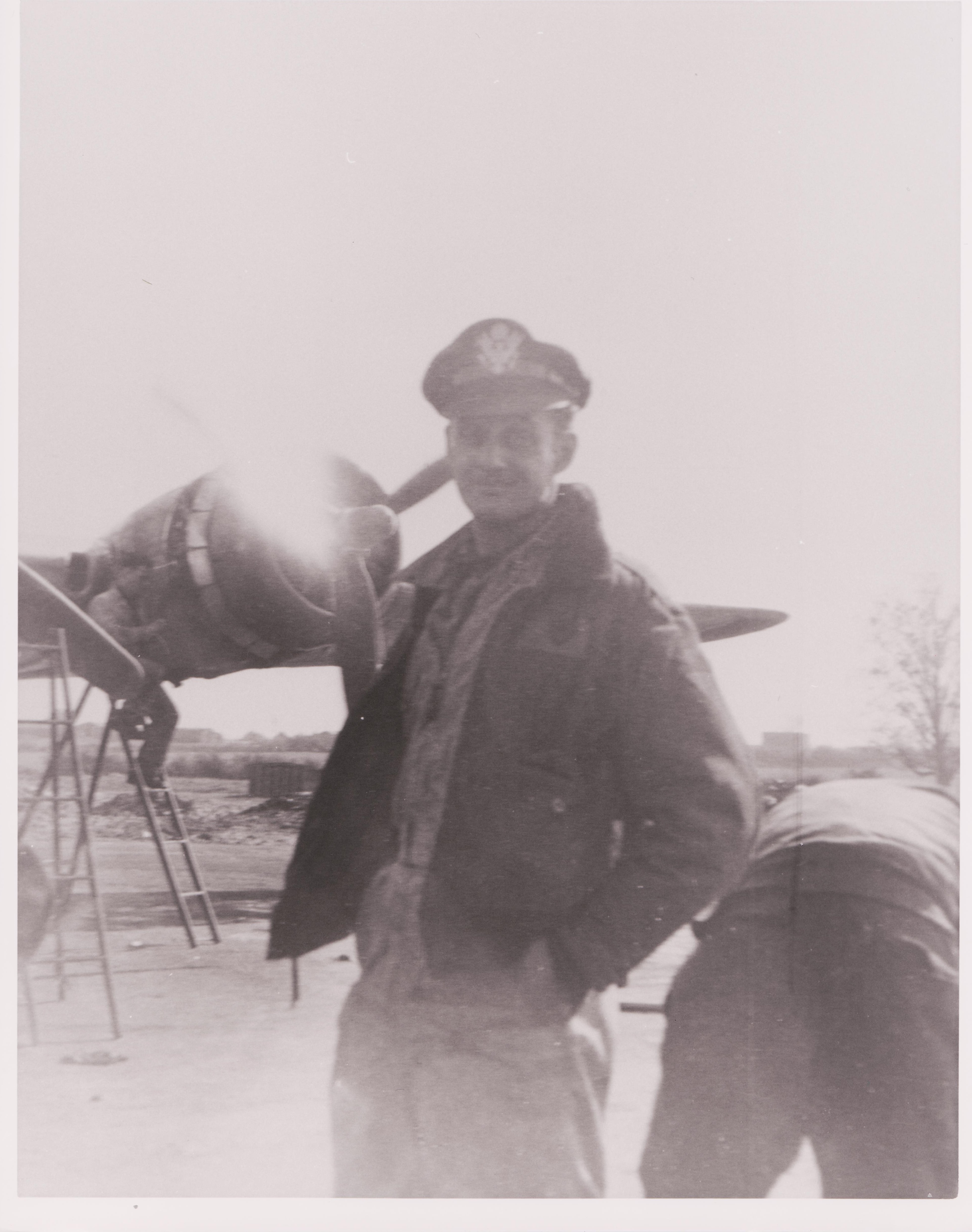
An amazing thing recently happened.  A friend of mine, stationed at RAF Molesworth, the old airbase of the 303rd Bomb Group (H) in the western part of Cambridgeshire, came by my office.  He brought me a box of old photographs – all photos from airmen and officers of the 303rd, part of U.S. 8th Air Force, taken during the Second World War at RAF Molesworth.  He asked if I wanted them.  Of course! I was amazed.  They are wonderful historical records.  On top of the stack of photos – there must be 70 – there was a handwritten note, which read: “Dupes of WWII photos donated by Malcolm Magid, plus copies from old JAC XO, CAPT Mewbourne.” This note tells me quite a few things, namely the photos were in the possession of the Joint Analysis Centre (JAC) Executive Officer (XO), who was a naval officer (the acronym CAPT is only used for a U.S. Navy Captain, the other branches of the U.S. military use different acronyms: Capt., CPT, or Capt).  The JAC command has only been at Molesworth since 1990 – so that gives some idea of the timeline of the photos ownership.

More importantly, Mr. Malcolm James Magid was a B-17 co-pilot who survived the war and passed away in Atlanta, Georgia on 16 May 2012 at the age of 88.  He was stationed at RAF Molesworth and flew 35 missions over Germany during the War.  He was highly decorated, even being made a Chevalier of the Légion d’honneur by the President of France for his aid in the Republic’s liberation. 

2LT Magid
2LT Malcolm Magid Service Photo, thanks to the 303rd BG(H) Historical Society

For the photos themselves, I asked myself what to do?  First, I thought I will scan them in and post them here as a record of the brave men who served at RAF Molesworth, and in honour of Mr. Magid.  Secondly, I will attempt to find Mr. Magid’s family (an obituary published in a local paper lists his descendants) and see if they would like these photos returned.  If that effort is unsuccessful, I will contact the U.S. Air Force Historical Society and the 303rd Bomb Group Historical Society to see if the photos can be added to their collections.  More to follow.

For now, please enjoy these photographs.  I think you may feel as I do that these men are all so very young…

2LT Magid

This appears to be 2LT Malcolm Magid standing infront of a B-17 undergoing maintenance.

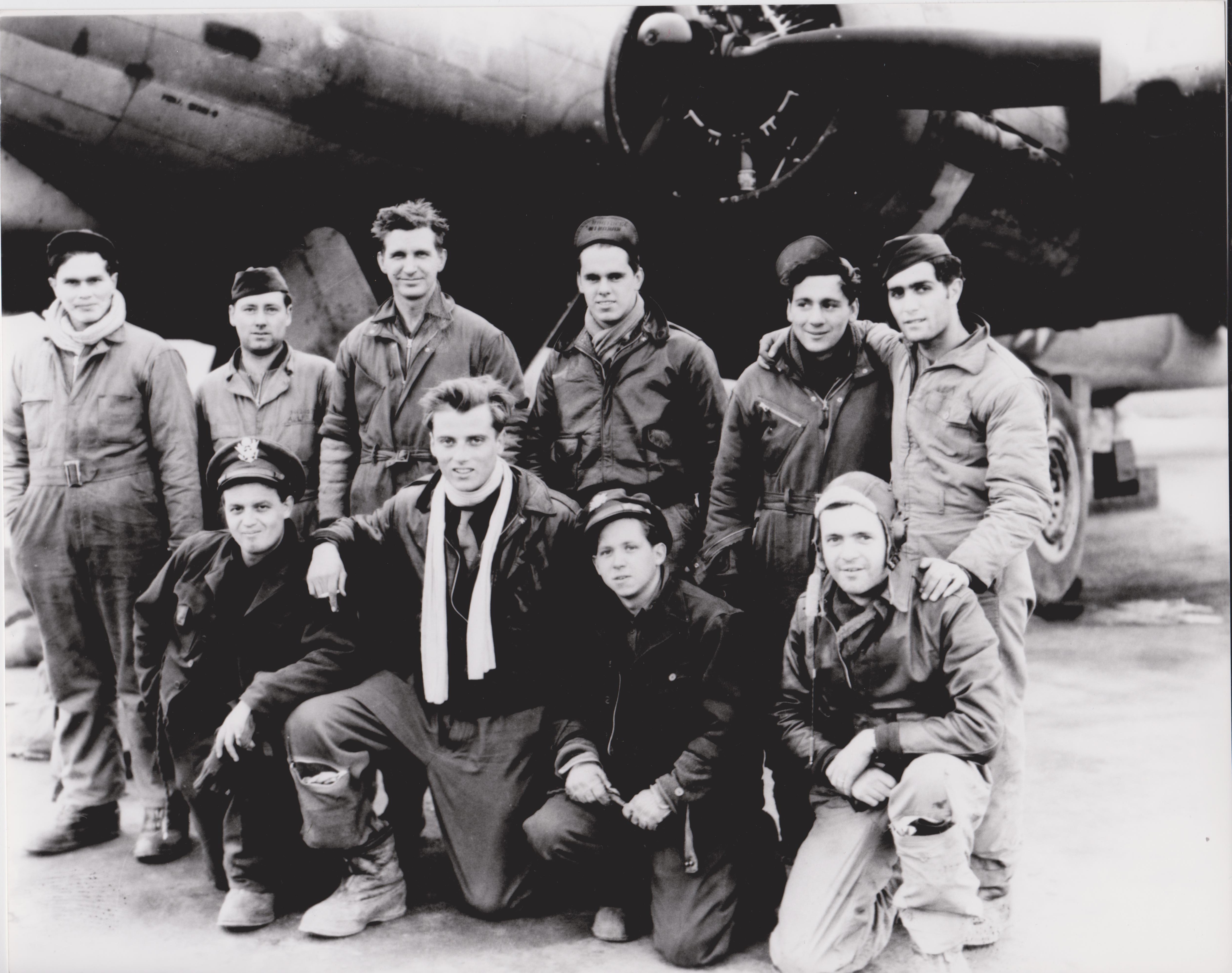
Air crew in front of B-17
B-17 Crew in front of aircraft.  I am (moderately) confident that 2LT Magid is kneeling in the front row on the far left, wearing the peaked cap. The officer in the front row, third from left, is striking in how young he looks.

B-17 Cockpit
B-17 Cockpit.

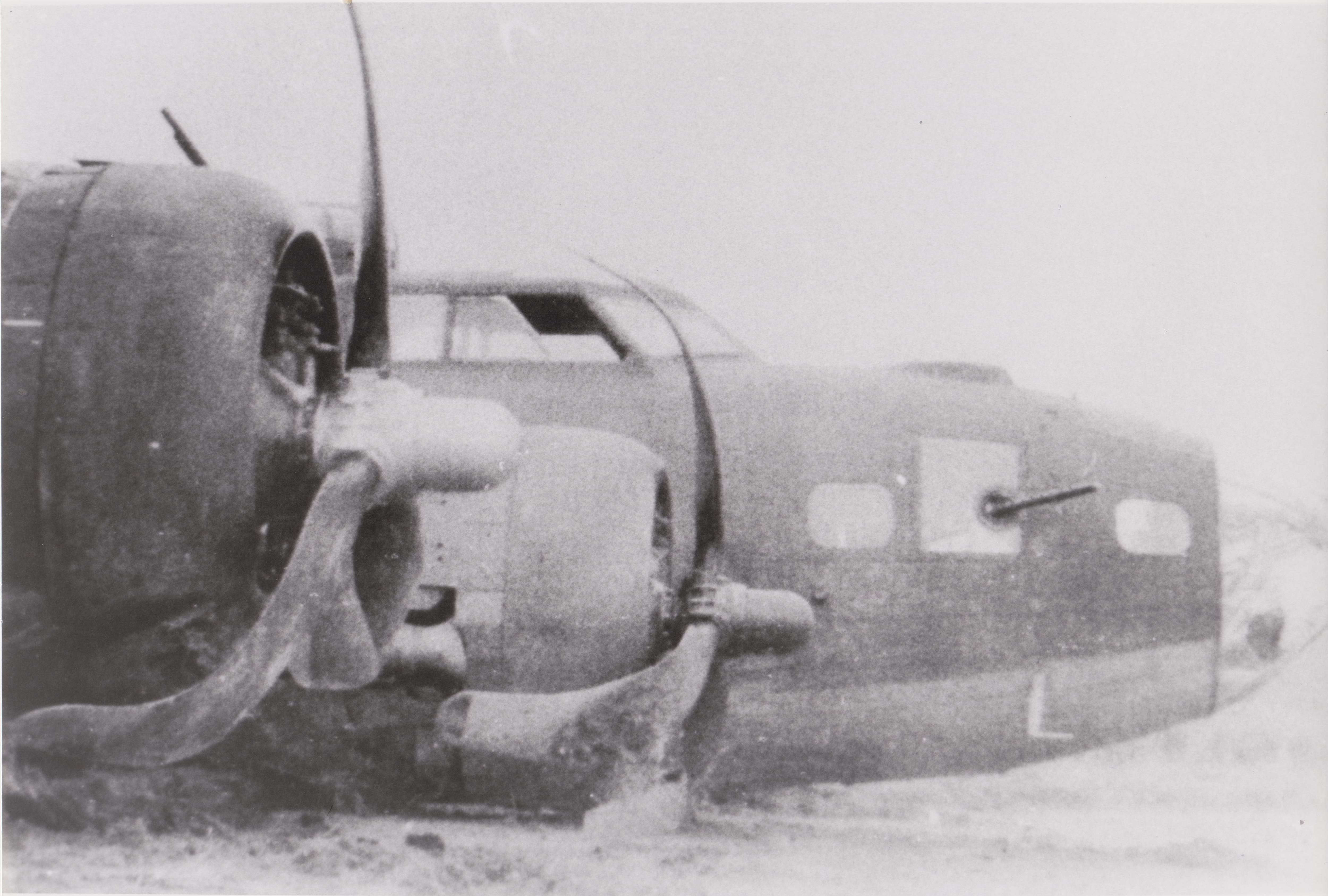
B-17 Wheels Up Landing
Photo of a B-17 after making a wheels-up landing (the aircraft is in remarkable shape).

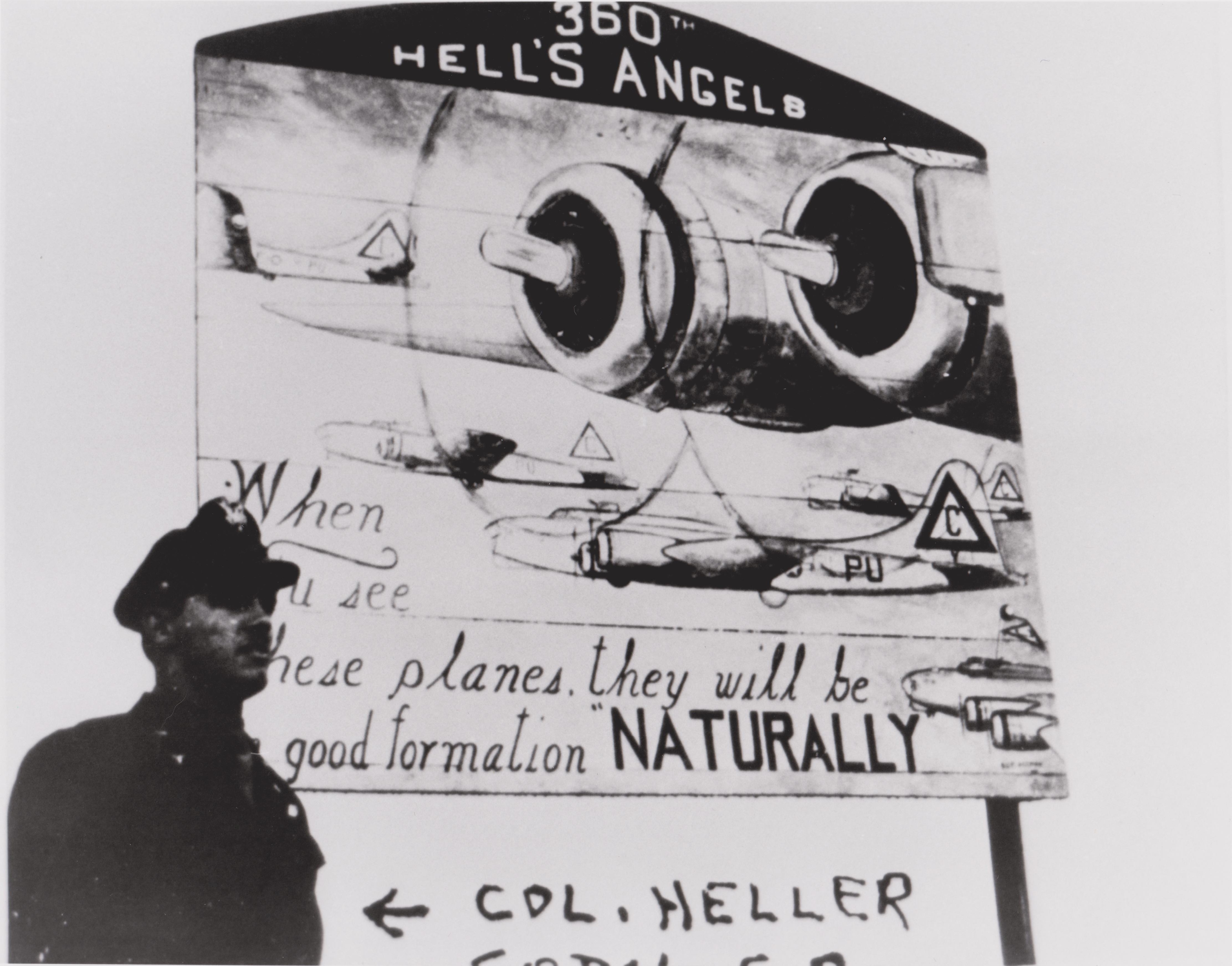
Hell's Angels Board with Colonel
Written on the negative is “COL. Heller… [illegible]” Colonel Heller was the 360th  Squadron Commanding Officer, a subordinate unit to the 303rd Bomb Group (H).

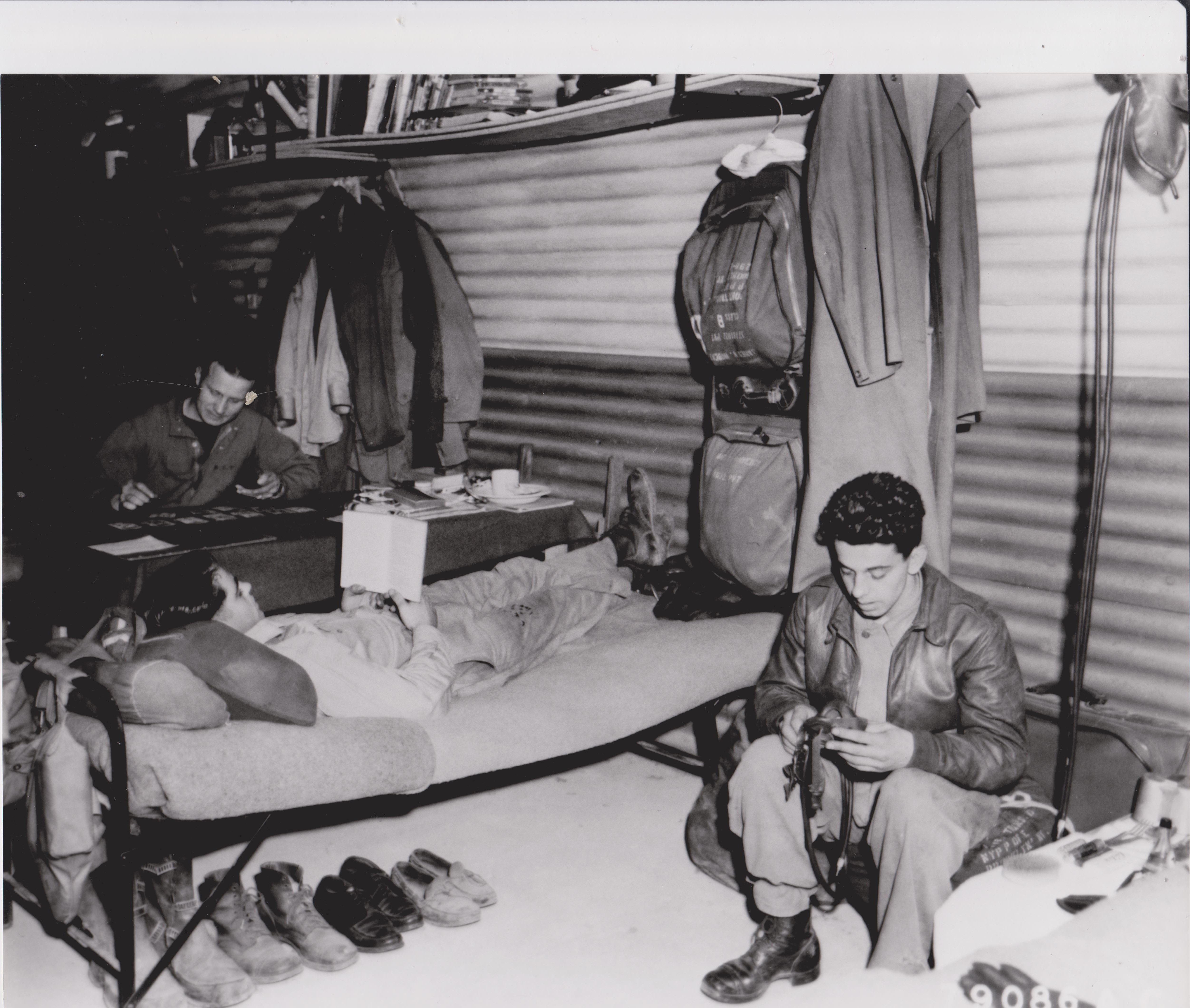
Inside the Nissen Hut
Inside a Nissen Hut.  Of note: under the cot are flying boots, uniform dress shoes, and tasselled loafers.  The airman in the background is playing solitaire.

Aircraft Archeology: Mosquito Crash Site in the Dutch Countryside

During the night of 27 April 1944 a de Havilland Mosquito night attack fighter from 613 Squadron was airborne for a raid on the German fighter airfield at Vliegbasis Twenthe  (Dutch: Twente Airbase) in the eastern border area of the Netherlands. The Mosquito was on an intruder mission, a low-altitude strafing/bombing run on a fighter base in the darkness.  Coming in low and from the east the Mosquito was only two kilometres from the Luftwaffe base when (according to local accounts) search lights were switched on and anti-aircraft fire began, blinding Flight Sergeant R. J. E. Adey and his co-pilot K. J. Pinnell, who were brought down into the trees in the Haagse Bos (Dutch: Haagse Woods),  both men dying during the crash

613_Squadron_Mosquito_FB.VI_at_RAF_Lasham_June_1944
DeHavilland Mosquito FB.VI of RAF 613 Squadron at RAF Lasham, June 1944. This photo was taken two months after the crash in the Haagse Bos. Notice the Recognition or “D-Day” stripes on the aircraft. By Ringwayobserver – Licensed under CC BY-SA 3.0 on Wikimedia commons.

This area, the Haagse Bos, happens to lie near my in-laws home in Enschede, the Netherlands, and as the years have passed, I have often found myself hiking in the woods. A small wooden marker on the path, near the forest where the Mosquito crashed on 27 April 1994 is there to remind us of the sacrifice by these two men on a night-time raid in a almost completely wooden, high speed, light bomber.  I felt compelled to learn more about the crash. I wanted to find the spot where the plane went down, aware that very little of the aircraft would remain, since the de Havilland Mosquito was designed for speed and was mostly a wooden construction bomber built around a metal frame.

Slide1
I’ve oriented the below photographs onto the aerial photo from the late 1940s mentioned. #3 is the location of the Mosquito crash site. The photograph is oriented with North at the top of the photo, the Vliegbasis Twenthe is 2 km WSW of the crash site.

Aircraft archaeology efforts paid off quickly, as the sacrifice of the two British fliers who crashed here in 1944 were quietly honoured at the time and have been respectfully remembered by the citizens of the Dutch city of Enschede since.  An aerial photograph from the late 1940s identified the crash site, approximately 150 meters from a small wooden marker that records the crash.  From there, using the overhead photo and a picture from the 1980s which shows scarring in the trees from the Mosquitoes’ crash, I could vector in on the site.  It was during these exploratory efforts that we discovered a fresh bouquet of flowers last April, on a cold afternoon, lying next to the wooden marker near the site. The flowers were a moving, quiet act of gratitude to the two men who flew the aircraft from an anonymous person, left 71 years after their death.

This aerial photograph shows the area from above, taken in the late 1940s, and is the one which allowed me to locate the site.  At the time, the scaring in the trees from the Mosquito’s impact and fire was still visible.  (Remarkably, in the early 1980s, scarring in the trees was also mentioned in a local Dutch newspaper with an accompanying photograph, but by 2015 to 2016 I could not discern any noticeable change, most likely since some timbering took place in the area after the 1980s story).  The photos I’ve taken with my camera are numbered, with the number corresponding to a place on the aerial picture where I stood taking the photo. The v-shaped arrow shows the direction of the photograph, to help orient the ground images to the overhead photo. The location of the plane’s final position is a close approximation, since debris was likely spread as the plane hit the trees at high speed, but this final photo is the location of the wreck and visible damage to the woods from 70 years ago.

February 2015 incl trip to Holland 096
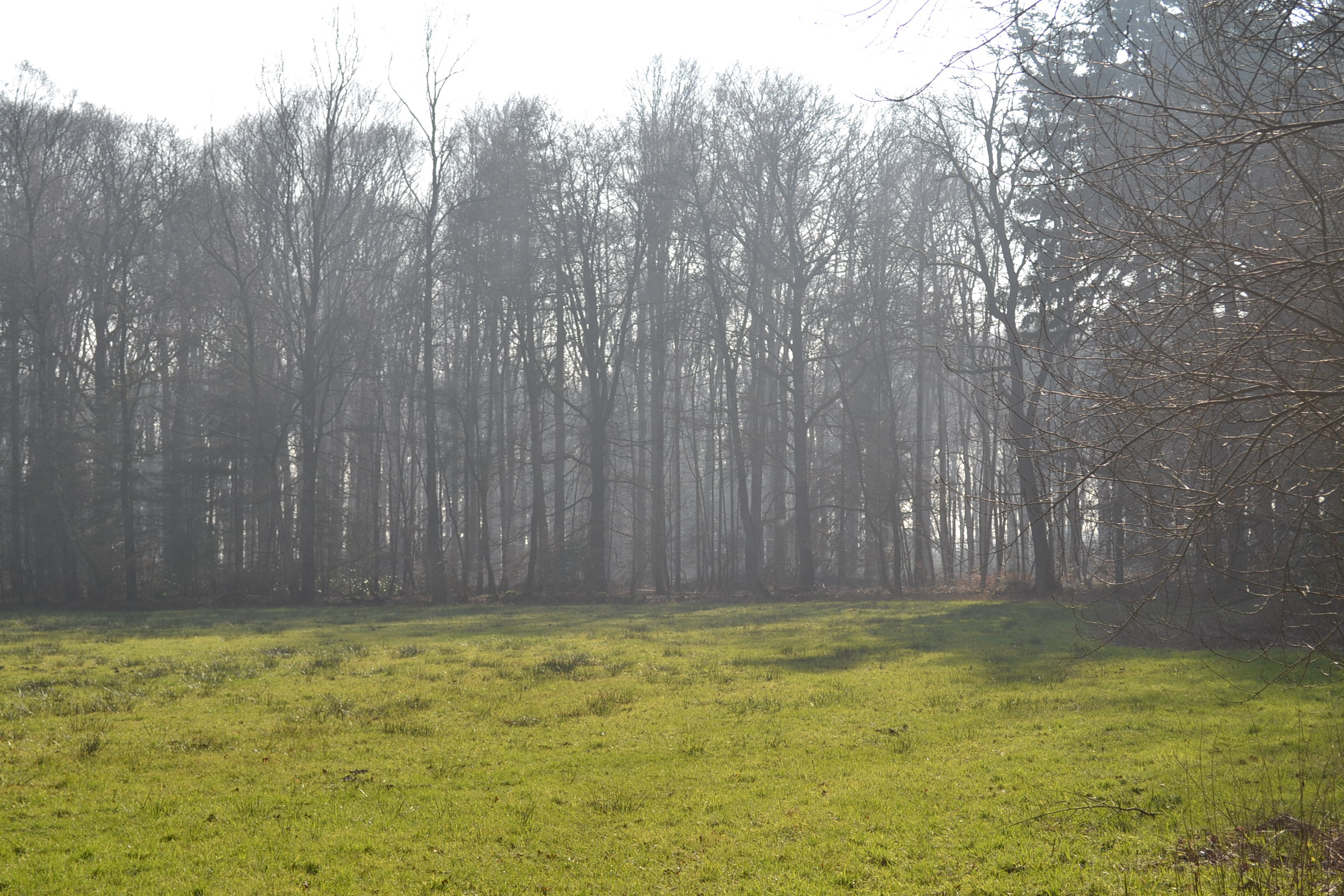
Picture #1, looking north into the Haagse Bos, south of the crash site. © Brandon Wilgus, 2016.

February 2015 incl trip to Holland 043
Photo #2, the crash site is ahead. The wooden marker honoring the two lost aviators I mentioned is in the foreground. © Brandon Wilgus, 2016.

February 2015 incl trip to Holland 065
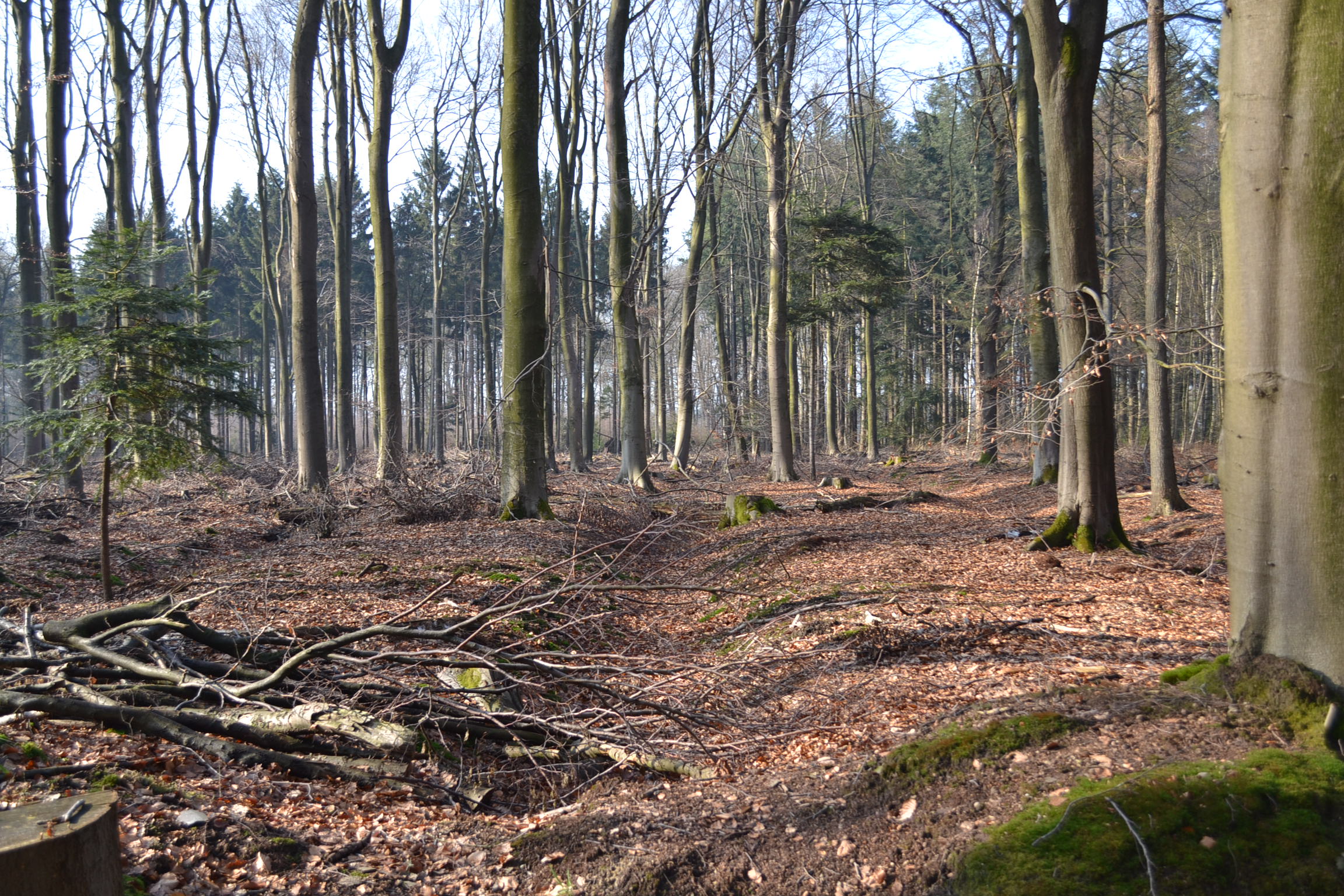
Picture #3, the crash site. Due to the Mosquitos’ almost all wood construction, little of the aircraft remains. © Brandon Wilgus, 2016.

February 2015 incl trip to Holland 069
Picture #4, the path into the Haagse Bos. © Brandon Wilgus, 2016.

A few kilometres east of the crash site is  Vliegbasis Twenthe, which the Royal Netherlands Air Force maintains as a fighter divert airfield.  During the Second World War, the Luftwaffe used the airfield as a Messerschmitt BF 109 fighter airfield: the target of the Mosquito’s low altitude night-time raid.  Maintained and used by the Dutch Air Force since World War II, there are several anti-aircraft hardstands, pill boxes, and firing positions from the time it was used by the Luftwaffe which still survive.

February 2015 incl trip to Holland 164
On the roof of one of the WWII era Luftwaffe pillboxes at Vliegbasis Twenthe is an extremely well preserved anti-aircraft gun. I am unable to identify this weapon besides seeing that it is a light anti-aircraft gun on a rail mount system. © Brandon Wilgus, 2016.

February 2015 incl trip to Holland 150
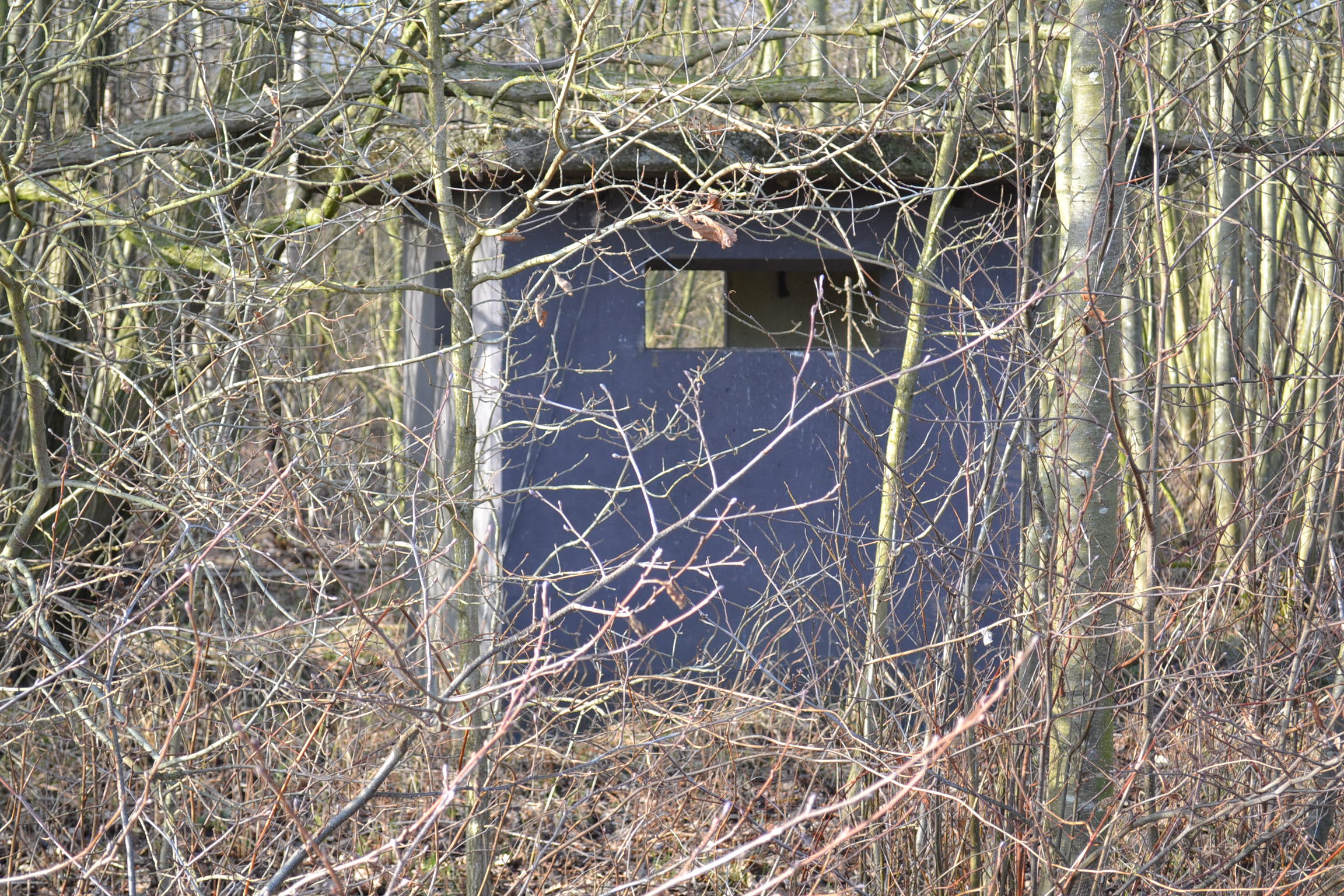
A Luftwaffe pillbox from the Second World War on Vliegbasis Twenthe, © Brandon Wilgus 2016.

February 2015 incl trip to Holland 154
The Inside of the bunker, the excellent state of preservation is likely due to the pillboxes still residing on the Royal Netherlands Air Force Base, Vliegbasis Twenthe, with little public access. © Brandon Wilgus, 2016.

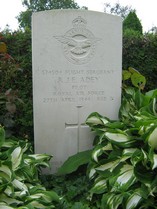
Adey

Flight Sergeant Adey’s gravestone. Thanks to http://www.vliegtuigongevallen.nl.

After the plane crashed, locals removed their bodies which were later identified and interred in a local cemetery. Flight Sergeant Royston John Edward Adey was 21 years old at the time of his death. His parents were Ronald John Edward Adey and Edith Rose Mary Adey, still living in their family home, Winshill, Burton-on-Trent in Staffordshire.  In St. Mark’s Parish Church in Winshill there are two boards marking the names of men from the village who fell in the First and Second World Wars, Flight Sergeant Adey’s name is memorialized there.  His final resting place lies under a Commonwealth War Graves Commission marker in the Oosterbegraafplaats Enschede, the Netherlands.

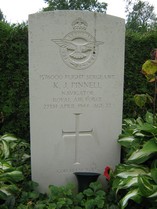
Pinnell

Flight Sergeant Pinnell’s gravestone. Thanks to http://www.vliegtuigongevallen.nl.

Flight Sergeant Kenneth John Pinnnell was 22 years old at the time of his death. His parents, Daniel John Pinnell and Mary Pinnell survived him.  Flight Sergeant Pinnell was from Coventry.  His grave is also in the Oosterbegraafplaats Enschede cemetery, the Netherlands.  He and Flight Sergeant Adey rest a few meters away from one another.  Quietly, restfully, these two brave aviators lie in a small corner of a foreign field and I’m reminded of the poet Rupert Brooke, who died on a hospital ship in the Mediterranean in 1915 wrote:

If I should die, think only this of me:
That there’s some corner of a foreign field
That is for ever England. There shall be
In that rich earth a richer dust concealed;
A dust whom England bore, shaped, made aware,
Gave, once, her flowers to love, her ways to roam,
A body of England’s, breathing English air,
Washed by the rivers, blest by suns of home.

And think, this heart, all evil shed away,
A pulse in the eternal mind, no less
Gives somewhere back the thoughts by England given;
Her sights and sounds; dreams happy as her day;
And laughter, learnt of friends; and gentleness,
In hearts at peace, under an English heaven.

Several very helpful Dutch webpages assisted me in this blog post and aircraft archaeology effort: http://www.luchtoorlogboventwente.nl/440427RAF.php, and http://www.secondworldwar.nl/enschede/luchtoorlog-vliegveld-twente.php#.Voe7-VgrHIU, thanks. – Brandon.

MK1 Supermarine Spitfire to be sold to benefit RAF Veterans and Wildlife Charity

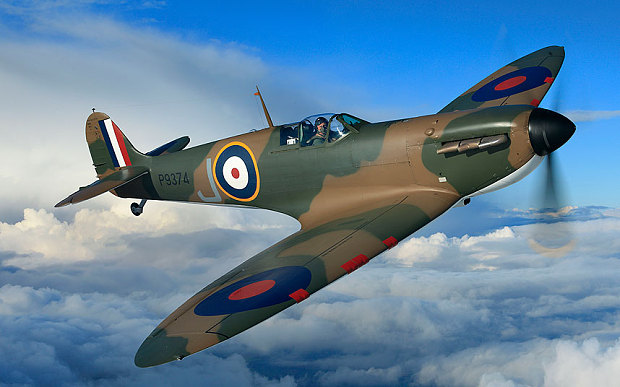
MK1 Supermarine Spitfire P9374 in flight over Cambridgeshire in 2015. © BNPS

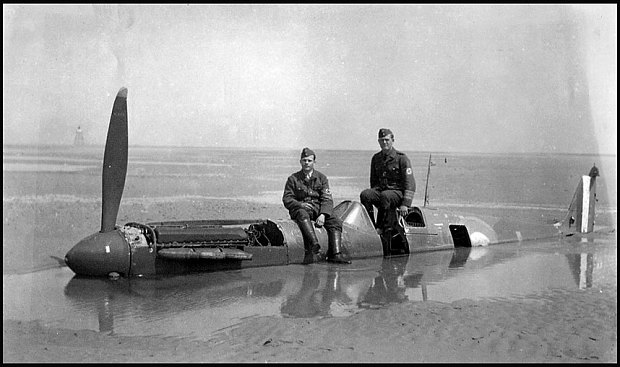
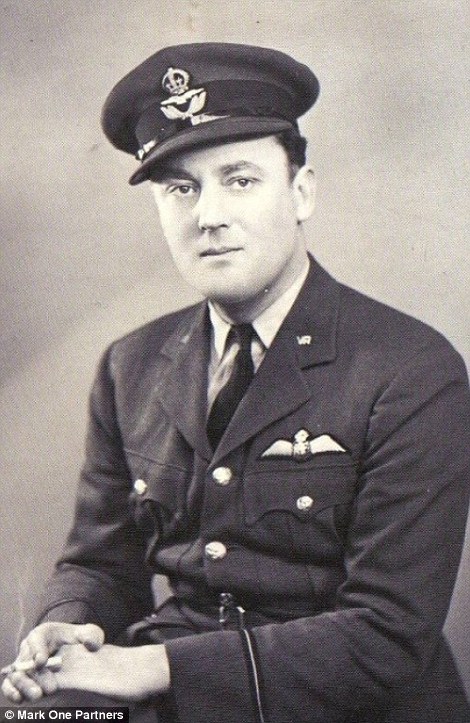
On May 24, 1940 a Dornier 17-Z bomber got a lucky hit on a MK1 Supermarine Spitfire P9374 during an air battle over the beaches of Dunkirk. The MK1 Spitfire, flown by Flying Officer Peter Cazenove had taken off from RAF Croydon and flown over northern France to support the fighting on the beaches of Dunkirk. The Dornier brought the Spitfire down with a single bullet, which then crash-landed gear-up on the beaches near Calais. Uninjured, Flying Officer Cazenove left the aeroplane and walked to Calais where he joined a British unit fighting in the waning days of the Battle of France. Eventually he was captured and made a POW, ending up in Stalag Luft III in eastern Germany and becoming involved in the Great Escape. Flying Officer Cazenove survived the War. The Spitfire; however, stayed on the beaches of Dunkirk along with so much British military kit abandoned in the evacuation. Remarkably, a picture survives of two German servicemen sitting on the wreckage of P9374, half buried in the sand.

MK1 Spitfire P9374 on the beaches of Dunkirk in Spring 1940 with two German servicemen on her fuselage. © BNPS.

Flying Officer Peter Cazenove in 1940. © Mark One Partners.

Eventually the tides coming in and out over Dunkirk buried the aeroplane where it was preserved for the next several decades until September 1980 when the fighter appeared back above the sands. Lovingly restored and reassembled by experts and now at the Imperial War Museum in Duxford, Cambridgeshire, the Spitfire is now one of only two flying MK1 Spitfires in their original specifications (there are many other flying Spitfires of different variants).

MKI Supermarine Spitfire P9374's cockpit.  Photograph taken at IWM Duxford, Cambridgeshire, 2015. © Getty Images.
MKI Supermarine Spitfire P9374’s cockpit. Photograph taken at IWM Duxford, Cambridgeshire, 2015. © Getty Images.

MK 1 Spitfire P9374 was built in 1939. Its Merlin III engine was completed at the Rolls-Royce Factory in Derby on October 27, 1939. The aeroplane had only 32 hours of flying time when it was brought down over France. It was one of the renowned No. 92 Squadron’s fighters based at RAF Croydon in March 1940.

MK1 Supermarine Spitfire P9374 in flight over Cambridgeshire in 2015. © John Dibbs, SWNS.com.

Amazingly, this aeroplane is going on sale. On July 9, 2015 at Christie’s in London, P9374 will go on sale and is expected to fetch between £2- £2.5 million. The proceeds of the sale will be shared between two charities – the Royal Air Force Benevolent Fund and Panthera Corporation, a wildlife conservation charity Mr Thomas Kaplan and his wife, Ms Dafna Kaplan, founded in 2006. Mr Kaplan, an American billionaire investor who is a world renowned conservationist, art collector, and Oxfordian, is the generous individual behind the sale. The second flying MK1 Spitfire in the world was also restored by Mr Kaplan’s experts. Numbered N3200, he has generously donated the MK1 Spitfire to the Imperial War Museum, Duxford, where it often flies and is available to all visitors to admire.

One of the greatest military aviation sites in the World is the Imperial War Museum, Duxford.  Located off the M11, south of Cambridge, on the site of historic RAF Duxford. http://www.iwm.org.uk/visits/iwm-duxford

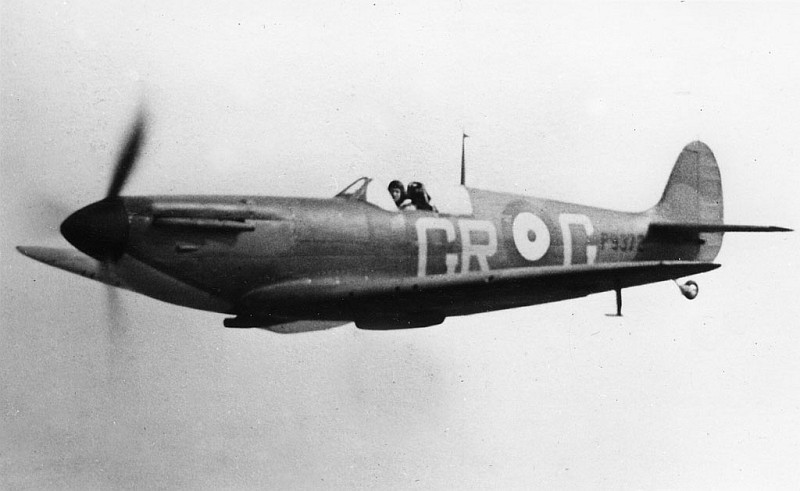
One of her sister aircraft, MK1 Supermarine Spitfire P9372. An early photo of a No. 92 Squadron Spitfire Mk1, The GR codes date it to the Spring of 1940 and the lack of an armour plated windscreen dates it to before the evacuation of Dunkirk. P9372 was shot down over Rye in September 1940. The wreck was recovered and much of the aeroplane is on display at Biggin Hill Heritage Hangar.  Unknown Photographer.
One of her sister aircraft, MK1 Supermarine Spitfire P9372. An early photo of a No. 92 Squadron Spitfire Mk1, The GR codes date it to the Spring of 1940 and the lack of an armour plated windscreen dates it to before the evacuation of Dunkirk. P9372 was shot down over Rye in September 1940. The wreck was recovered and much of the aeroplane is on display at Biggin Hill Heritage Hangar. Unknown Photographer.

Bomber Command Raid on a German Town – Böblingen, 7 October 1943

I often write in this dialogue with you about the local history of Cambridgeshire, and frequently about the efforts during the Second World War which originated from the bases and airfields spread throughout southeast England.  However, this week I find myself in the small town of Böblingen, Baden-Wurttemberg, in southwest Germany. It is an ancient town which was accidentally bombed during the war, bombed and destroyed.  Here one sees the horrific reality of what 8th Air Force and Bomber Command’s strategic bombing wrought on the ground.  The level of destruction waves of heavy bombers were capable of achieving in an effort to destroy Germany’s military might is sobering.  This small town is but one example of millions of lives that were horrifically changed by the Second World War – and is not a judgment on guilt or innocence – but is simply what happened.

"Böblingen 01 1939-07-01" by Ansgar Walk - Foto erstellt von Ansgar Walk.  The town on 1 July 1939.
“Böblingen 01 1939-07-01” by Ansgar Walk – Foto erstellt von Ansgar Walk. The town on 1 July 1939.

On the night of 7 October 1943, 343 Avro Lancaster Bombers, launching from airfields in Cambridgeshire and beyond, formed up and began a major night raid on the military-industrial targets of Stuttgart.  It was overcast and dark, some of the aircraft from the 101st squadron were equipped with night-fighter jamming equipment (this was “CIGAR” first operational use in a combat mission). This allowed the bombers to conduct the raid with little resistance.  A diversionary raid on Munich further confused the German fighters and the bombers reached their targets relatively unhindered and dropped waves of ordnance, explosives followed by incendiary bombs, losing only four aircraft that night.  The mission was hailed as a success – for the industrial capacity of Stuttgart needed to be destroyed to slow the German war machine.

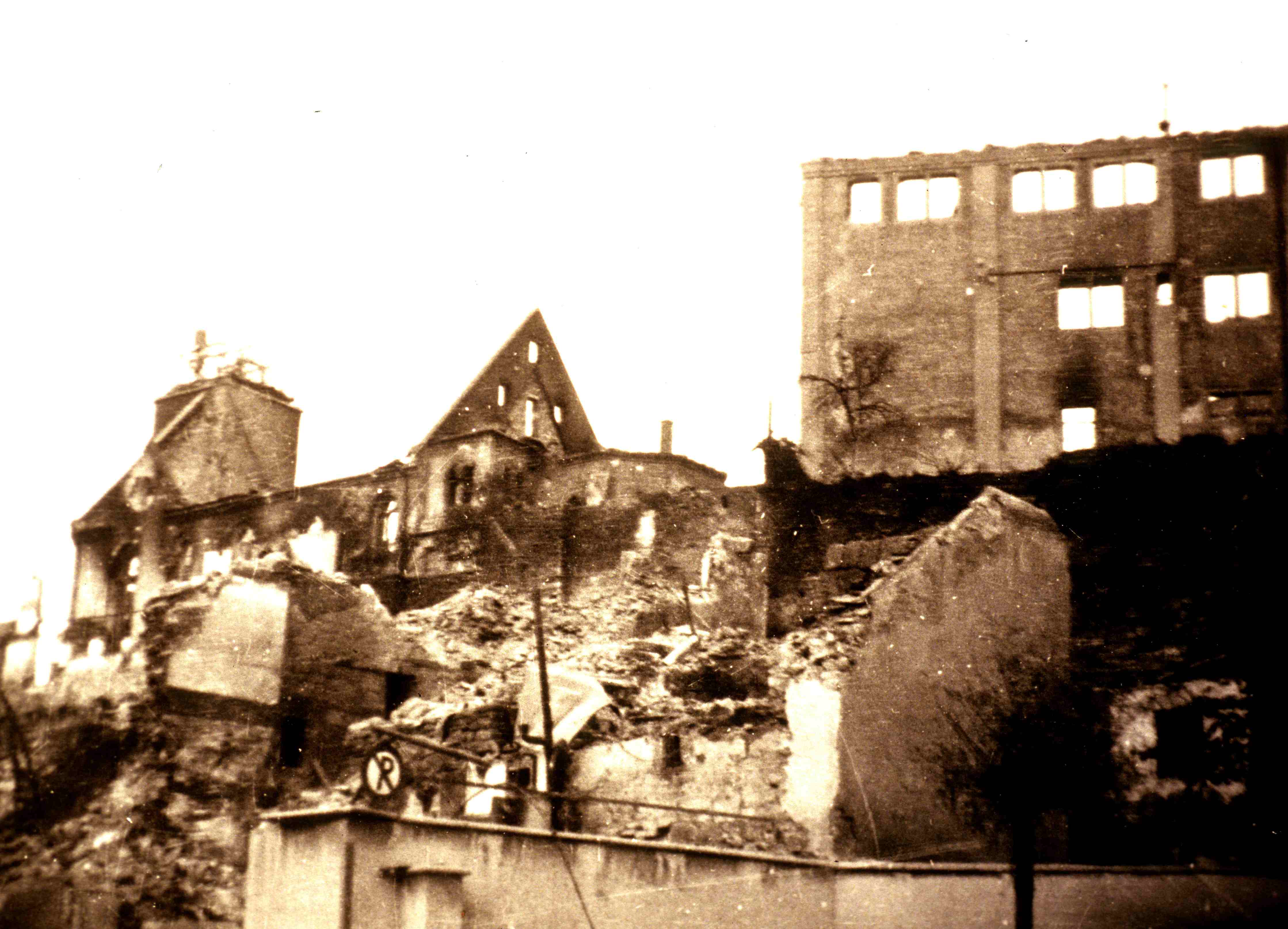
Things were very different in the sleepy town of Böblingen, 10 miles southwest of Stuttgart, where no military targets were located.  By mistake, one of the two pathfinders which dropped aerial markers to guide in the remaining bombers, marked Böblingen instead of the industrial facilities of Stuttgart.  Following the pathfinder’s lead, the Lancasters dropped 35 high-explosive bombs before over 400 incendiary bombs over the unsuspecting town.  The Schloβberg, church, and over 70% of the old town was destroyed.  1,735 people lost their homes, and most tragically, 44 people died including 24 women and children.  As I walked around the Schloβberg this week, which still is the central part of the rebuilt town, I found small intact pieces of the medieval castle which survived the night.  One can still see the black scorching on the medieval stones, which were burned permanently into the rock by the inferno caused by the incendiaries.  It isn’t hard to picture the horror of that night to the people of this small town, rushing about, seeking shelter and tending to the destruction.

"Zentrum von Böblingen nach dem Bombenangriff vom 7./8. Oktober 1943." Date 12 October 1943  Source Foto erstellt von Ansgar Walk. Photograph by Ansgar Walk .
“Zentrum von Böblingen nach dem Bombenangriff vom 7./8. Oktober 1943.” Date 12 October 1943
Source Foto erstellt von Ansgar Walk. Photograph by Ansgar Walk . The shell of the nave of the protestant church can be seen in the centre of the photo, where the remembrance memorial now stands.

A small piece of the Boblingen castle, completely destroyed on the night of 7 October 1943.  This piece of archway lies buried in the hillside. © Brandon Wilgus, 2015.
A small piece of the Böblingen castle, completely destroyed on the night of 7 October 1943. This piece of archway lies buried in the hillside. © cambridgemilitaryhistory.com, 2015.

A medieval tower remained after the bombing of the castle.  It now is perched on the highstreet, between buildings from the 1950s and beyond.  A testament to the almost complete destruction of Boblingen's center. © Brandon Wilgus, 2015.
A medieval tower remained after the bombing of the castle. It now is perched on the Highstreet, between buildings from the 1950s and beyond. A testament to the almost complete destruction of Böblingen’s centre. © cambridgemilitaryhistory.com, 2015.

On the back of the rebuilt protestant church, which was just a shell of stone after the night’s bombing, I found a small stone marker that commemorates the loss of that night – a phoenix flies up from the ashes – and the inscription reads: “Destroyed by bombs during the night of 7/8 October 1943, rebuilt 1949/1950 for the glory of God.”

The memorial stone on the rebuilt nave of the protestant church in Boblingen. © Brandon Wilgus, 2015.
The memorial stone on the rebuilt nave of the protestant church in Böblingen. © cambridgemilitaryhistory.com, 2015.

Sadly, another very similar event happened in 1944, when Böblingen was once again struck out of confusion by bombers seeking the heavy industry of Stuttgart.  More deaths, more destruction in this small town so desperately affected by the Second World War.

A check of the Statistisches Bundesamt, the Federal German Records Office, shows that in the last census before the war, Böblingen had a population in 1939 of 12,560.  In 1946, 10,809 people were counted in the town.  1,751 people had disappeared from the town.  Behind those numbers are enormous tragedies: lost civilians in the raids yes, but also lost soldiers, dispossessed families that left never to return, and even those murdered by the regime.  Time has passed now and I don’t seek to judge or to search for any more horror here. A tragedy has woven together with accidental targeting of an unimportant town, spurred by the deliberate bombing of military-industrial targets, the civilian losses, the impact of the war on these people, but also the crews of the four Lancasters which were lost that night, and the overall efforts of so many for so long during a dreadful time. The greater tragedy of the Second World War can best be found in seeking the personal stories, the human struggles of so many in the face of such horror over so long.

Writing to you from Böblingen, Germany.  Brandon.

RAF Glatton and the 457th Bomb Group (Heavy)

Between Huntingdon and Peterborough, in the west of Cambridgeshire lies the small village of Conington. With its beautiful All Saints Church, first mentioned in Domesday Book and rebuilt in the early 16th Century, and remarkably beautiful cottages and homes perched on the edge of the fens, one can hardly imagine that 70 years ago this was the home of four squadrons of B-17 Flying Fortresses, roaring into the air almost daily for targets in Germany and Occupied Europe.

The Control Tower, now demolished, of RAF Glatton, taken on 31 March 1945. In the distance, to the left of the tower, a B-17 is visible on the taxiway. US Air Force Photograph, in the public domain.

In the Second World War, Conington was located next to Royal Air Force Station Glatton, which was constructed to Class “A” standards by engineers to support heavy bombers in 1943 with the intent of being used by the U.S. Army Air Forces in the strategic bombing campaign. The 457th Bombardment Group (Heavy) arrived on 21 January 1944, consisting of the 748th, 749th, 750th and 751st Bombardment Squadrons. The recognizable tail code of the 457th was the “triangle U” painted on the vertical stabilizers of the Boeing B-17 Flying Fortresses which operated from the air base. The 457th Bomb Group operated RAF Glatton from January 1944 until 20 April 1945, when it completed its 237th and last combat mission at the conclusion of the war.

Before June 1944, the 457th operated on attacking strategic targets in Germany – munitions factories, ball-bearing plants, marshalling yards and oil refineries. On D-Day, the 457th flew missions against Cherbourg Peninsula, attacking German positions off the east flank of American forces landing at Utah and Omaha beaches. By July 1944, the 457th had resumed strategic bombing and would continue to focus on German targets through April 1945.  However, the 457th provided aerial bombing support to the breakout from St. Lo in northern France, the British 1st Airborne’s landings at Arnhem in the Netherlands, and in support of embattled U.S. Army forces in the Battle of the Bulge.

At the conclusion of the War, the B-17s of the 457th Bomb Group returned to the United States and the airfield was used by No. 3 Group of the RAF Bomber Command flying B-24 Liberators and Avro Lancaster heavy bombers. By 1948, it was decided that the airfield was surplus and the land was returned to agricultural use and demilitarized.

The 457th Bomb Group (H) Memorial, dedicated to the men who flew from RAF Glatton during the Second World War. © Brandon Wilgus, 2015.
The 457th Bomb Group (H) Memorial, dedicated to the men who flew from RAF Glatton during the Second World War. © cambridgemilitaryhistory.com, 2014

A marker placed at the foot of the watertower, which is a moving remembrance to the men who paid the ultimate sacrifice flying from RAF Glatton in the Second World War.  © Brandon Wilgus, 2015.
A marker placed at the foot of the water tower, which is a moving remembrance to the men who paid the ultimate sacrifice flying from RAF Glatton in the Second World War. © cambridgemilitaryhistory.com, 2015.

The watertower of the former airfield of RAF Glatton, the only surviving structure from the Second World War. © Brandon Wilgus, 2015
The water tower of the former airfield of RAF Glatton, the only surviving structure from the Second World War. © cambridgemilitaryhistory.com, 2015

Today, one of the Class A runways remains in use as the “Peterborough Business Airport” which is a general aviation facility.  It is a testament to the strength of the runways built over 70 years ago that the field remains in limited and lighter use.  The only other structure from the Second World War is the water tower which stands near the 457th Bomb Group Memorial, off Great Ermine Street, near the village. In All Saints’ Church, Conington, is a memorial to the 457th Bomb Group which must be visited.

At the end of the Peterborough Business Airport's runway, still in use from the Second World War as a general aviation facility. A marker placed at the foot of the watertower, which is a moving remembrance to the men who paid the ultimate sacrifice flying from RAF Glatton in the Second World War.  © Brandon Wilgus, 2015.
At the end of the Peterborough Business Airport’s runway, still in use from the Second World War as a general aviation facility. A marker placed at the foot of the water tower, which is a moving remembrance to the men who paid the ultimate sacrifice flying from RAF Glatton in the Second World War. © cambridgemilitaryhistory.com, 2015.

To see RAF Glatton, travel up the A1(M) and exit at the B660, signposted to Conington.