RAF Little Staughton: Home of the Pathfinders of No. 109 and No. 582 Squadrons

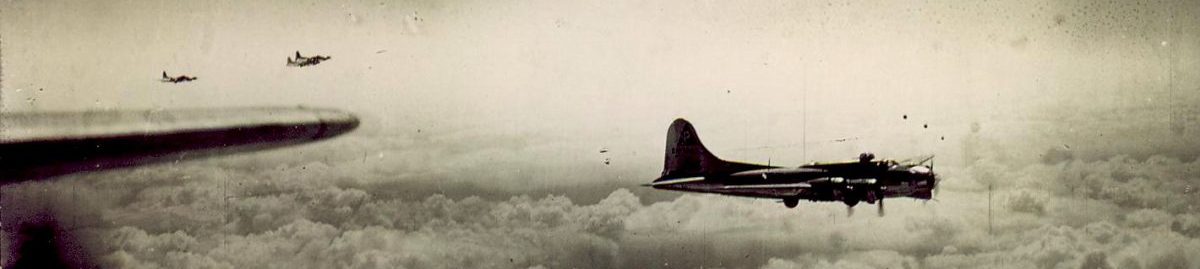
During the Second World War a large Royal Air Force Station operated several types of aircraft and served both the Royal Air Force and the U.S. Army Air Corps near the village of Little Staughton, on the border between Bedfordshire and Cambridgeshire. In 1942, RAF Little Staughton was designed as a Class A airfield, able to support the heavies — multi-engine bombers such as Boeing B-17s, Consolidated B-24s, and Avro Lancasters.  Once complete, the airfield was set aside as a depot, more specifically, the 2nd Advance Air Depot of the US Army Air Corps, under the 1st Bomb Wing at RAF Brampton Grange (see my posting about this headquarters). B-17s, damaged or in need of maintenance that could not be provided at their home station were flown to RAF Little Staughton for repairs.  

On 1 March 1944, the U.S. Air Force returned the facility to RAF use, and it became the home of two squadrons of Pathfinder Force Group 8 – No. 109 Squadron flying the de Havilland Mosquito XVIs, and No. 582 Squadron flying Avro Lancaster Mark Is and IIIs.
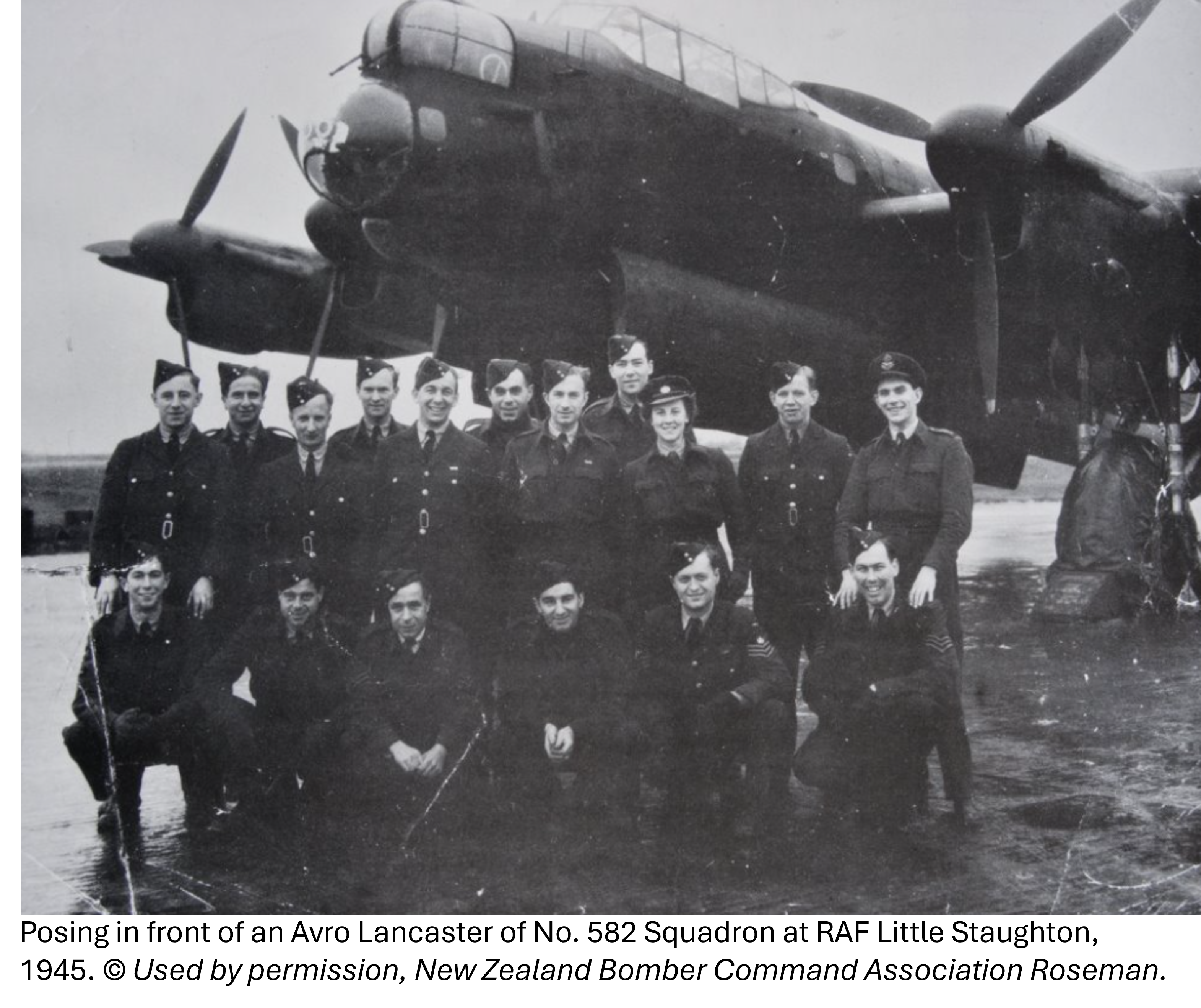
In the last year of the war, the Pathfinders flew 2,100 sorties from RAF Little Staughton in 165 separate missions against Germany and occupied Europe. Over 120 medals for courage and gallantry were awarded to the officers and men flying from RAF Little Staughton, along with two Victoria Crosses:  Squadron Leader Robert A. M. Palmer, VC DFC with Bar and Captain Edwin “Ted” Swales, VC DFC.  The two men were close friends and both pilots in 582 Squadron.  

Squadron Leader Palmer was 24 years old on 23 December 1944 when he was the Master Bomber – in command of the lead bomber on a raid of 30 aircraft – over Cologne, Germany.  Despite heavy clouds and several losses enroute to the target, Palmer continued the run despite an order having gone out to break up the formation and for the bombers to drop their ordnance visually. His Lancaster damaged by German anti-aircraft fire, with two engines erupting in flames, Palmer stayed on target and dropped his bombs as the lead plane, fulfilling his role as a Pathfinder, before his aircraft spiralled out of control.  Only the tail gunner escaped from Palmer’s Lancaster. He was posthumously awarded the Victoria Cross.  Six of the 30 RAF aircraft on the 23 December 1944 raid on Cologne were lost.

Captain Swales, a South African pilot, was 29 years old on 23 February 1945 when he was the Master Bomber in a Lancaster leading a bombing raid on Pforzheim, Germany of 367 Lancasters and 13 Mosquitos. Swales successfully found the target and marked it for the several hundred bombers following his lead.  After dropping his bomb load, Swales’ Lancaster was critically damaged by a Messerschmidt Bf-110.  With the fuel tanks ruptured and two engines lost, Swales held the plane in the air as his crew all successfully bailed out over France.  He attempted to bring down the Lancaster over friendly territory, but it stalled and crashed near Valenciennes.  Like his friend Palmer, Swales was posthumously awarded the Victoria Cross. His Lancaster was one of 12 lost in the raid.
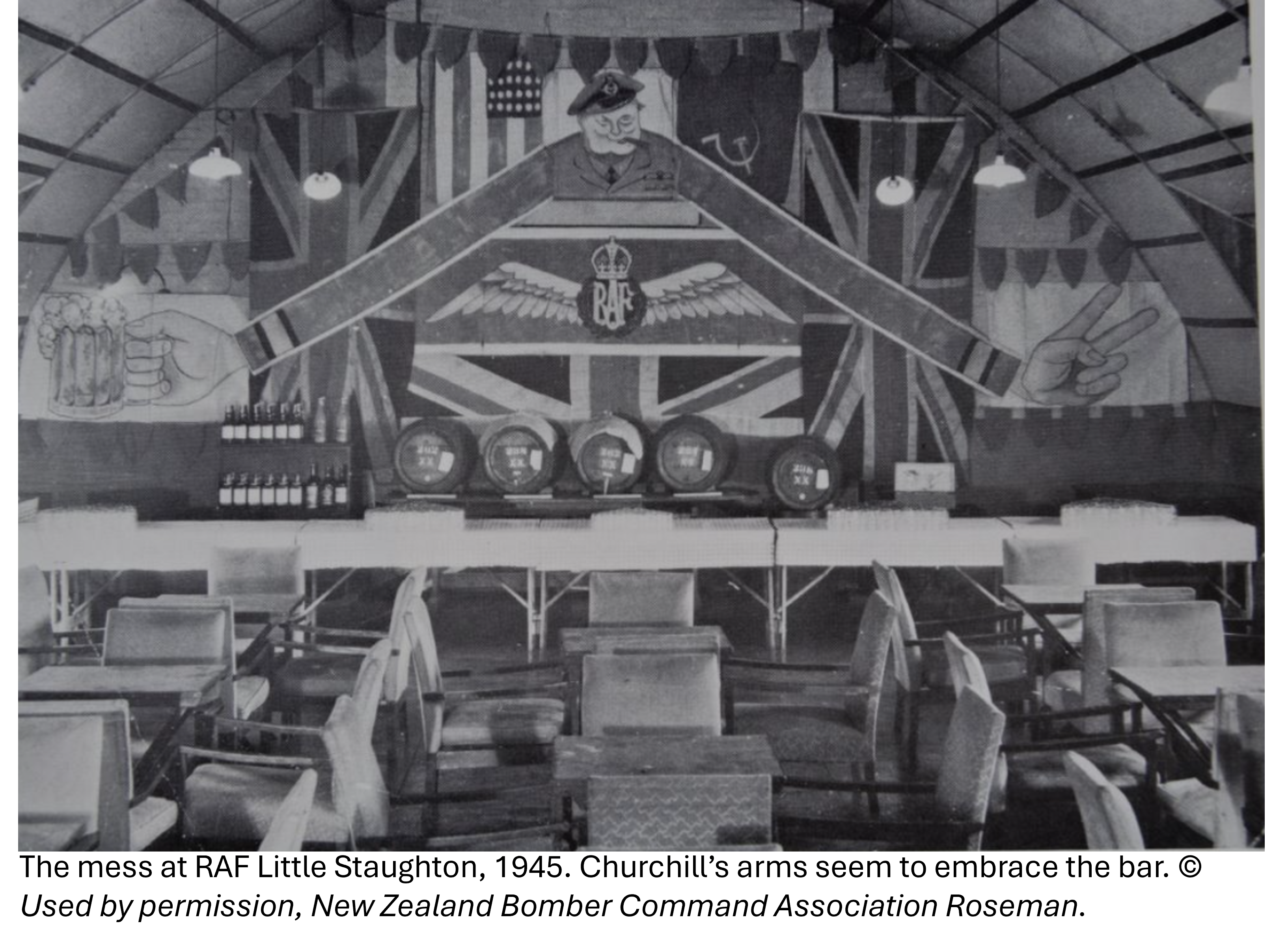
28 Lancasters from No. 582 Squadron would be lost from April 1944 until VE day. 23 Mosquitos of No. 109 Squadron were lost during the same period.  The sacrifices of these men, working to protect their nation and liberate Europe, in such a short period of time is stunning.

In September 1945, RAF Little Staughton was put into a care and maintenance status.  However, its days as a flying airfield were not finished. In the 1950s, the U.S. Air Force expanded and lengthened the main runway to 3,000 yards so that RAF Little Staughton could serve as a divert for RAF Alconbury’s North American B-45 Tornado multi-engine jet bombers and the Douglas B-66 Destroyer light bombers which were then flown by the 85th Bombardment Squadron.
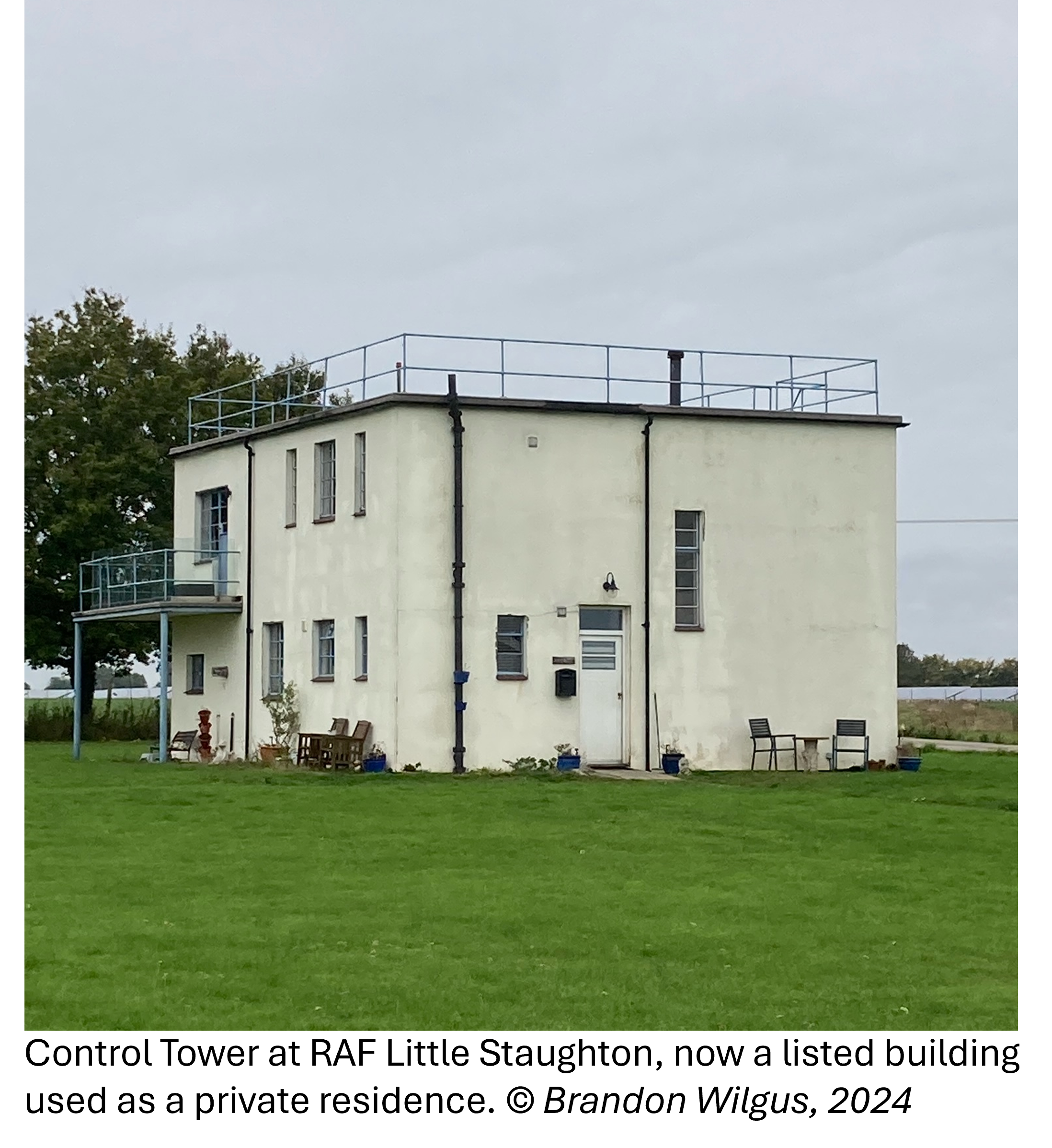
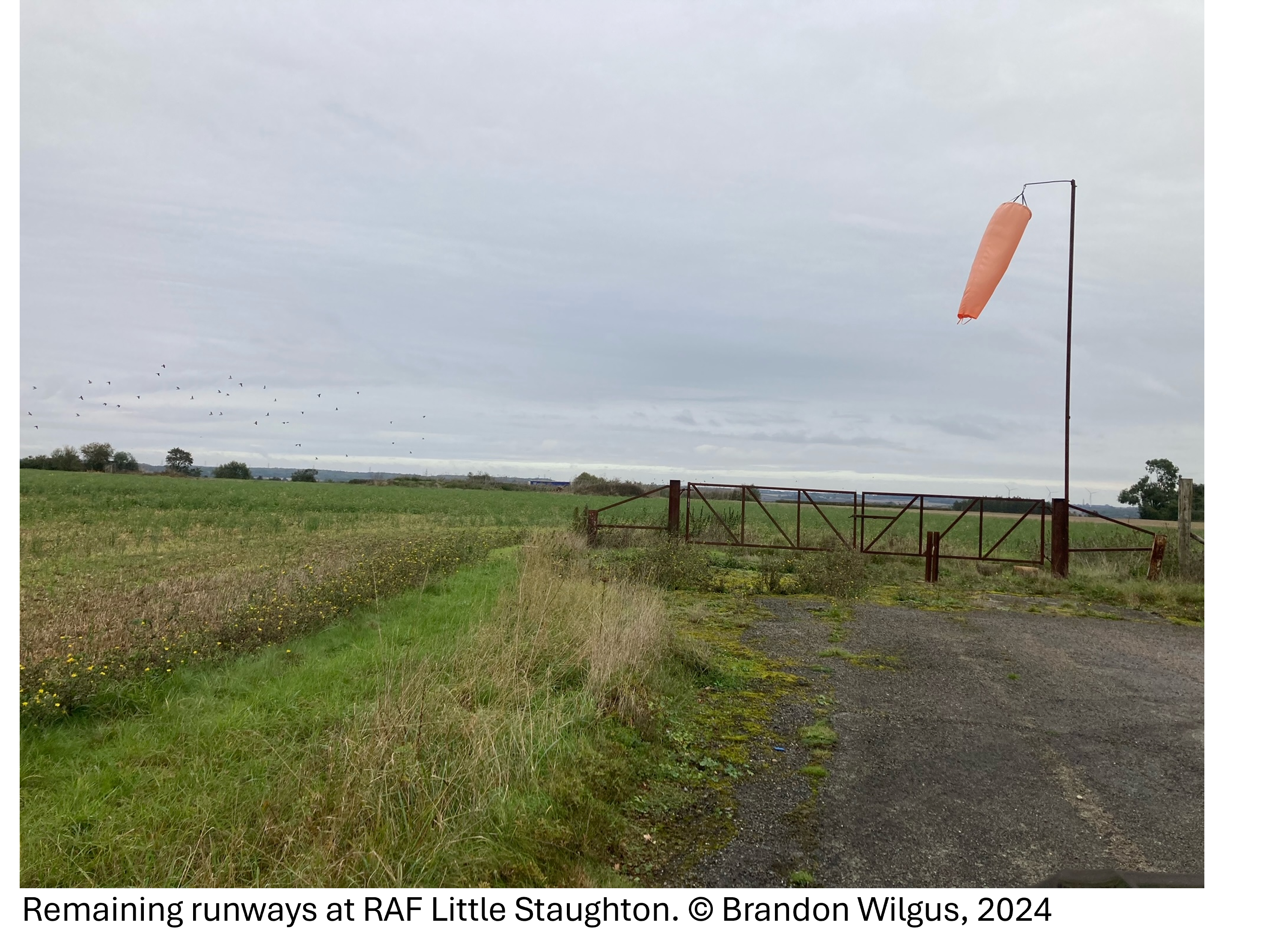
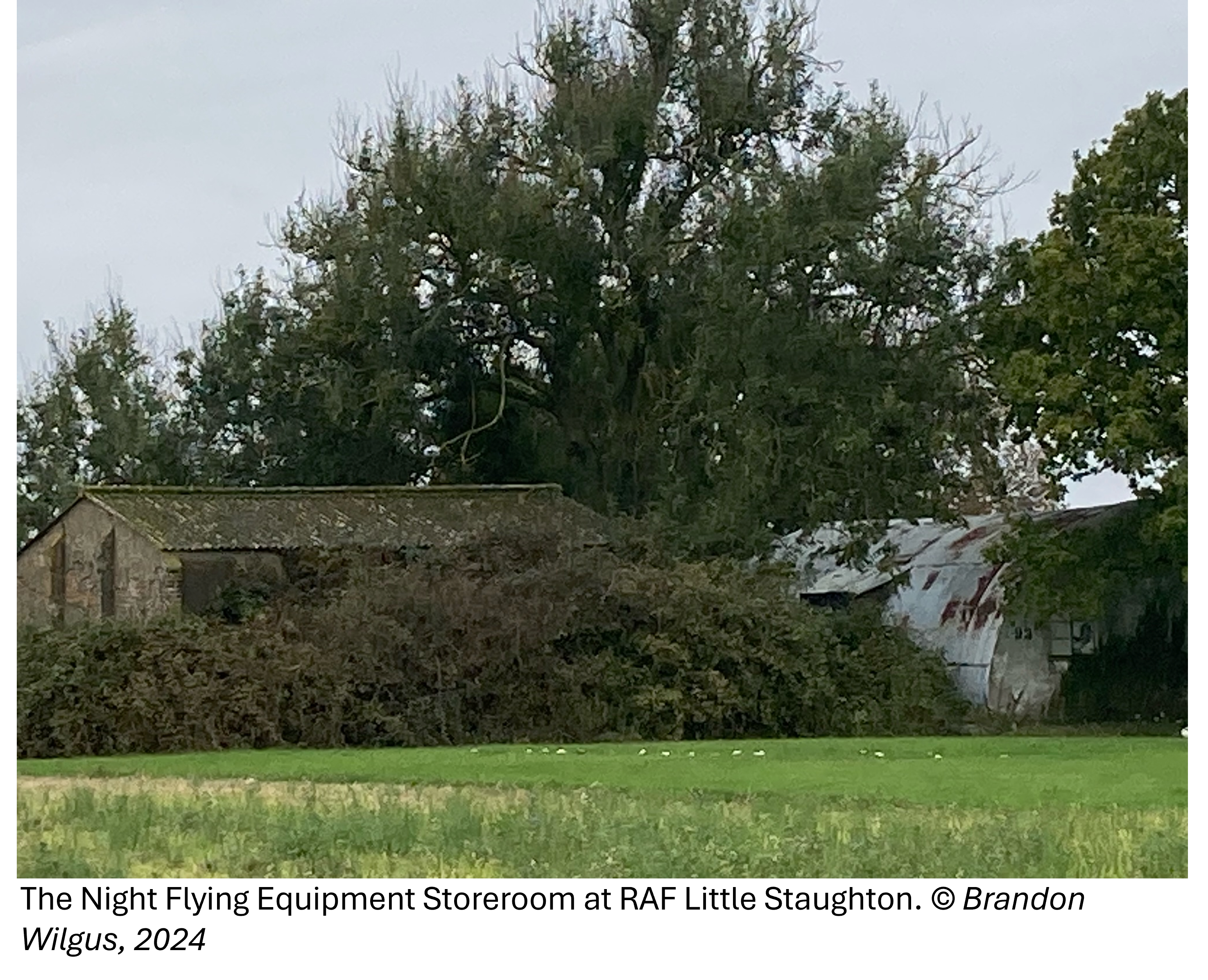
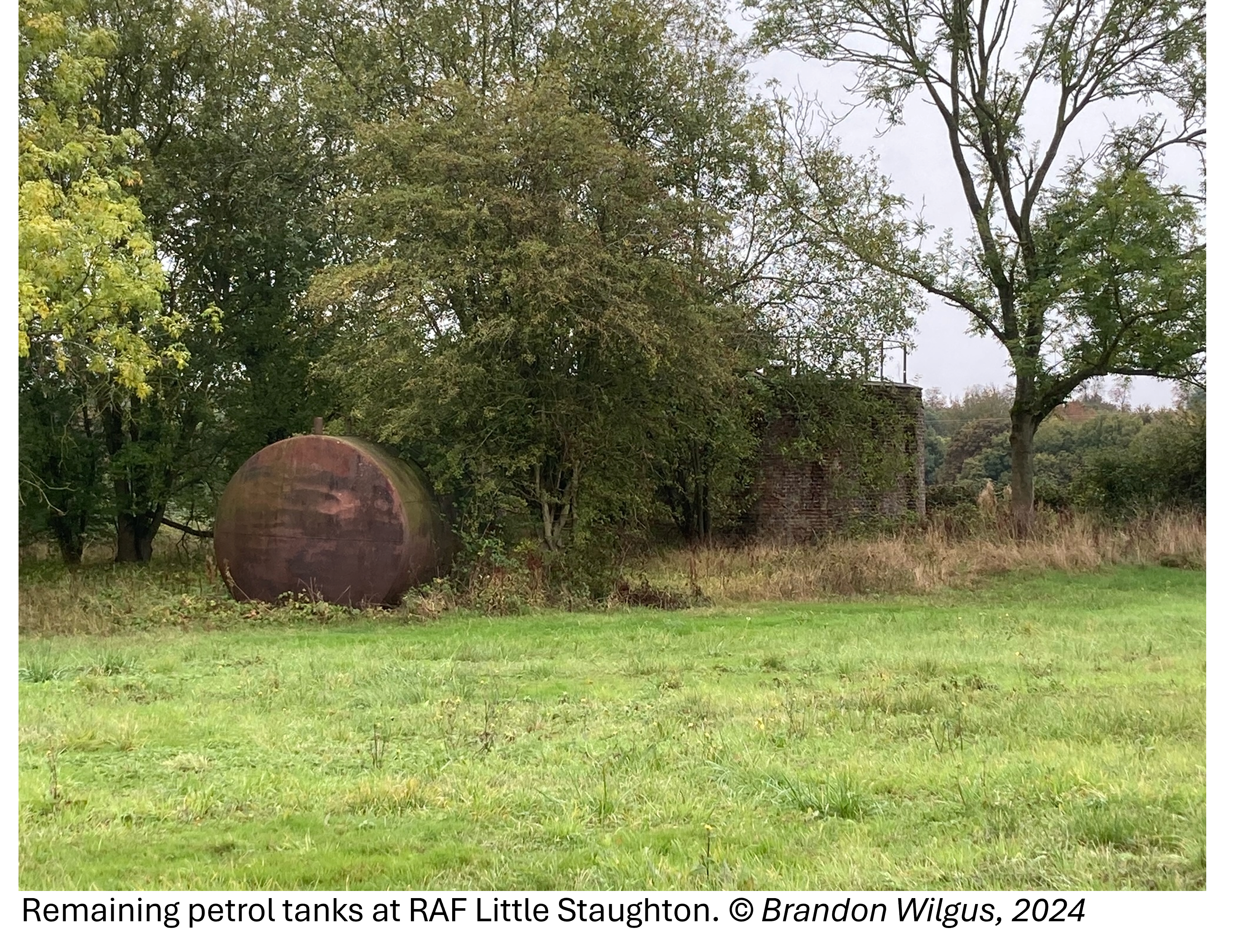
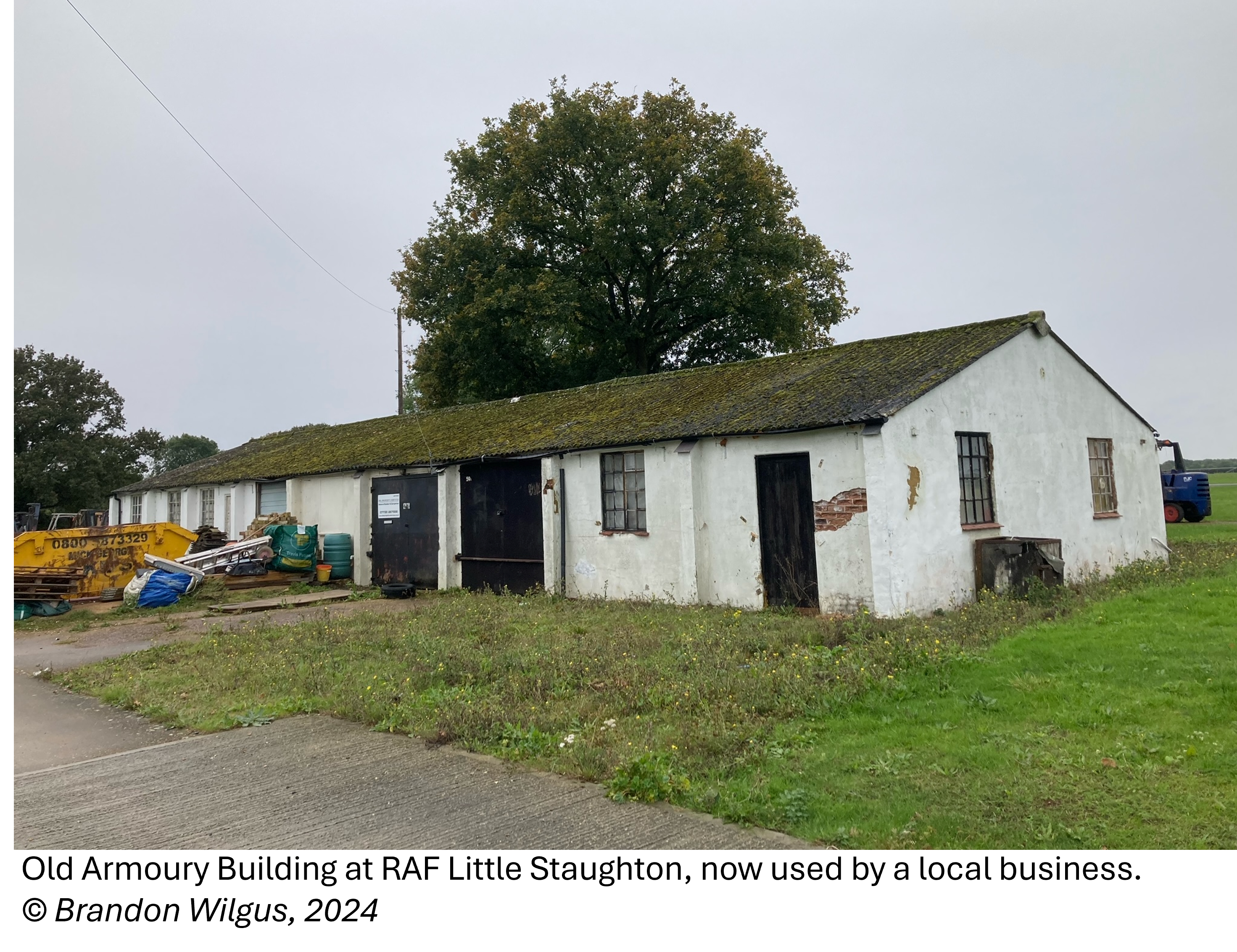
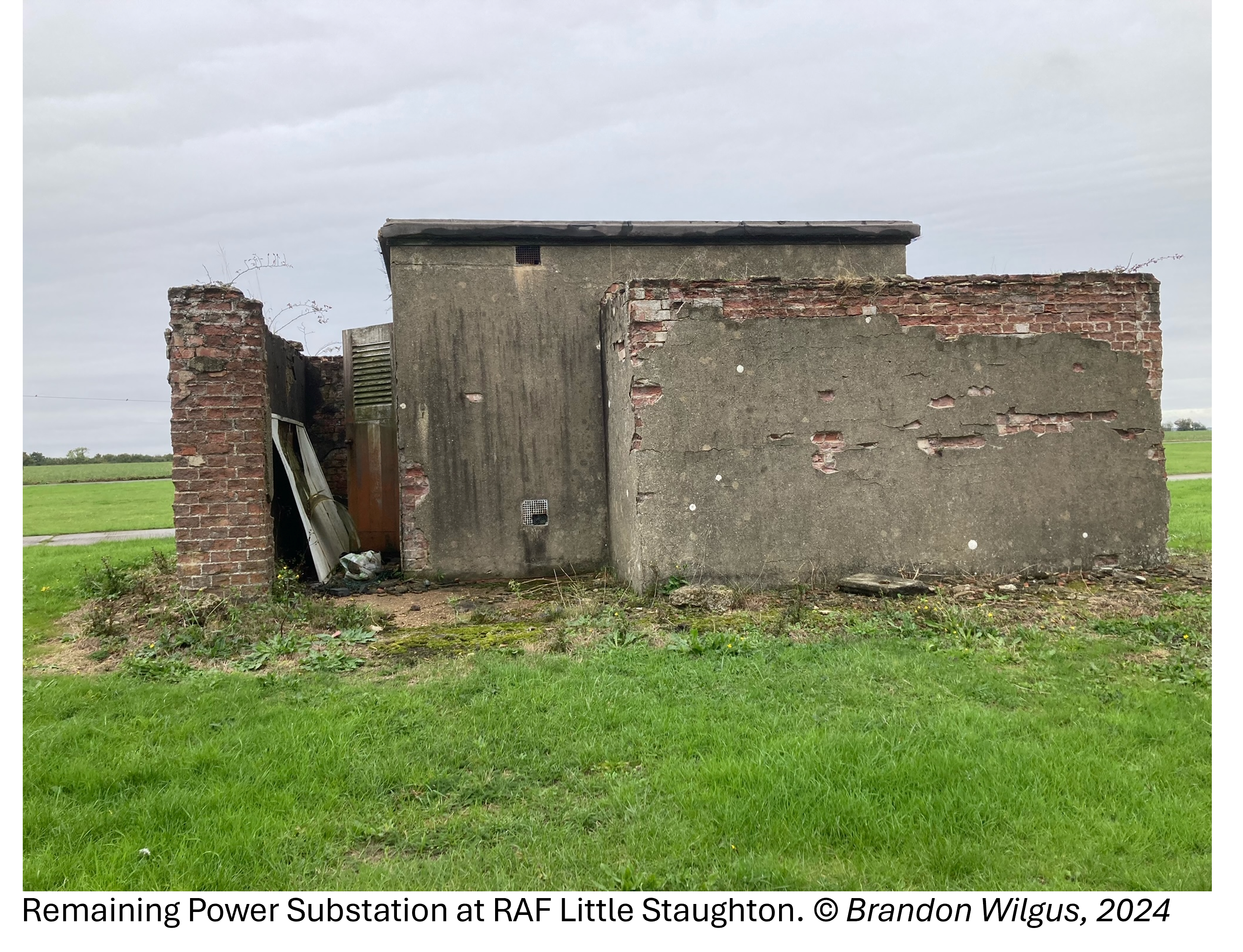
Today, light industry dots the former airfield and many of the original buildings, storage areas, hangars, and the control tower still stand. A solar power farm covers much of the land which once was the Royal Air Force station. Overgrown and scattered around the site are several old blast shelters, bomb dumps, petrol storage tanks and more. Hangars and barracks are still used by small businesses. Light, general aviation craft fly from the old runways.  Maybe, best of all in terms of preservation, the World War II control tower still stands and is in excellent shape, it is now a private residence. In fact, RAF Little Staughton is one of the best-preserved airfields I’ve visited, not that it has been kept as a museum, but its ongoing use has maintained the facility in an impressive state of repair after almost a century.

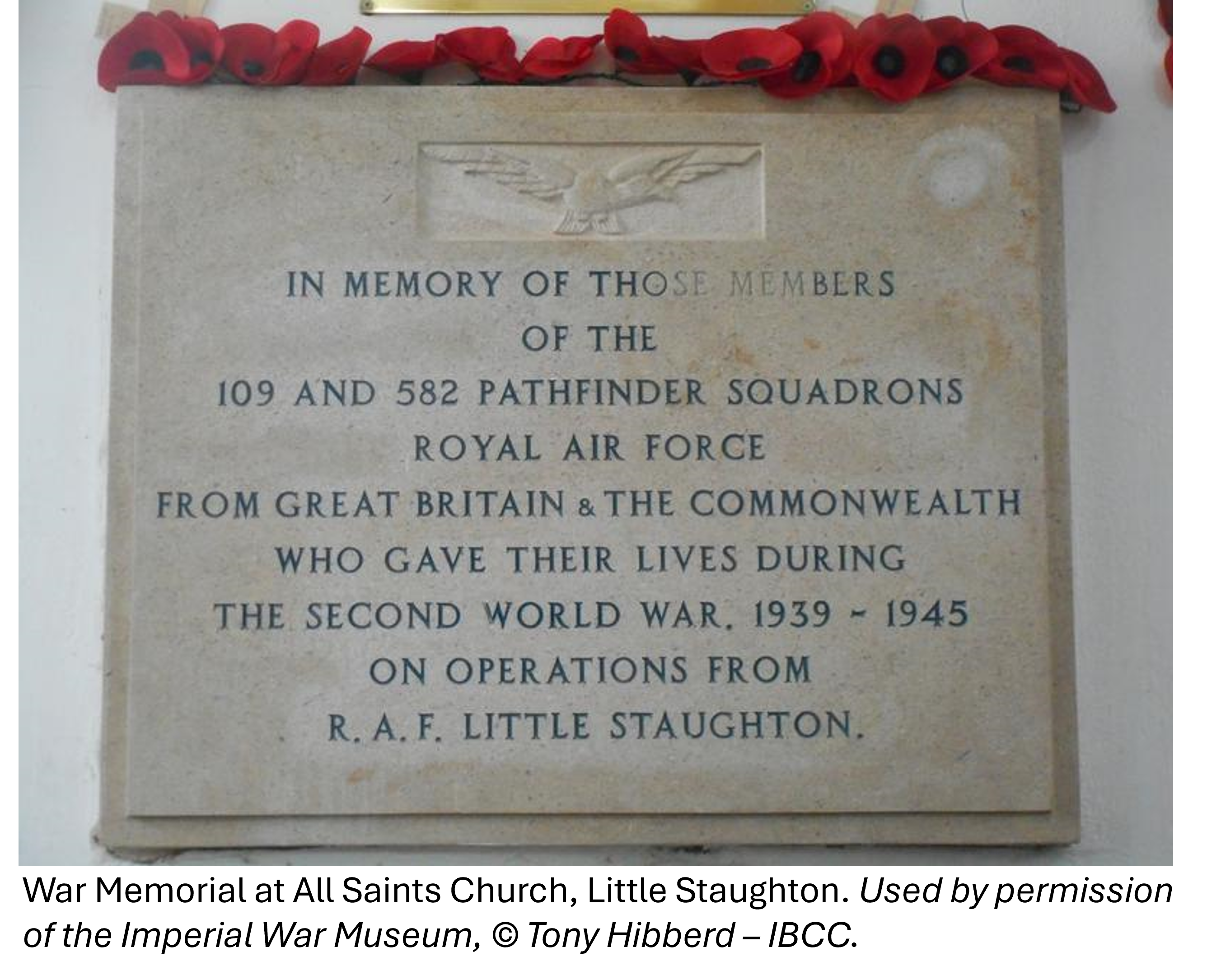
A mile or so from the former air station lies the Parish Church of All Saints, Little Staughton.  Interestingly, the church lies a bit distant from the village, as the original village was abandoned after a bought of bubonic plague and the survivors farther away from its original location in the Middle Ages.  A memorial in the Church on the south wall honours the men from 109 and 582 Pathfinder Squadrons who lost their lives, and the airfield’s Roll of Honour is on display as well. (Although the church is open on Saturdays and Sundays in the summer, you can ring ahead and arrange a time to visit throughout the year, just check the parish website.)
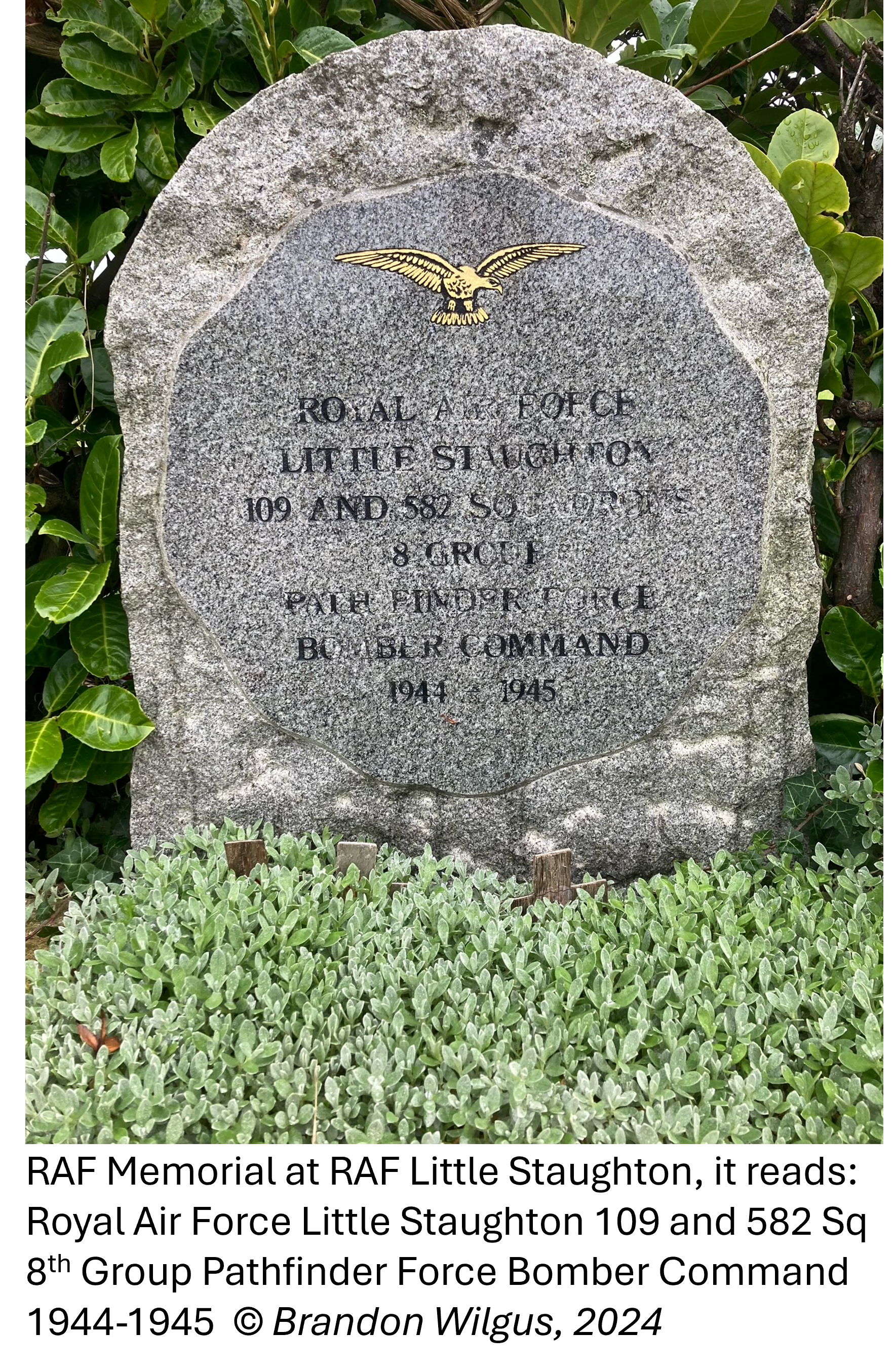
Located near the end of the runway is the RAF Little Staughton Airfield Memorial, obviously well cared for by the village. It recognized the sacrifice of the airmen who once flew from this field and lies on the cracked concrete which once made up the runway.
RAF Brampton Grange and the First Air Division in World War II

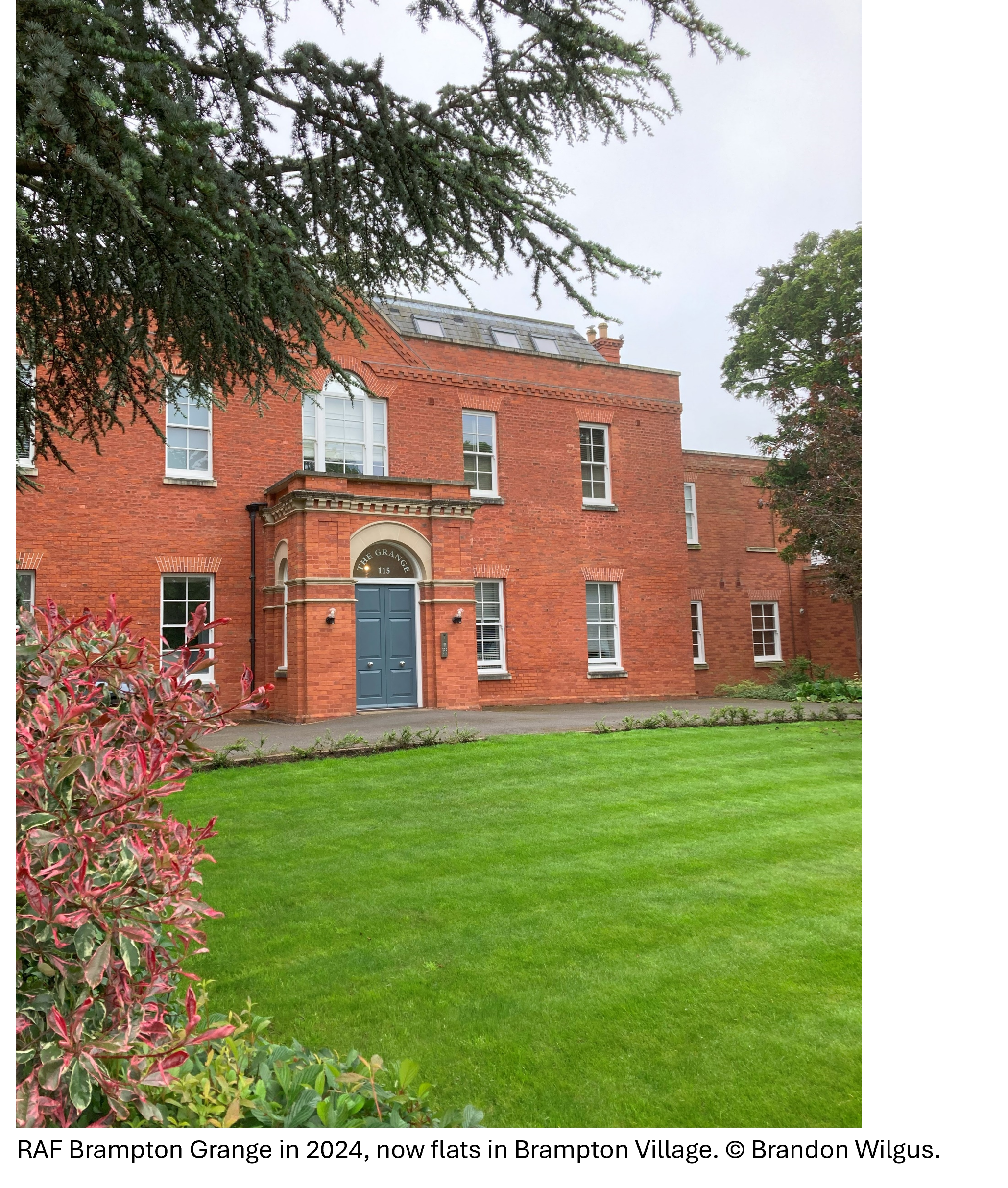
In the village of Brampton, Cambridgeshire lies a large, Georgian house built in 1773 called The Grange.  Despite its early use as a girl’s school in the 19th Century and its connections with Lady Olivia Sparrow, the philanthropist and early evangelist, it is the Grange’s use in the Second World War as the headquarters of the 8th Air Force’s 1st Air Division that most interests me.

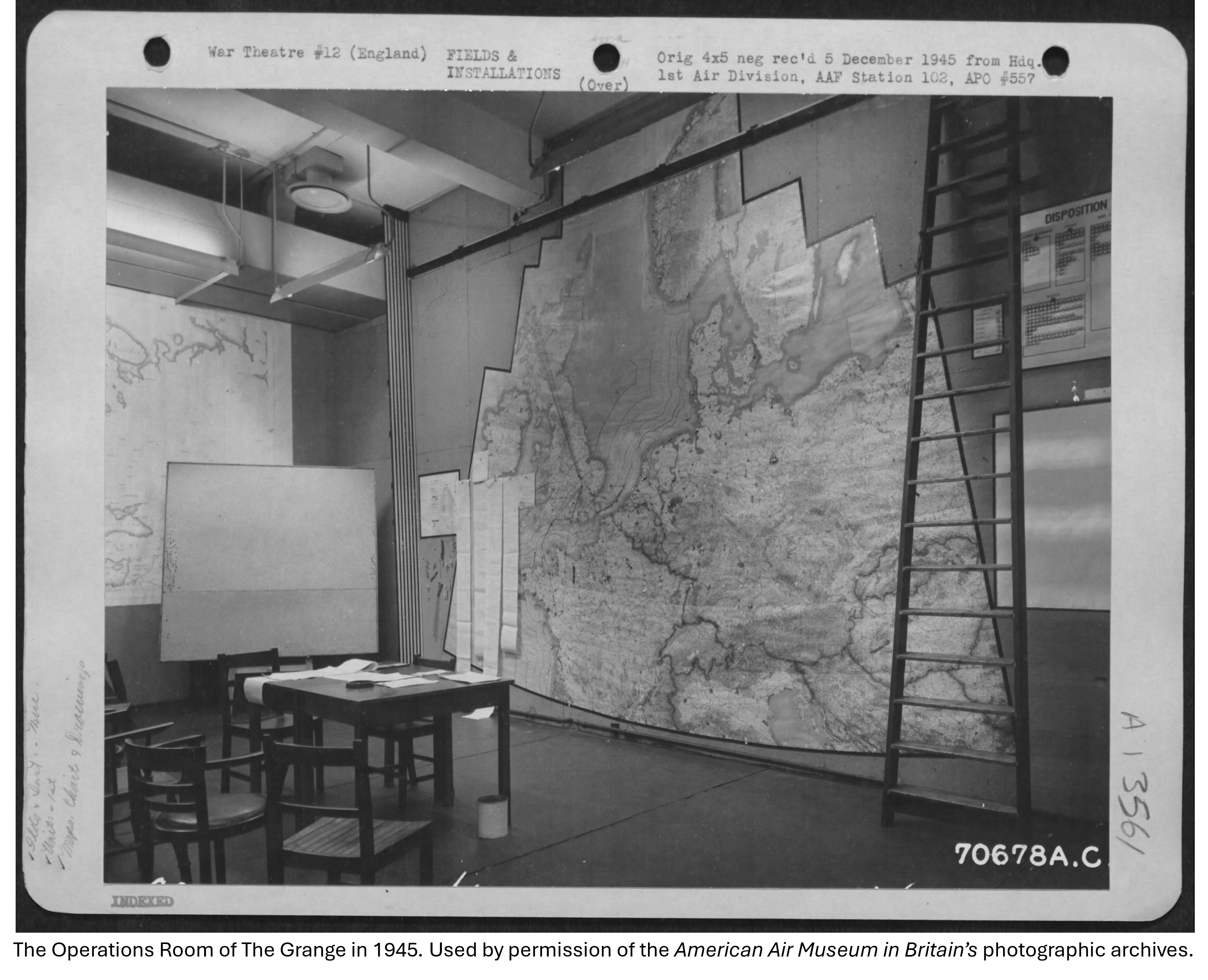
Several years into the Second World War, the United States was attacked at Pearl Harbor and was quickly at war with the Axis Powers.  Settling on a Europe First policy, the US Army Air Corps immediately began moving heavy bombers to England, primarily the Boeing B-17 Flying Fortress and Consolidated B-24 Liberator, 4-engine bombers.  In coordination with RAF Bomber Command, it was decided that the RAF would focus on night bombing missions while the US Army Air Corps would focus on high-altitude, precision daylight bombing.  As forces and capacity grew, the goal was to move the combined British and United States strategic bombing campaign against Germany and occupied Europe into round-the-clock operations.  This obviously would require an enormous amount of planning, plus operational command and control to be effective, and that is where The Grange in Brampton played its part in World War II.

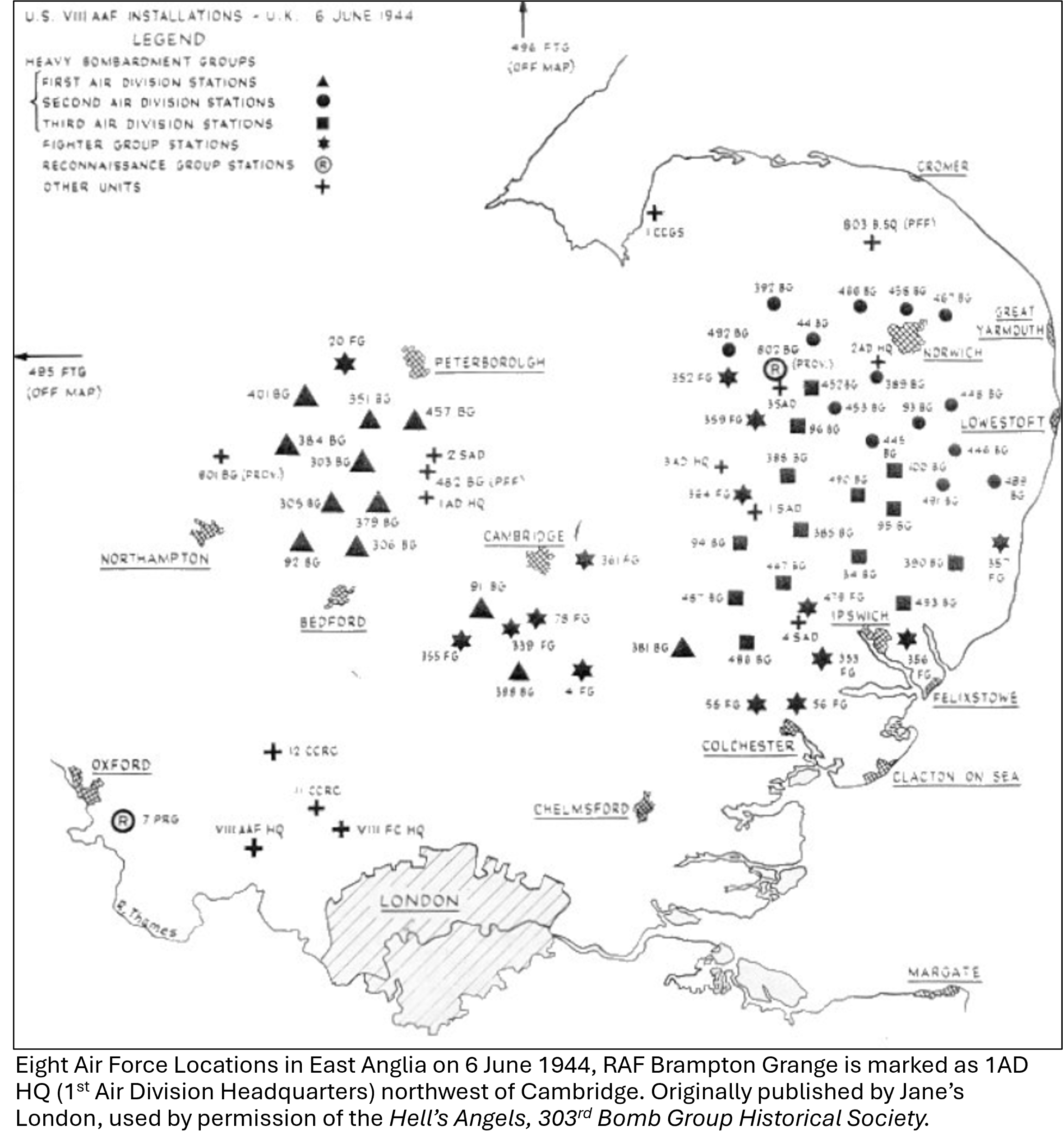
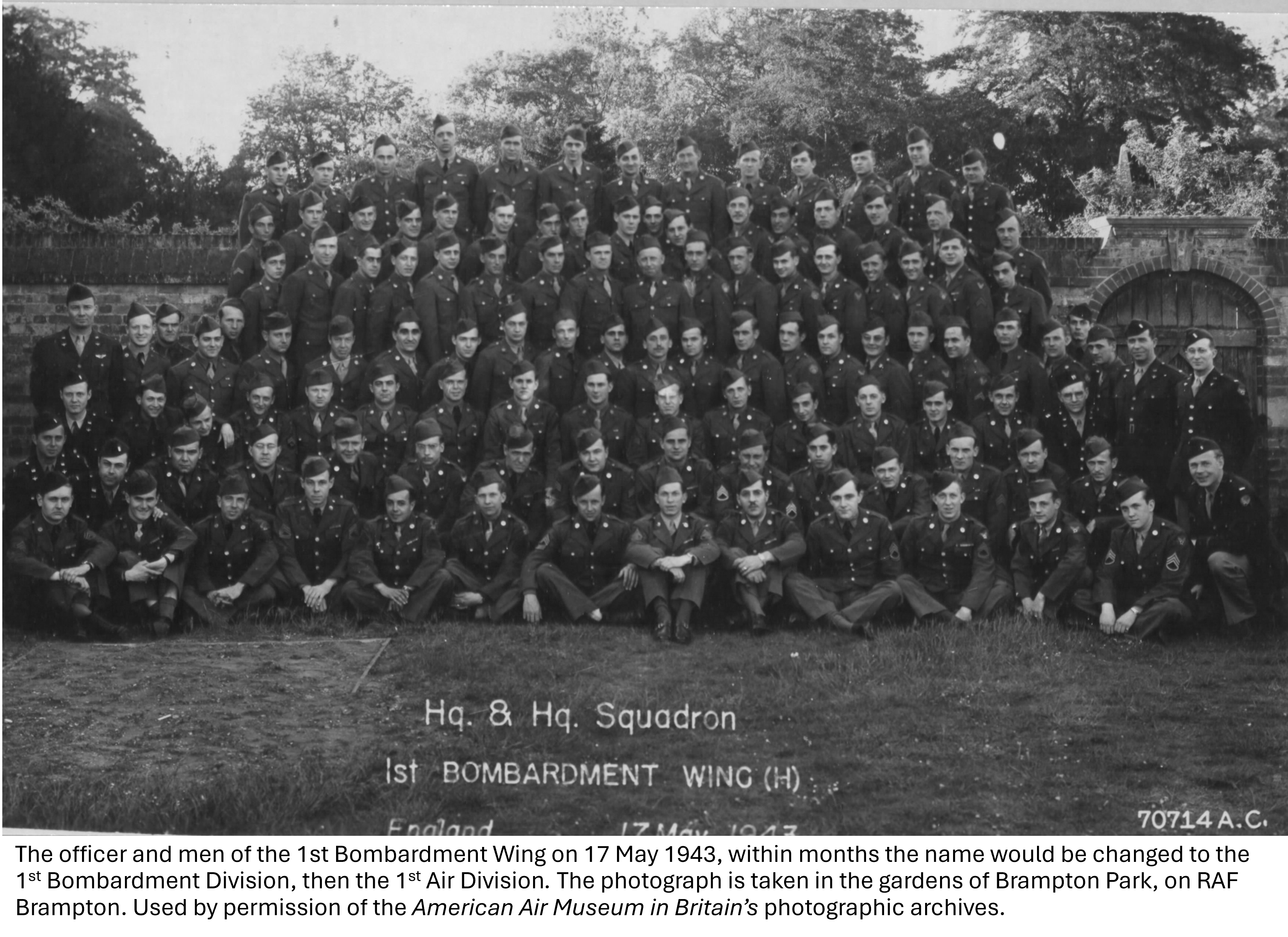
The US Army Air Forces in World War Two were organized under a Numbered Air Force (Lieutenant General, three-star Commander), then a Division (Brigadier General or Major General, one to two-star Commander), then a group (Colonel Commanding), and then squadrons (Major Commanding).  More specifically, the US Bombers in England were organized under the 8th Air Force at RAF Daws Hill located near Bomber Command at RAF High Wycombe. 8th Air Force was divided into three Divisions and the First Bomber Division was headquartered at the Grange in Brampton, referred to as RAF Brampton Grange in official documents beginning in 1943.

Almost all the bomber and fighter groups and squadrons in Cambridgeshire were commanded by the First Bomber Wing in Brampton, renamed the First Bomber Division, and finally renamed in 1944 the First Air Division.  By the war’s end, the 8th Air Force was spread over 112 airfields across East Anglia, flying B-17 and B-24 heavy bombers, B-26 Marauder medium bombers, P-38 Lightning, P-47 Thunderbolt, and P-51 Mustang fighters, as well as Spitfires and Mosquito bombers provided by the RAF.  Throughout the war, the 8th Air Force dropped 700,000 tons of bombs on Germany and occupied Europe, flew 600,000 bomber and fighter sorties, and destroyed over 15,000 enemy aircraft by air-to-air engagements, ground strafing, or by bomber crew engagement.  35,000 men and women would serve with the 8th Air Force during the war, with many thousands never returning home. Much of that enormous effort was planned and executed from the Grange in Brampton.

At the war’s end, the headquarters and staff were moved on 25 April 1945 from The Grange in Brampton to RAF Alconbury, a few miles away, where the US Air Force still operates a wing commanding several bases and facilities today. After 1945, The Grange operated as the RAF’s Technical Training Command, responsible for organizing aircraft maintenance and aircrew training. Then in 1980, released from the RAF, it became a restaurant and hotel in the village of Brampton for many years, before being converted into flats in 2013. 

Today, with no historical marker or blue disc to identify it, most people are unaware of the remarkable wartime history of The Grange in Brampton.  However, it is certainly worth a visit along the Brampton High Street new Huntingdon in Cambridgeshire.

Bomber Command Raid on a German Town – Böblingen, 7 October 1943

I often write in this dialogue with you about the local history of Cambridgeshire, and frequently about the efforts during the Second World War which originated from the bases and airfields spread throughout southeast England.  However, this week I find myself in the small town of Böblingen, Baden-Wurttemberg, in southwest Germany. It is an ancient town which was accidentally bombed during the war, bombed and destroyed.  Here one sees the horrific reality of what 8th Air Force and Bomber Command’s strategic bombing wrought on the ground.  The level of destruction waves of heavy bombers were capable of achieving in an effort to destroy Germany’s military might is sobering.  This small town is but one example of millions of lives that were horrifically changed by the Second World War – and is not a judgment on guilt or innocence – but is simply what happened.

"Böblingen 01 1939-07-01" by Ansgar Walk - Foto erstellt von Ansgar Walk.  The town on 1 July 1939.
“Böblingen 01 1939-07-01” by Ansgar Walk – Foto erstellt von Ansgar Walk. The town on 1 July 1939.

On the night of 7 October 1943, 343 Avro Lancaster Bombers, launching from airfields in Cambridgeshire and beyond, formed up and began a major night raid on the military-industrial targets of Stuttgart.  It was overcast and dark, some of the aircraft from the 101st squadron were equipped with night-fighter jamming equipment (this was “CIGAR” first operational use in a combat mission). This allowed the bombers to conduct the raid with little resistance.  A diversionary raid on Munich further confused the German fighters and the bombers reached their targets relatively unhindered and dropped waves of ordnance, explosives followed by incendiary bombs, losing only four aircraft that night.  The mission was hailed as a success – for the industrial capacity of Stuttgart needed to be destroyed to slow the German war machine.

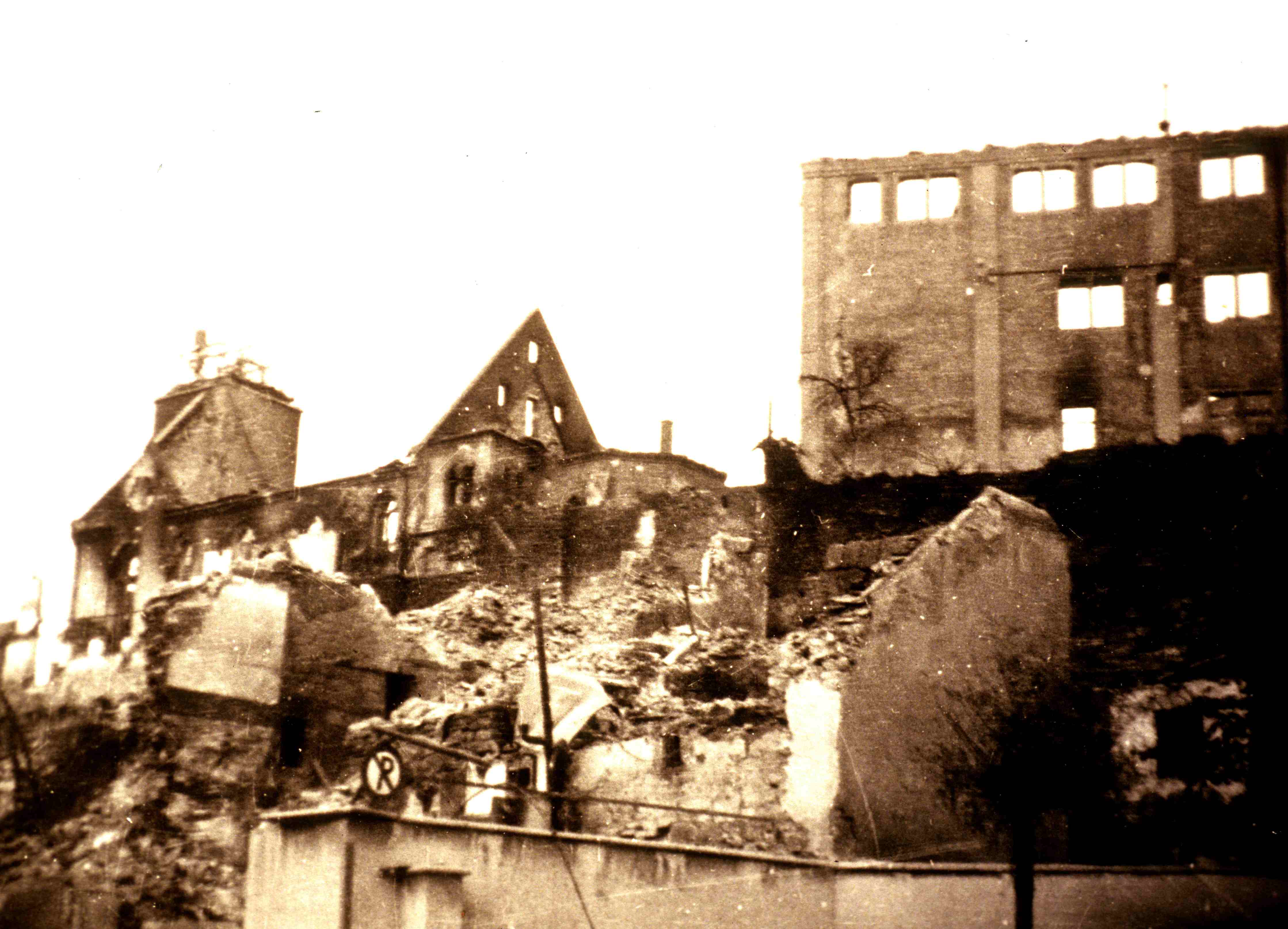
Things were very different in the sleepy town of Böblingen, 10 miles southwest of Stuttgart, where no military targets were located.  By mistake, one of the two pathfinders which dropped aerial markers to guide in the remaining bombers, marked Böblingen instead of the industrial facilities of Stuttgart.  Following the pathfinder’s lead, the Lancasters dropped 35 high-explosive bombs before over 400 incendiary bombs over the unsuspecting town.  The Schloβberg, church, and over 70% of the old town was destroyed.  1,735 people lost their homes, and most tragically, 44 people died including 24 women and children.  As I walked around the Schloβberg this week, which still is the central part of the rebuilt town, I found small intact pieces of the medieval castle which survived the night.  One can still see the black scorching on the medieval stones, which were burned permanently into the rock by the inferno caused by the incendiaries.  It isn’t hard to picture the horror of that night to the people of this small town, rushing about, seeking shelter and tending to the destruction.

"Zentrum von Böblingen nach dem Bombenangriff vom 7./8. Oktober 1943." Date 12 October 1943  Source Foto erstellt von Ansgar Walk. Photograph by Ansgar Walk .
“Zentrum von Böblingen nach dem Bombenangriff vom 7./8. Oktober 1943.” Date 12 October 1943
Source Foto erstellt von Ansgar Walk. Photograph by Ansgar Walk . The shell of the nave of the protestant church can be seen in the centre of the photo, where the remembrance memorial now stands.

A small piece of the Boblingen castle, completely destroyed on the night of 7 October 1943.  This piece of archway lies buried in the hillside. © Brandon Wilgus, 2015.
A small piece of the Böblingen castle, completely destroyed on the night of 7 October 1943. This piece of archway lies buried in the hillside. © cambridgemilitaryhistory.com, 2015.

A medieval tower remained after the bombing of the castle.  It now is perched on the highstreet, between buildings from the 1950s and beyond.  A testament to the almost complete destruction of Boblingen's center. © Brandon Wilgus, 2015.
A medieval tower remained after the bombing of the castle. It now is perched on the Highstreet, between buildings from the 1950s and beyond. A testament to the almost complete destruction of Böblingen’s centre. © cambridgemilitaryhistory.com, 2015.

On the back of the rebuilt protestant church, which was just a shell of stone after the night’s bombing, I found a small stone marker that commemorates the loss of that night – a phoenix flies up from the ashes – and the inscription reads: “Destroyed by bombs during the night of 7/8 October 1943, rebuilt 1949/1950 for the glory of God.”

The memorial stone on the rebuilt nave of the protestant church in Boblingen. © Brandon Wilgus, 2015.
The memorial stone on the rebuilt nave of the protestant church in Böblingen. © cambridgemilitaryhistory.com, 2015.

Sadly, another very similar event happened in 1944, when Böblingen was once again struck out of confusion by bombers seeking the heavy industry of Stuttgart.  More deaths, more destruction in this small town so desperately affected by the Second World War.

A check of the Statistisches Bundesamt, the Federal German Records Office, shows that in the last census before the war, Böblingen had a population in 1939 of 12,560.  In 1946, 10,809 people were counted in the town.  1,751 people had disappeared from the town.  Behind those numbers are enormous tragedies: lost civilians in the raids yes, but also lost soldiers, dispossessed families that left never to return, and even those murdered by the regime.  Time has passed now and I don’t seek to judge or to search for any more horror here. A tragedy has woven together with accidental targeting of an unimportant town, spurred by the deliberate bombing of military-industrial targets, the civilian losses, the impact of the war on these people, but also the crews of the four Lancasters which were lost that night, and the overall efforts of so many for so long during a dreadful time. The greater tragedy of the Second World War can best be found in seeking the personal stories, the human struggles of so many in the face of such horror over so long.

Writing to you from Böblingen, Germany.  Brandon.