RAF Little Staughton: Home of the Pathfinders of No. 109 and No. 582 Squadrons

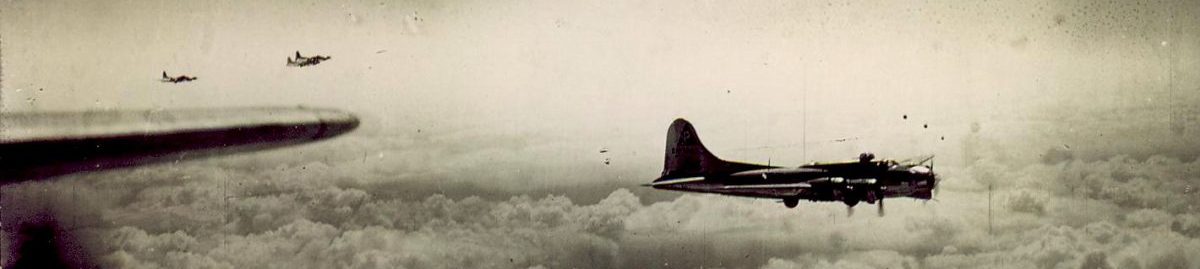
During the Second World War a large Royal Air Force Station operated several types of aircraft and served both the Royal Air Force and the U.S. Army Air Corps near the village of Little Staughton, on the border between Bedfordshire and Cambridgeshire. In 1942, RAF Little Staughton was designed as a Class A airfield, able to support the heavies — multi-engine bombers such as Boeing B-17s, Consolidated B-24s, and Avro Lancasters.  Once complete, the airfield was set aside as a depot, more specifically, the 2nd Advance Air Depot of the US Army Air Corps, under the 1st Bomb Wing at RAF Brampton Grange (see my posting about this headquarters). B-17s, damaged or in need of maintenance that could not be provided at their home station were flown to RAF Little Staughton for repairs.  

On 1 March 1944, the U.S. Air Force returned the facility to RAF use, and it became the home of two squadrons of Pathfinder Force Group 8 – No. 109 Squadron flying the de Havilland Mosquito XVIs, and No. 582 Squadron flying Avro Lancaster Mark Is and IIIs.
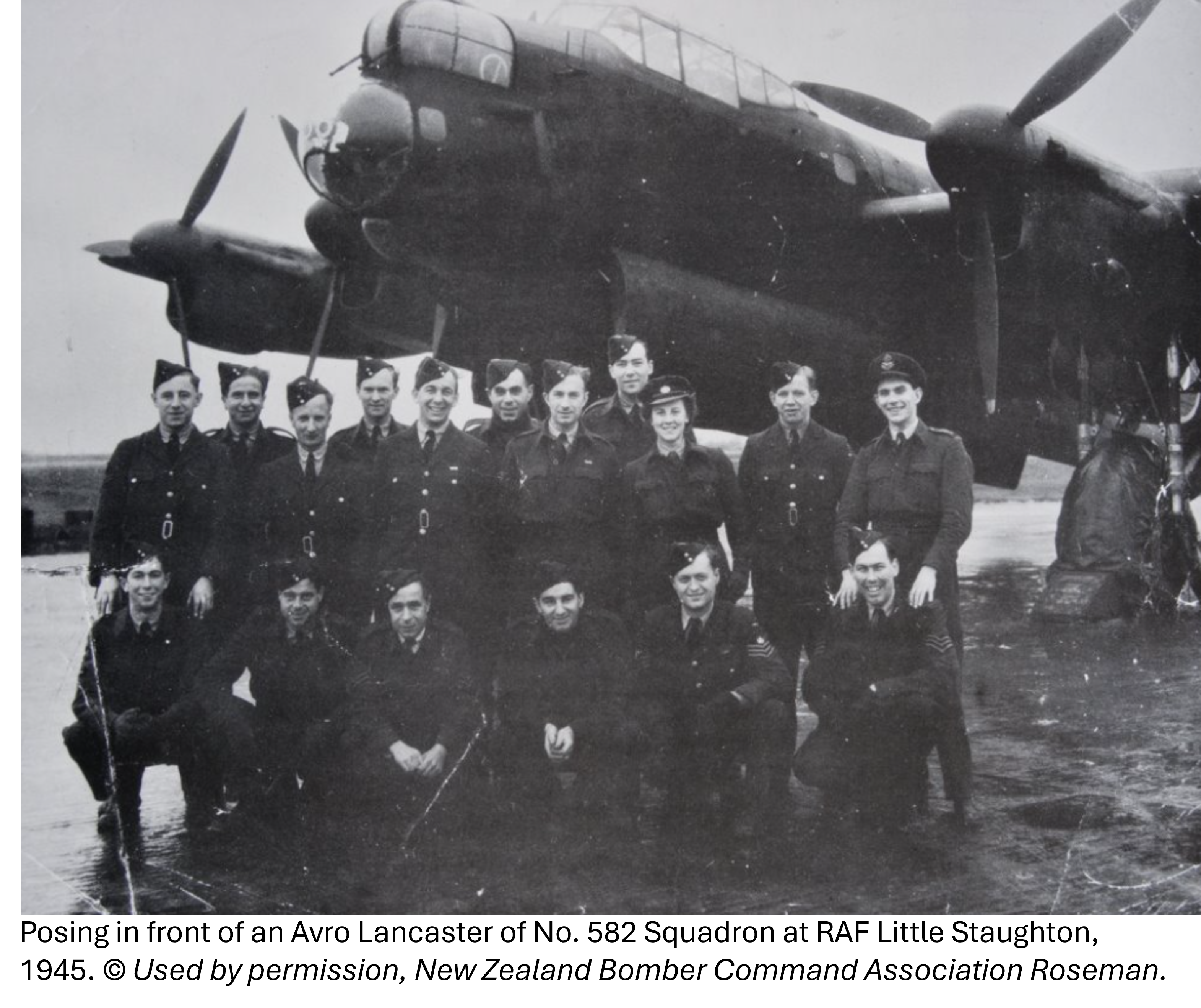
In the last year of the war, the Pathfinders flew 2,100 sorties from RAF Little Staughton in 165 separate missions against Germany and occupied Europe. Over 120 medals for courage and gallantry were awarded to the officers and men flying from RAF Little Staughton, along with two Victoria Crosses:  Squadron Leader Robert A. M. Palmer, VC DFC with Bar and Captain Edwin “Ted” Swales, VC DFC.  The two men were close friends and both pilots in 582 Squadron.  

Squadron Leader Palmer was 24 years old on 23 December 1944 when he was the Master Bomber – in command of the lead bomber on a raid of 30 aircraft – over Cologne, Germany.  Despite heavy clouds and several losses enroute to the target, Palmer continued the run despite an order having gone out to break up the formation and for the bombers to drop their ordnance visually. His Lancaster damaged by German anti-aircraft fire, with two engines erupting in flames, Palmer stayed on target and dropped his bombs as the lead plane, fulfilling his role as a Pathfinder, before his aircraft spiralled out of control.  Only the tail gunner escaped from Palmer’s Lancaster. He was posthumously awarded the Victoria Cross.  Six of the 30 RAF aircraft on the 23 December 1944 raid on Cologne were lost.

Captain Swales, a South African pilot, was 29 years old on 23 February 1945 when he was the Master Bomber in a Lancaster leading a bombing raid on Pforzheim, Germany of 367 Lancasters and 13 Mosquitos. Swales successfully found the target and marked it for the several hundred bombers following his lead.  After dropping his bomb load, Swales’ Lancaster was critically damaged by a Messerschmidt Bf-110.  With the fuel tanks ruptured and two engines lost, Swales held the plane in the air as his crew all successfully bailed out over France.  He attempted to bring down the Lancaster over friendly territory, but it stalled and crashed near Valenciennes.  Like his friend Palmer, Swales was posthumously awarded the Victoria Cross. His Lancaster was one of 12 lost in the raid.
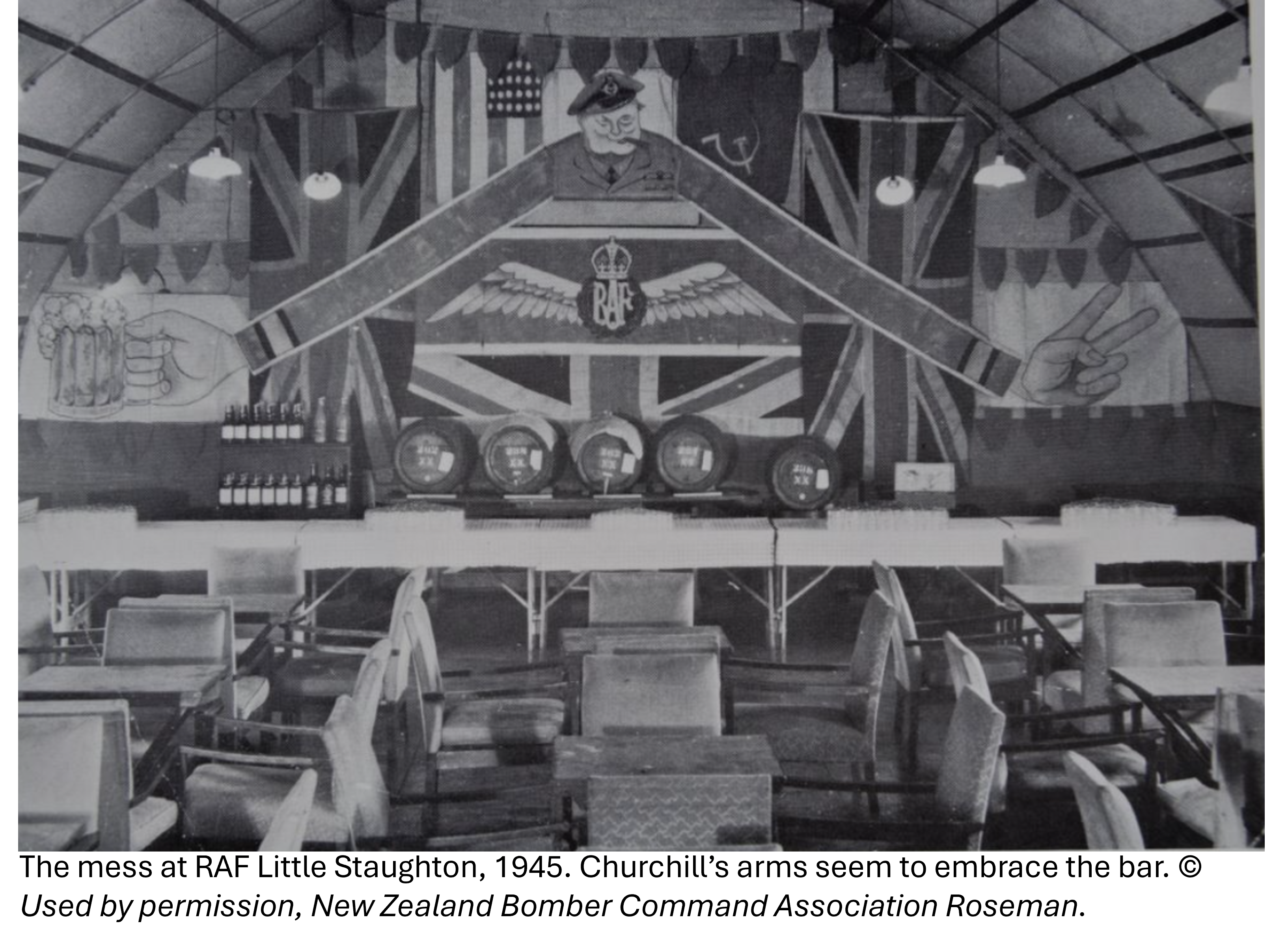
28 Lancasters from No. 582 Squadron would be lost from April 1944 until VE day. 23 Mosquitos of No. 109 Squadron were lost during the same period.  The sacrifices of these men, working to protect their nation and liberate Europe, in such a short period of time is stunning.

In September 1945, RAF Little Staughton was put into a care and maintenance status.  However, its days as a flying airfield were not finished. In the 1950s, the U.S. Air Force expanded and lengthened the main runway to 3,000 yards so that RAF Little Staughton could serve as a divert for RAF Alconbury’s North American B-45 Tornado multi-engine jet bombers and the Douglas B-66 Destroyer light bombers which were then flown by the 85th Bombardment Squadron.
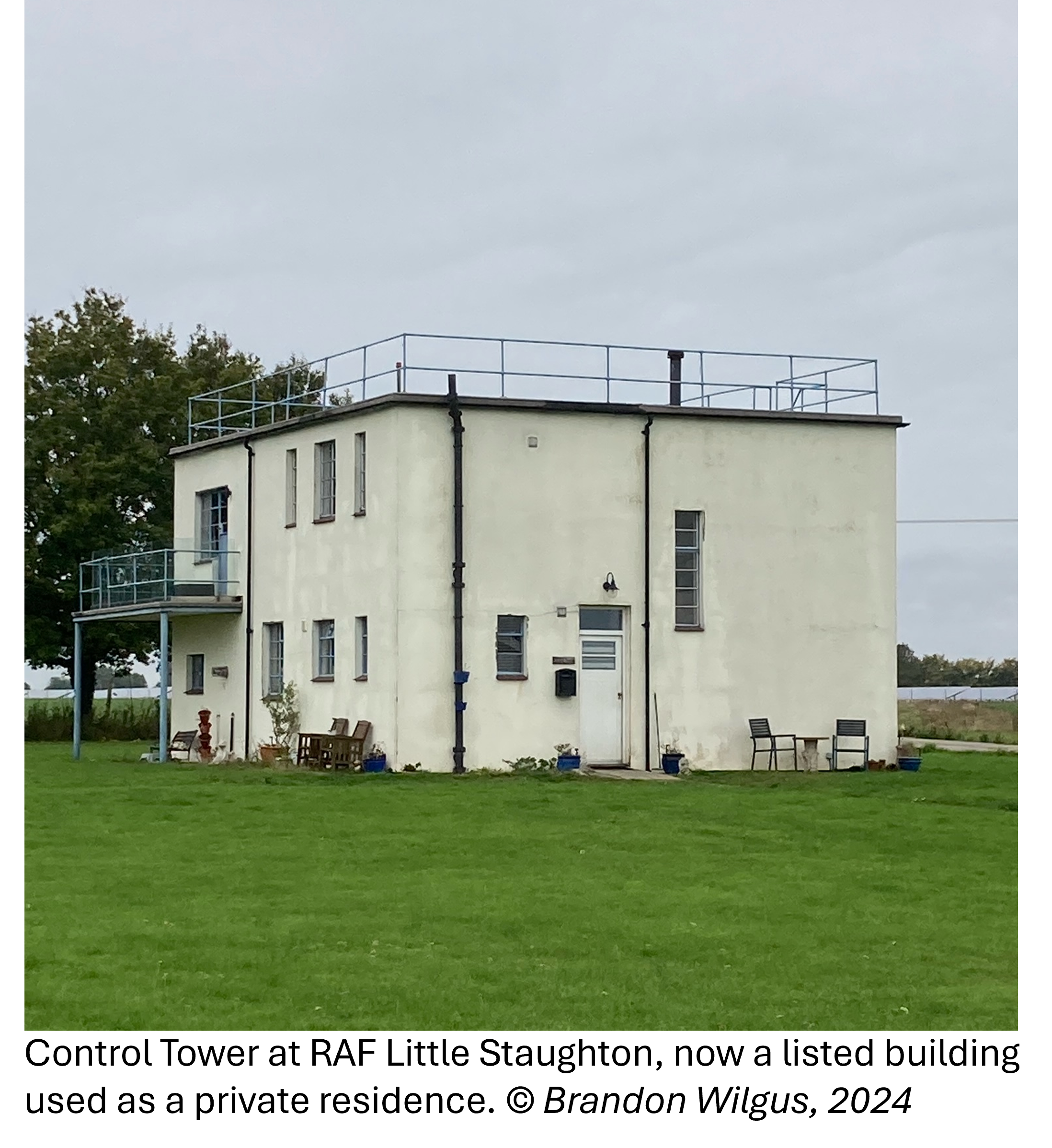
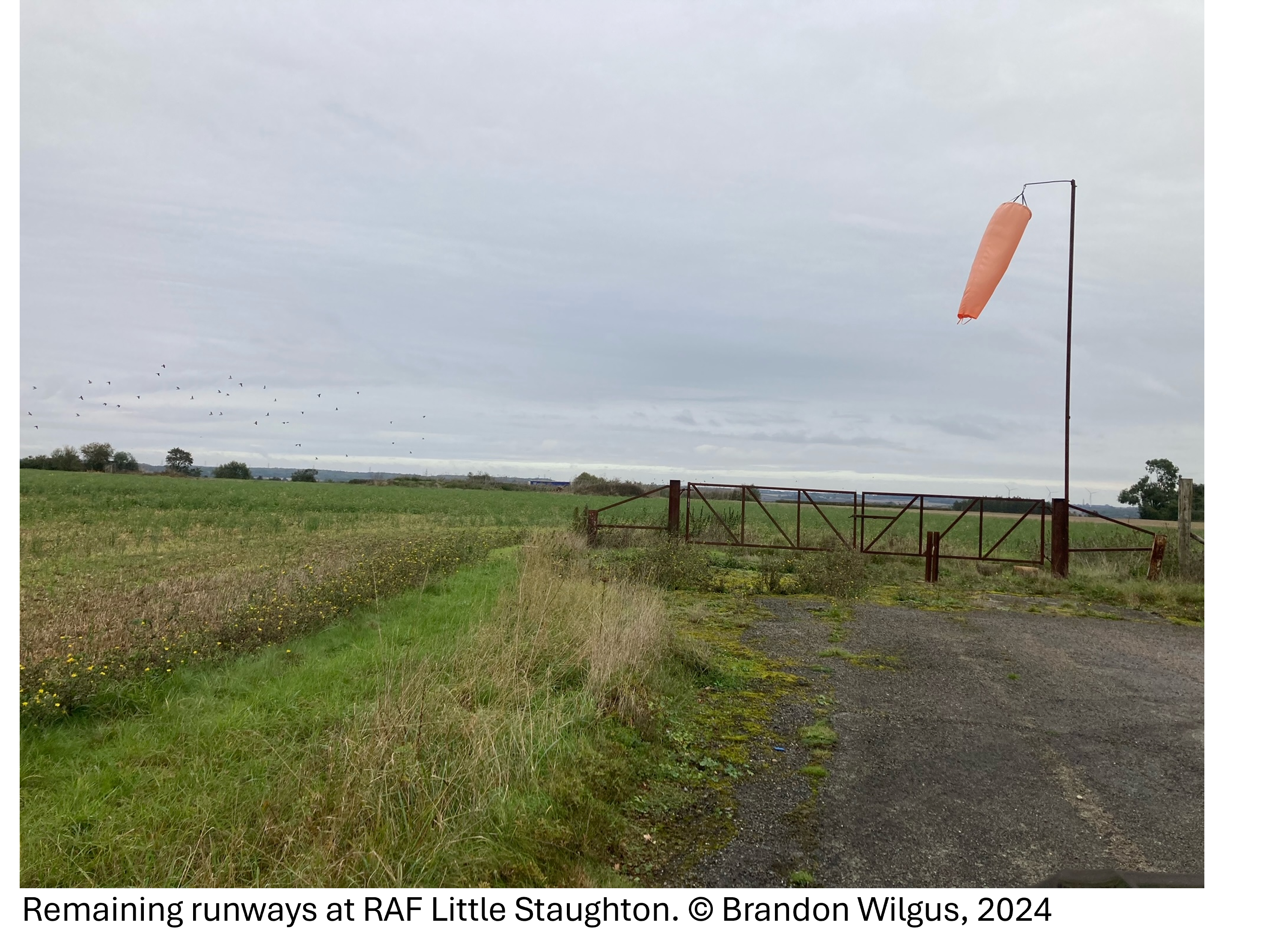
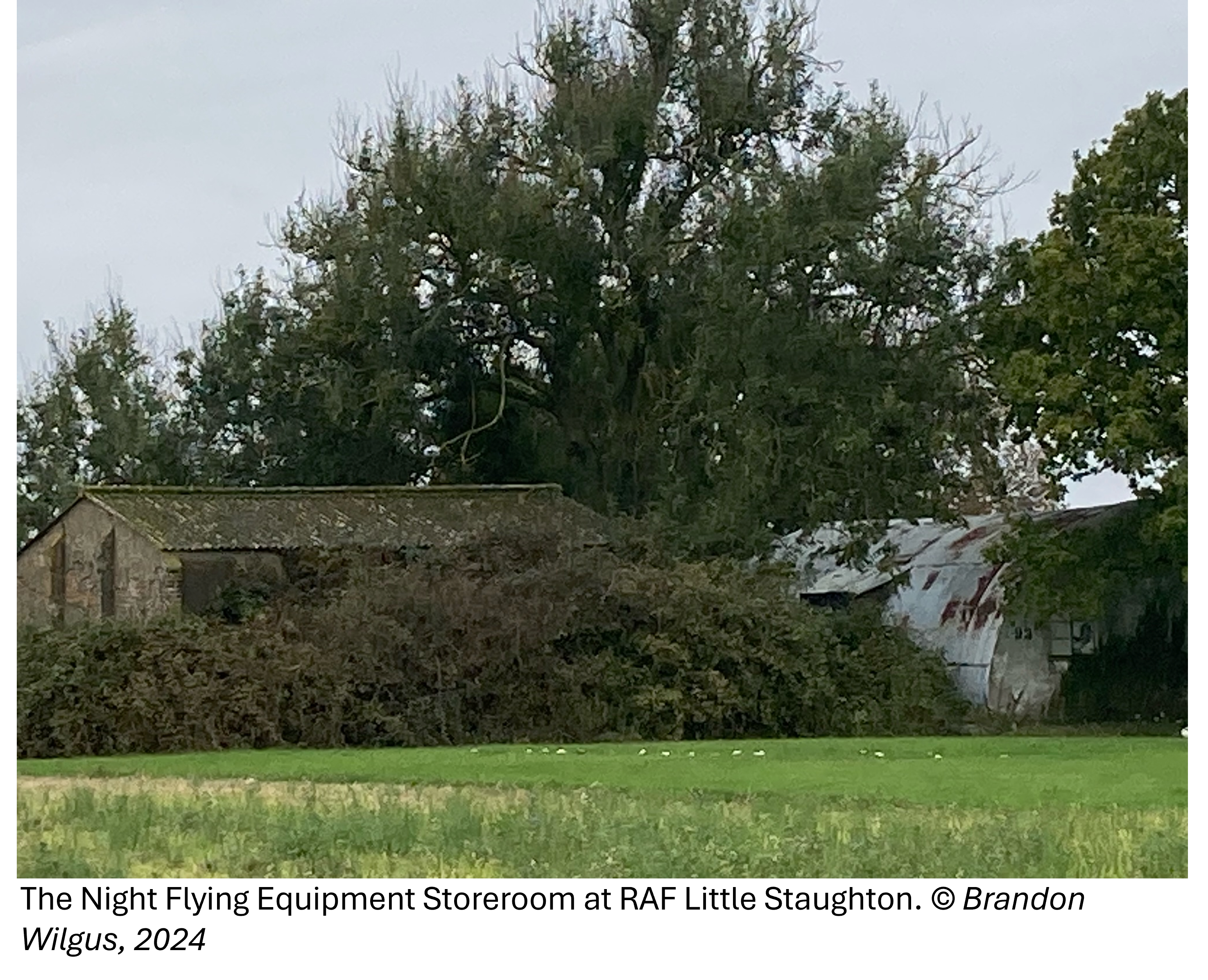
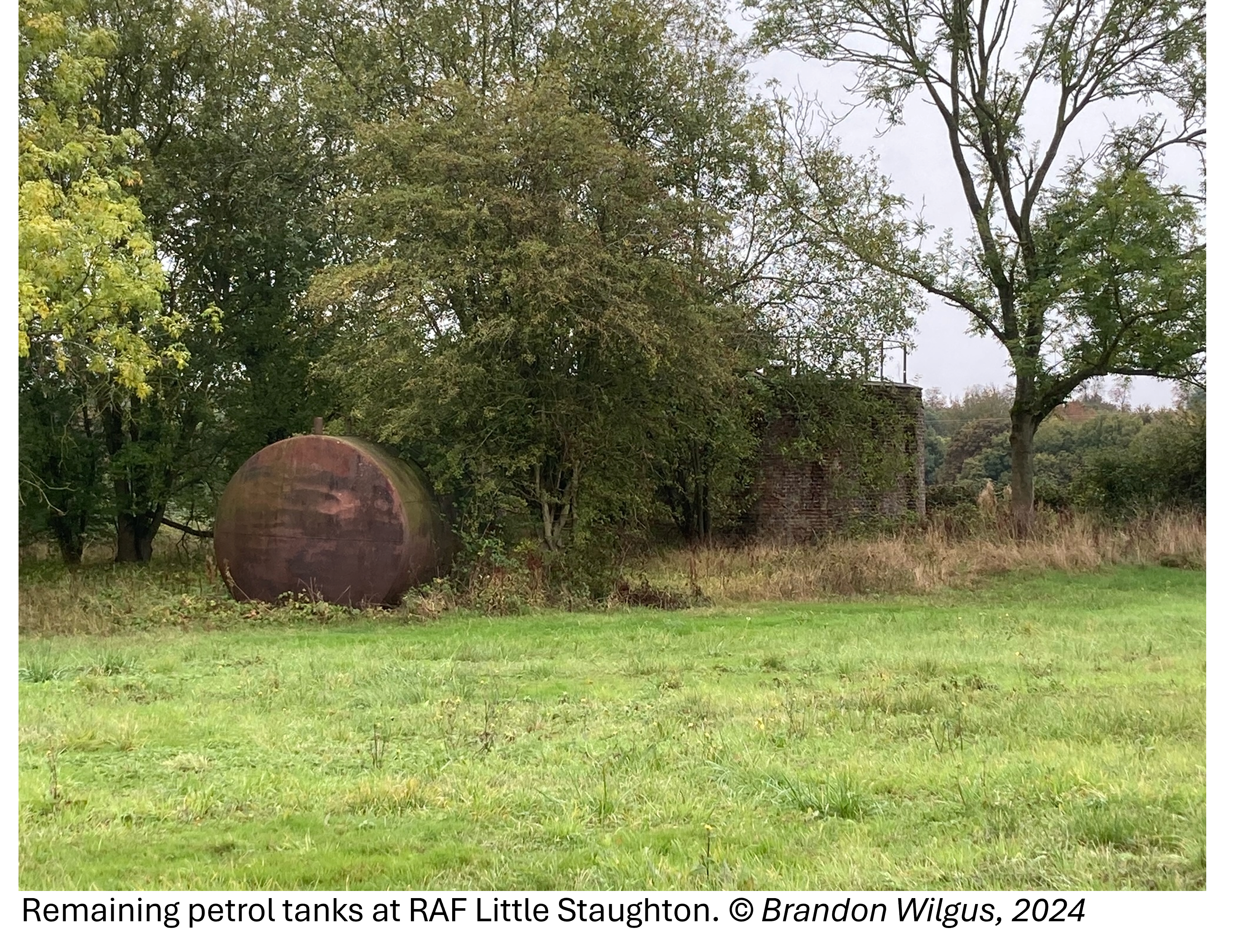
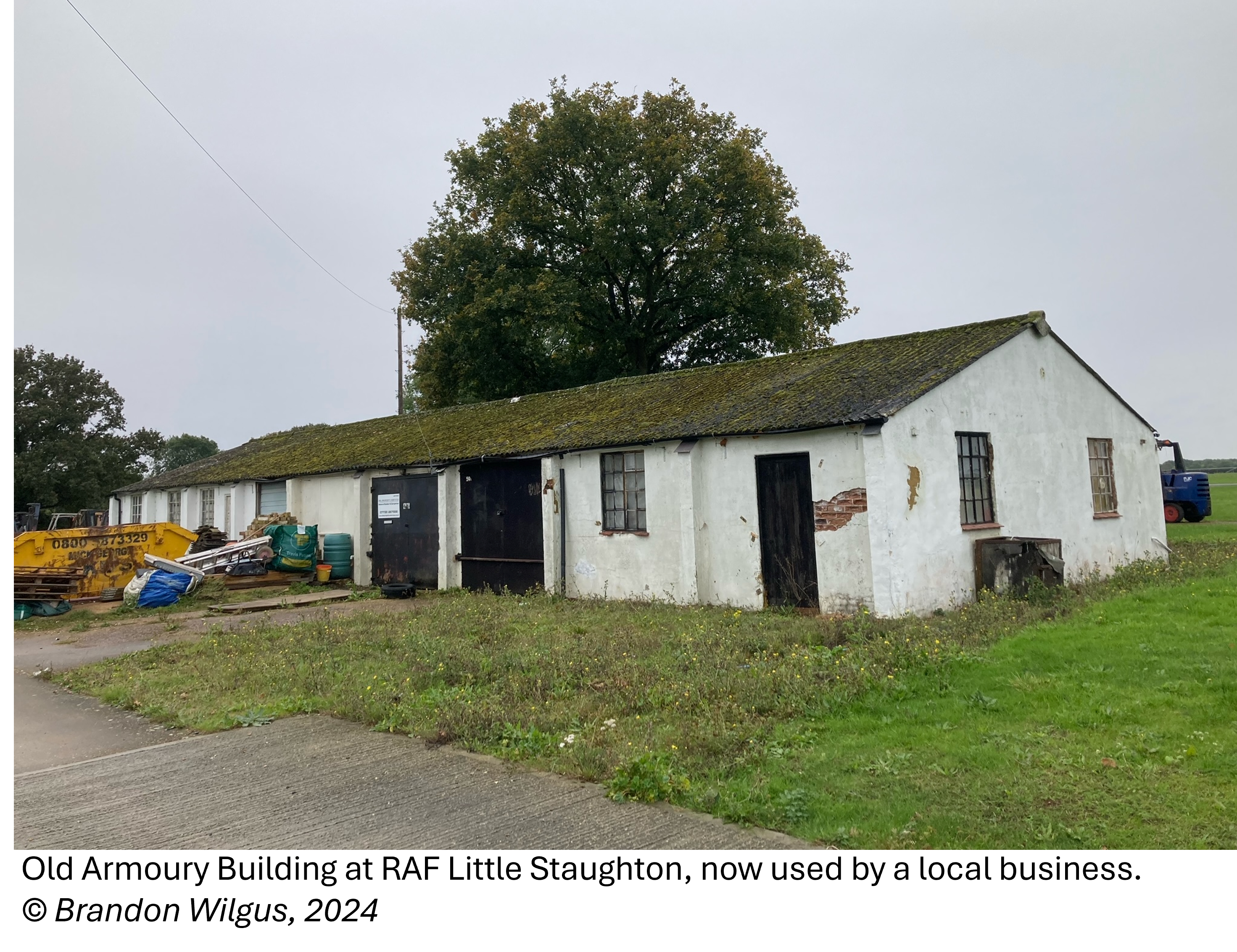
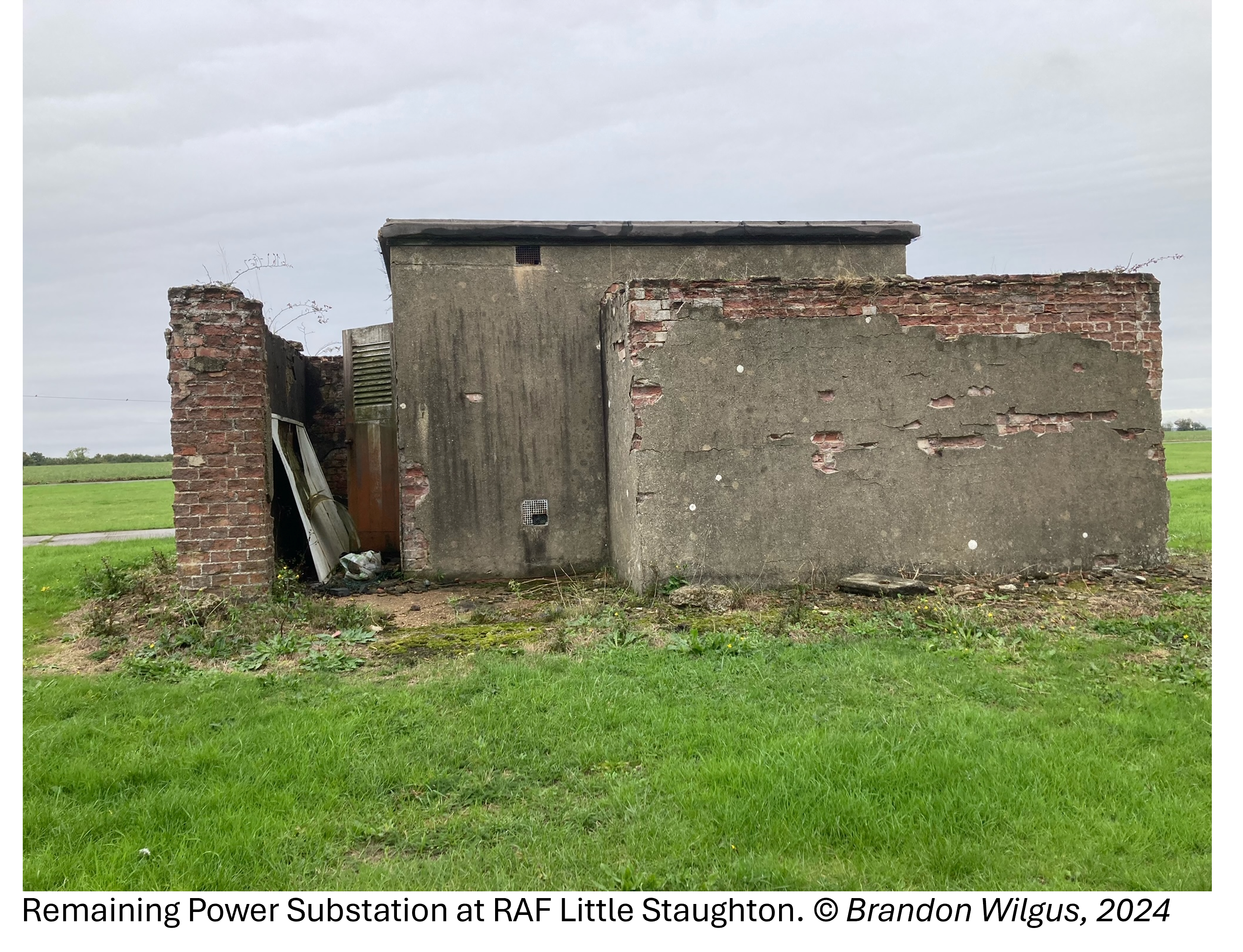
Today, light industry dots the former airfield and many of the original buildings, storage areas, hangars, and the control tower still stand. A solar power farm covers much of the land which once was the Royal Air Force station. Overgrown and scattered around the site are several old blast shelters, bomb dumps, petrol storage tanks and more. Hangars and barracks are still used by small businesses. Light, general aviation craft fly from the old runways.  Maybe, best of all in terms of preservation, the World War II control tower still stands and is in excellent shape, it is now a private residence. In fact, RAF Little Staughton is one of the best-preserved airfields I’ve visited, not that it has been kept as a museum, but its ongoing use has maintained the facility in an impressive state of repair after almost a century.

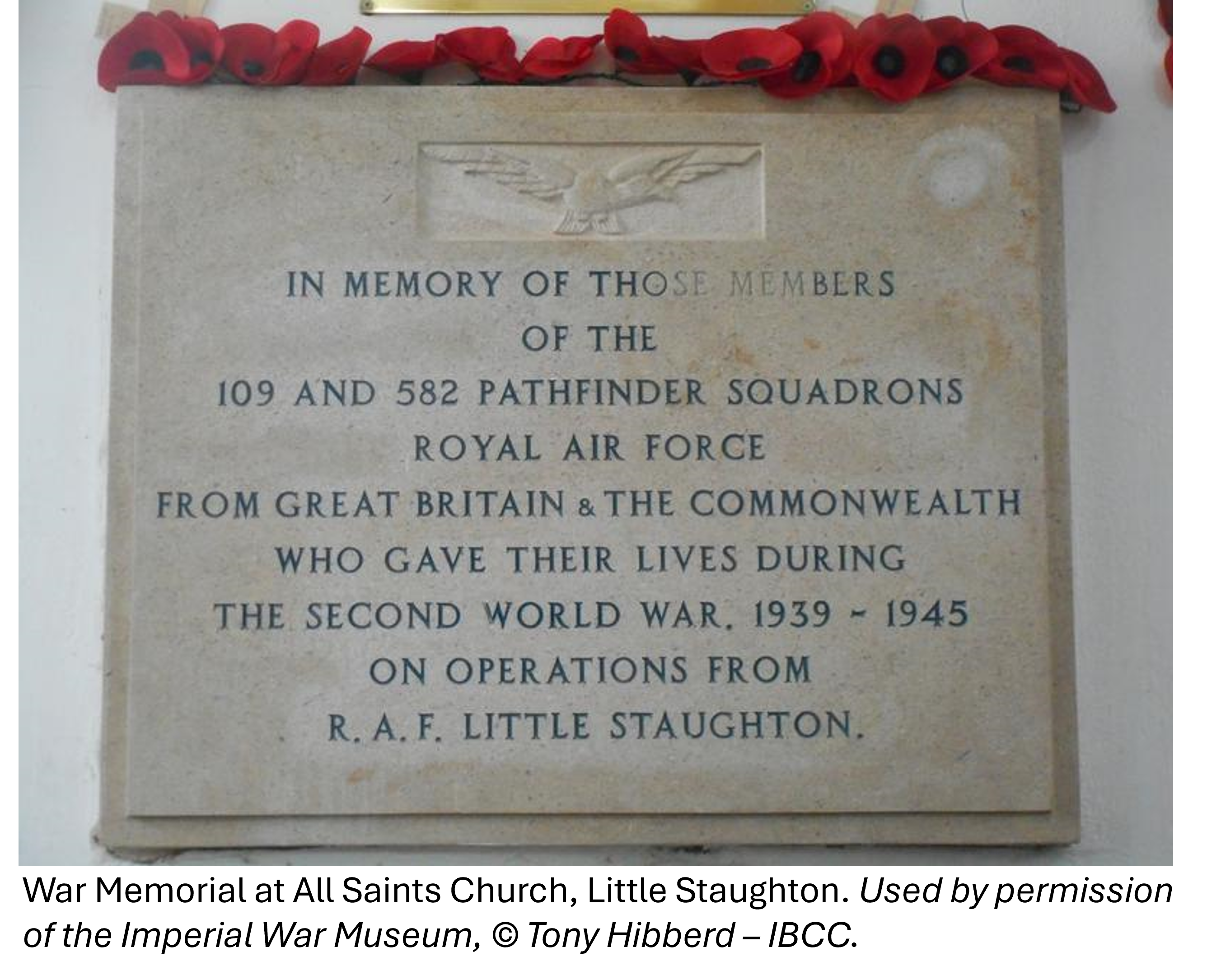
A mile or so from the former air station lies the Parish Church of All Saints, Little Staughton.  Interestingly, the church lies a bit distant from the village, as the original village was abandoned after a bought of bubonic plague and the survivors farther away from its original location in the Middle Ages.  A memorial in the Church on the south wall honours the men from 109 and 582 Pathfinder Squadrons who lost their lives, and the airfield’s Roll of Honour is on display as well. (Although the church is open on Saturdays and Sundays in the summer, you can ring ahead and arrange a time to visit throughout the year, just check the parish website.)
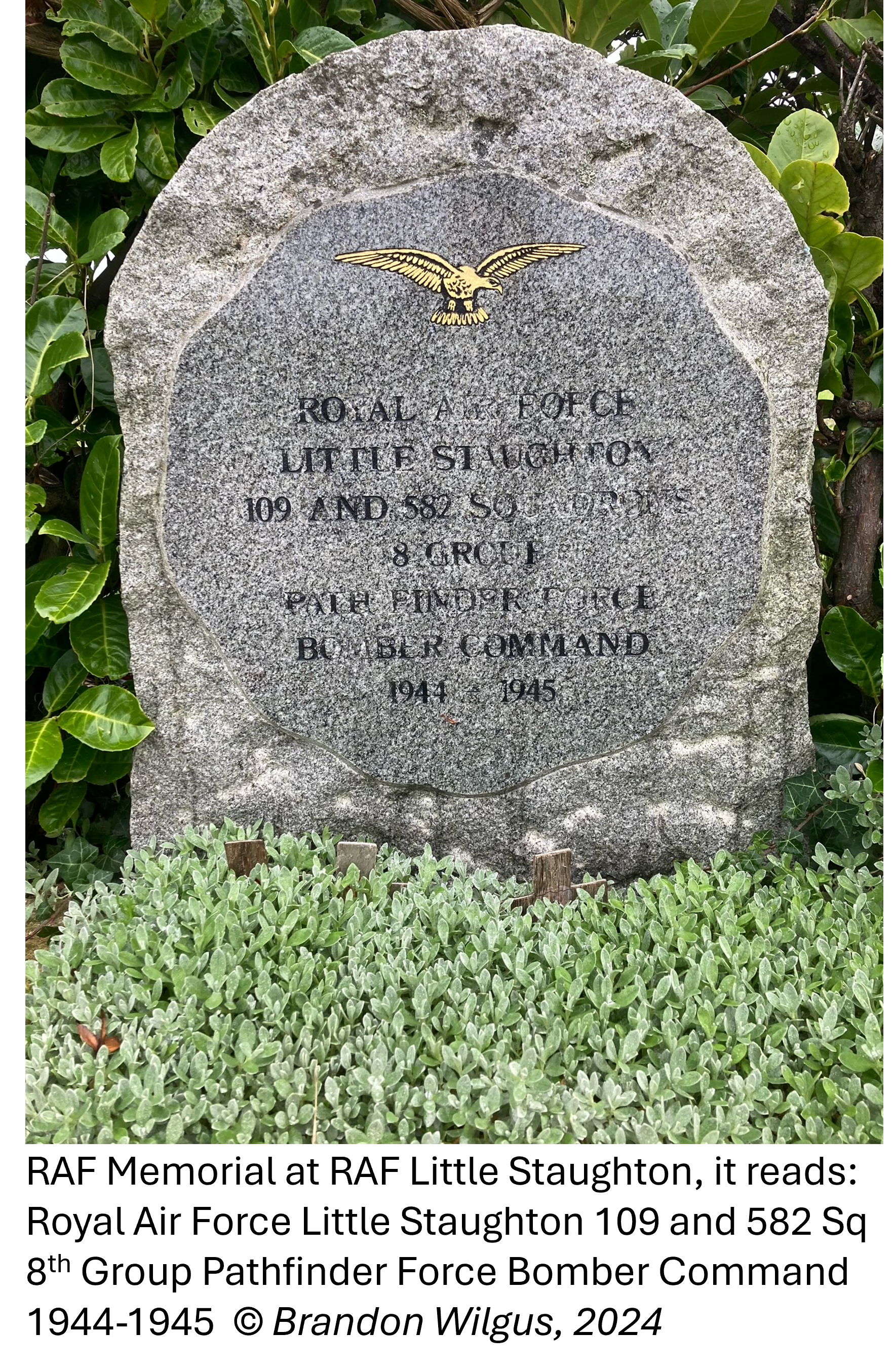
Located near the end of the runway is the RAF Little Staughton Airfield Memorial, obviously well cared for by the village. It recognized the sacrifice of the airmen who once flew from this field and lies on the cracked concrete which once made up the runway.
RAF Brampton Grange and the First Air Division in World War II

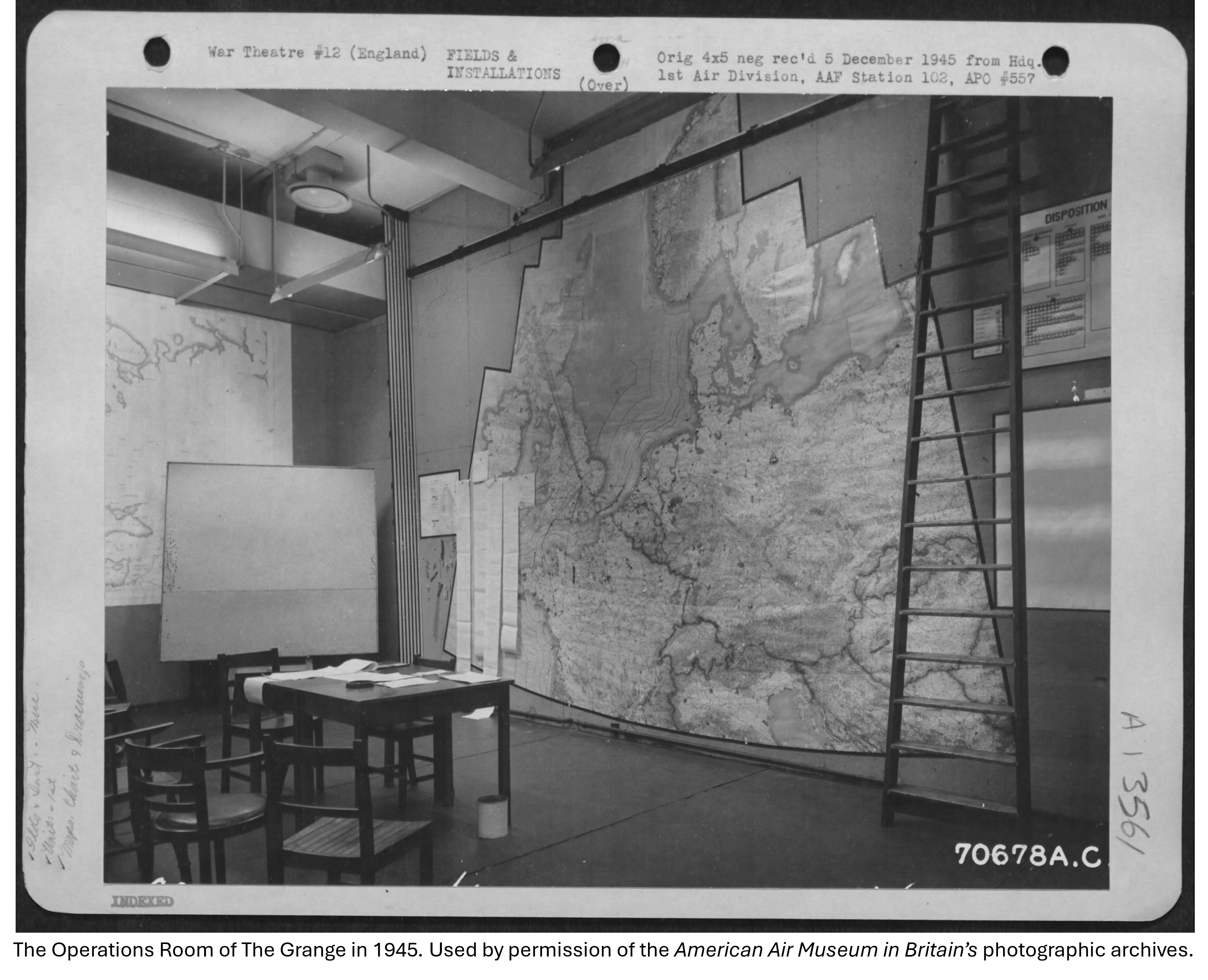
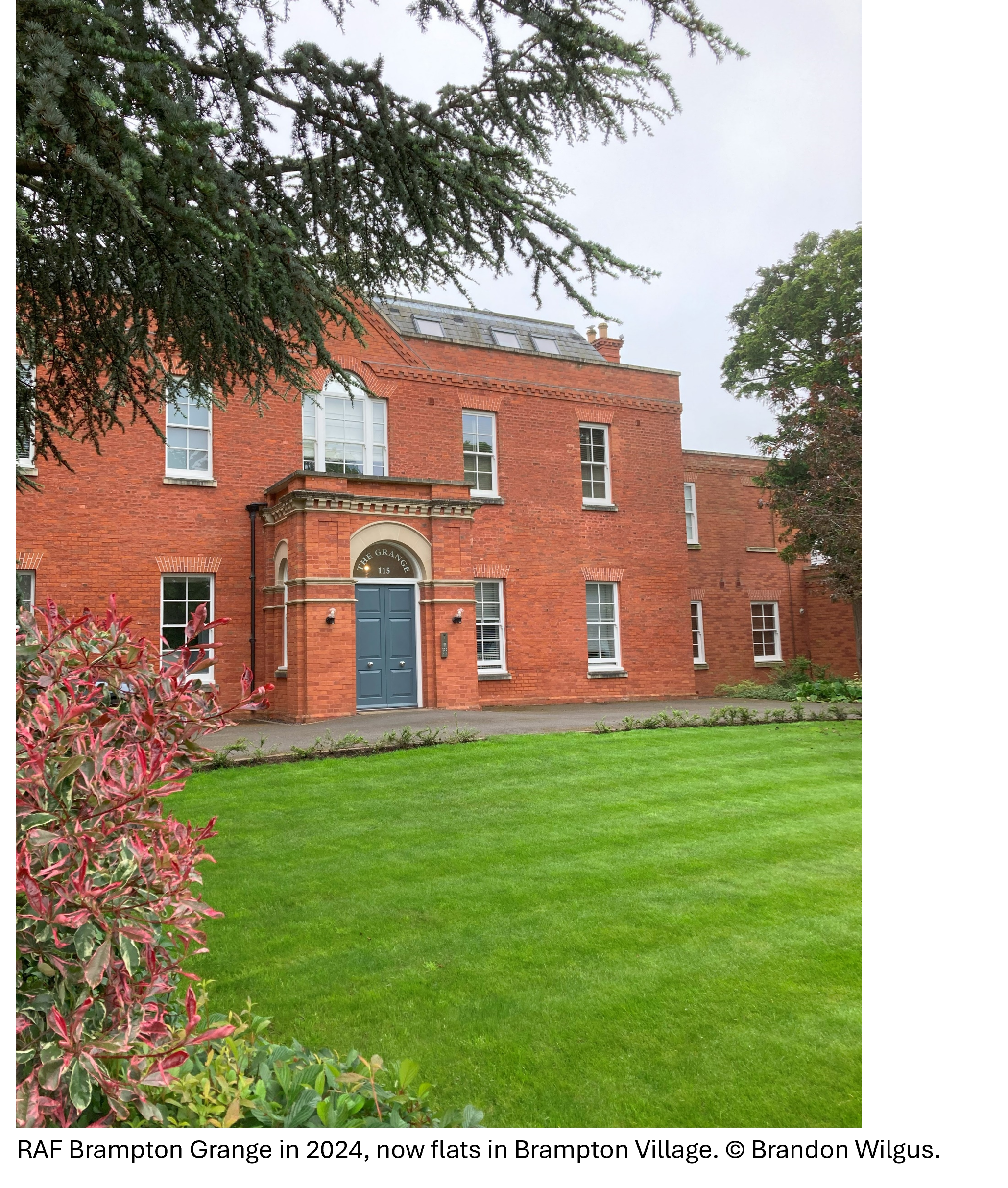
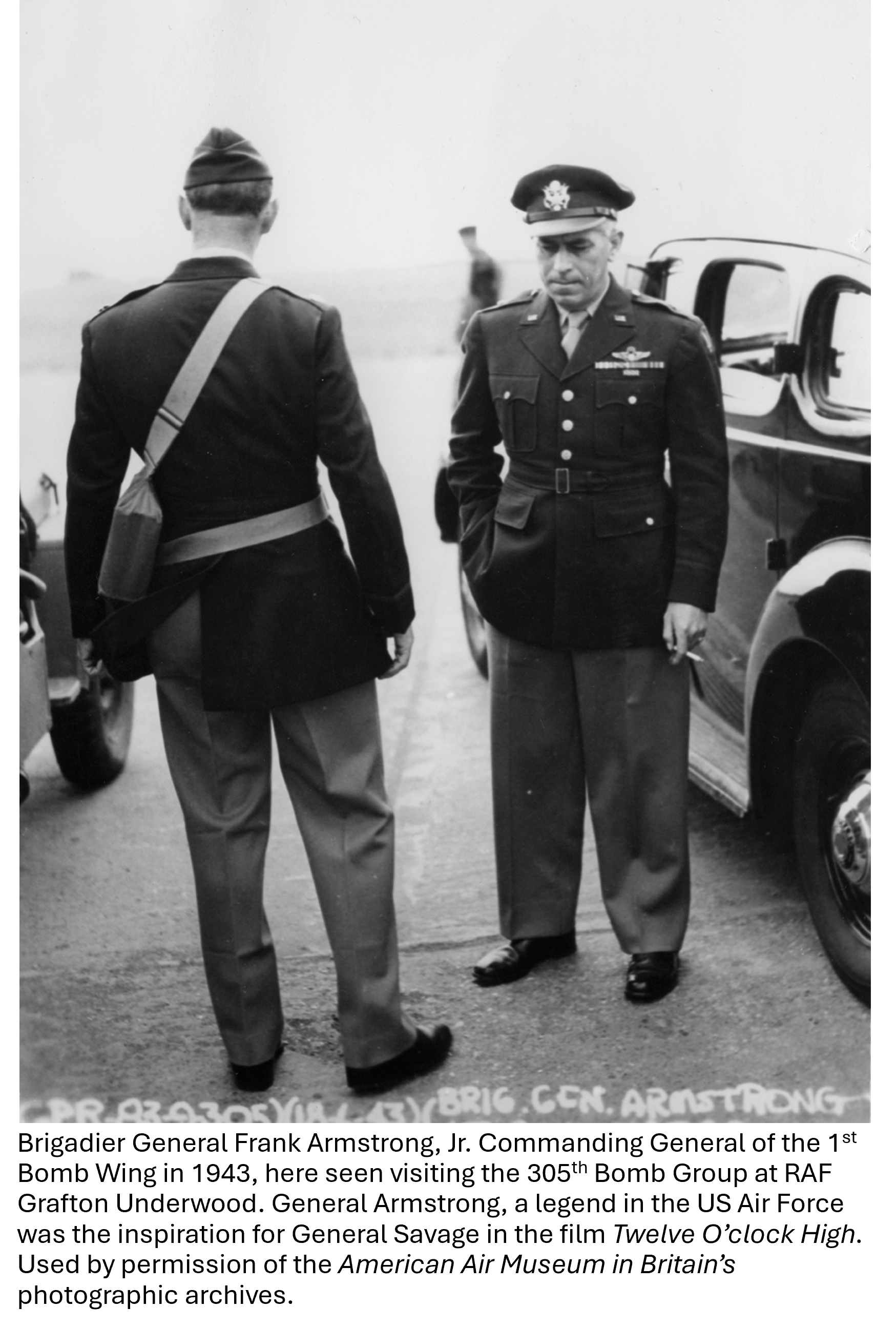
In the village of Brampton, Cambridgeshire lies a large, Georgian house built in 1773 called The Grange.  Despite its early use as a girl’s school in the 19th Century and its connections with Lady Olivia Sparrow, the philanthropist and early evangelist, it is the Grange’s use in the Second World War as the headquarters of the 8th Air Force’s 1st Air Division that most interests me.

Several years into the Second World War, the United States was attacked at Pearl Harbor and was quickly at war with the Axis Powers.  Settling on a Europe First policy, the US Army Air Corps immediately began moving heavy bombers to England, primarily the Boeing B-17 Flying Fortress and Consolidated B-24 Liberator, 4-engine bombers.  In coordination with RAF Bomber Command, it was decided that the RAF would focus on night bombing missions while the US Army Air Corps would focus on high-altitude, precision daylight bombing.  As forces and capacity grew, the goal was to move the combined British and United States strategic bombing campaign against Germany and occupied Europe into round-the-clock operations.  This obviously would require an enormous amount of planning, plus operational command and control to be effective, and that is where The Grange in Brampton played its part in World War II.

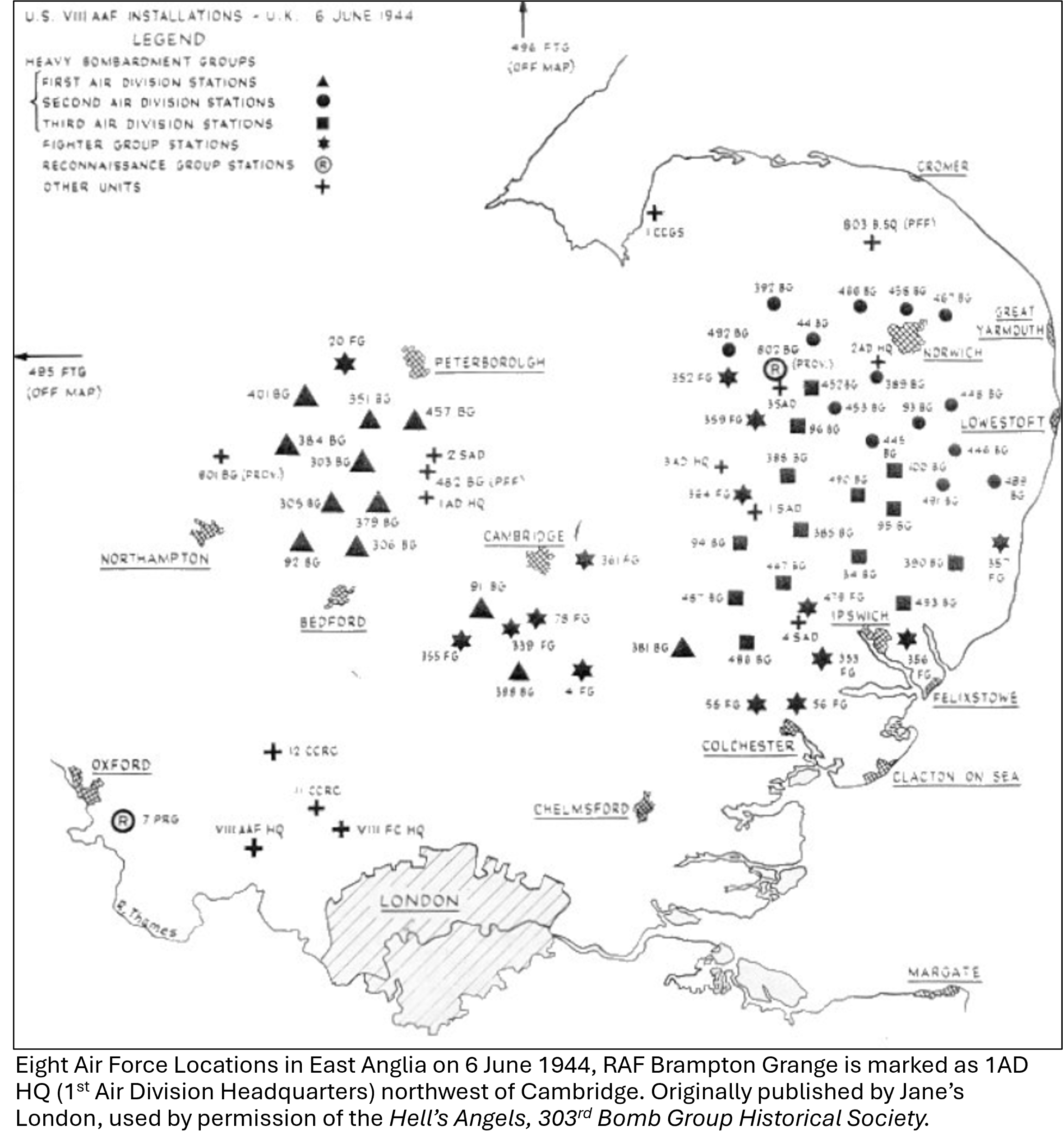
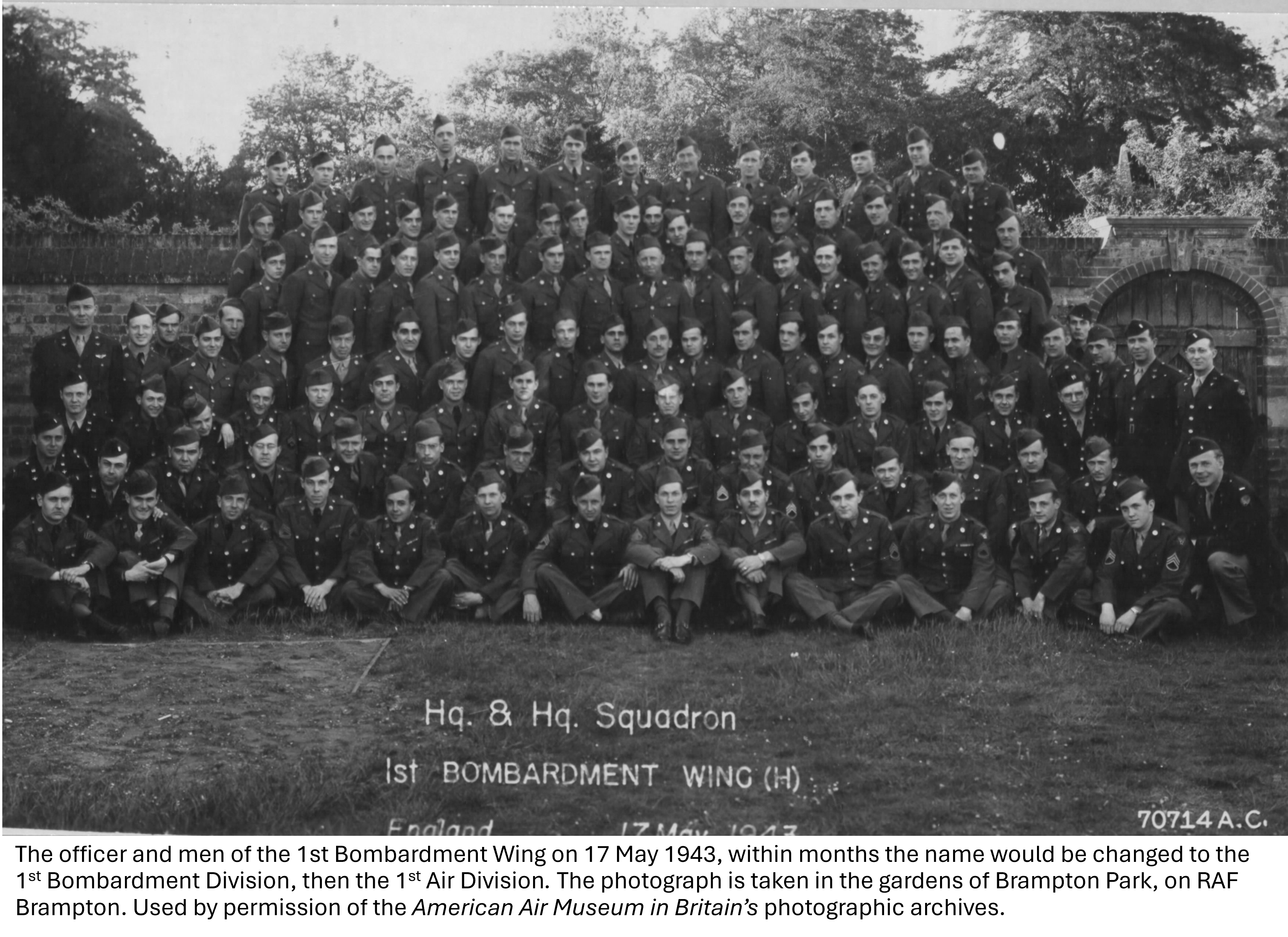
The US Army Air Forces in World War Two were organized under a Numbered Air Force (Lieutenant General, three-star Commander), then a Division (Brigadier General or Major General, one to two-star Commander), then a group (Colonel Commanding), and then squadrons (Major Commanding).  More specifically, the US Bombers in England were organized under the 8th Air Force at RAF Daws Hill located near Bomber Command at RAF High Wycombe. 8th Air Force was divided into three Divisions and the First Bomber Division was headquartered at the Grange in Brampton, referred to as RAF Brampton Grange in official documents beginning in 1943.

Almost all the bomber and fighter groups and squadrons in Cambridgeshire were commanded by the First Bomber Wing in Brampton, renamed the First Bomber Division, and finally renamed in 1944 the First Air Division.  By the war’s end, the 8th Air Force was spread over 112 airfields across East Anglia, flying B-17 and B-24 heavy bombers, B-26 Marauder medium bombers, P-38 Lightning, P-47 Thunderbolt, and P-51 Mustang fighters, as well as Spitfires and Mosquito bombers provided by the RAF.  Throughout the war, the 8th Air Force dropped 700,000 tons of bombs on Germany and occupied Europe, flew 600,000 bomber and fighter sorties, and destroyed over 15,000 enemy aircraft by air-to-air engagements, ground strafing, or by bomber crew engagement.  35,000 men and women would serve with the 8th Air Force during the war, with many thousands never returning home. Much of that enormous effort was planned and executed from the Grange in Brampton.

At the war’s end, the headquarters and staff were moved on 25 April 1945 from The Grange in Brampton to RAF Alconbury, a few miles away, where the US Air Force still operates a wing commanding several bases and facilities today. After 1945, The Grange operated as the RAF’s Technical Training Command, responsible for organizing aircraft maintenance and aircrew training. Then in 1980, released from the RAF, it became a restaurant and hotel in the village of Brampton for many years, before being converted into flats in 2013. 

Today, with no historical marker or blue disc to identify it, most people are unaware of the remarkable wartime history of The Grange in Brampton.  However, it is certainly worth a visit along the Brampton High Street new Huntingdon in Cambridgeshire.

RAF Glatton and the 457th Bomb Group (Heavy)

Between Huntingdon and Peterborough, in the west of Cambridgeshire lies the small village of Conington. With its beautiful All Saints Church, first mentioned in Domesday Book and rebuilt in the early 16th Century, and remarkably beautiful cottages and homes perched on the edge of the fens, one can hardly imagine that 70 years ago this was the home of four squadrons of B-17 Flying Fortresses, roaring into the air almost daily for targets in Germany and Occupied Europe.

The Control Tower, now demolished, of RAF Glatton, taken on 31 March 1945. In the distance, to the left of the tower, a B-17 is visible on the taxiway. US Air Force Photograph, in the public domain.

In the Second World War, Conington was located next to Royal Air Force Station Glatton, which was constructed to Class “A” standards by engineers to support heavy bombers in 1943 with the intent of being used by the U.S. Army Air Forces in the strategic bombing campaign. The 457th Bombardment Group (Heavy) arrived on 21 January 1944, consisting of the 748th, 749th, 750th and 751st Bombardment Squadrons. The recognizable tail code of the 457th was the “triangle U” painted on the vertical stabilizers of the Boeing B-17 Flying Fortresses which operated from the air base. The 457th Bomb Group operated RAF Glatton from January 1944 until 20 April 1945, when it completed its 237th and last combat mission at the conclusion of the war.

Before June 1944, the 457th operated on attacking strategic targets in Germany – munitions factories, ball-bearing plants, marshalling yards and oil refineries. On D-Day, the 457th flew missions against Cherbourg Peninsula, attacking German positions off the east flank of American forces landing at Utah and Omaha beaches. By July 1944, the 457th had resumed strategic bombing and would continue to focus on German targets through April 1945.  However, the 457th provided aerial bombing support to the breakout from St. Lo in northern France, the British 1st Airborne’s landings at Arnhem in the Netherlands, and in support of embattled U.S. Army forces in the Battle of the Bulge.

At the conclusion of the War, the B-17s of the 457th Bomb Group returned to the United States and the airfield was used by No. 3 Group of the RAF Bomber Command flying B-24 Liberators and Avro Lancaster heavy bombers. By 1948, it was decided that the airfield was surplus and the land was returned to agricultural use and demilitarized.

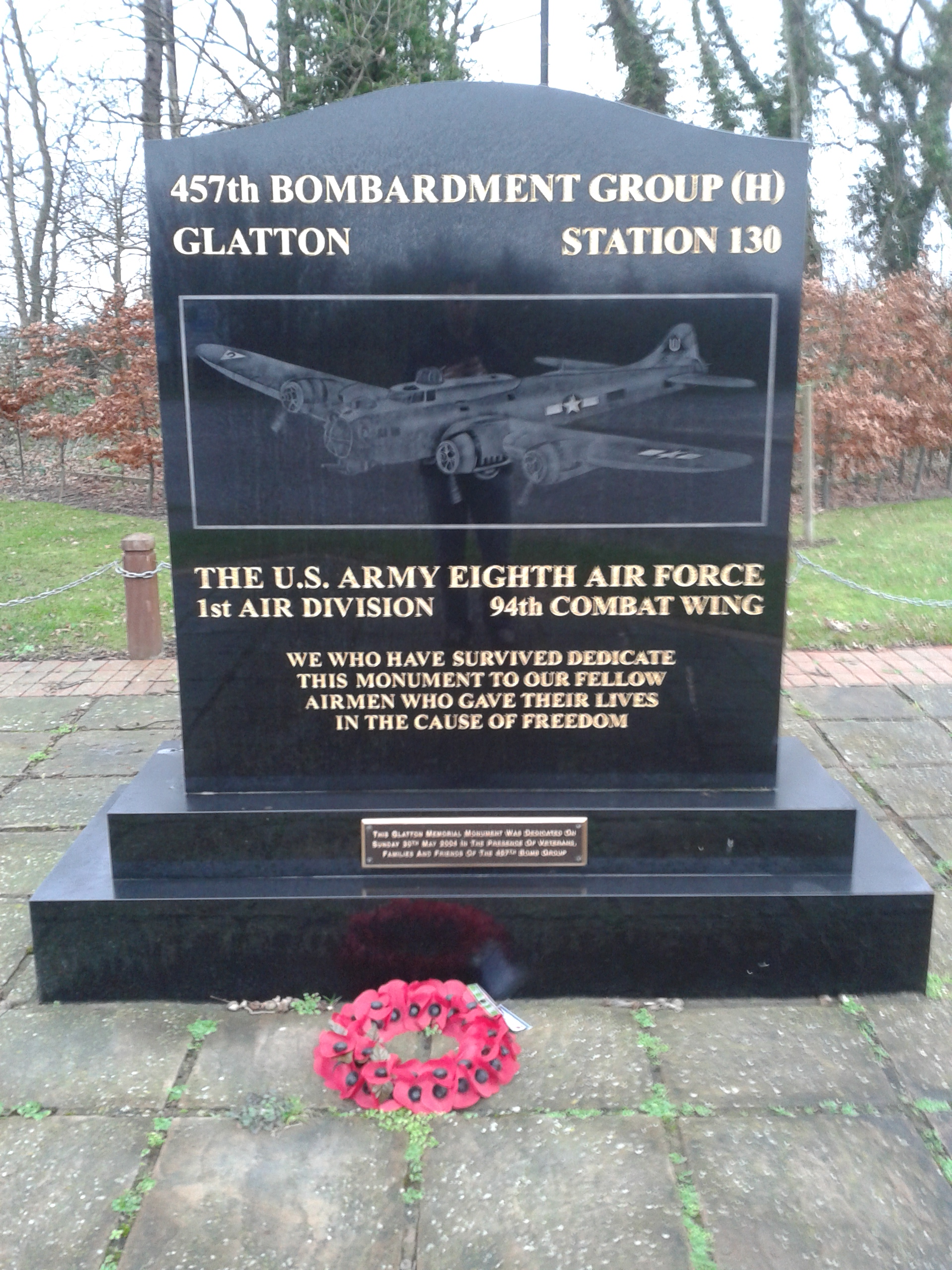
The 457th Bomb Group (H) Memorial, dedicated to the men who flew from RAF Glatton during the Second World War. © Brandon Wilgus, 2015.
The 457th Bomb Group (H) Memorial, dedicated to the men who flew from RAF Glatton during the Second World War. © cambridgemilitaryhistory.com, 2014

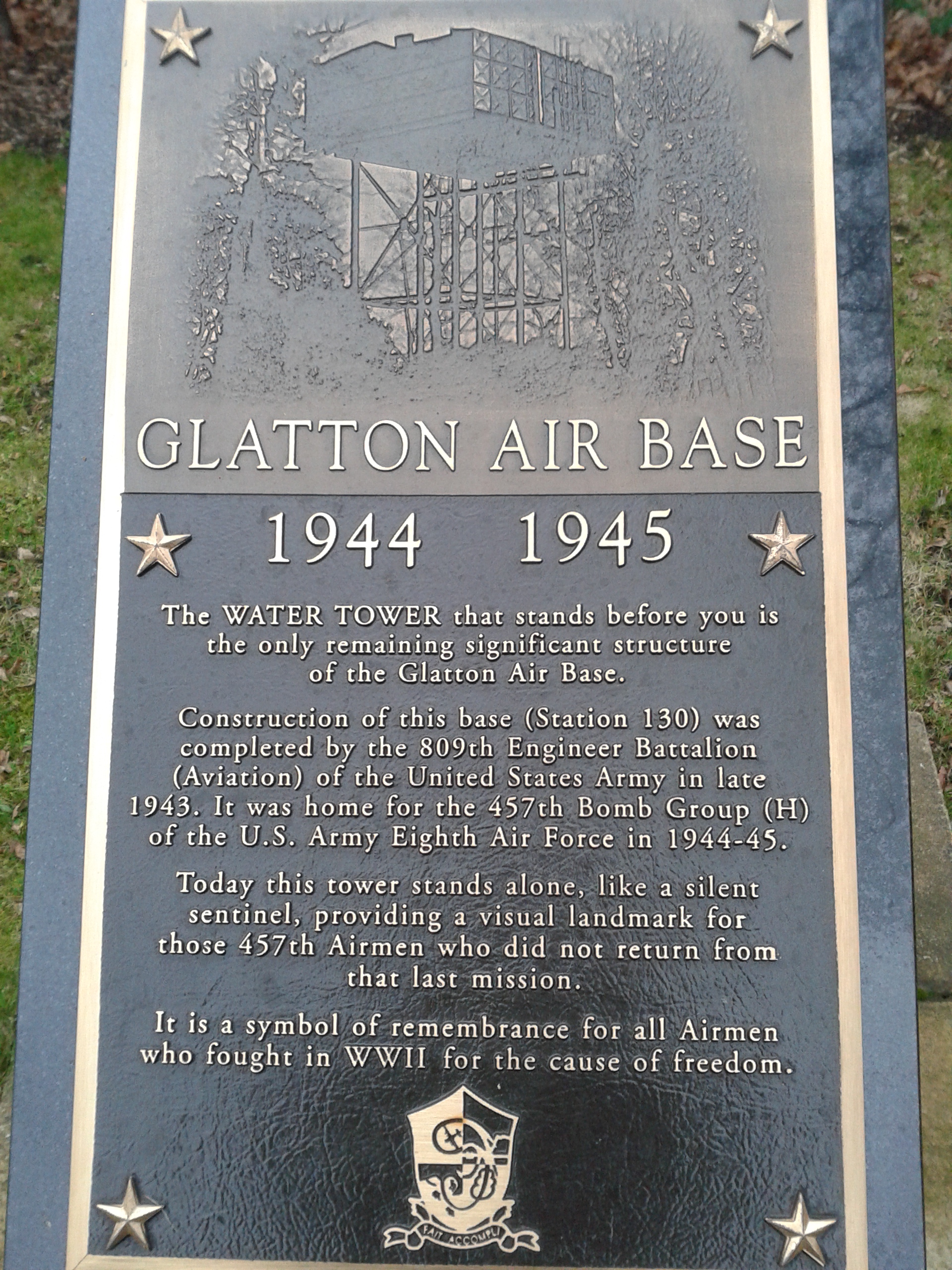
A marker placed at the foot of the watertower, which is a moving remembrance to the men who paid the ultimate sacrifice flying from RAF Glatton in the Second World War.  © Brandon Wilgus, 2015.
A marker placed at the foot of the water tower, which is a moving remembrance to the men who paid the ultimate sacrifice flying from RAF Glatton in the Second World War. © cambridgemilitaryhistory.com, 2015.

The watertower of the former airfield of RAF Glatton, the only surviving structure from the Second World War. © Brandon Wilgus, 2015
The water tower of the former airfield of RAF Glatton, the only surviving structure from the Second World War. © cambridgemilitaryhistory.com, 2015

Today, one of the Class A runways remains in use as the “Peterborough Business Airport” which is a general aviation facility.  It is a testament to the strength of the runways built over 70 years ago that the field remains in limited and lighter use.  The only other structure from the Second World War is the water tower which stands near the 457th Bomb Group Memorial, off Great Ermine Street, near the village. In All Saints’ Church, Conington, is a memorial to the 457th Bomb Group which must be visited.

At the end of the Peterborough Business Airport's runway, still in use from the Second World War as a general aviation facility. A marker placed at the foot of the watertower, which is a moving remembrance to the men who paid the ultimate sacrifice flying from RAF Glatton in the Second World War.  © Brandon Wilgus, 2015.
At the end of the Peterborough Business Airport’s runway, still in use from the Second World War as a general aviation facility. A marker placed at the foot of the water tower, which is a moving remembrance to the men who paid the ultimate sacrifice flying from RAF Glatton in the Second World War. © cambridgemilitaryhistory.com, 2015.

To see RAF Glatton, travel up the A1(M) and exit at the B660, signposted to Conington. 

Lt. Colonel Leon Vance and the Cambridge American Cemetery

A few days ago I had the privilege to walk the hallowed grounds of the Cambridge American Cemetery with an expert on the history of the U.S. Armed Forces’ staging, presence, and forward operations from Cambridgeshire and southeast England.  This gentleman works for the American Battle Monuments Commission, an agency of the U.S. Government that maintains and preserves the 25 overseas cemeteries from the Philippines to Tunisia, from Omaha Beach to the Meuse-Argonne.  One cannot visit an overseas U.S. Memorial or Cemetery and not be touched by the stories and sacrifice of these men and women. Although some stories are heroic and some more simple, all were serving their country in a desperate time and found themselves far from their home and their family, and never returned.  The historian I was walking with told me the heroic story of Lt. Colonel Vance.

Francis Scott Bradford designed the glorious mosaic that covers the ceiling of the Cambridge American Cemetery Chapel.  Ghostly aircraft and mournful angels cover the ceiling in his moving tribute to the 3,811 buried and 5,126 missing who are memorialized at the Cemetery.
Francis Scott Bradford designed the glorious mosaic that covers the ceiling of the Cambridge American Cemetery Chapel. Ghostly aircraft and mournful angels cover the ceiling in his moving tribute to the 3,811 buried and 5,126 missing who are memorialized at the Cemetery.

His story needs to be told. It is the story of an American airman, a 27-year-old Lieutenant Colonel, who had rapidly risen through the ranks in a way that can only happen during a desperate war.  Colonel Leon Robert “Bob” Vance, had arrived at West Point in 1935 and graduated in 1939, becoming a young lieutenant as America warily watched the Second World War beginning in Europe. Marrying Georgette Brown the day after his graduation, Bob and Georgette had a daughter in 1942, Sharon, whom he would name his B-24 Liberator after: The Sharon D.

After several years as a flight instructor, he was transferred to England. Lt. Colonel Vance was assigned to the 8th Air Force, 95th Combat Bombardment Wing, 2nd Bomb Division at RAF Helesworth in Suffolk.  On 5 June 1944, the day before the allied landings in Normandy, Lt. Colonel Vance led the 489th Bomb Group on a diversionary bombing mission to the Pas-de-Calais to target German coastal defenses as part of the Atlantic Wall. Lt Colonel Vance was in the lead plane as on observer on the flight deck, flying in a pathfinder to ensure the bombs of all the following aircraft hit their target.

After the short flight to France, the Liberators were over their target when the lead aircraft’s bombs failed to release.  Instead of ordering the bombers to drop their ordnance into the Channel, Lt. Colonel Vance ordered all the aircraft to circle and re-approach the target.

A photo of LTC Bob Vance, courtesy of the US Army.  The photo is in the public domain.
A photo of LTC Bob Vance, courtesy of the US Army. The photo is in the public domain.

On the second approach to the target, the bombers came under intense anti-aircraft fire. Vance’s lead bomber was severely damaged by flak: four crewmen were wounded, three engines disabled, fuel lines ruptured within the aircraft.  Despite the damage, the B-24 continued and dropped its bombs over the target although one did not release. Immediately after the bombs were dropped, a flak burst in front of the aircraft that killed the pilot and almost severed Bob’s right foot, trapping him within the bent metal of the mangled cockpit.  With only one engine still functioning and severe damage to the airframe, the co-pilot began to dive the aircraft to maintain airspeed, and Vance, losing blood and suffering from shock, worked the engineering of the aircraft to feather the engines and save the aircraft as one of the crew applied a tourniquet to his foot.

Amazingly, the aircraft returned to the English coast and Vance took the controls, ordering the men to bail out.  Knowing it was impossible to land the aircraft, he aimed to get the crew safely away. As the crew departed, he discovered that not only was he trapped, but in the confusion thought that one of the crewmembers was also trapped and unable to bail out.  He decided the only option was to ditch the B-24 in the Channel — the B-24 was a notoriously difficult aircraft to safely ditch in water.

Stuck in a prone position between the pilot and co-pilots’ seats, trapped in the mangled cockpit and losing blood, Lt. Colonel Vance could only see out the side window of the cockpit and could only access some of the plane’s controls.  Remarkably, he landed the aircraft safely in the water, believing that the other crewmember would have a fighting chance to live.  As the water flooded into the cockpit — Vance was still trapped — he had a slim hope that air-sea rescue might reach the aircraft before it sank.  However, the one bomb that had failed to release but was still armed detonated at this moment, blowing the B-24 to pieces and amazingly sending Vance flying through the air, now dislodged from the metal.  He hit the water and was just able to inflate his life vest, clinging to consciousness and life.

In a moment of self-sacrifice that is difficult to believe, Vance then spent the next 50 minutes searching for his last crewmember in the sinking debris of the B-24 before he was rescued by the RAF.

Colonel Vance had survived the ordeal, but tragically was lost at sea two months later as the C-54 Skymaster carrying him on a medical evacuation flight back to the United States disappeared between Iceland and Newfoundland.

On 4 January 1945 it was announced that Lieutenant Colonel Vance would receive the Medal of Honor posthumously, but the presentation was delayed until 11 October 1946, so that his daughter Sharon — whom he had named his B-24 after — could be awarded her father’s medal.

5-year-old Sharon Vance is presented with her father's Medal of Honor in 1946. US Army Photograph.
5-year-old Sharon Vance is presented with her father’s Medal of Honor in 1946. US Army Photograph.

For some more information on the Cambridge American Cemetery see this publication: http://www.abmc.gov/sites/default/files/publications/Cambridge_Booklet.pdf

The citation for Lt. Colonel Vance’s Medal of Honor reads:

For conspicuous gallantry and intrepidity above and beyond the call of duty on 5 June 1944, when he led a Heavy Bombardment Group, in an attack against defended enemy coastal positions in the vicinity of Wimereaux, France. Approaching the target, his aircraft was hit repeatedly by antiaircraft fire which seriously crippled the ship, killed the pilot, and wounded several members of the crew, including Lt. Col. Vance, whose right foot was practically severed. In spite of his injury, and with 3 engines lost to the flak, he led his formation over the target, bombing it successfully. After applying a tourniquet to his leg with the aid of the radar operator, Lt. Col. Vance, realizing that the ship was approaching a stall altitude with the 1 remaining engine failing, struggled to a semi-upright position beside the copilot and took over control of the ship. Cutting the power and feathering the last engine he put the aircraft in glide sufficiently steep to maintain his airspeed. Gradually losing altitude, he at last reached the English coast, whereupon he ordered all members of the crew to bail out as he knew they would all safely make land. But he received a message over the interphone system which led him to believe 1 of the crewmembers was unable to jump due to injuries; so he made the decision to ditch the ship in the channel, thereby giving this man a chance for life. To add further to the danger of ditching the ship in his crippled condition, there was a 500-pound bomb hung up in the bomb bay. Unable to climb into the seat vacated by the copilot, since his foot, hanging on to his leg by a few tendons, had become lodged behind the copilot’s seat, he nevertheless made a successful ditching while lying on the floor using only aileron and elevators for control and the side window of the cockpit for visual reference. On coming to rest in the water the aircraft commenced to sink rapidly with Lt. Col. Vance pinned in the cockpit by the upper turret which had crashed in during the landing. As it was settling beneath the waves an explosion occurred which threw Lt. Col. Vance clear of the wreckage. After clinging to a piece of floating wreckage until he could muster enough strength to inflate his life vest he began searching for the crewmember whom he believed to be aboard. Failing to find anyone he began swimming and was found approximately 50 minutes later by an Air-Sea Rescue craft. By his extraordinary flying skill and gallant leadership, despite his grave injury, Lt. Col. Vance led his formation to a successful bombing of the assigned target and returned the crew to a point where they could bail out with safety. His gallant and valorous decision to ditch the aircraft in order to give the crewmember he believed to be aboard a chance for life exemplifies the highest traditions of the U.S. Armed Forces.