
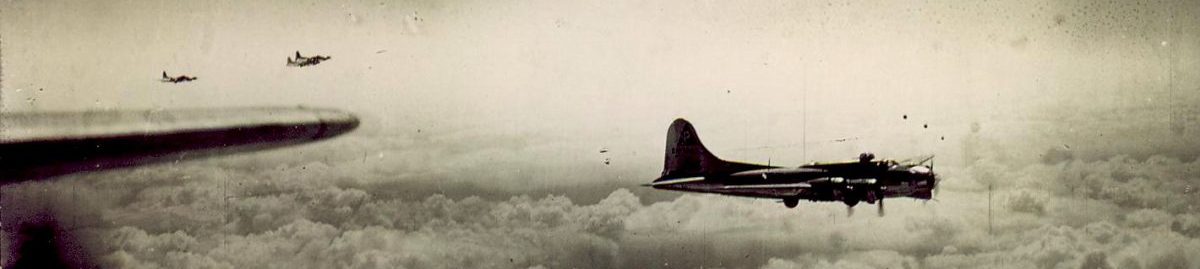
A few years ago, I wrote about the night of 27 April 1944, when an RAF Mosquito, P for Pete, was shot down along the Dutch-German border: you can read my original posting here. P for Pete was flown by Flight Sergeant Royston John Edward Adey with Flight Sergeant K. J. Pinnell as his navigator and co-pilot. The De Havilland Mosquito, a high-speed, two-engine, multi-role aircraft, mainly made of wood, was an exceptional aircraft during the war. During this evening, it was making a low-altitude, intruder bombing and strafing mission on Vliegbasis Twenthe (Dutch: Twente Airbase), a German fighter base in the eastern occupied Netherlands.
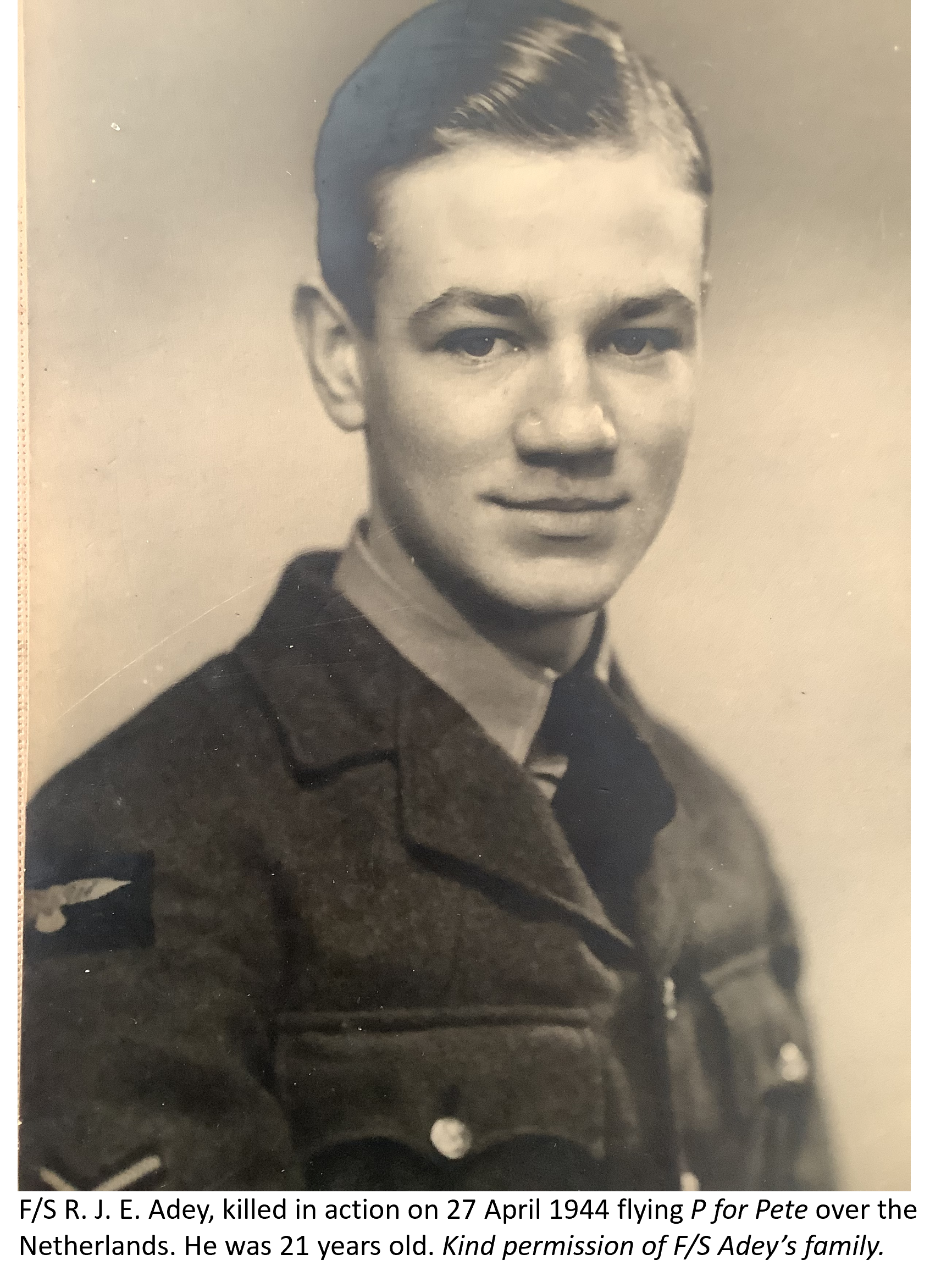
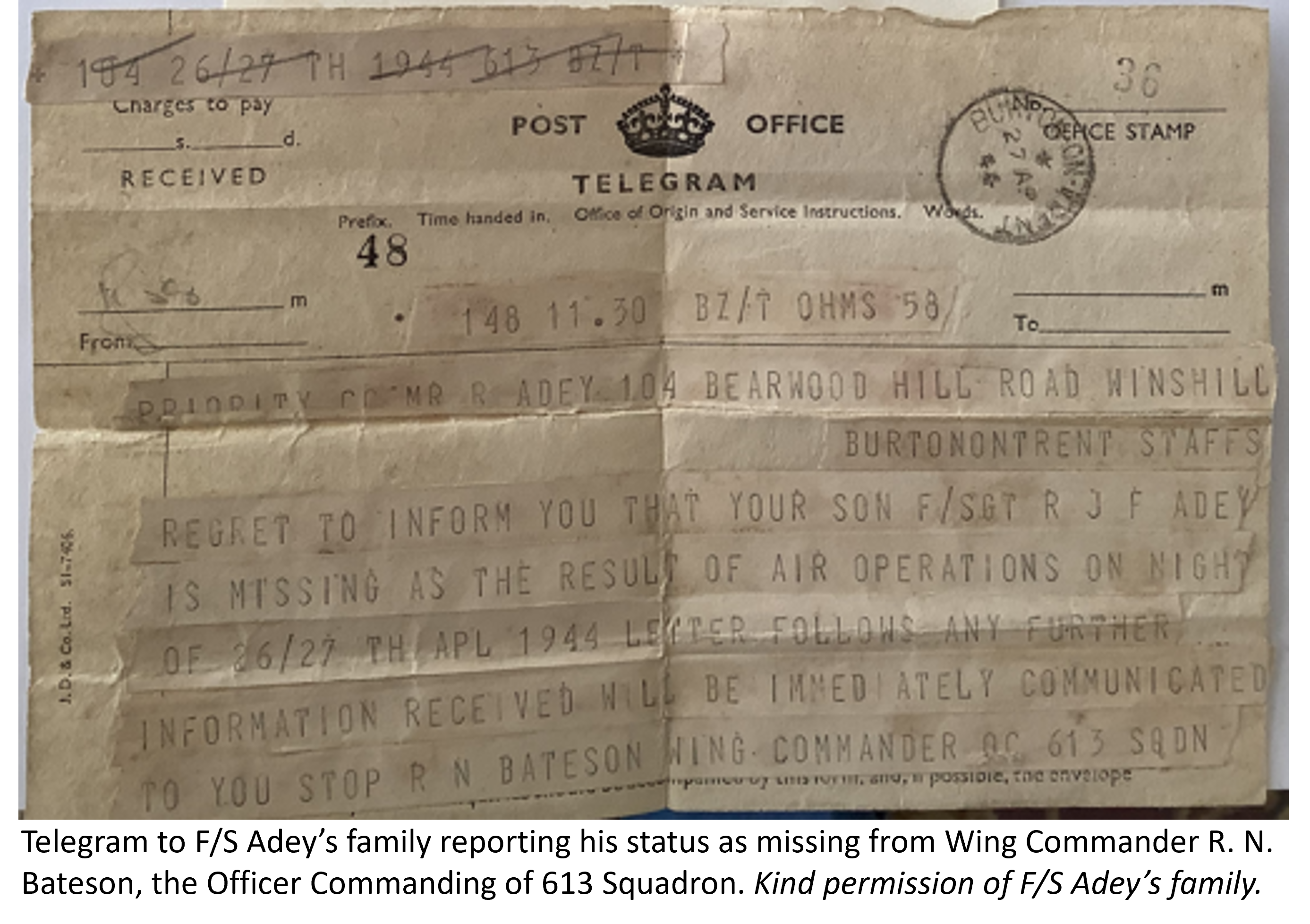
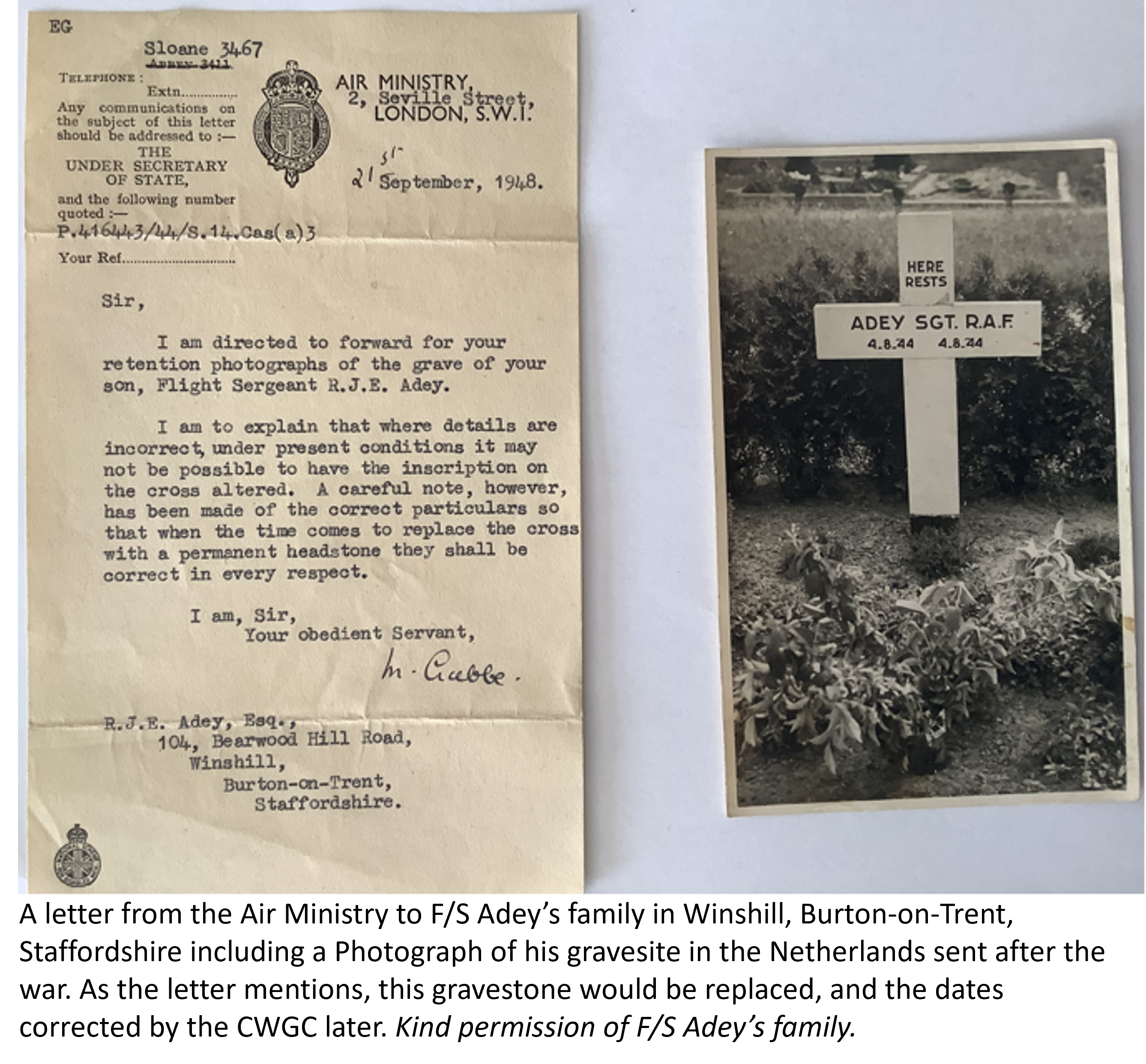
Both Flight Sergeant Adey and Flight Sergeant Pinnell were killed when their airplane crashed in the Haagse Bos (Dutch: Haagse Woods). After the crash, local Dutch farmers removed their bodies and they were both buried in a corner of the Enschede cemetery nearby, the Oosterbegraafplaats Enschede. The Commonwealth War Graves Commission (CWGC) maintains the two men’s graves in a quiet corner of the cemetery. As I wrote a few years ago, Flight Sergeant R. J. E. Adey was 21 years old at the time of his death. His parents were Ronald John Edward Adey and Edith Rose Mary Adey, still living in their family home at Winshill, Burton-on-Trent in Staffordshire. In Winshill, at St. Mark’s Parish Church there are two memorials marking the names of men from the village who fell in the First and Second World Wars, Flight Sergeant Adey’s name is honoured there.
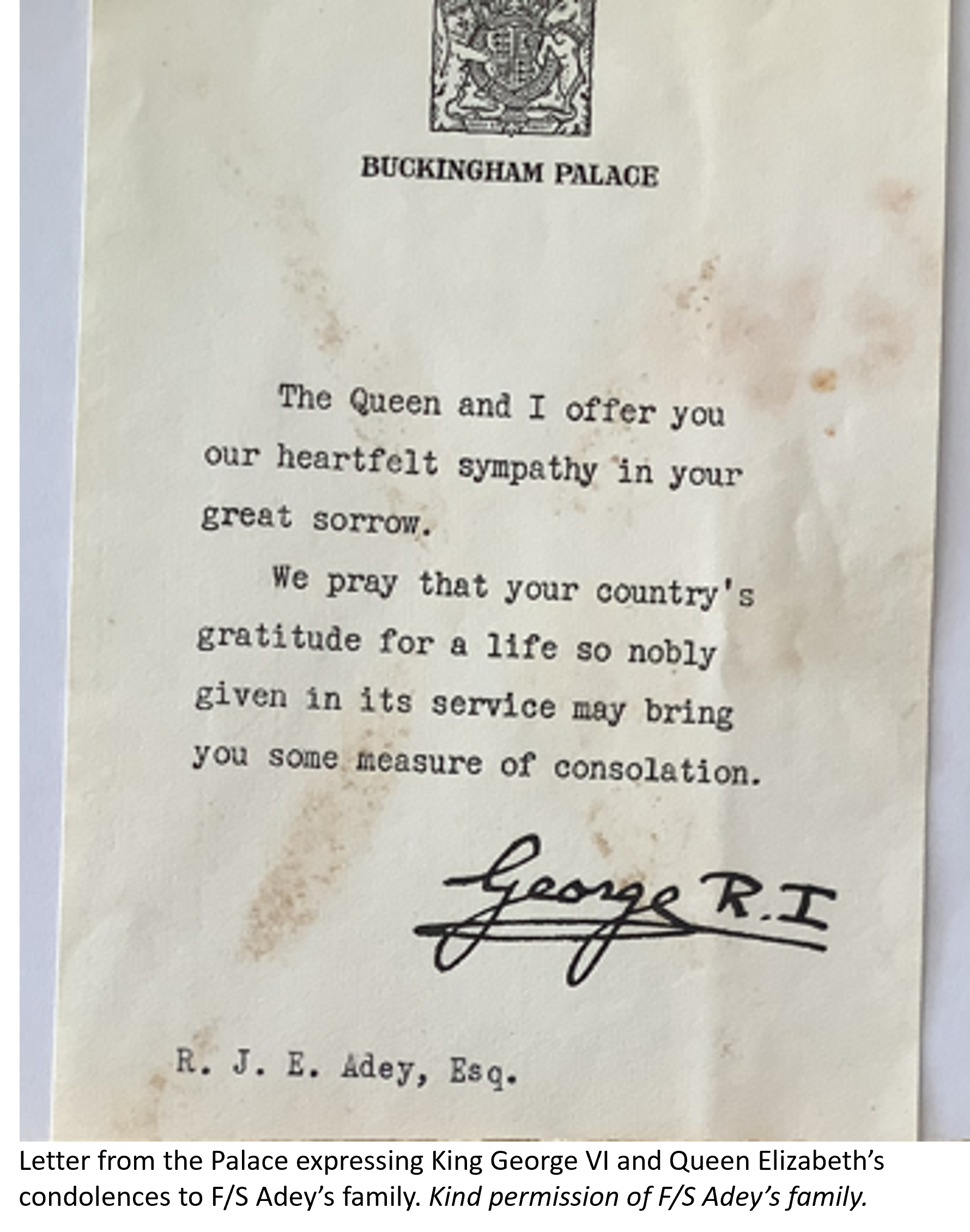
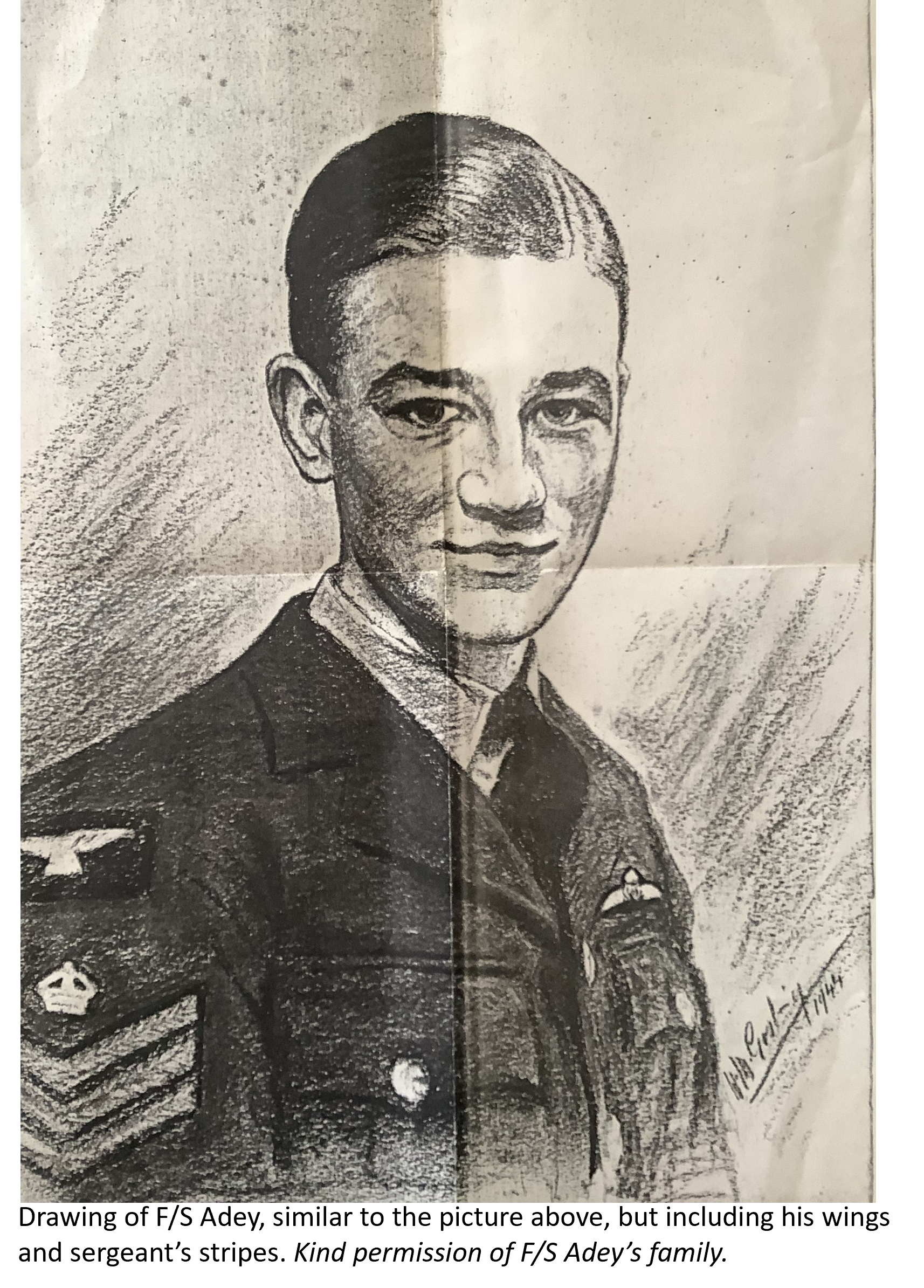
Recently, I received an email from a family member of Flight Sergeant Adey, Lt Colonel Mike Southworth, whose mother was Rosemary Adey, Flight Sergeant Adey’s sister. Colonel Southworth had several items relating to the loss of Flight Sergeant Adey during 1944, and kindly provided those important documents to be posted here in his memory. A special thanks to Colonel Southworth and his niece Claire for letting me share these precious items with you.
 Cambridge Military History