
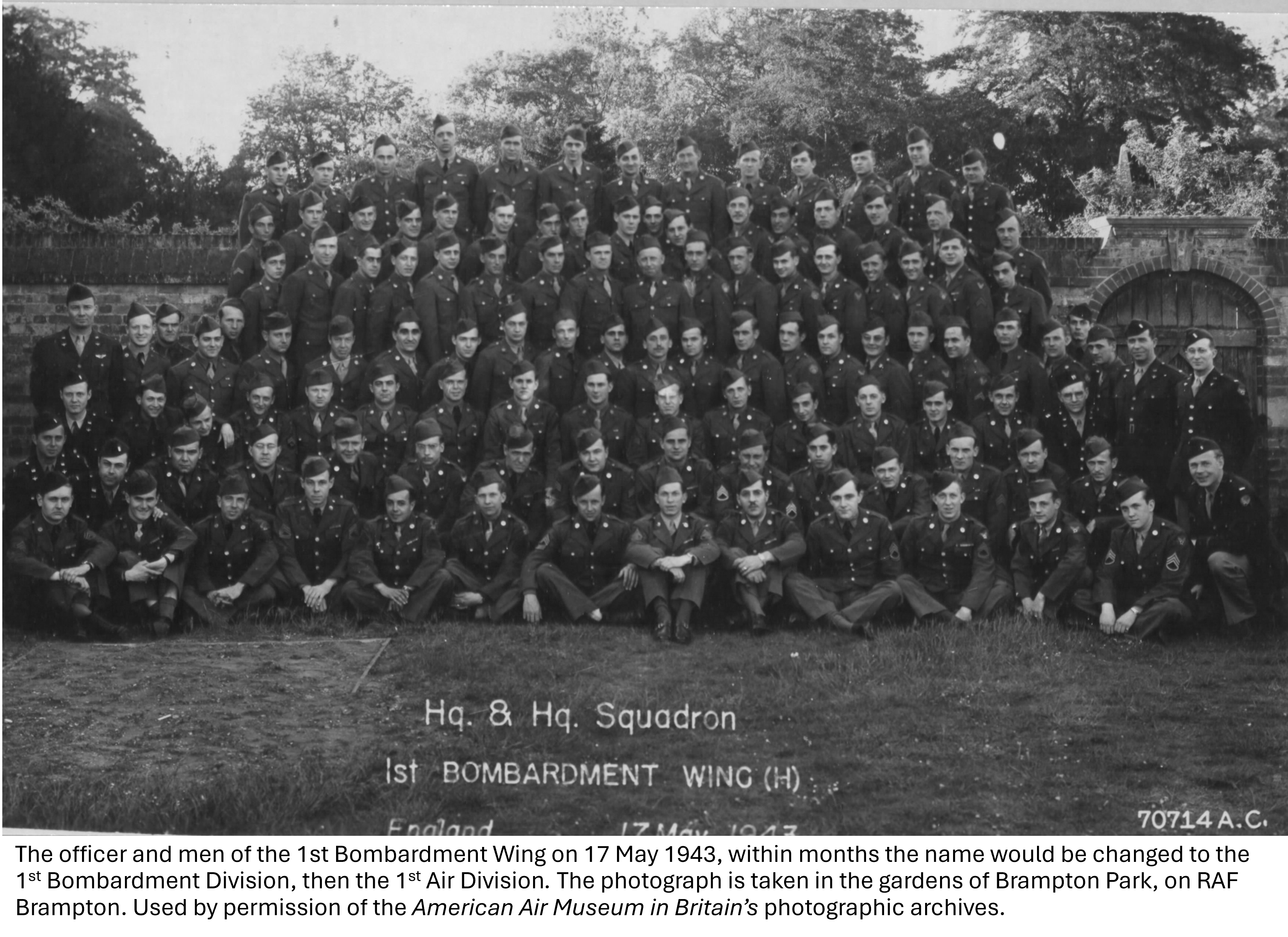
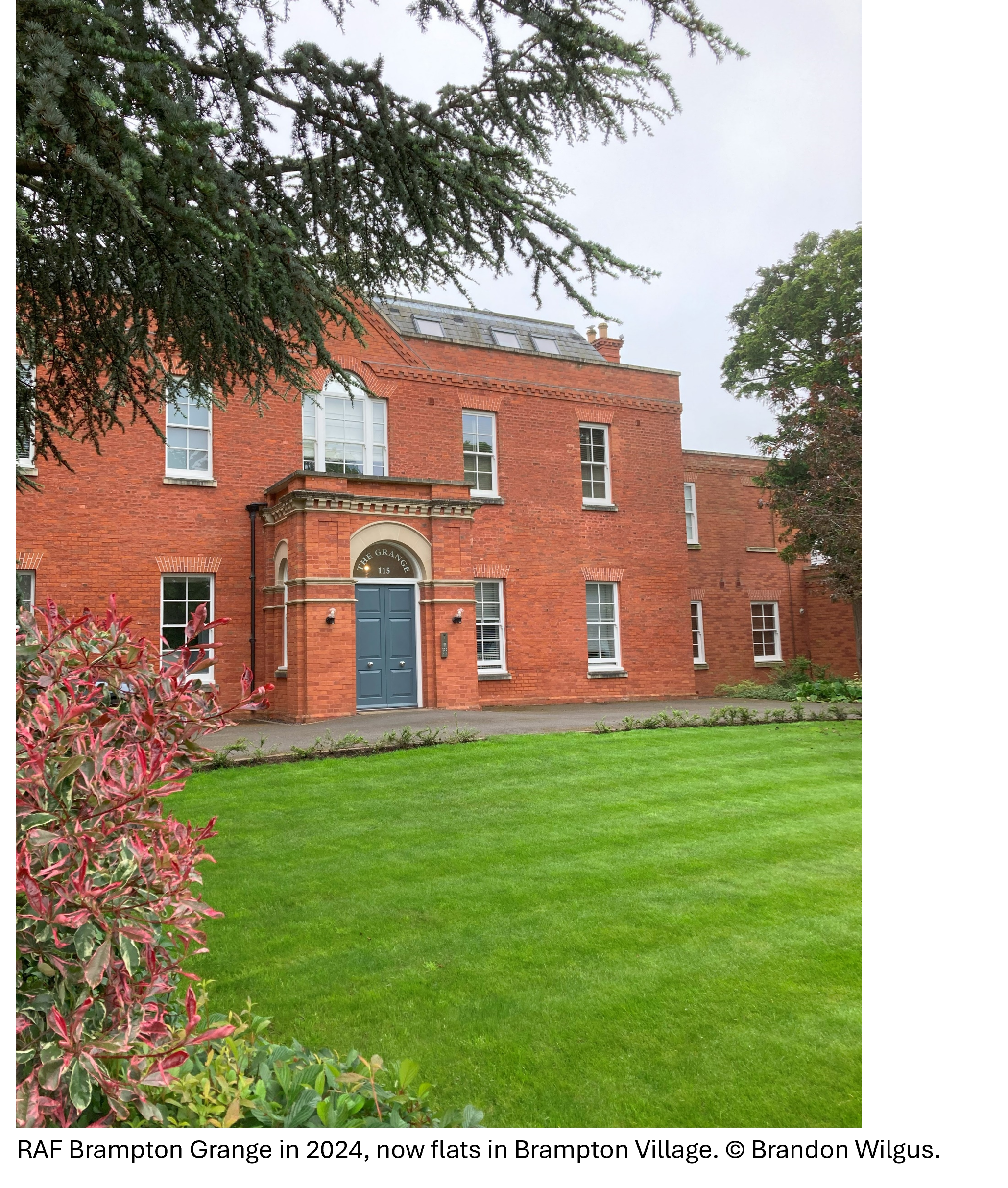
In the village of Brampton, Cambridgeshire lies a large, Georgian house built in 1773 called The Grange. Despite its early use as a girl’s school in the 19th Century and its connections with Lady Olivia Sparrow, the philanthropist and early evangelist, it is the Grange’s use in the Second World War as the headquarters of the 8th Air Force’s 1st Air Division that most interests me.
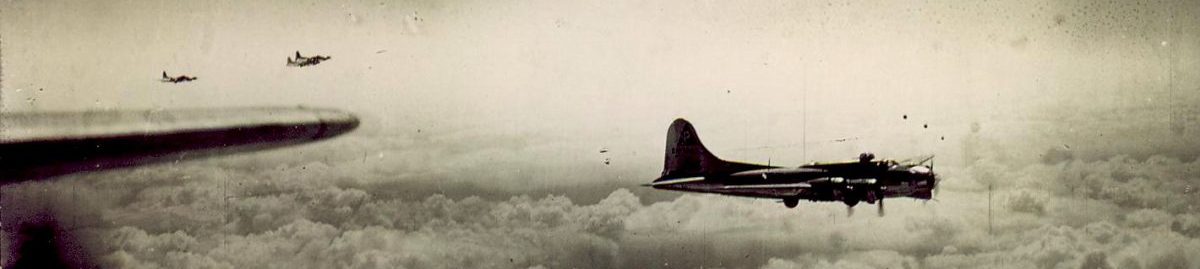
Several years into the Second World War, the United States was attacked at Pearl Harbor and was quickly at war with the Axis Powers. Settling on a Europe First policy, the US Army Air Corps immediately began moving heavy bombers to England, primarily the Boeing B-17 Flying Fortress and Consolidated B-24 Liberator, 4-engine bombers. In coordination with RAF Bomber Command, it was decided that the RAF would focus on night bombing missions while the US Army Air Corps would focus on high-altitude, precision daylight bombing. As forces and capacity grew, the goal was to move the combined British and United States strategic bombing campaign against Germany and occupied Europe into round-the-clock operations. This obviously would require an enormous amount of planning, plus operational command and control to be effective, and that is where The Grange in Brampton played its part in World War II.
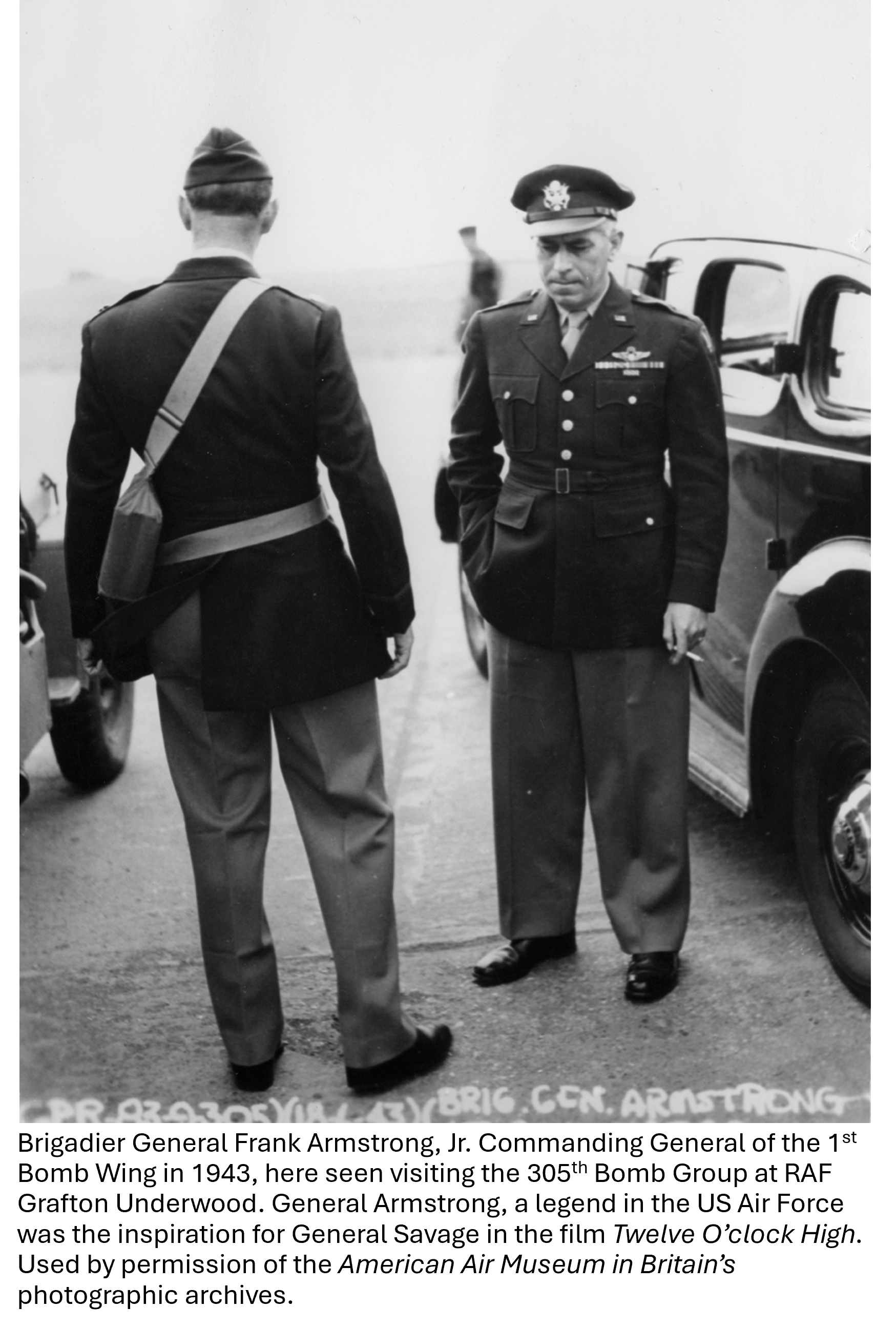
The US Army Air Forces in World War Two were organized under a Numbered Air Force (Lieutenant General, three-star Commander), then a Division (Brigadier General or Major General, one to two-star Commander), then a group (Colonel Commanding), and then squadrons (Major Commanding). More specifically, the US Bombers in England were organized under the 8th Air Force at RAF Daws Hill located near Bomber Command at RAF High Wycombe. 8th Air Force was divided into three Divisions and the First Bomber Division was headquartered at the Grange in Brampton, referred to as RAF Brampton Grange in official documents beginning in 1943.
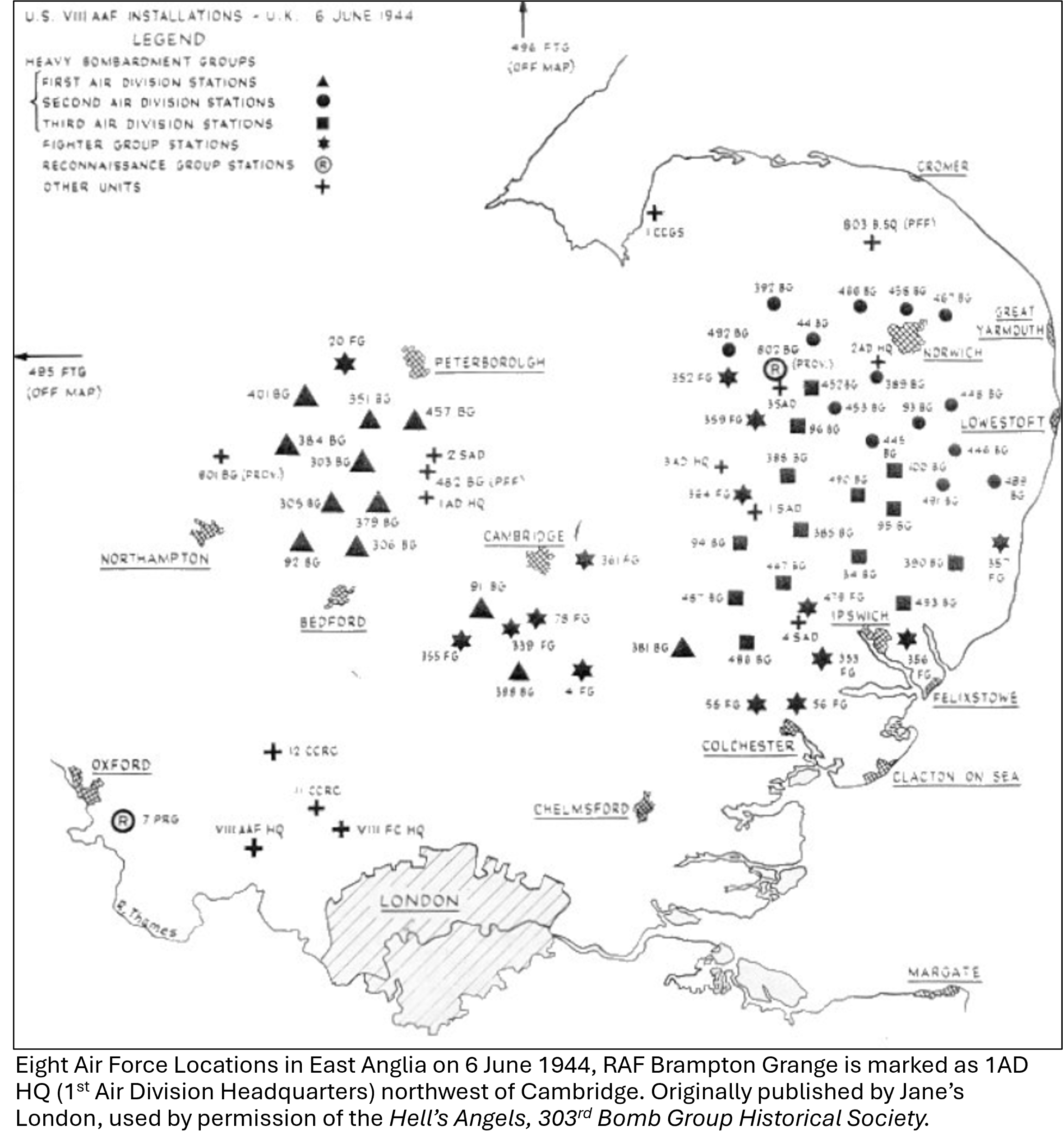
Almost all the bomber and fighter groups and squadrons in Cambridgeshire were commanded by the First Bomber Wing in Brampton, renamed the First Bomber Division, and finally renamed in 1944 the First Air Division. By the war’s end, the 8th Air Force was spread over 112 airfields across East Anglia, flying B-17 and B-24 heavy bombers, B-26 Marauder medium bombers, P-38 Lightning, P-47 Thunderbolt, and P-51 Mustang fighters, as well as Spitfires and Mosquito bombers provided by the RAF. Throughout the war, the 8th Air Force dropped 700,000 tons of bombs on Germany and occupied Europe, flew 600,000 bomber and fighter sorties, and destroyed over 15,000 enemy aircraft by air-to-air engagements, ground strafing, or by bomber crew engagement. 35,000 men and women would serve with the 8th Air Force during the war, with many thousands never returning home. Much of that enormous effort was planned and executed from the Grange in Brampton.
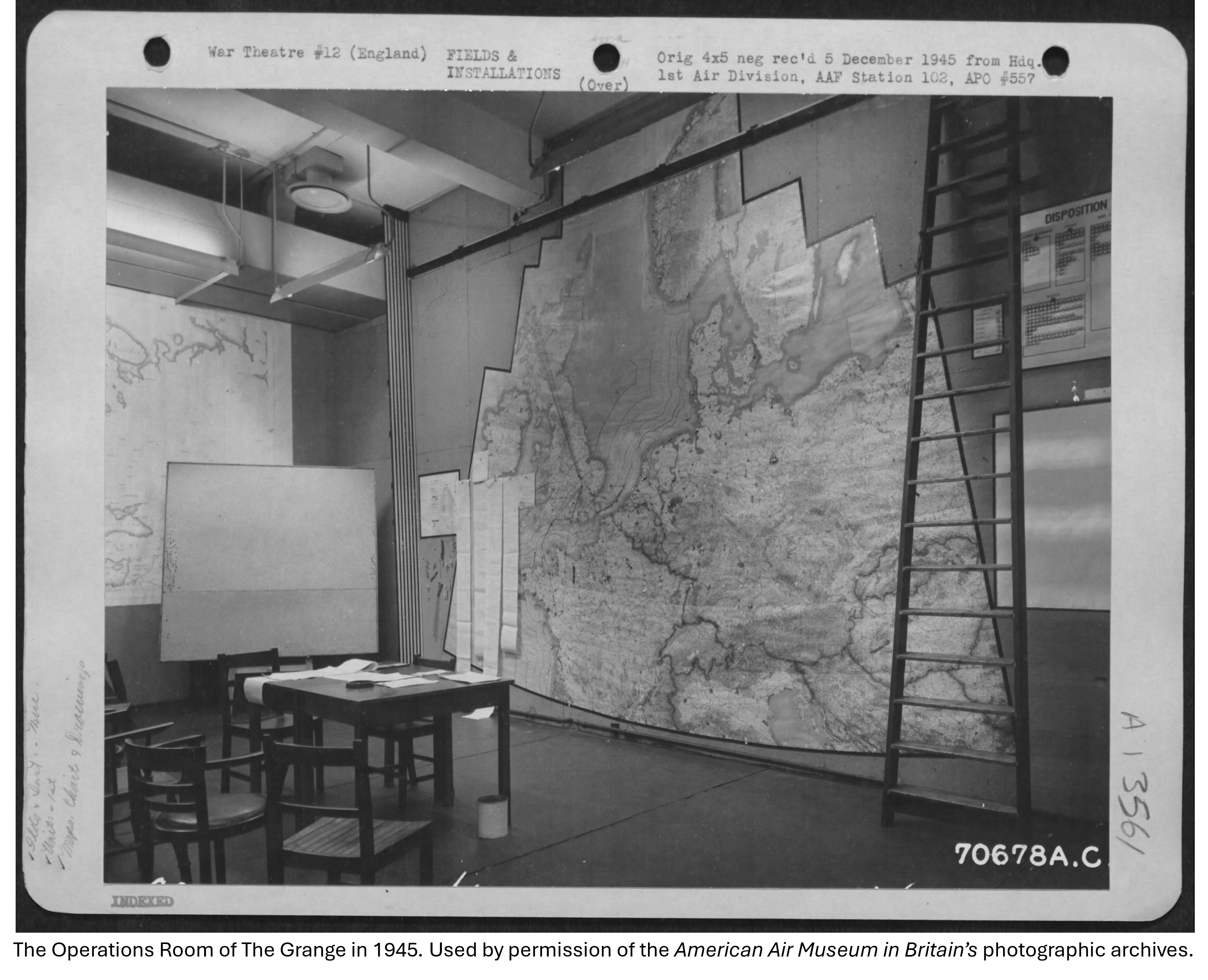
At the war’s end, the headquarters and staff were moved on 25 April 1945 from The Grange in Brampton to RAF Alconbury, a few miles away, where the US Air Force still operates a wing commanding several bases and facilities today. After 1945, The Grange operated as the RAF’s Technical Training Command, responsible for organizing aircraft maintenance and aircrew training. Then in 1980, released from the RAF, it became a restaurant and hotel in the village of Brampton for many years, before being converted into flats in 2013.
Today, with no historical marker or blue disc to identify it, most people are unaware of the remarkable wartime history of The Grange in Brampton. However, it is certainly worth a visit along the Brampton High Street new Huntingdon in Cambridgeshire.
 Cambridge Military History