Trench Art: Christmas 1917 and the Machine Gun Corps

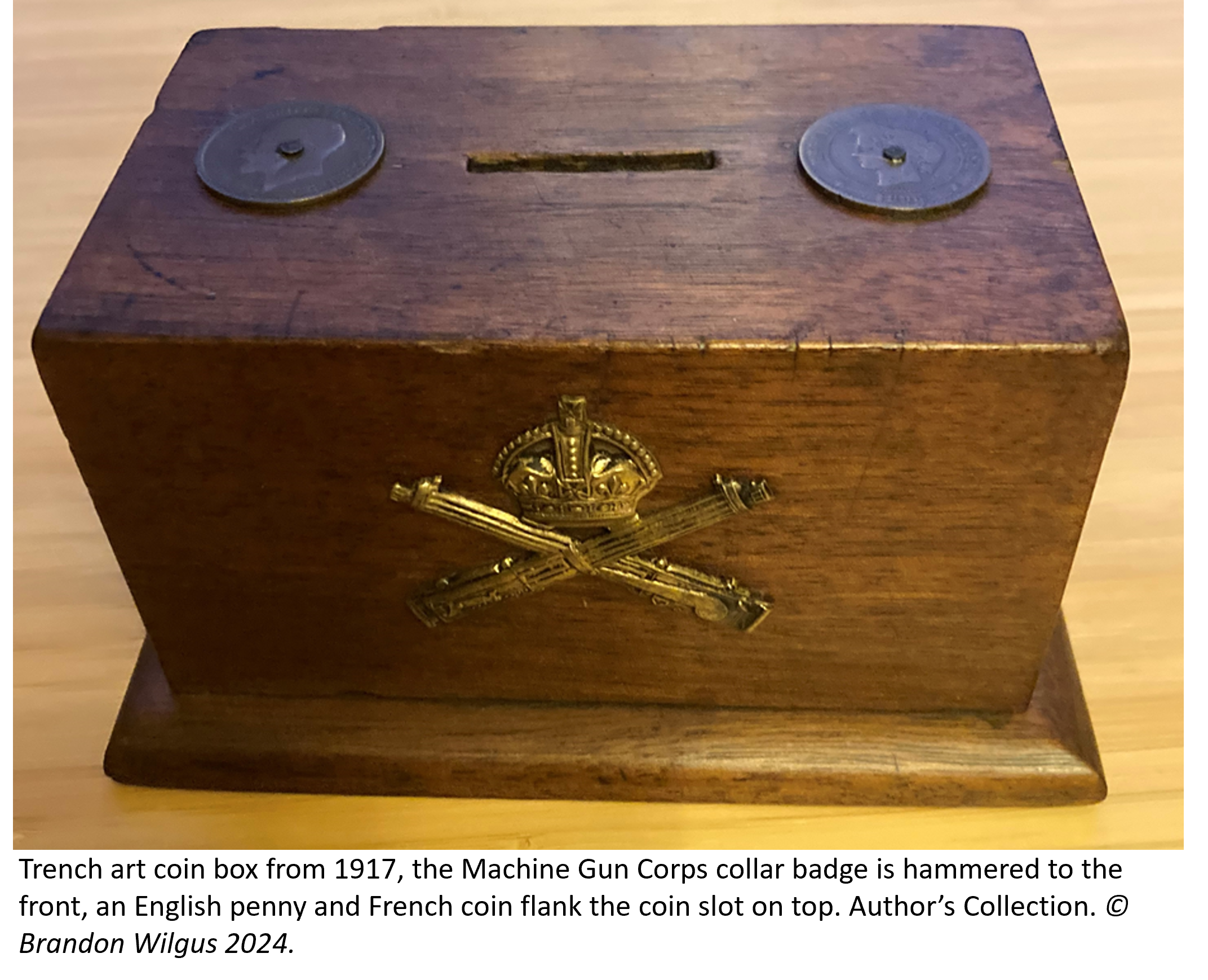
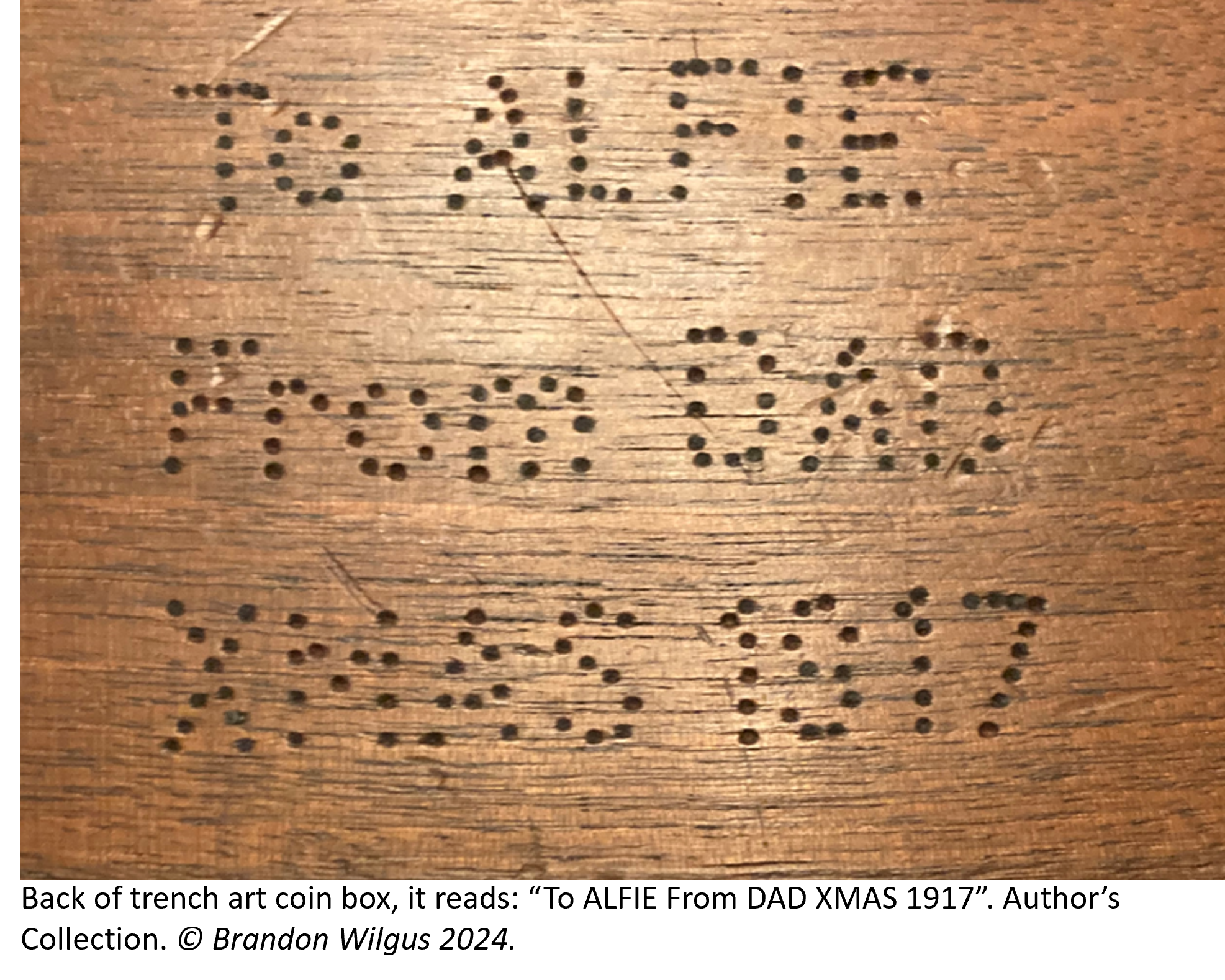
It was October or November 1917, a British soldier in the Machine Gun Corps took some scraps of wood, possibly duckboards or pieces of an ammunition container, and crafted them into a money box for his son back home in England.  He found a way, and time, to cut the wood, screw the pieces together, sand and varnish the box, and then hammered an English and French coin to the top, flanking the slot he chiseled out.  He then took an extra collar badge of the Machine Gun Corps, the organization of which he was undoubtedly proud to belong, and softly hammered it into the wood on the front of the box – the hammer taps are still visible in the bronze. Finally, after the varnish had finally set in the cold and wet of the Western Front – one imagines the box in a place of honour, drying by a stove in the muck and mire of a dugout – he turned the box around and hammered a note to his son with a nail point: “To ALFIE from DAD XMAS 1917”. He sent it off in the post, hopefully to arrive safely by Christmas for his son Alfie in England.
Alfie’s father was a member of the Machine Gun Corps. This prestigious force was formed in late 1915 with the aim to improve the effectiveness of the use of crew-operated machine guns in support of Allied infantry and cavalry units on all fronts. In 1914, each infantry battalion or cavalry regiment went to war with two machine guns embedded in the unit, this was quickly raised to four. By 1915, the Army realised that machine guns were being employed in a sub-optimal fashion, and a correction was in order. The Machine Gun Corps was formed in October 1915 by taking the Maxim and Vickers gun sections from all infantry regiments and consolidating the force to provide specialized training and specific marksmanship to crews to improve the use the machine guns on the front. By 1916, the Machine Gun Corps was divided into four branches: infantry, cavalry, motorized, and heavy.  Most machine gunners were trained on the grounds of Belton House, a stately home just north of Cambridgeshire, near Grantham in Lincolnshire and would go on to support the infantry.
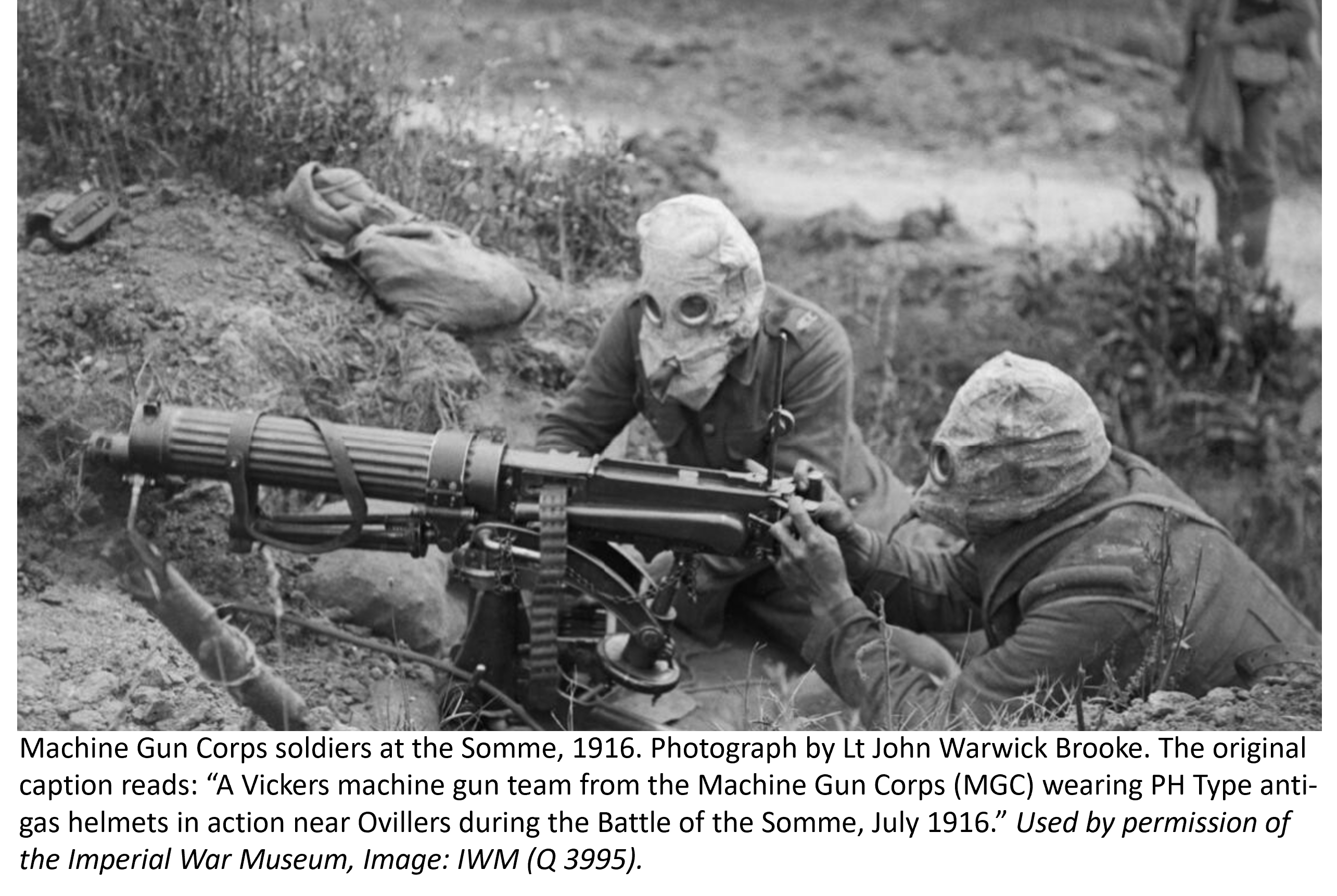
Life in the Machine Gun Corps was not easy – its members served on all fronts in the Great War – and the force was nicknamed “the suicide club” due to its heavy casualties.  The enemy, observing the importance of the machine gun sections to both defensive and offensive operations, specifically targeted machine gun positions, mainly through artillery fires. By the war’s end, 170,500 officers and men served in the Machine Gun Corps, 62,049 became casualties, just over 36 percent of total strength. 12,498 members of the Machine Gun Corps died during the war. Seven members of the Machine Gun Corps were awarded the Victoria Cross, two posthumously. The machine gunner’s grit and bravery was unquestioned.

The Machine Gun Corps was short lived. It was disbanded in 1922 to save money after the war, but its legacy lives on in the Royal Tank Regiment. The heavy branch of the Machine Gun Corps was the first to operate tanks in combat on the Western Front, forming the Tank Corps when seperated from the Machine Gun Corps in July 1917. This force became the Royal Tank Corps in 1923 and now forms the Royal Tank Regiment.
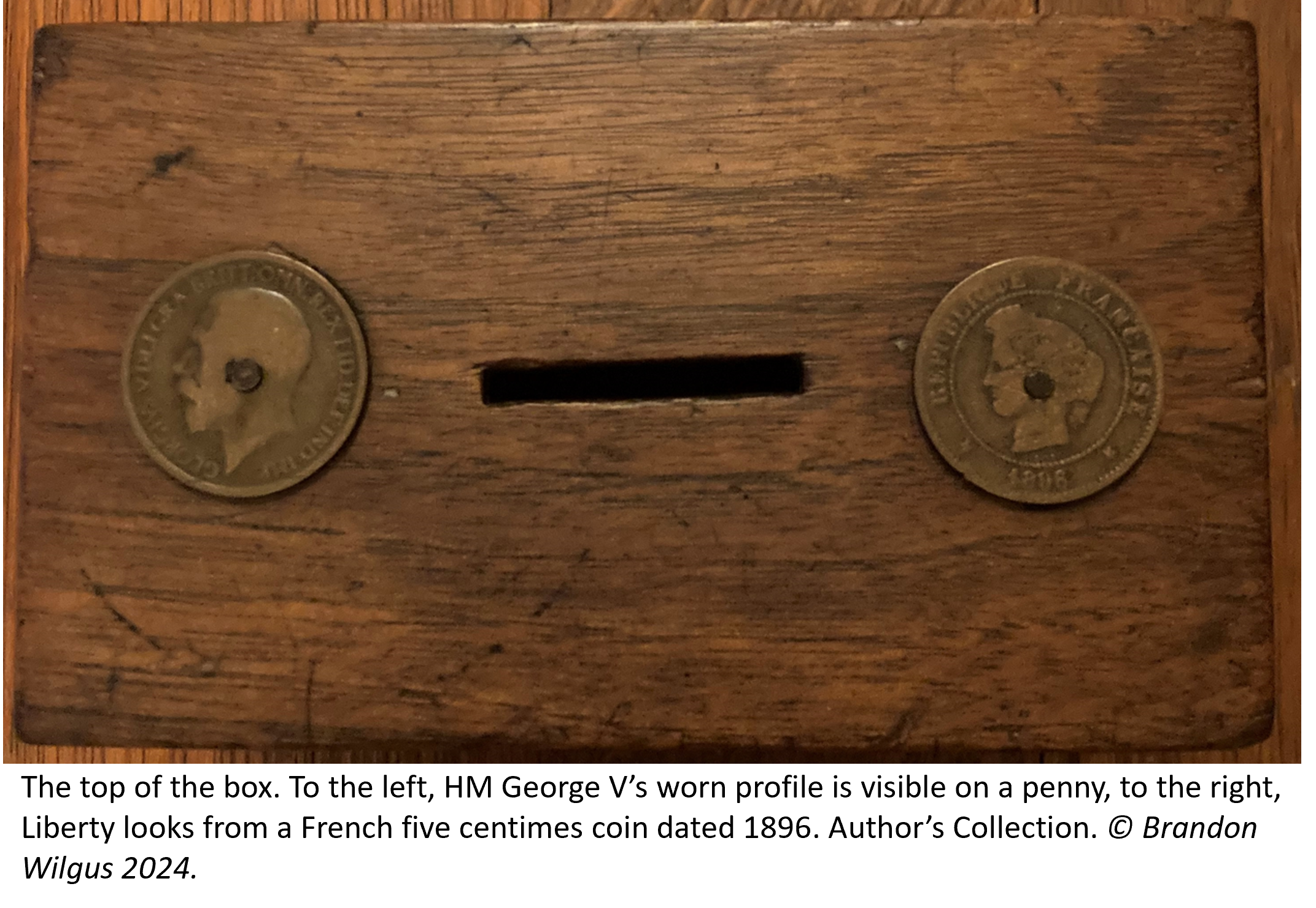
This box, this gift from a father to his son at a time when at least one of the two realised they might not meet again, is the most precious and sentimental type of trench art. It was a gift to a family member made with what was available and at hand at the time. It leads to more questions than it answers: did the father make it home by the next Christmas, in 1918, after the war ended?  Did Alfie, who received the box 107 Christmases ago, keep and cherish this gift from his father?  Did Alfie ever learn of the experiences, the suffering, the pain that his father must have experienced while in France with the Machine Gun Corps?  What became of the box after the Christmas of 1917?

I can answer some of the last question.  The box was obviously used to save coins for a long time, the slot on top is worn from the rough edges of many coins dropped through. The screws on the bottom – the old-fashioned slotted or flat head screws that one sees in Victorian or Edwardian furniture – have been taken out and screwed back many, many times.  It was the only way for Alfie, or others, to retrieve the money they had saved.

What about the father?  I assume he was commissioned, for the collar badge is an officer’s: it is bronze. Besides that, there is very little to learn of him.
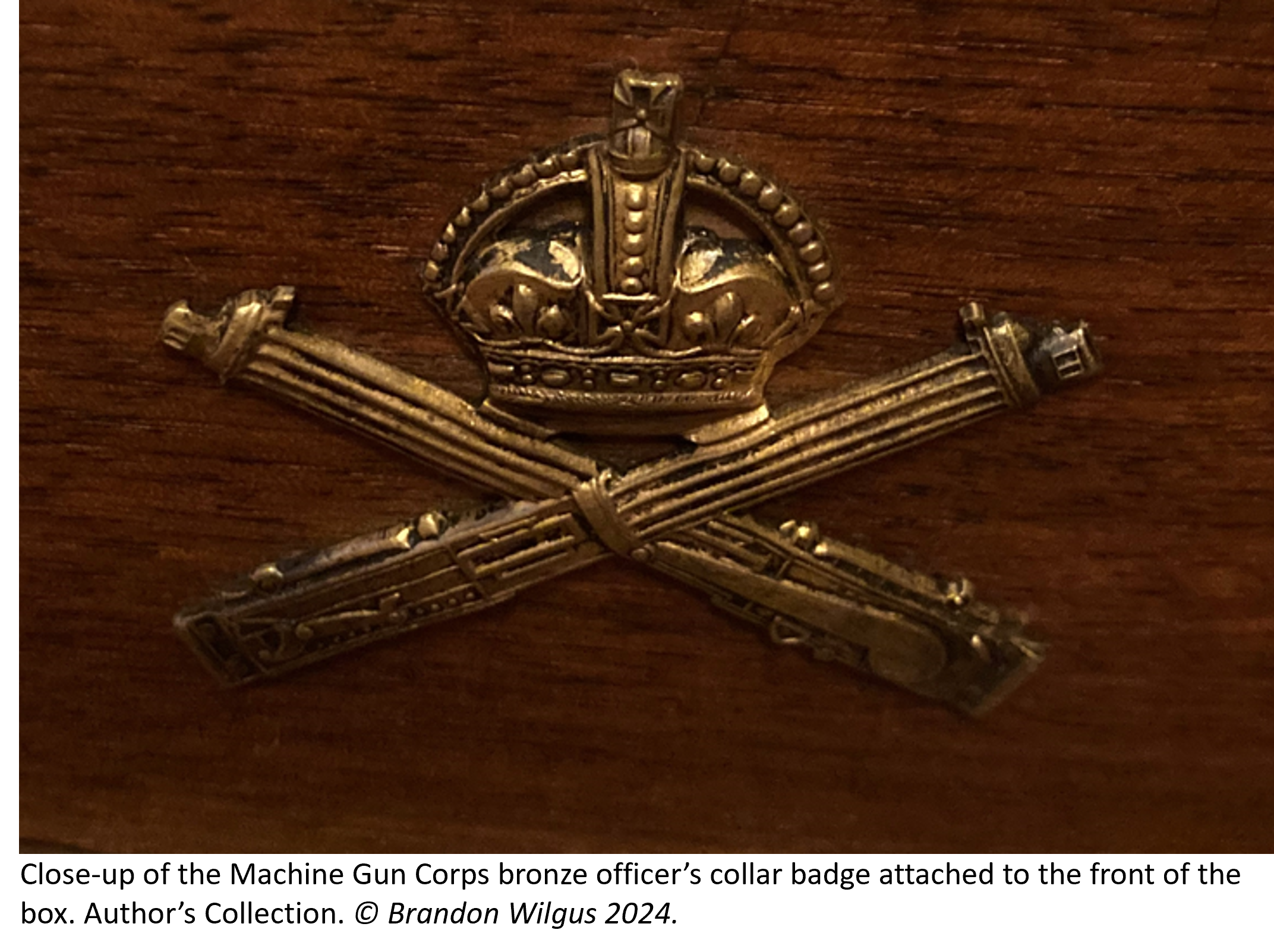
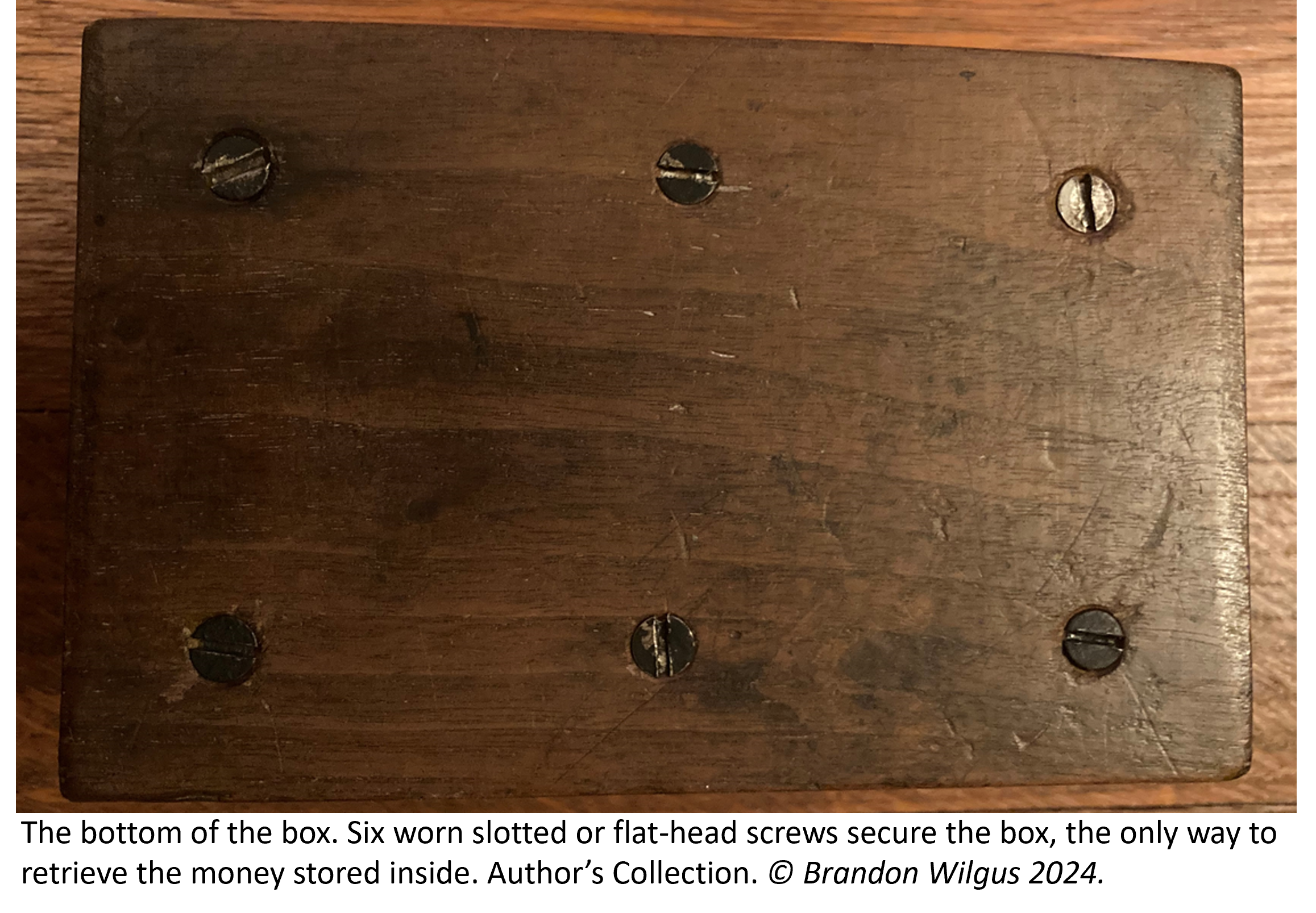
The box eventually ended up in an antique store in Tewkesbury, a market town in Gloucestershire, and came to me for a few pounds. It now sits proudly on my shelf, as I am certain it once did on Alfie’s.

Recently, as my family was decorating for Christmas, I found myself hoping once more that Alfie’s father made it home from France a year after he made this box and was rejoined safely with his family. I hope that Alfie, and his father, shared many Christmases together in later years. Maybe a bit sentimentally, I wonder if 107 years ago, as this box was being assembled in the cold and misery of France in 1917, if its maker could have imagined it would be cared for and kept by a different family in England over a century later?

While a box like this will always spur more questions than it answers, I would like to tell you how I appreciate the questions and comments you send my way through the year, a very Merry Christmas and a Happy New Year to you all!
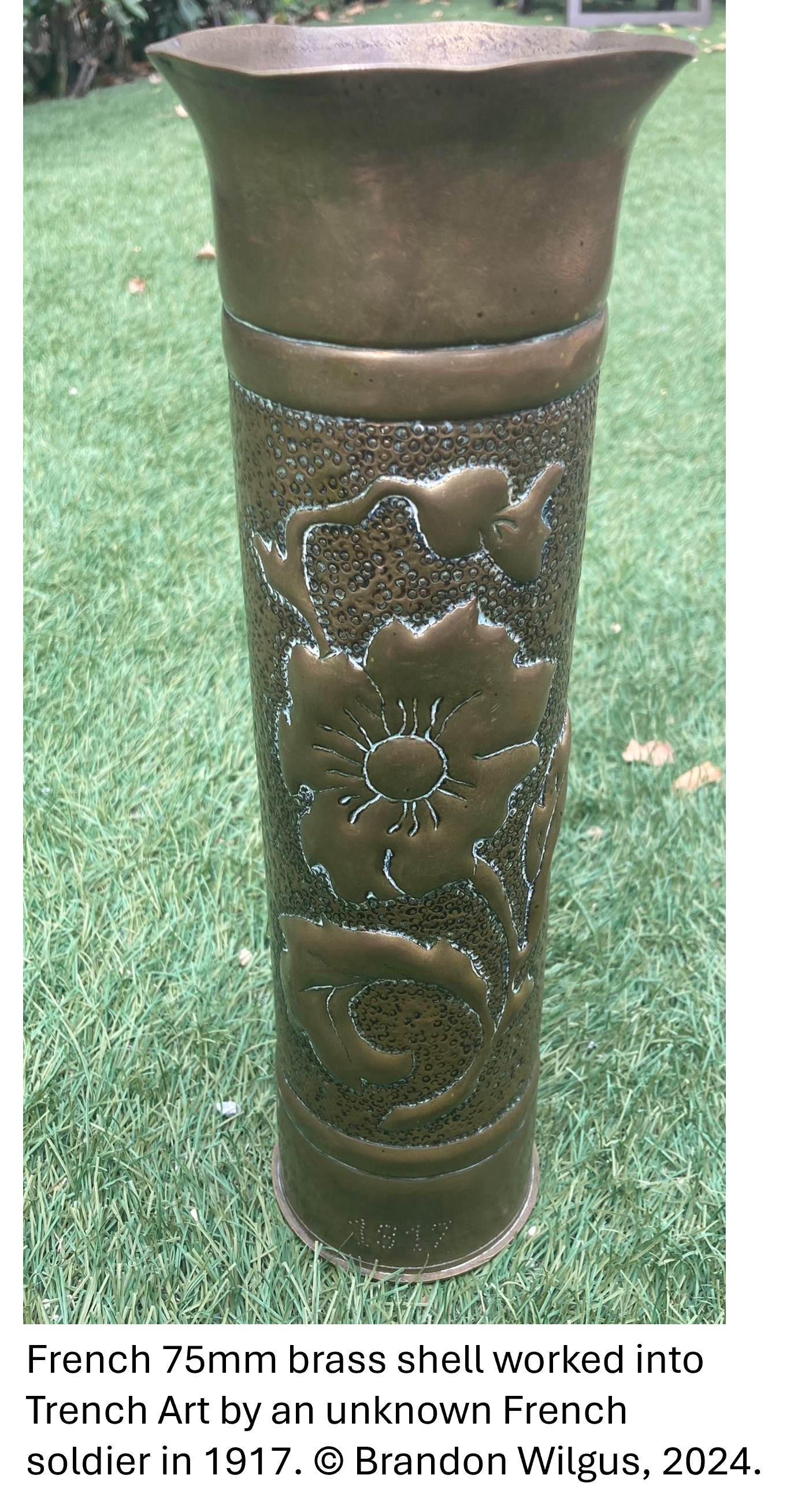
Trench Art: Hand Worked Shell Vase from 1917

I have been fascinated by Trench Art for several years.  I was first exposed to numerous examples of decorated shells, paperweights, desktop items, and trinkets made in the areas around Mons and Ypres, Belgium where we lived some time ago.  Some of these items I acquired and began a small collection.  First though, what is Trench Art?  At its most basic level, it is handcrafted artwork made by soldiers and sailors who find themselves with free time and materials to create original works of art.  This was often men stuck in the trenches of the First World War, or in Prisoner of War (POW) camps from the Napoleonic Wars through World War II. Items were made as souvenirs to post home or carry back on leave, to trade, or to simply occupy time in a dangerous and horrifying situation. One feels that a soldier felt very little control over his circumstances and fate, surrounded by destruction, but could find a release through an act of creation.  There are numerous items one can find: decorated brass shell casings are common, but also letter openers, desk items, regimental items, matchbook holders, ash trays, models of ships, aeroplanes, ships, and so on.  The beauty of Trench Art is in its originality, its story, the story of its materials, who might have made it, and why?

According to Nicholas Saunders, who has written on the history and variety of Trench Art, there are four real categories of the craft: items made by soldiers in war; items made by POWs; items made by civilians at the front with access to materials; and finally, purely commercial items.  The first three categories are the most interesting to me; however, around Belgium one often finds examples of the fourth category. Often one finds decorated shells made to sell to families traveling to Flanders in the 1920s – the Menin Gate or some other poignant memorial often is depicted on these items.

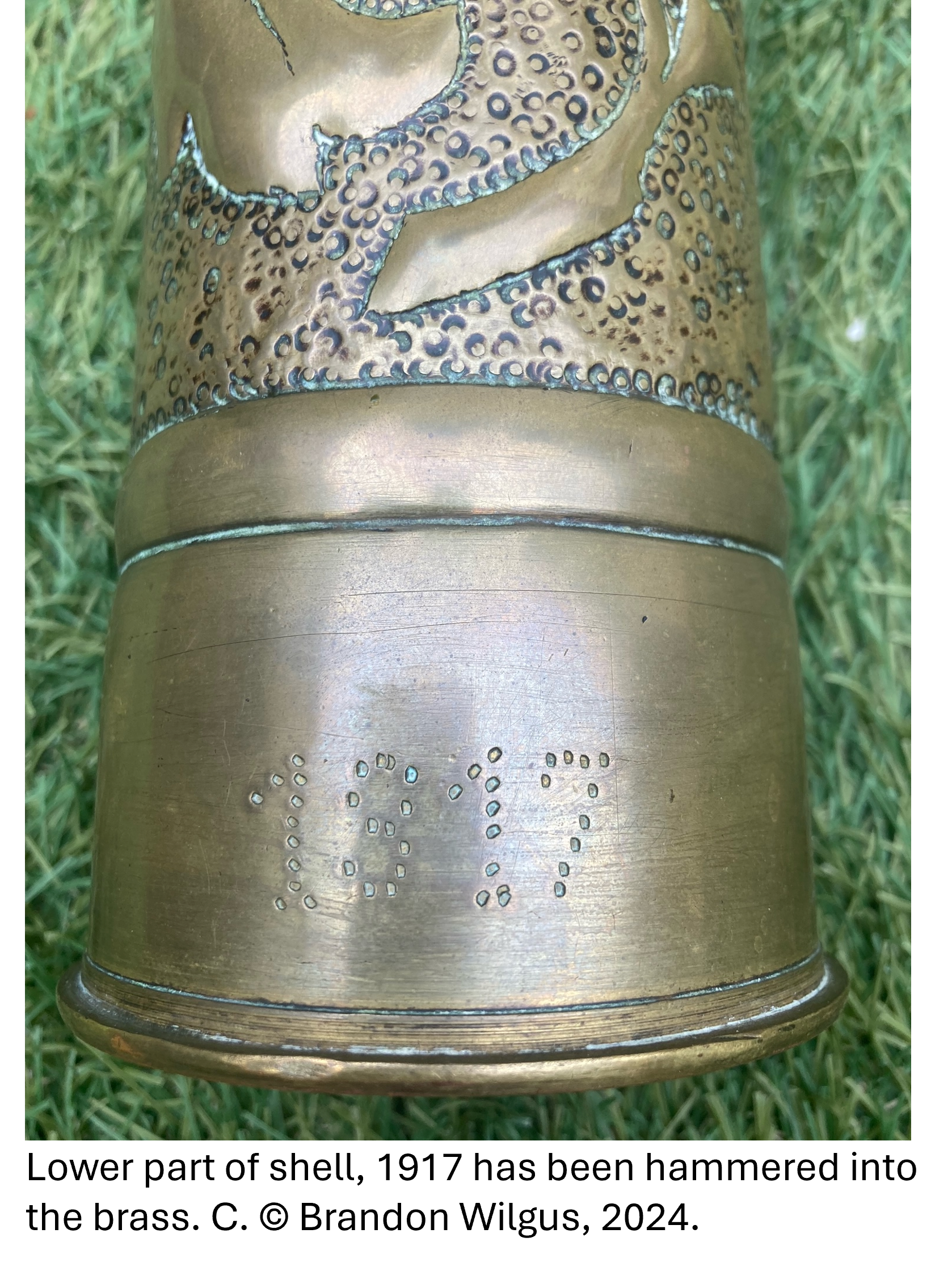
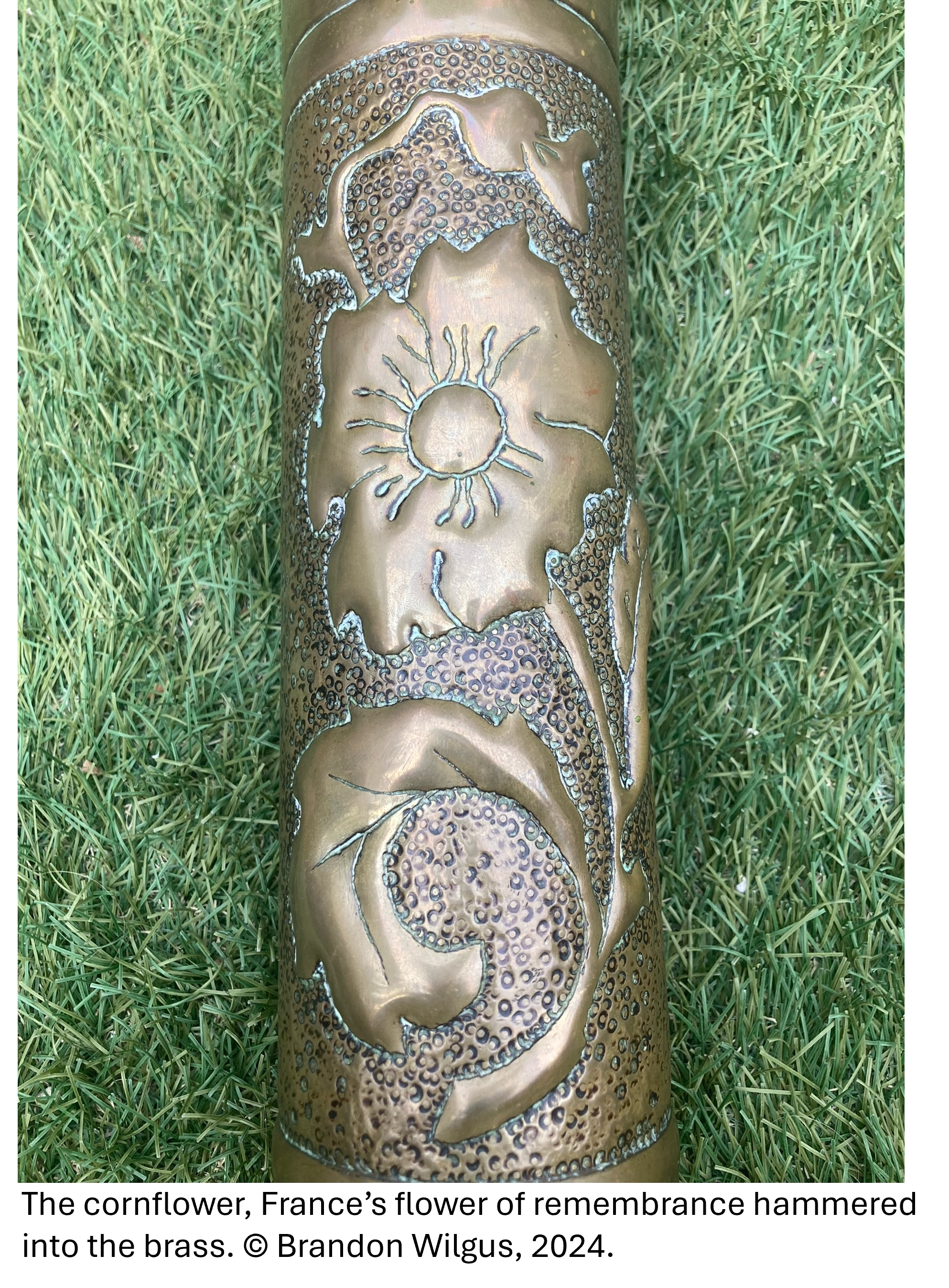
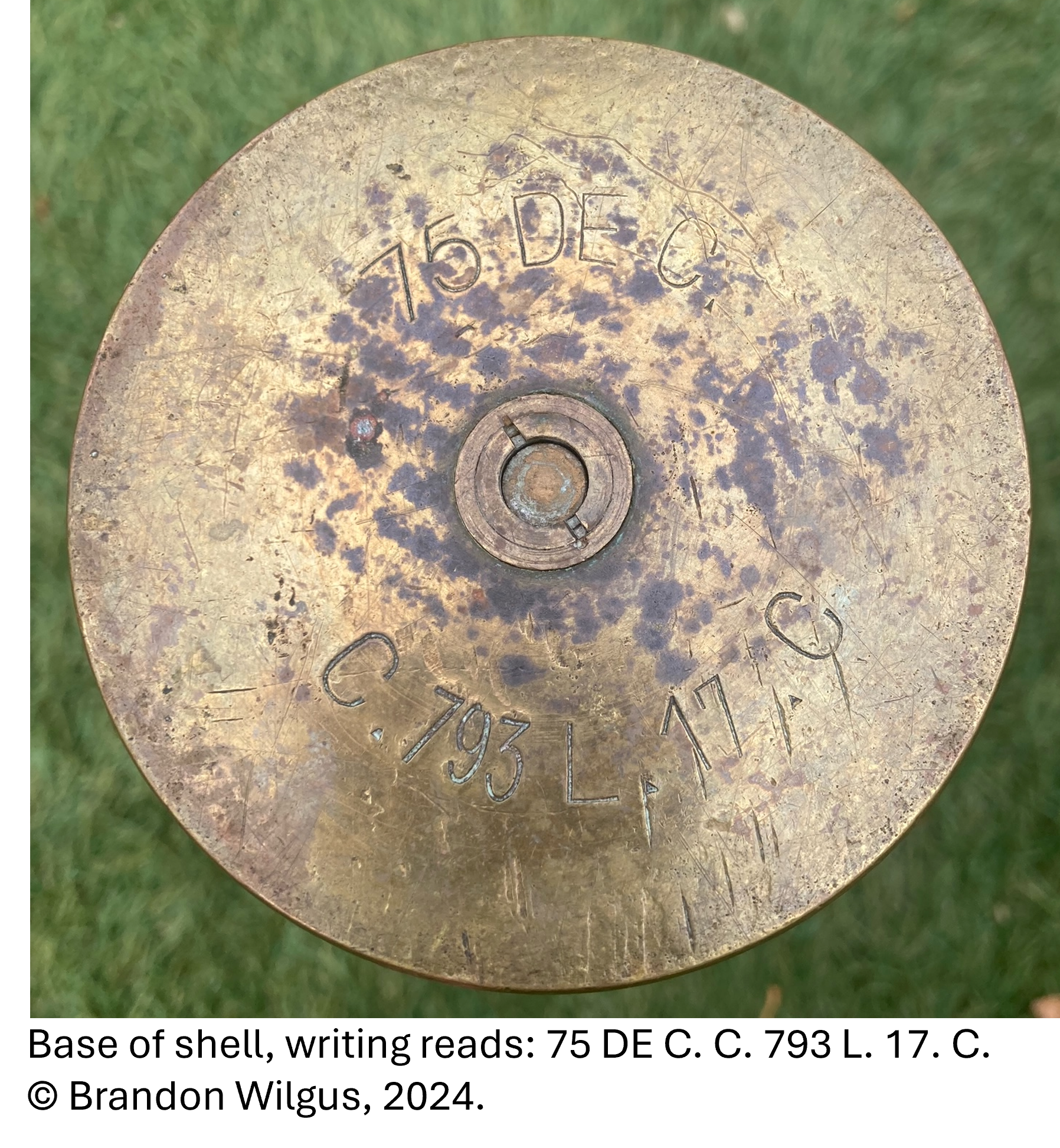
We are currently traveling in southern France on holiday.  While exploring a local marché aux puces, a flea market, I found a decorated French 75-millimetre brass shell, with 1917 hammered into the lower part of the vase below a stylized cornflower.  The cornflower in light blue is the symbol for remembrance in France, like the red poppy in the United Kingdom and the Commonwealth Nations, or the gold star or yellow ribbon in the United States.  The base of the shell reads: “75 DE C, C. 793 L. 17 C”.  As time has gone by, these markings have become harder to decipher, but the “75 DE C” means 75 canon de compagne, or the 75mm quick-firing field gun, which is the gun for which the shell was made.  The “C. 793 L.” is the munitions manufacturer and the lot number, so C is for Castelsarrasin, Tarn-et-Garrone, which was the location of a major armaments factory in southwest France under the Compagnie Française des Métaux (CFM) concern. This shell in particular was part of that facilities’ 793rd lot of 1917.  The “17” is the year of manufacture, 1917. The final “C” is the initial for the foundry which made the brass for the shell, also CFM’s Castelsarrasin factory in this case. 

I find it interesting to delve into the history of these decorated items, these mementos made during such awful times. What makes this piece of Trench Art fascinating is that after this shell was manufactured and fired in 1917, a French soldier likely took the time to hammer a cornflower and the year into the brass, then blued the indentations. He almost certainly made this piece of art in 1917 soon after the shell was fired since the brass casings of fired rounds were collected, recycled and reforged by French armaments manufacturers desperate for raw materials late in the war.  The shell vase was then kept for 107 years until it came into my possession at a French flea market this week.  There are many questions which are unanswerable: where on the Front was this 75mm shell fired?  At whom or what?  Who made this specific piece of Trench Art? Did he survive the war? Was it a gift for a wife, a sweetheart, or family member? Maybe he made it to trade or to sell?  Who kept it, cherished it, and preserved it for over a century?  One question I can answer, the cost in 2024? 107 years after it was made on the Western Front, lovingly preserved, and eventually forgotten, it made it into a box of old bits of metal and cost me 8 Euros on a hot Saturday in southwest France.

For more information on Trench Art, I’d recommend an excellent book on the subject: Nicholas J. Saunders, Trench Art: A Brief History and Guide, 1914-1939. 2nd Ed., (Barnsley: Pen and Sword Books, 2011).

Portholme Meadow and Early Cambridgeshire Aviation

Located between Huntingdon, Godmanchester, and Brampton Village is a low-lying meadow along the River Great Ouse. Having existed as a protected place since medieval times and known as the largest meadow in England, Portholme Meadow is treasure. The site was historically dubbed Cromwell’s Acres due to his connection with the area and the nearby presence of Hinchingbrooke House but it is Portholme Meadow’s early connections with aviation in Cambridgeshire that I want to explore. While the meadow is a wildlife paradise, a Site of Special Scientific Interest, and an important part of managing flooding in the area during the winter, it is its aviation history that is an almost forgotten story and a key piece of Cambridge military history. At 104 hectares, wholly located in the Brampton Parish, the Portholme Meadow was used as a Royal Flying Corps and RAF training area during the later part of the Great War and beyond, but its connection with aviation began earlier.

In 1910, just two years after Samuel F. Cody had flown the first aeroplane in England, James Radley, an early aviation pioneer based in Bedford believed that the flat areas of the Portholme Meadow, shielded from winds, and accessible to local towns, were ideal for take-off and landing as well as demonstrating to an enthused public the wonder of flight. Having acquired a Beleriot monoplane (the French aviator had recently flown the channel and the Alps), on 19 April 1910, with almost the whole population of Huntingdon, Godmanchester, and Brampton watching, Radley took off and flew circuits of the meadow to the amazement of the local crowds.

While several flights were made, Radley’s aircraft was able to complete a 16.5 mile circuit of the meadow at an altitude of 40 feet in just under 24 minutes – just over 41 miles per hour.

After this success, a workshop was aquired in Huntingdon, on St. Johns street, and James began to assemble his aircraft along with his partner Will Morehouse. Their company, Portholme Aerodrome Ltd. was founded and the first locally produced aeroplane was flown on 27 July 1911 from the meadow.  

Despite local enthusiasm, Radley and Moorehouse’s business venture was not a succes. Their debts mounted and they were unable to produce a commercially viable aircraft. In 1912, they sold Portholme Aerodrome Ltd. to Handly Page which also struggled to maintain profitable aircraft production in Huntingdon. However, flying did continue in Portholme Meadow up until the Great War, largely for practice and demonstrations for the public. When the Great War began, the admiralty awarded Handly Page a license to produce 20 Wight Seaplanes for the Royal Navy, but this contract was canceled in 1916 after only four aeroplanes were produced due to issues with the construction. Consummed with debt and the war over, Portholme Aerodrome Ltd. went into receivership in July 1922.

However, it was later in the Great War that the Royal Flying Corps, which became the RAF in April 1918, used the meadow for flight training, and this use would continue into the 1930s. At one point, the Portholme Meadow was considered for conversion into an airfield, but luckily this never occurred, and this beautiful and unique piece of nature was conserved. As aircraft became larger and maintenance requirements grew, the RAF moved the remaining aircraft from the grassy meadow to RAF Digby in Lincolnshire and Portholme Meadow’s brief history with aviation came to an end. 

If you would like to visit Portholme Meadow, it can be accessed from Godmanchester, Huntingdon, or Brampton but I would recommend parking at The Brampton Mill, Bromholme Lane, Huntingdon, Cambs. PE28 4NE, where the Meadow can be accessed by public footpath – and an excellent lunch or pint can be had after your visit.

Sources:

Doody, J.P., Portholme Meadow: A Celebration of Huntingdonshire’s Grassland. The Huntingdonshire Fauna and Flora Society, 60th Anniversary Report, eds., H.R. Arnold, B.P. Dickerson, K.L. Drew and P.E.G. Walker. 2008.

Hull, Patrick. 1998 – The Past of Portholme. The Godmanchester Museum Website: http://www.godmanchester.co.uk/bridge-magazine/219-1998-the-past-of-portholme

Ypres: The Menin Gate

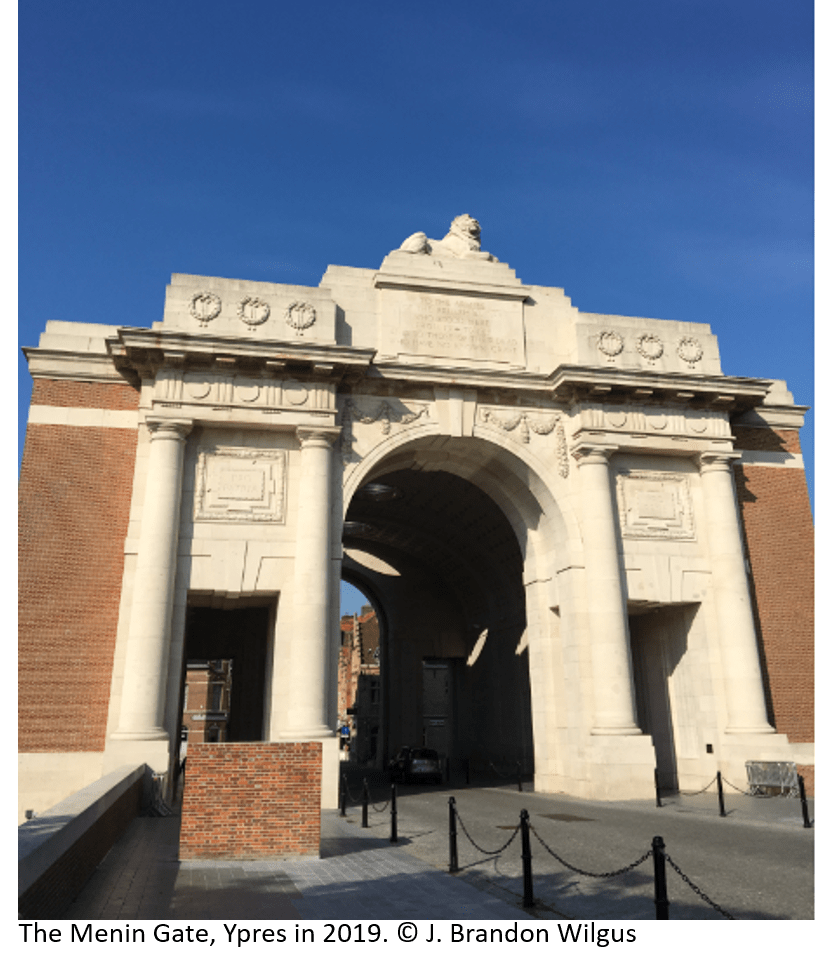
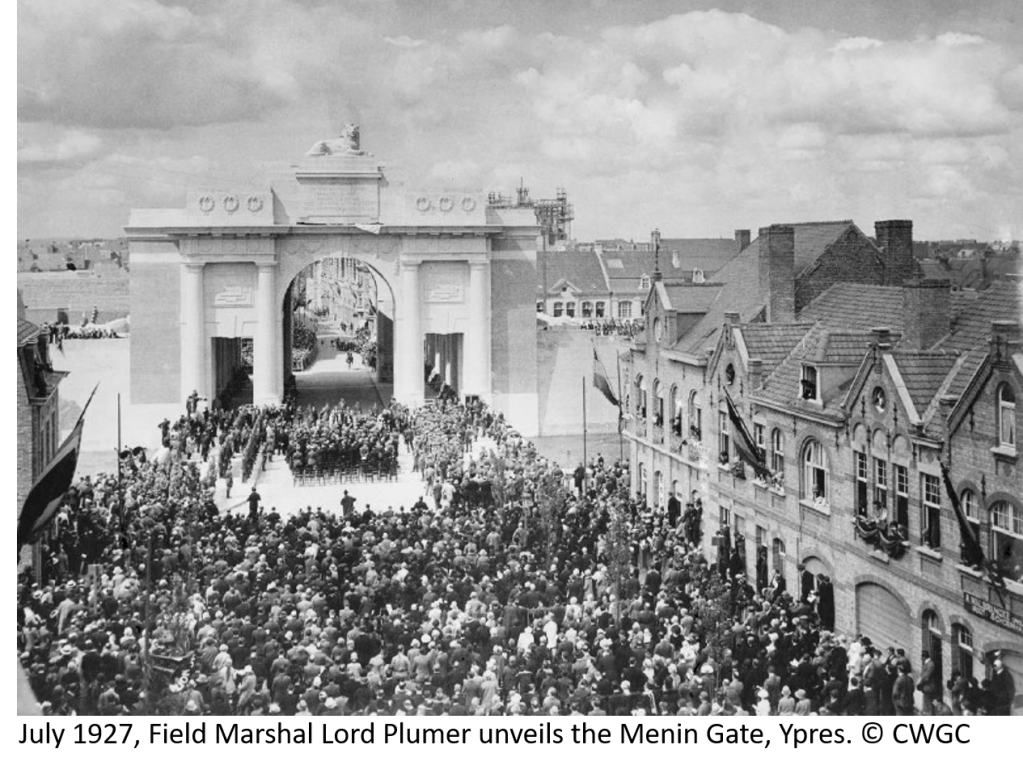
It is a somber place, the Ypres Salient, where so many young men perished between 1914 and 1918. I have begun a series of hikes around the many battlefields, following Paul Reed’s excellent guide: “Walking Ypres”. However, my exploration of the Ypres Salient rightly begins at the Menin Gate, a memorial to the British and Commonwealth soldiers missing from the beginning of the war until 15 August 1917. It was then that 55,000 names of missing men had been reached and additional names would be recorded on other memorials around the Salient. However, for the missing from Commonwealth countries: Australia, Canada, and South Africa, all their missing from the Ypres Salient are recorded at the Menin Gate. The memorial was built in the 1920s and unveiled in July of 1927. At the unveiling of the monument, Field Marshal Herbert Plumer, 1st Viscount Plumer, who had led forces in the Salient during the war, most notably at Messines Ridge, famously said of those with no graves: “They are not missing, they are here.”

Originally, the gate was an opening in the 17th Century walls built by Vauban which led from the medieval market town of Ypres to the town of Menin some miles away to the east. During the war, the opening in the walls led to the front, and as the war progressed, hundreds of thousands of men would pass from the town through the destroyed portal to the trenches and dugouts which surrounded the tenuous British position in the salient. Ypres itself came under increased German shelling throughout the war and was almost completely destroyed by the armistice in 1918. Soldiers passing from Ypres through the ruined walls to the trenches were said to joke: “tell the last man through to bolt the Menin Gate.”

Beginning in July 1928, only interrupted during the German occupation during the Second World War, the Last Post Buglers’ Association has played the Last Post at 8 pm each evening under the arch of the Menin Gate. In fact, as Ypres was liberated by Polish forces in the Second World War, the ceremony was bravely resumed by local firefighters while fighting continued in the town. It is a moving ceremony and a credit to the Belgian allies of Great Britain, the citizens of Ypres, who have maintained this somber tradition for almost a hundred years. Each night, traffic is stopped and visitors stand silently as the buglers play in unison the Last Post, which echoes under the gate and among the 55,000 names of the missing. It is fitting to feel overcome by a sense of loss and tragedy at such a moment.

For more information on the Last Post Buglers’ Association, or to schedule a wreath laying at the Menin Gate, visit their website: https://www.lastpost.be/en/ceremonies/participation

The Special Relationship: the U.S. Armed Forces in England

One of the interesting things about living in Cambridgeshire is seeing the uniforms of U.S. servicemen and women stationed here in England.  Many of these men and women serve in the U.S. Air Force, on Royal Air Force Bases, across East Anglia and the East of England.  However, it wasn’t too many decades past when U.S. Army and Navy personnel were commonly seen in England as well, especially during the Second World War.  Even before the attack on Pearl Harbor and the United States entering the war in December 1941, there were high-level contacts at the General Staff level between the United States and United Kingdom.   In fact, as early as March 1941, the United States, United Kingdom and Canada had agreed on:  “The early defeat of Germany as the predominant member of the Axis with the principal military effort of the United States being exerted in the Atlantic and European area; and a strategic defensive in the Far East.” – this was the Europe First policy which was the basis of the Allied war effort throughout the Second World War.  So when the attack on Pearl Harbor came and the United States found itself at war with the Axis Powers: Germany, Japan, and Italy, it was only a short amount of time before U.S. Army and U.S. Army Air Corps (the forerunner of the U.S. Air Force) personnel began arriving in droves across England.

It was on January 26, 1942 that the first U.S. combat troops arrived in England.  As U.S. forces arrived in England, they were handed a publication titled: “Instructions for American Servicemen in Britain”.  Along with all sorts of useful advice to help with the large influx of Americans, servicemen were told never to insult the monarchy, and that “the British don’t know how to make a good cup of coffee, but you don’t know how to make a good cup of tea.  It’s an even swap.” It is important to note that individual Americans were serving with UK and Canadian units across England in units like the Eagle Squadrons, but the organized landing of forces of the U.S. Army did not occur until January 1942.

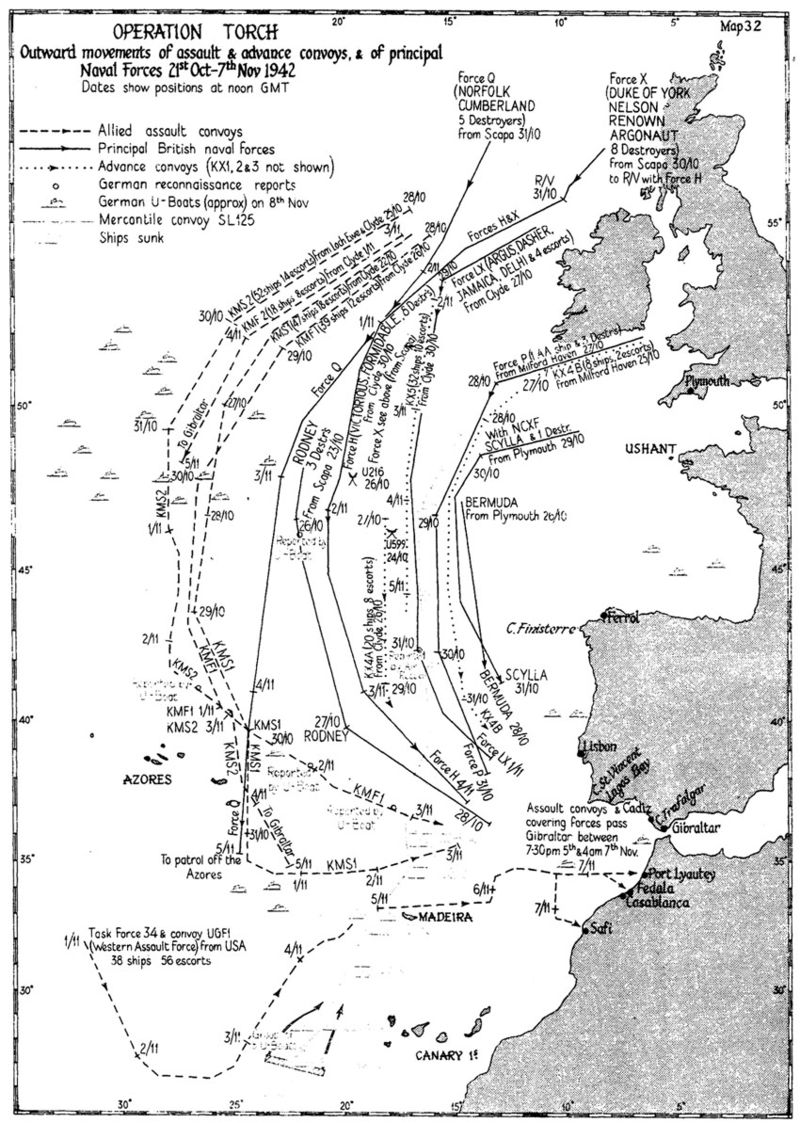
As the staging of forces continued from January thousands of men and equipment were staged across the United Kingdom.  These forces launched  the first allied amphibious operation from England, the invasion of North Africa, named Operation Torch.  18,500 U.S. Army combat troops were transported from their staging bases in the United Kingdom to Oran, North Africa.  These men were part of the U.S. 1st Infantry Division (The Big Red One), the 1st Armored Division (Old Ironsides), and the 509th Parachute Infantry Regiment.  Fighting would rage across North Africa, and many of these men would find themselves fighting from Sicily to the Italian mainland until the end of the War.

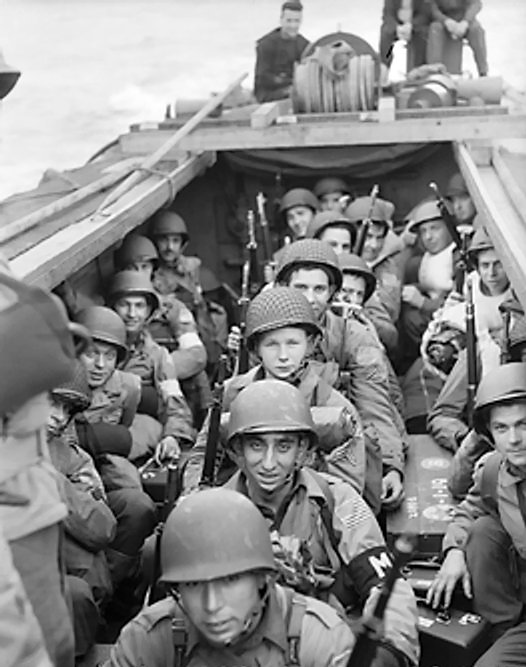
Americans in Landing Craft Operation Torch
U.S. Troops embarked in a landing craft for Operation Torch.  This artistic work was created by the Government of the United Kingdom before 1957 and is in the public domain.

Operation Torch Map
Map from “Operation Torch” by S. W. Roskill, from “The War at Sea 1939-1945”, Chapter XII.  In the public domain.

The close proximity of Cambridgeshire and East Anglia to the industrial heart of Germany led to the development of numerous air fields for medium and heavy bombers, as well as fighter, cargo, and airborne support aircraft, arriving from the United States to work with RAF Bomber Command in the strategic bombing campaign against the Axis Powers.

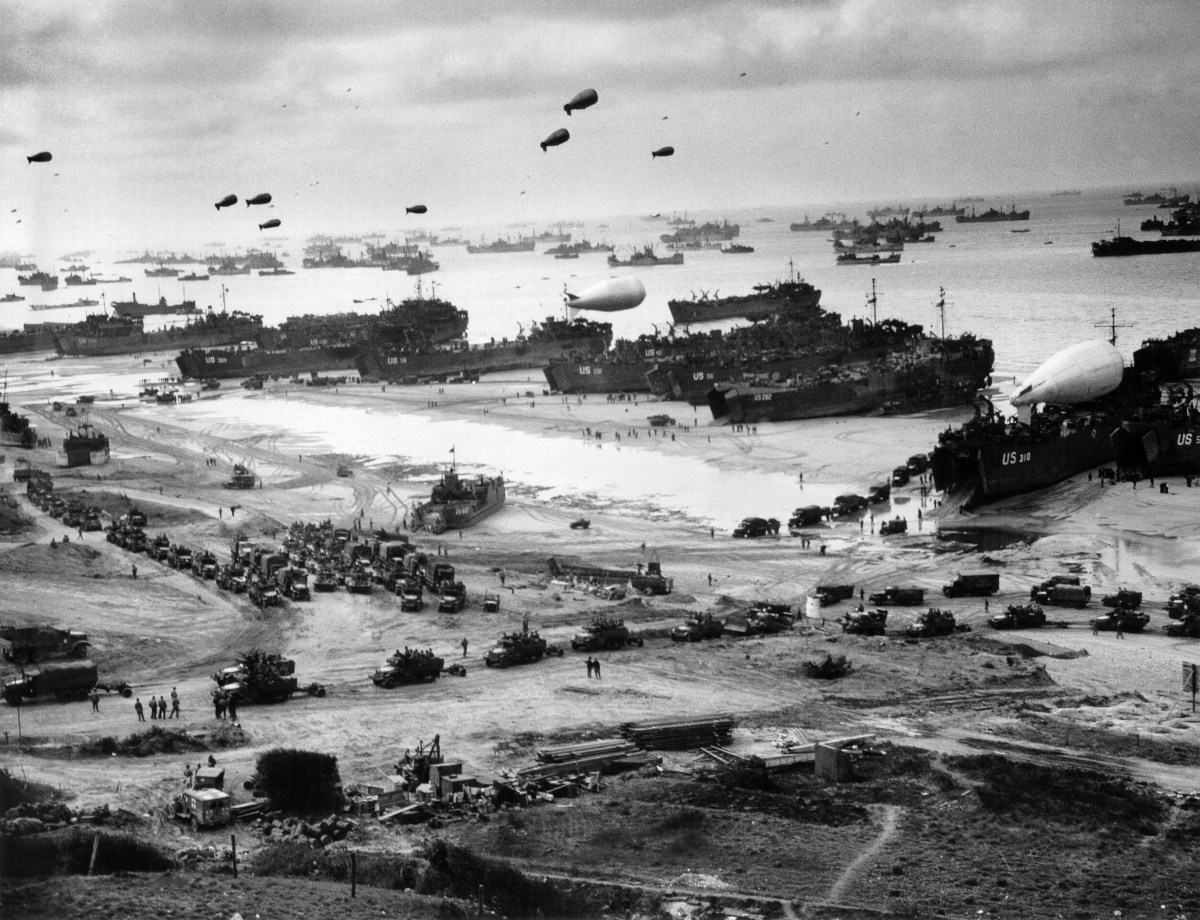
In June 1944, the long-awaited invasion of France was launched from staging points across England, with U.S., British, Commonwealth, and Allied troops storming the beaches of Normandy in Operation Overlord.  These forces would drive on to liberate France, the Netherlands, Belgium and Luxembourg, and invade Germany, meeting the Soviet Allies on the Elbe. Amazingly, onboard over 1,200 aircraft and 5,000 ships, 160,000 allied troops were landed in France on June 6, 1944.  By the end of August, 3 million allied troops were transported from England to France, a staggering feat of human achievement.

NormandySupply_edit
Mid-June 1944, a view of the immense logistical operation on Omaha Beach, Normandy France.  The photo is the property of the U.S. Coast Guard and is in the public domain.

By the end of the war, 1.5 million U.S. servicemen and women had been stationed in England, or passed through to combat operations in Europe.

The military cooperation and deep relationship between the United Kingdom and the United States, which continues to this day, remained at the end of the Second World War.  NATO was formed in response to new threats from the Soviet Union and its Allies, and the United Kingdom remained critical to Allied efforts through the Cold War.  Today, almost two decades after the end of the Second World War, the presence of U.S. servicemen and women across Cambridgeshire is a point of pride for those of us who live here, reminded of our shared military history.

For more information on the U.S. military in England during the Second World War, visit the National Archives website: http://www.nationalarchives.gov.uk/help-with-your-research/research-guides/second-world-war/

RAF Molesworth and the 303rd Bombardment Group (Heavy)

In western Cambridgeshire, tucked away among the muddy fields, hedges and paths is a still active RAF station with a long and fascinating history.  Royal Air Force Station Molesworth, almost always shortened to RAF Molesworth, was first constructed in 1917 and remains in use today by the U.S. Air Force.

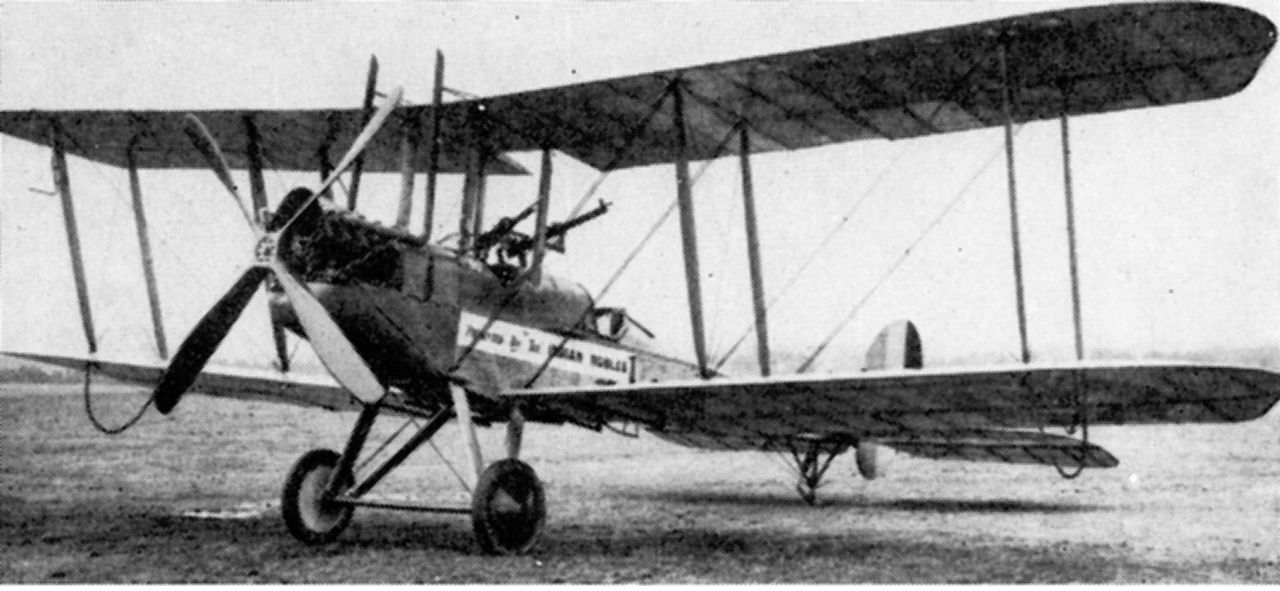
One can almost picture the B.E.2s of the Royal Flying Corps which operated out of Molesworth during the Great War, conducting training and preparations for flyers preparing to transfer with their aircraft to France.  The No. 75 Squadron occupied the airfield for sometime during this period. However, the airfield was abandoned after the war ended and went into disuse.  Some of the buildings which had supported the air station where incorporated into the local farms near Bington, Old Weston, and Molesworth.

Unatributed photo of a wartime Avro B.E.2c, with 'V" undercarriage, stremlined engine cowling, and the upper wing cut-out for the tail gunner to improve field of fire.  Sadly, there are no photographs of B.E.2's operating from RAF Molesworth during the war that I have been able to locate.
Unattributed photo of a wartime Avro B.E.2c, a reconnaissance plane and from the Great War, with ‘V” undercarriage, streamlined engine cowling, and the upper wing cut-out for the tail gunner to improve field of fire. Sadly, there are no photographs of B.E.2’s operating from RAF Molesworth during the war that I have been able to locate.

Despite the hopes of a generation, the horror of World War was to be experienced once again.  As the United Kingdom found itself drawn into the conflict with the German invasion of Poland in 1939, it was not long before the Air Ministry decided to recommission the abandoned aerodrome at Molesworth. Through 1940, the runways were laid and the base infrastructure constructed to support bombers. The Royal Australian Air Force flew Vickers Wellington IVs, a medium bomber, from Molesworth from November 1941 until January of 1942 under the Royal Australian Air Force’s No. 460 Squadron.  After the Australians, the RAF’s No. 159 Squadron occupied the airfield for a short time, but did not conduct flight operations from Molesworth.

It was the arrival of the U.S. Army Air Forces after America’s entry into the war that would transform Molesworth into one of the major bomber bases in England.  Upgraded to a Class ‘A’ Airfield intended for use by the “heavies” – the four-engine bombers that would take the strategic bombing campaign to occupied Europe and Germany – Molesworth was radically altered and underwent major upgrades.

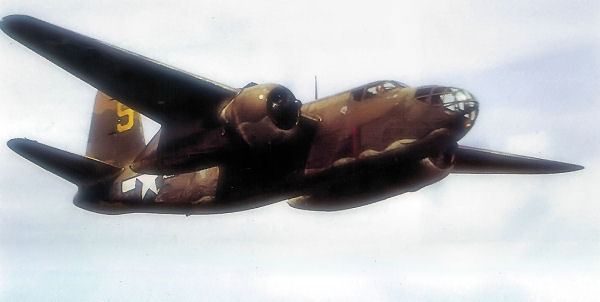
The first American tenants at RAF Molesworth were the 15th Bombardment Squadron, flying the Douglas A-20 Havoc/Boston III light bomber. It was from Molesworth on 4 July 1942 that six aircraft from the 15th Bombardment Squadron joined a flight of RAF bombers to conduct a low-level attack against Luftwaffe airfields in the occupied Netherlands – the first U.S. Army Air Force bombers to attack mainland Europe. The date chosen was auspicious for President Roosevelt wanted to begin the strategic bombing campaign against Germany on the 4th of July. None of the four-engine “heavies” at the time were ready though, so the President’s intent was met with the light bombers launched from Molesworth. Sadly, three aircraft on the combined mission did not return from the bombing raid, two were A-20s from the 15th Bombardment Squadron.  One of the four that survived was pictured at a later date, amazingly in color:

This Douglas A-20C HAVOC/BOSTON III, serial number AL672, was flown on the 4 July 1942 low-level attack against Luftwaffe positions in the Netherlands at the time part of the 15th Bombardment Squadron (light).  This photograph was taken later in the war when AL672 was flying as a staff communications aircraft for the 8th USAAF out of RAF Bovingdon.  Photograph from the U.S. Army Air Forces via the National Arcives.  Thanks to Roger Freeman: "The Mighty Eighth, the Colour Record" 1991.
This Douglas A-20C HAVOC/BOSTON III, serial number AL672, was flown on the 4 July 1942 low-level attack against Luftwaffe positions in the Netherlands at the time part of the 15th Bombardment Squadron (light). This photograph was taken later in the war when AL672 was flying as a staff communications aircraft for the 8th USAAF out of RAF Bovingdon. Photograph from the U.S. Army Air Forces via the National Archives. Thanks to Roger Freeman: “The Mighty Eighth, the Colour Record” 1991.

The 15th Bombardment Squadron departed RAF Molesworth for operations in North Africa under the 12th Air Force in September 1942.  It was at this time that the B-17 Flying Fortresses began arriving at RAF Molesworth, the four squadrons that would eventually comprise the 303rd Bombardment Group (Heavy) which would fly from Molesworth until the end of the war.  The 303rd Bombardment Group, consisting of the 358th, 359th, 360th and 427th Bombardment Squadrons, was destined to become one of the legendary units of the Second World War under the 8th Air Force.  The first mission by the 303rd Bomb Group was flown on 17 November 1942, targeting military targets in occupied France.  On 27  January 1943, the 303rd began flying missions against Germany, taking part in the 8th Air Force’s first bombing mission against Germany proper – the U-boat facilities at Wilhelmshaven.

For the next two and a half years the 303rd would fly missions deep into German territory: to the ball-bearing factories at Schweinfurt, against factories and shipyards, against rail-yards and distribution centres for the Wehrmacht.  During the D-day invasion of Normandy, the 303rd bombed the Pas de Calais and then later supported the breakout from St. Lo in July 1944.  It supported the army in the Battle of the Bulge and in the crossing of the Rhine in March 1945.  On 25 April 1945, the 303rd flew its last mission from RAF Molesworth attacking the German armaments factory complex at Pilsen.

The RAF Molesworth control tower in April 1944.  On the taxiway is a B-17G, tail number 42-97284 "Ain't Misbehavin" - she would fly a total of 48 combat missions during the war.  The "Triangle-C" designator on the verticle stabilizer was the RAF Molesworth designator.  Photograph by Mr. Milton "Chic" Cantor, the photographer of the 303rd BG(H), with thanks to the 303rd "Hell's Angels" historical society.
The RAF Molesworth control tower in April 1944. On the taxiway is a B-17G, tail number 42-97284 “Ain’t Misbehavin” – she would fly a total of 48 combat missions during the war. The “Triangle-C” marking on the vertical stabilizer was the RAF Molesworth designator. The Class A Airfield improvements: three converging airstrips with a concrete runway of at least 6,000 feet are visible in the distance. Photograph by Mr. Milton “Chic” Cantor, the photographer of the 303rd BG(H), with thanks to the 303rd “Hell’s Angels” historical society.

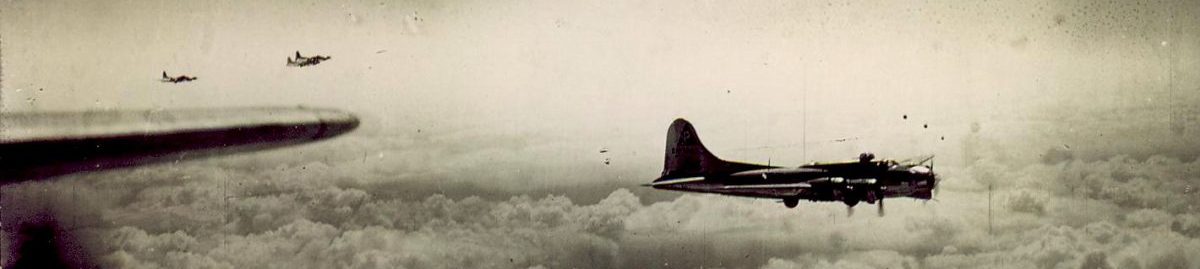
The 303rd Bomb Group (Heavy) flew a total of 364 missions from RAF Molesworth, comprising 10,271 sorties.  The bombers shot down a confirmed 378 aircraft with 104 additional aircraft as probable kills.  817 men from the 303rd were killed in action and 754 become prisoners of war.  After the war, the 303rd Bomb Group (Heavy) departed Molesworth for the United States via North Africa.

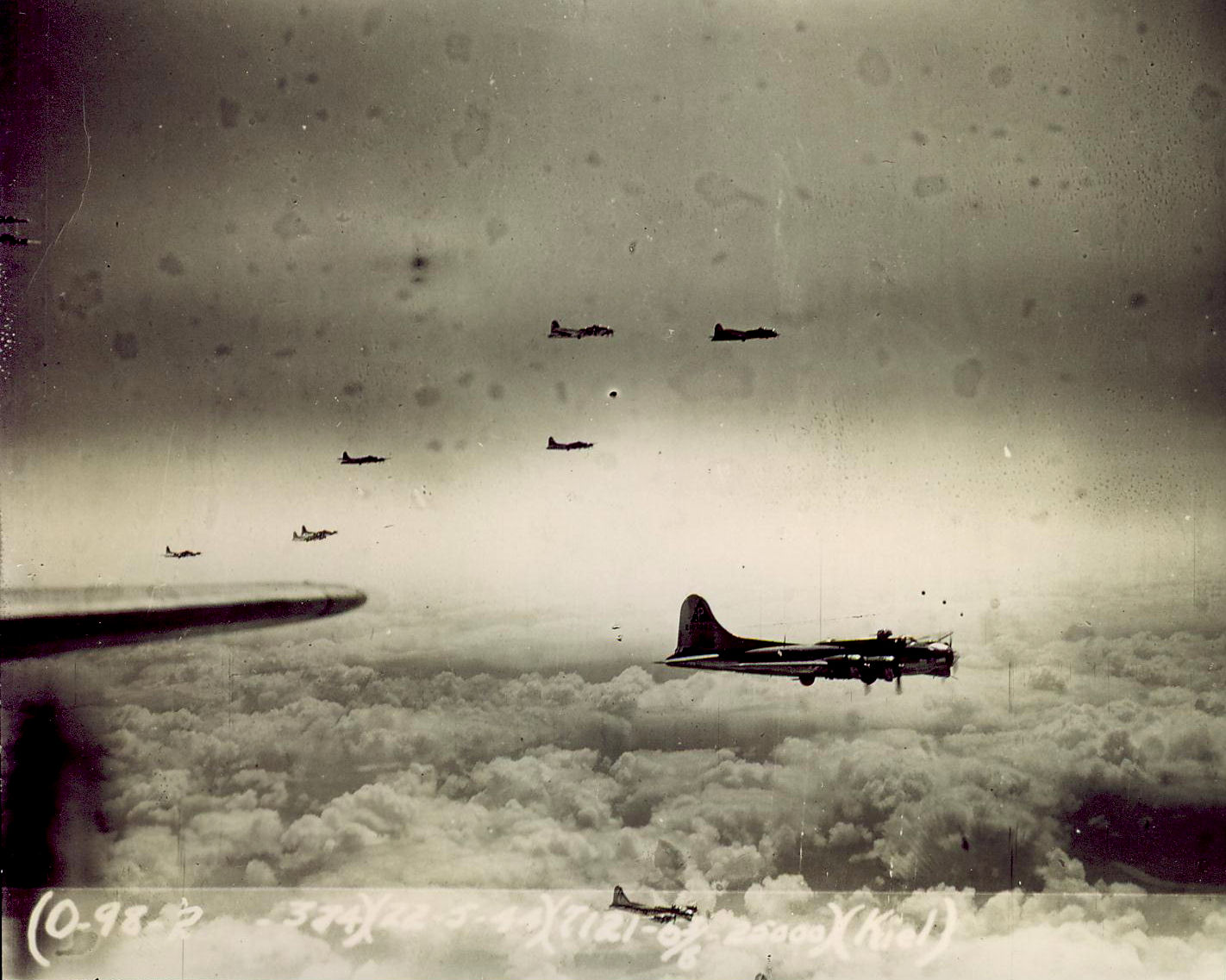
22 May 1944: 303rd B-17s on a bombing mission to Kiel, Germany taken at 25,000 feet.  Photo from the Peter M. Curry Collection.
22 May 1944: 303rd B-17s on a bombing mission to Kiel, Germany taken at 25,000 feet. Photo from the Peter M. Curry Collection.

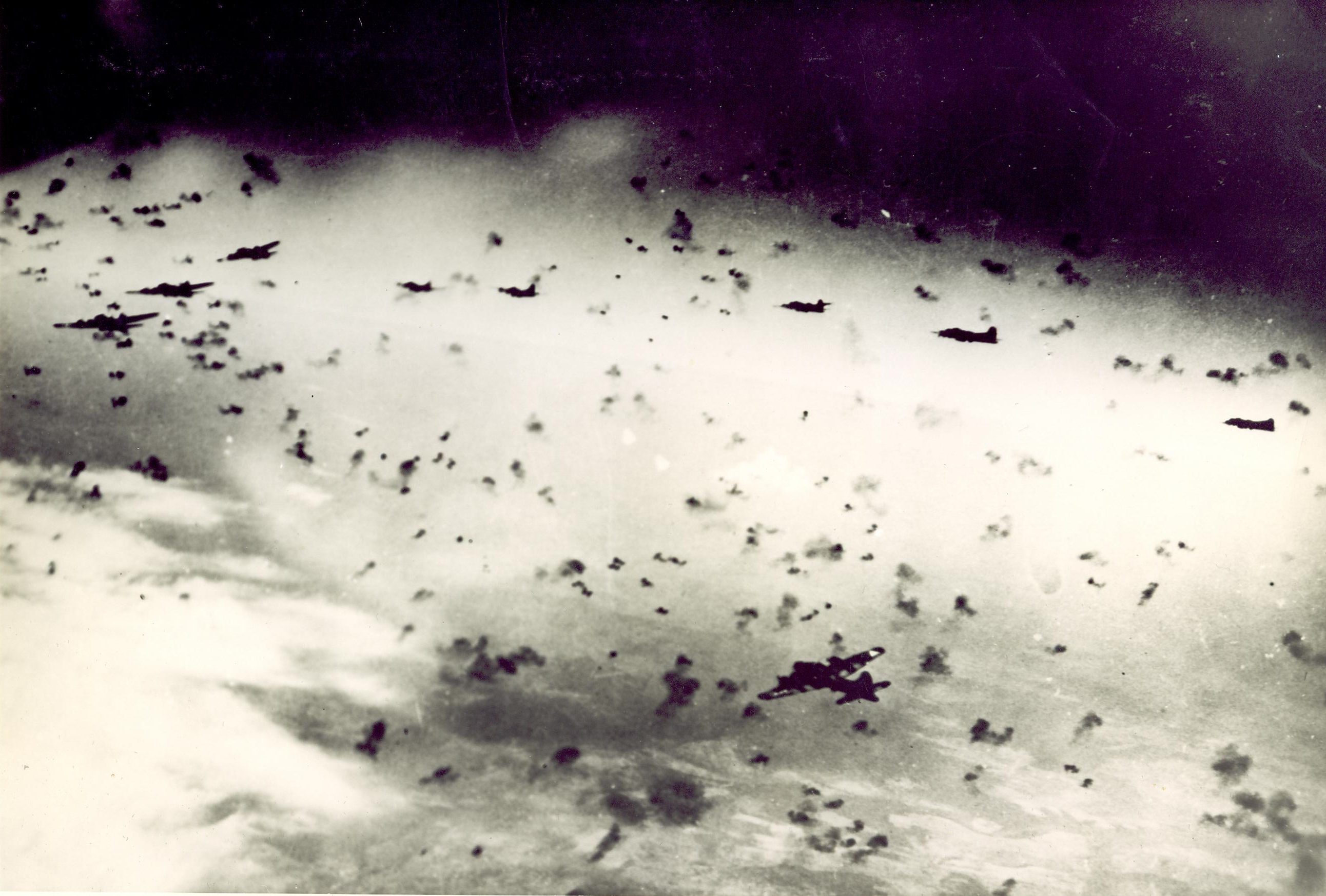
B-17s from the 303rd flying through intense anti-aircraft fire.  Photo by Joseph Sassone with caption: "Flak so thick you could almost taxi around it."
B-17s from the 303rd flying through intense anti-aircraft fire. Photo by Joseph Sassone with caption: “Flak so thick you could almost taxi around it.”

The airfield was returned to the Royal Air Force in July 1945 where it was used for jet trainers and Gloster Meteor IIIs were operated from Molesworth for a short period.  On 10 October 1946 the training unit left and the airfield was placed in ‘care and maintenance’.

In 1951, the U.S. Air Force returned to RAF Molesworth, hosting the 582nd Air Resupply Group.  The runways, taxiways and hardstands were all improved and the airfield became a critical logistics airbase for the Cold War.  The 582nd provided air support – paratroop airdrops and resupply – to the U.S. Army’s 10th Special Forces Group which was stationed in Bad Tolz, Germany.  The 582nd Air Resupply Group flew a variety of aircraft from Molesworth, from B-29s to C-119 Flying Boxcars and HU-16 Albatrosses. At the time, the 582nd was treated as a normal resupply group; however, its support to Army Special Forces, which were trained to infiltrate the Iron Curtain if needed, must be wondered at.

On 25 October 1956, the 582nd was reorganized and called the 42nd Troop Carrier Squadron Medium (Special). They flew HU-16s Albatrosses, C-47 Dakotas, C-119 Flying Boxcars, and C-54 Skymasters from RAF Molesworth until 3 May 1957 when the aircraft moved to RAF Alconbury. However the squadron had a short life at Alconbury and was inactivated on 8 December 1957. The C-54s and C-47s were transferred to Rhein-Main AB, Germany.  The C-119s were sent to the 322nd Air Division at Evreux-Fauville AB, France.  Of personal note, my grandfather was a C-119 pilot in the 322nd Air Division in Evreux-Fauville AB France at the time, a young U.S. Air Force lieutenant.

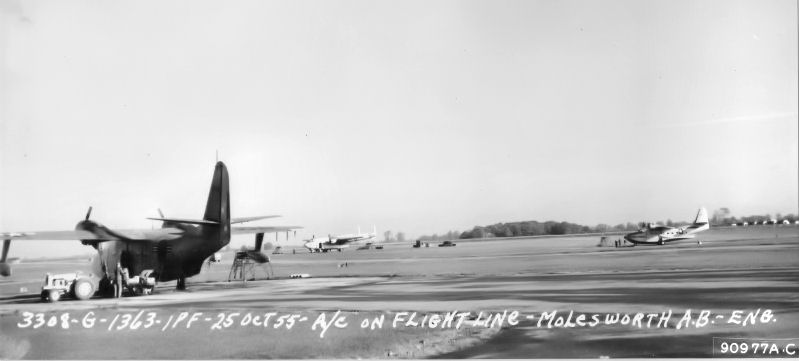
25 October 1955: HU-16 Albatross of the 582nd Air Resupply Group at RAF Molesworth. This image or file is a work of a U.S. Air Force Airman or employee, taken or made as part of that person's official duties. As a work of the U.S. federal government, the image or file is in the public domain.
25 October 1955: HU-16 Albatross of the 582nd Air Resupply Group at RAF Molesworth. This image or file is a work of a U.S. Air Force Airman or employee, taken or made as part of that person’s official duties. As a work of the U.S. federal government, the image or file is in the public domain.

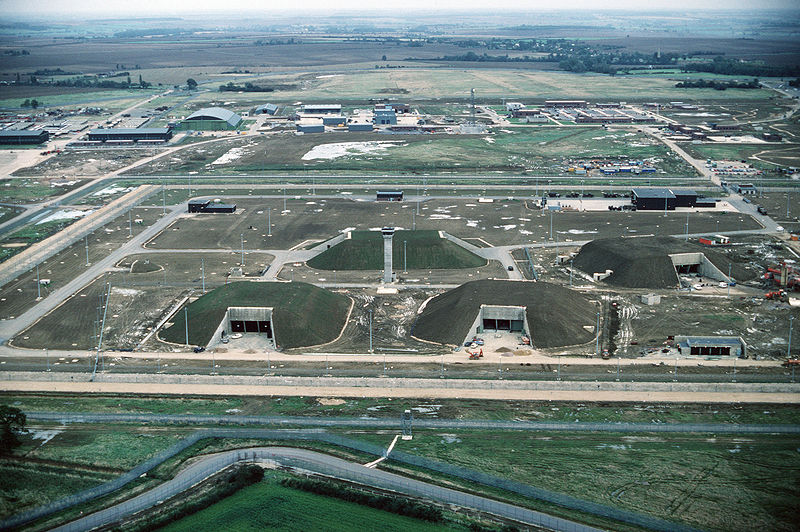
RAF Molesworth went into a maintenance status for the next twenty years, finally being deactivated officially in 1973.  Only marginal maintenance was performed at Molesworth by U.S. Air Force personnel stationed a few miles away at RAF Alconbury.   That changed in June 1980 when RAF Molesworth was chosen to house nuclear weapons – the BGM-109G Ground Launched Cruise Missiles or GLCMs – under the 303rd Tactical Missile Wing.  The Ministry of Defence now worked on building the massive GLCM bunkers that have become a hallmark of the west Cambridgeshire countryside.  All the World War II runways, taxiways and hardstands were removed.  Only three large hangers from the World War II period remained. Old infrastructure from the 1950s was demolished and new buildings constructed.  By December 1986, the 303rd Tactical Missile Wing was activated but when the United States and the Soviet Union signed the INF Treaty in 1987, all nuclear weapons were removed from RAF Molesworth by October 1988.  In January 1989 the 303rd Tactical Missile Wing was deactivated.

1989: the GAMA (GLCM Alert and Maintenance Area) at RAF Molesworth is completed for the housing of short-range nuclear weapons.
1989: the GAMA (GLCM Alert and Maintenance Area) at RAF Molesworth is completed for the housing of short-range nuclear weapons. This image or file is a work of a U.S. Air Force AIrman or employee, taken or made as part of that person’s official duties.  As a work of the U.S. federal government, the image or file is in the public domain.

During the 1980s, regular protests occured at Molesworth due to the stationing of nuclear GLCMs at the facility – part of the peace camp can still be seen outside the main gates of RAF Molesworth. This was part of the European-wide effort to oppose NATO’s basing of tactical nuclear cruise missiles in Europe which was seen at the time as a dramatic escalation in the final years of the Cold War. It was only the removal of the cruise missiles that led to the end of the protests.

In 1990, the Royal Air Force announced that RAF Molesworth would house the U.S. European Command’s Joint Analysis Centre, which still operates at the base today, still controlled by the U.S. Air Force.

For more information on the 303rd Bombardment Group:

The 303rd Bomb Group (Heavy), the Hell’s Angels maintains an indepth and fascinating webpage: http://www.303rdbg.com where many more photos, additional details and stories on the brave men who flew from RAF Molesworth can be read and shared.

For an interesting article on the GLCM facility at RAF Molesworth:

Read this article: http://www.heritagedaily.com/2014/01/raf-molesworths-ground-launched-cruise-missiles-25-years-on/100785 from the Heritage Daily by Cindy Eccles.