RAF Molesworth and the 303rd Bombardment Group (Heavy)

In western Cambridgeshire, tucked away among the muddy fields, hedges and paths is a still active RAF station with a long and fascinating history.  Royal Air Force Station Molesworth, almost always shortened to RAF Molesworth, was first constructed in 1917 and remains in use today by the U.S. Air Force.

One can almost picture the B.E.2s of the Royal Flying Corps which operated out of Molesworth during the Great War, conducting training and preparations for flyers preparing to transfer with their aircraft to France.  The No. 75 Squadron occupied the airfield for sometime during this period. However, the airfield was abandoned after the war ended and went into disuse.  Some of the buildings which had supported the air station where incorporated into the local farms near Bington, Old Weston, and Molesworth.
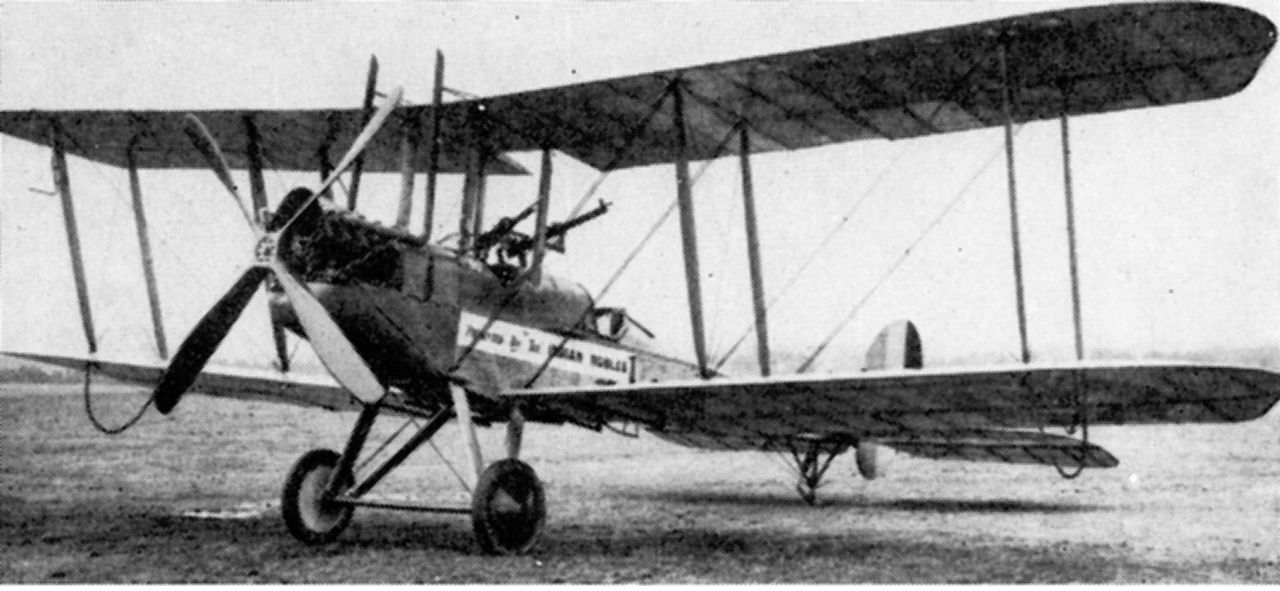
Unatributed photo of a wartime Avro B.E.2c, with 'V" undercarriage, stremlined engine cowling, and the upper wing cut-out for the tail gunner to improve field of fire.  Sadly, there are no photographs of B.E.2's operating from RAF Molesworth during the war that I have been able to locate.
Unattributed photo of a wartime Avro B.E.2c, a reconnaissance plane and from the Great War, with ‘V” undercarriage, streamlined engine cowling, and the upper wing cut-out for the tail gunner to improve field of fire. Sadly, there are no photographs of B.E.2’s operating from RAF Molesworth during the war that I have been able to locate.

Despite the hopes of a generation, the horror of World War was to be experienced once again.  As the United Kingdom found itself drawn into the conflict with the German invasion of Poland in 1939, it was not long before the Air Ministry decided to recommission the abandoned aerodrome at Molesworth. Through 1940, the runways were laid and the base infrastructure constructed to support bombers. The Royal Australian Air Force flew Vickers Wellington IVs, a medium bomber, from Molesworth from November 1941 until January of 1942 under the Royal Australian Air Force’s No. 460 Squadron.  After the Australians, the RAF’s No. 159 Squadron occupied the airfield for a short time, but did not conduct flight operations from Molesworth.

It was the arrival of the U.S. Army Air Forces after America’s entry into the war that would transform Molesworth into one of the major bomber bases in England.  Upgraded to a Class ‘A’ Airfield intended for use by the “heavies” – the four-engine bombers that would take the strategic bombing campaign to occupied Europe and Germany – Molesworth was radically altered and underwent major upgrades.

The first American tenants at RAF Molesworth were the 15th Bombardment Squadron, flying the Douglas A-20 Havoc/Boston III light bomber. It was from Molesworth on 4 July 1942 that six aircraft from the 15th Bombardment Squadron joined a flight of RAF bombers to conduct a low-level attack against Luftwaffe airfields in the occupied Netherlands – the first U.S. Army Air Force bombers to attack mainland Europe. The date chosen was auspicious for President Roosevelt wanted to begin the strategic bombing campaign against Germany on the 4th of July. None of the four-engine “heavies” at the time were ready though, so the President’s intent was met with the light bombers launched from Molesworth. Sadly, three aircraft on the combined mission did not return from the bombing raid, two were A-20s from the 15th Bombardment Squadron.  One of the four that survived was pictured at a later date, amazingly in color:
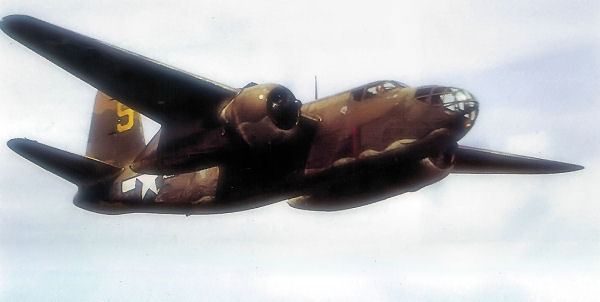
This Douglas A-20C HAVOC/BOSTON III, serial number AL672, was flown on the 4 July 1942 low-level attack against Luftwaffe positions in the Netherlands at the time part of the 15th Bombardment Squadron (light).  This photograph was taken later in the war when AL672 was flying as a staff communications aircraft for the 8th USAAF out of RAF Bovingdon.  Photograph from the U.S. Army Air Forces via the National Arcives.  Thanks to Roger Freeman: "The Mighty Eighth, the Colour Record" 1991.
This Douglas A-20C HAVOC/BOSTON III, serial number AL672, was flown on the 4 July 1942 low-level attack against Luftwaffe positions in the Netherlands at the time part of the 15th Bombardment Squadron (light). This photograph was taken later in the war when AL672 was flying as a staff communications aircraft for the 8th USAAF out of RAF Bovingdon. Photograph from the U.S. Army Air Forces via the National Archives. Thanks to Roger Freeman: “The Mighty Eighth, the Colour Record” 1991.

The 15th Bombardment Squadron departed RAF Molesworth for operations in North Africa under the 12th Air Force in September 1942.  It was at this time that the B-17 Flying Fortresses began arriving at RAF Molesworth, the four squadrons that would eventually comprise the 303rd Bombardment Group (Heavy) which would fly from Molesworth until the end of the war.  The 303rd Bombardment Group, consisting of the 358th, 359th, 360th and 427th Bombardment Squadrons, was destined to become one of the legendary units of the Second World War under the 8th Air Force.  The first mission by the 303rd Bomb Group was flown on 17 November 1942, targeting military targets in occupied France.  On 27  January 1943, the 303rd began flying missions against Germany, taking part in the 8th Air Force’s first bombing mission against Germany proper – the U-boat facilities at Wilhelmshaven.

For the next two and a half years the 303rd would fly missions deep into German territory: to the ball-bearing factories at Schweinfurt, against factories and shipyards, against rail-yards and distribution centres for the Wehrmacht.  During the D-day invasion of Normandy, the 303rd bombed the Pas de Calais and then later supported the breakout from St. Lo in July 1944.  It supported the army in the Battle of the Bulge and in the crossing of the Rhine in March 1945.  On 25 April 1945, the 303rd flew its last mission from RAF Molesworth attacking the German armaments factory complex at Pilsen.

The RAF Molesworth control tower in April 1944.  On the taxiway is a B-17G, tail number 42-97284 "Ain't Misbehavin" - she would fly a total of 48 combat missions during the war.  The "Triangle-C" designator on the verticle stabilizer was the RAF Molesworth designator.  Photograph by Mr. Milton "Chic" Cantor, the photographer of the 303rd BG(H), with thanks to the 303rd "Hell's Angels" historical society.
The RAF Molesworth control tower in April 1944. On the taxiway is a B-17G, tail number 42-97284 “Ain’t Misbehavin” – she would fly a total of 48 combat missions during the war. The “Triangle-C” marking on the vertical stabilizer was the RAF Molesworth designator. The Class A Airfield improvements: three converging airstrips with a concrete runway of at least 6,000 feet are visible in the distance. Photograph by Mr. Milton “Chic” Cantor, the photographer of the 303rd BG(H), with thanks to the 303rd “Hell’s Angels” historical society.

The 303rd Bomb Group (Heavy) flew a total of 364 missions from RAF Molesworth, comprising 10,271 sorties.  The bombers shot down a confirmed 378 aircraft with 104 additional aircraft as probable kills.  817 men from the 303rd were killed in action and 754 become prisoners of war.  After the war, the 303rd Bomb Group (Heavy) departed Molesworth for the United States via North Africa.
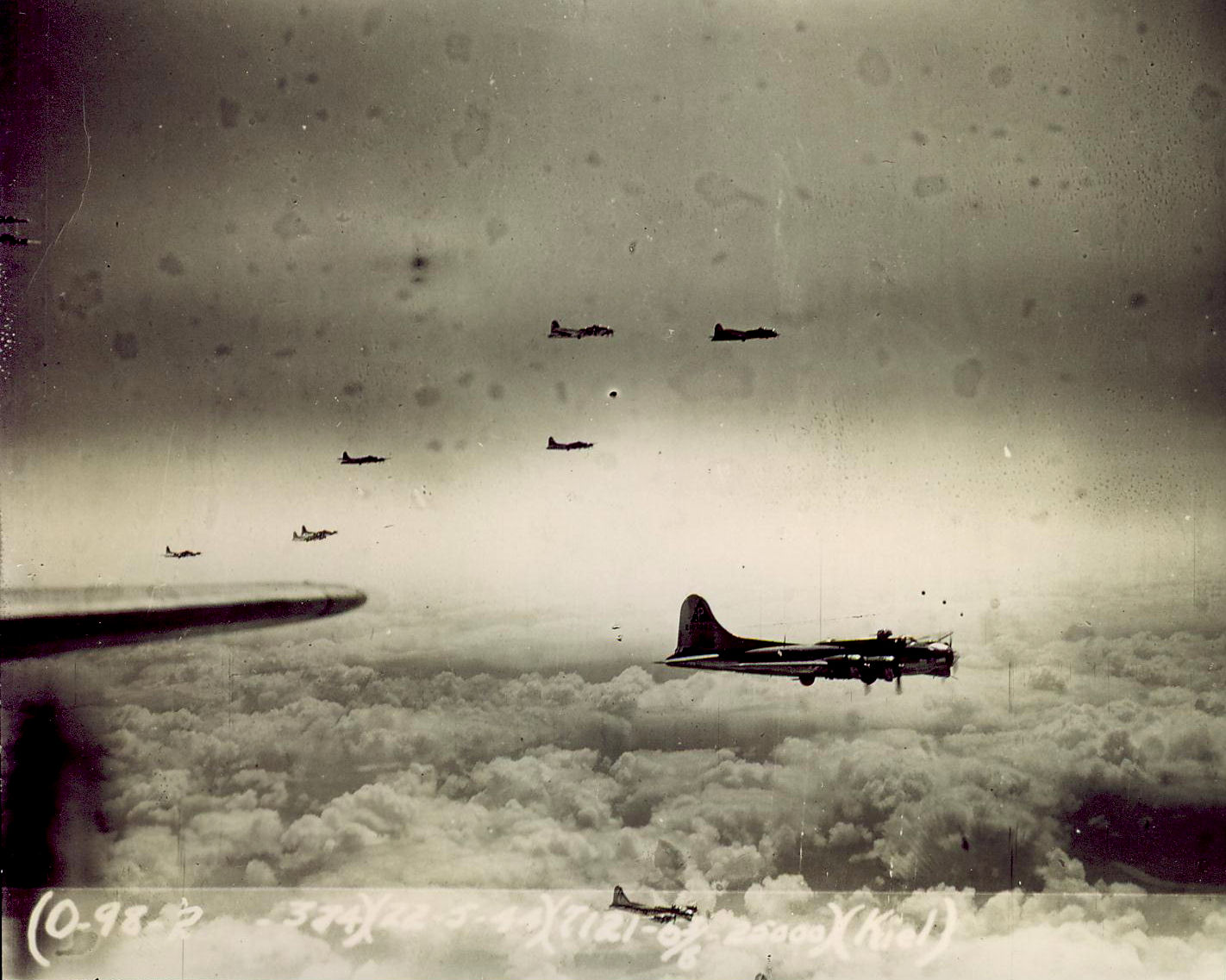
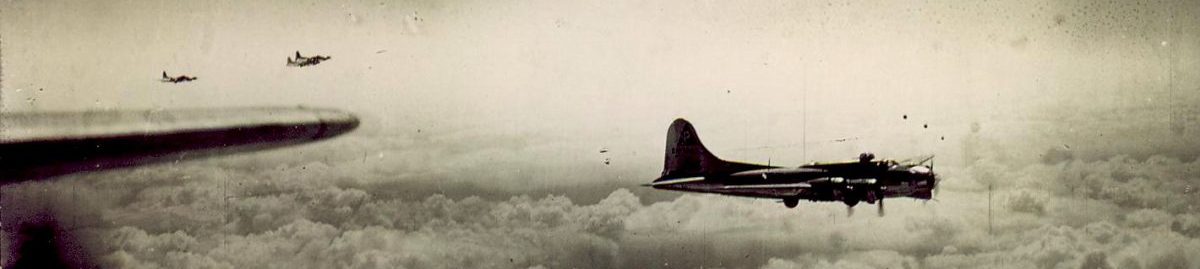
22 May 1944: 303rd B-17s on a bombing mission to Kiel, Germany taken at 25,000 feet.  Photo from the Peter M. Curry Collection.
22 May 1944: 303rd B-17s on a bombing mission to Kiel, Germany taken at 25,000 feet. Photo from the Peter M. Curry Collection.
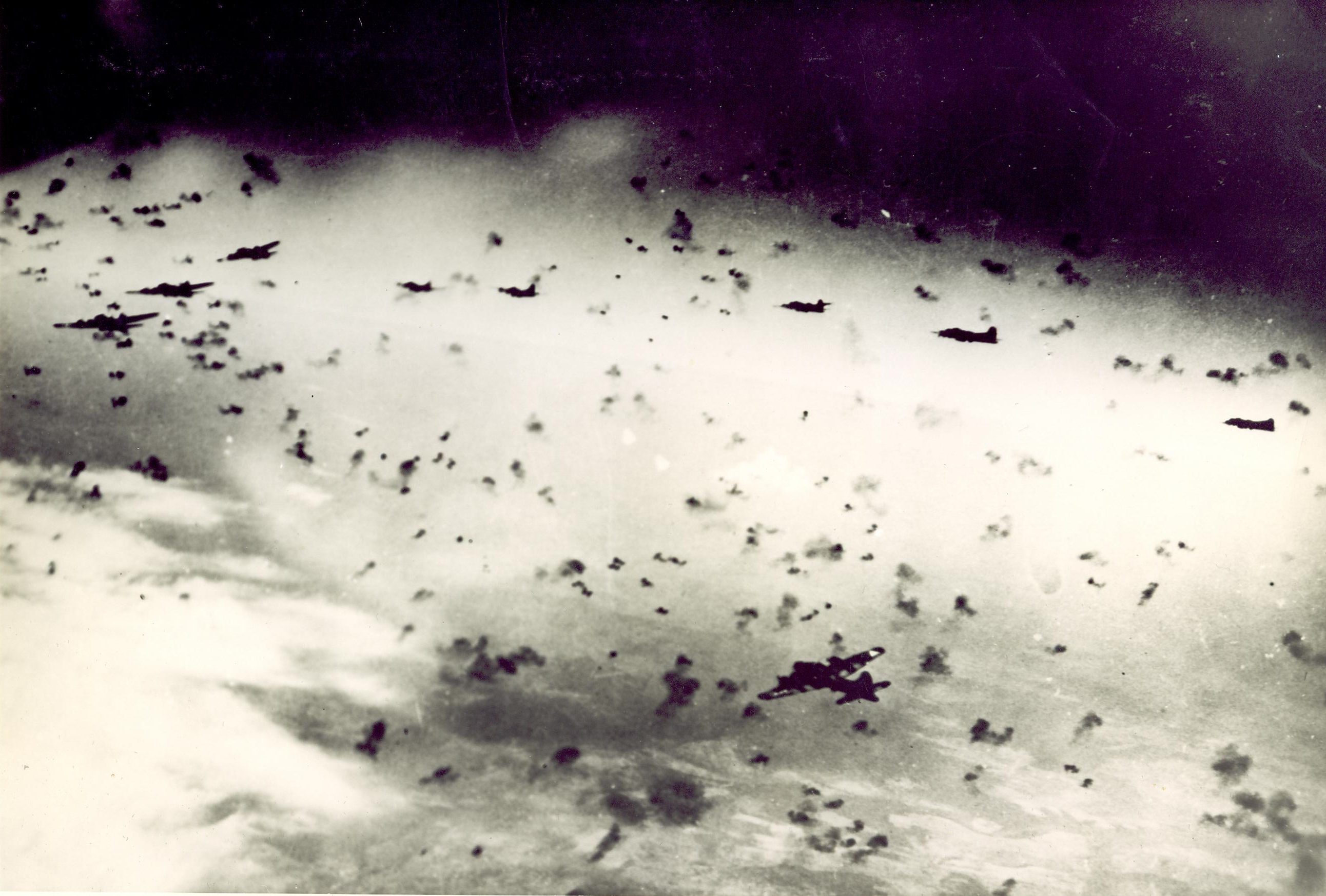
B-17s from the 303rd flying through intense anti-aircraft fire.  Photo by Joseph Sassone with caption: "Flak so thick you could almost taxi around it."
B-17s from the 303rd flying through intense anti-aircraft fire. Photo by Joseph Sassone with caption: “Flak so thick you could almost taxi around it.”

The airfield was returned to the Royal Air Force in July 1945 where it was used for jet trainers and Gloster Meteor IIIs were operated from Molesworth for a short period.  On 10 October 1946 the training unit left and the airfield was placed in ‘care and maintenance’.

In 1951, the U.S. Air Force returned to RAF Molesworth, hosting the 582nd Air Resupply Group.  The runways, taxiways and hardstands were all improved and the airfield became a critical logistics airbase for the Cold War.  The 582nd provided air support – paratroop airdrops and resupply – to the U.S. Army’s 10th Special Forces Group which was stationed in Bad Tolz, Germany.  The 582nd Air Resupply Group flew a variety of aircraft from Molesworth, from B-29s to C-119 Flying Boxcars and HU-16 Albatrosses. At the time, the 582nd was treated as a normal resupply group; however, its support to Army Special Forces, which were trained to infiltrate the Iron Curtain if needed, must be wondered at.

On 25 October 1956, the 582nd was reorganized and called the 42nd Troop Carrier Squadron Medium (Special). They flew HU-16s Albatrosses, C-47 Dakotas, C-119 Flying Boxcars, and C-54 Skymasters from RAF Molesworth until 3 May 1957 when the aircraft moved to RAF Alconbury. However the squadron had a short life at Alconbury and was inactivated on 8 December 1957. The C-54s and C-47s were transferred to Rhein-Main AB, Germany.  The C-119s were sent to the 322nd Air Division at Evreux-Fauville AB, France.  Of personal note, my grandfather was a C-119 pilot in the 322nd Air Division in Evreux-Fauville AB France at the time, a young U.S. Air Force lieutenant.
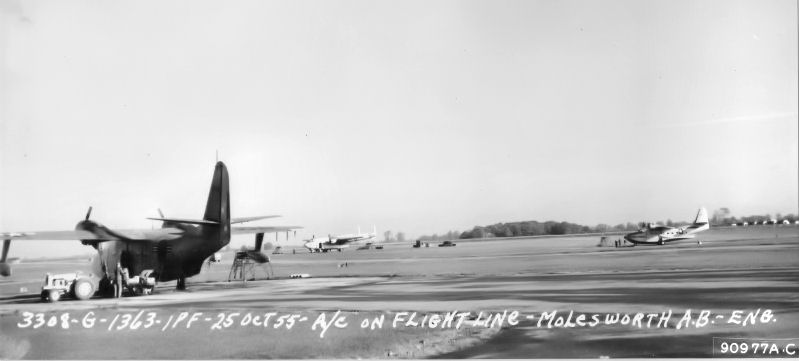
25 October 1955: HU-16 Albatross of the 582nd Air Resupply Group at RAF Molesworth. This image or file is a work of a U.S. Air Force Airman or employee, taken or made as part of that person's official duties. As a work of the U.S. federal government, the image or file is in the public domain.
25 October 1955: HU-16 Albatross of the 582nd Air Resupply Group at RAF Molesworth. This image or file is a work of a U.S. Air Force Airman or employee, taken or made as part of that person’s official duties. As a work of the U.S. federal government, the image or file is in the public domain.

RAF Molesworth went into a maintenance status for the next twenty years, finally being deactivated officially in 1973.  Only marginal maintenance was performed at Molesworth by U.S. Air Force personnel stationed a few miles away at RAF Alconbury.   That changed in June 1980 when RAF Molesworth was chosen to house nuclear weapons – the BGM-109G Ground Launched Cruise Missiles or GLCMs – under the 303rd Tactical Missile Wing.  The Ministry of Defence now worked on building the massive GLCM bunkers that have become a hallmark of the west Cambridgeshire countryside.  All the World War II runways, taxiways and hardstands were removed.  Only three large hangers from the World War II period remained. Old infrastructure from the 1950s was demolished and new buildings constructed.  By December 1986, the 303rd Tactical Missile Wing was activated but when the United States and the Soviet Union signed the INF Treaty in 1987, all nuclear weapons were removed from RAF Molesworth by October 1988.  In January 1989 the 303rd Tactical Missile Wing was deactivated.
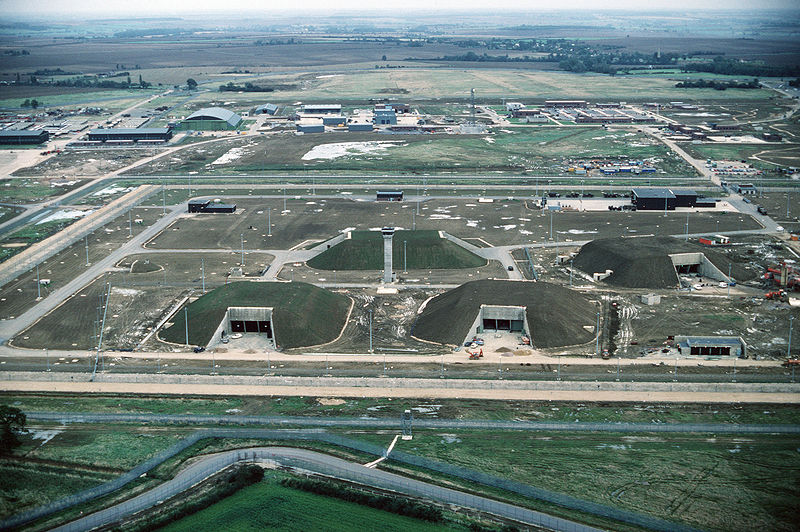
1989: the GAMA (GLCM Alert and Maintenance Area) at RAF Molesworth is completed for the housing of short-range nuclear weapons.
1989: the GAMA (GLCM Alert and Maintenance Area) at RAF Molesworth is completed for the housing of short-range nuclear weapons. This image or file is a work of a U.S. Air Force AIrman or employee, taken or made as part of that person’s official duties.  As a work of the U.S. federal government, the image or file is in the public domain.

During the 1980s, regular protests occured at Molesworth due to the stationing of nuclear GLCMs at the facility – part of the peace camp can still be seen outside the main gates of RAF Molesworth. This was part of the European-wide effort to oppose NATO’s basing of tactical nuclear cruise missiles in Europe which was seen at the time as a dramatic escalation in the final years of the Cold War. It was only the removal of the cruise missiles that led to the end of the protests.

In 1990, the Royal Air Force announced that RAF Molesworth would house the U.S. European Command’s Joint Analysis Centre, which still operates at the base today, still controlled by the U.S. Air Force.

For more information on the 303rd Bombardment Group:

The 303rd Bomb Group (Heavy), the Hell’s Angels maintains an indepth and fascinating webpage: http://www.303rdbg.com where many more photos, additional details and stories on the brave men who flew from RAF Molesworth can be read and shared.

For an interesting article on the GLCM facility at RAF Molesworth:

Read this article: http://www.heritagedaily.com/2014/01/raf-molesworths-ground-launched-cruise-missiles-25-years-on/100785 from the Heritage Daily by Cindy Eccles.
The Hedda Stone and Peterborough Abbey

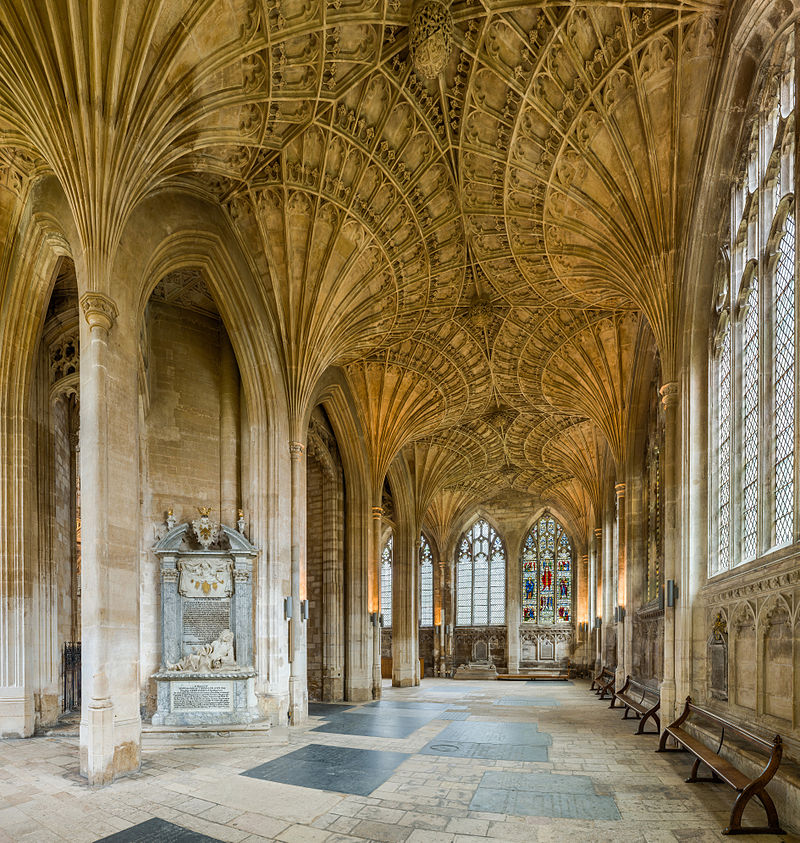
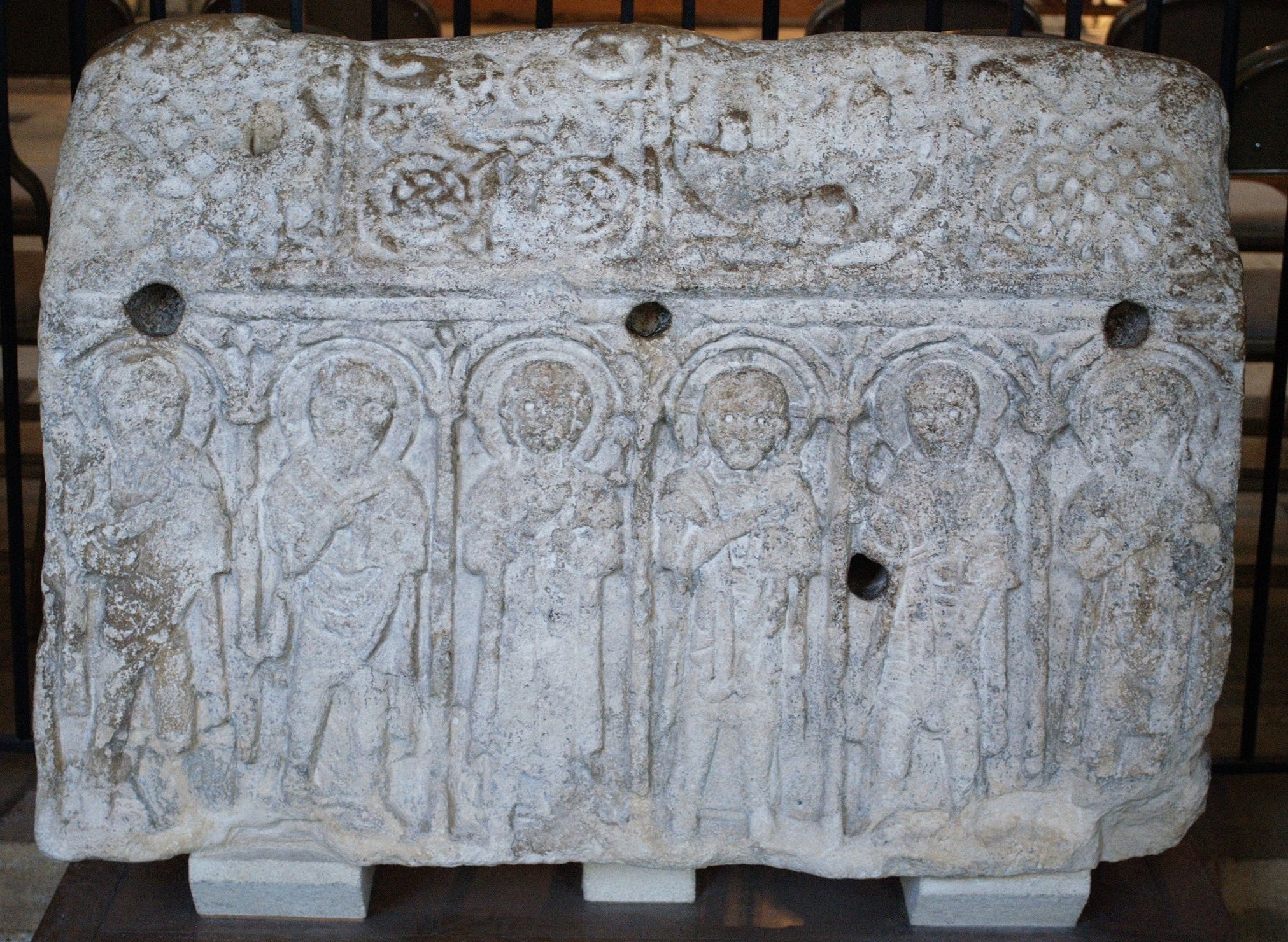
Behind the main altar in Peterborough Cathedral, in an alcove of the Lady Chapel, lies an ancient stone carving: the Hedda Stone. This medieval carving of 12 monks, six on each side, commemorates the destruction of the Monastery and the death of the Abbot and Monks when the area was sacked by the Vikings in 864.

The Lady Chapel of Peterborough Cathedral, photo by DAVID ILIFF. License: CC-BY-SA 3.0

In the 7th Century, Cambridgeshire and its environs was dramatically different than we now know. The Shire was part of the Anglo-Saxon Kingdom of Mercia – one of the many fractured states of medieval England. Peterborough at the time was known as “Medeshamstede”, which translates loosely to “Homestead belonging to the Mede” and according to the Anglo-Saxon Chronicle, had gained this name from the monastery which was founded there in the 7th Century. The Venerable Bede also mentioned “Medeshamstedi”, a latinized version of the area, in 670. Despite these references to the Monastery at the site, Peterborough’s history is even more ancient, with its Bronze Age Settlements and Roman history, but those are discussions for another day.

The Medeshamstede Monastery, often called Peterborough Abbey by modern historians, was an important ecclesiastical centre in the Kingdom of Mercia, located along the River Nene, in a boggy area or fen. According to Bede and the Royal Charter of the Mercian King Wulfhere, the Monastery was founded by Sexwulf, who became its first Abbot, likely between 653-656. Hugh Candidus wrote many centuries later, in the 1100s, that Sexwulf built a great Monastery and “laid as its foundations some great stones, so mighty that eight yoke of oxen could scarcely draw any of them”. One can imagine the size and importance of the Monastery, which now forms much of the foundations of Peterborough Cathedral, for Candidus also wrote that Sexwulf strove “to build no commonplace structure, but a Second Rome, or a daughter of Rome in England”. The Monastery likely played a key role in the Christianization of Mercia through the establishment of daughter churches throughout the Kingdom. By all appearances, the Monastery thrived and was a centre of Christian scholarship until the Vikings came.

In 870, according to the Anglo-Saxon Chronicle, the Viking invasion of Mercia reached Medeshamstede and the Abbey was razed, the Monks slaughtered. The remarkable Hedda Stone, a two-sided carving that memorializes the massacre of the Abbot and Monks in 870, carved a few years after the event, is the most prominent surviving artifact from Medeshamstede. It is a haunting piece, for the eyes of the monks peer out from carved sockets, worn and weathered by time.

The Hedda Stone, Peterborough Cathedral, Cambridgeshire, England. This file is licensed under the Creative Commons Attribution-Share Alike 3.0 Unported license.

There are no contemporary recollections of the razing of the Abbey. However, the violence of Viking raids, the invasion and settlement of England which began in June 793, still shocks. The raid on the Abbey on the Holy Island of Lindisfarne, in Northumbira, was called an atrocity at the time. One contemporary wrote: “Never before has such terror appeared in Britain as we have now suffered from a Pagan race… The heathens poured out the the blood of saints around the altar, and trampled on the bodies of saints in the temple of God, like dung in the streets.”

Lt. Colonel Leon Vance and the Cambridge American Cemetery

A few days ago I had the privilege to walk the hallowed grounds of the Cambridge American Cemetery with an expert on the history of the U.S. Armed Forces’ staging, presence, and forward operations from Cambridgeshire and southeast England.  This gentleman works for the American Battle Monuments Commission, an agency of the U.S. Government that maintains and preserves the 25 overseas cemeteries from the Philippines to Tunisia, from Omaha Beach to the Meuse-Argonne.  One cannot visit an overseas U.S. Memorial or Cemetery and not be touched by the stories and sacrifice of these men and women. Although some stories are heroic and some more simple, all were serving their country in a desperate time and found themselves far from their home and their family, and never returned.  The historian I was walking with told me the heroic story of Lt. Colonel Vance.

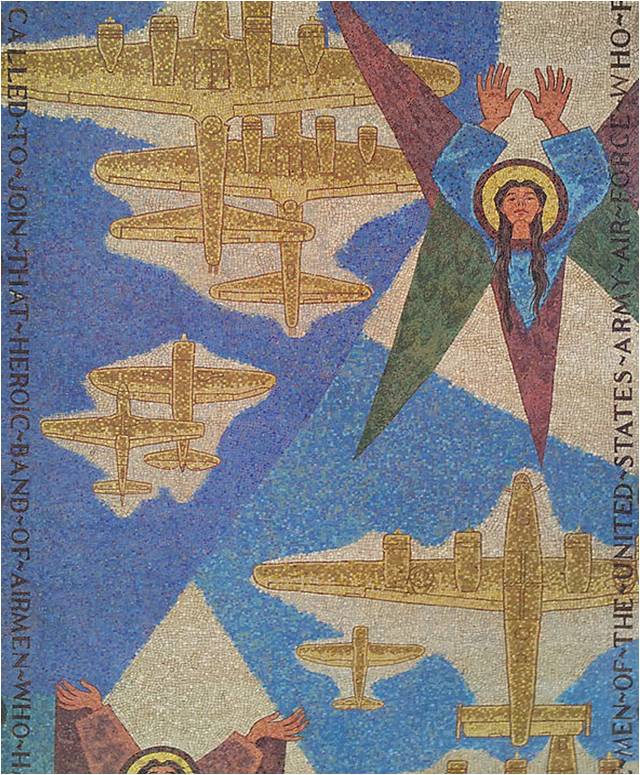
Francis Scott Bradford designed the glorious mosaic that covers the ceiling of the Cambridge American Cemetery Chapel.  Ghostly aircraft and mournful angels cover the ceiling in his moving tribute to the 3,811 buried and 5,126 missing who are memorialized at the Cemetery.
Francis Scott Bradford designed the glorious mosaic that covers the ceiling of the Cambridge American Cemetery Chapel. Ghostly aircraft and mournful angels cover the ceiling in his moving tribute to the 3,811 buried and 5,126 missing who are memorialized at the Cemetery.

His story needs to be told. It is the story of an American airman, a 27-year-old Lieutenant Colonel, who had rapidly risen through the ranks in a way that can only happen during a desperate war.  Colonel Leon Robert “Bob” Vance, had arrived at West Point in 1935 and graduated in 1939, becoming a young lieutenant as America warily watched the Second World War beginning in Europe. Marrying Georgette Brown the day after his graduation, Bob and Georgette had a daughter in 1942, Sharon, whom he would name his B-24 Liberator after: The Sharon D.

After several years as a flight instructor, he was transferred to England. Lt. Colonel Vance was assigned to the 8th Air Force, 95th Combat Bombardment Wing, 2nd Bomb Division at RAF Helesworth in Suffolk.  On 5 June 1944, the day before the allied landings in Normandy, Lt. Colonel Vance led the 489th Bomb Group on a diversionary bombing mission to the Pas-de-Calais to target German coastal defenses as part of the Atlantic Wall. Lt Colonel Vance was in the lead plane as on observer on the flight deck, flying in a pathfinder to ensure the bombs of all the following aircraft hit their target.

After the short flight to France, the Liberators were over their target when the lead aircraft’s bombs failed to release.  Instead of ordering the bombers to drop their ordnance into the Channel, Lt. Colonel Vance ordered all the aircraft to circle and re-approach the target.

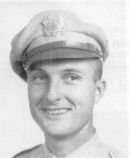
A photo of LTC Bob Vance, courtesy of the US Army.  The photo is in the public domain.
A photo of LTC Bob Vance, courtesy of the US Army. The photo is in the public domain.

On the second approach to the target, the bombers came under intense anti-aircraft fire. Vance’s lead bomber was severely damaged by flak: four crewmen were wounded, three engines disabled, fuel lines ruptured within the aircraft.  Despite the damage, the B-24 continued and dropped its bombs over the target although one did not release. Immediately after the bombs were dropped, a flak burst in front of the aircraft that killed the pilot and almost severed Bob’s right foot, trapping him within the bent metal of the mangled cockpit.  With only one engine still functioning and severe damage to the airframe, the co-pilot began to dive the aircraft to maintain airspeed, and Vance, losing blood and suffering from shock, worked the engineering of the aircraft to feather the engines and save the aircraft as one of the crew applied a tourniquet to his foot.

Amazingly, the aircraft returned to the English coast and Vance took the controls, ordering the men to bail out.  Knowing it was impossible to land the aircraft, he aimed to get the crew safely away. As the crew departed, he discovered that not only was he trapped, but in the confusion thought that one of the crewmembers was also trapped and unable to bail out.  He decided the only option was to ditch the B-24 in the Channel — the B-24 was a notoriously difficult aircraft to safely ditch in water.

Stuck in a prone position between the pilot and co-pilots’ seats, trapped in the mangled cockpit and losing blood, Lt. Colonel Vance could only see out the side window of the cockpit and could only access some of the plane’s controls.  Remarkably, he landed the aircraft safely in the water, believing that the other crewmember would have a fighting chance to live.  As the water flooded into the cockpit — Vance was still trapped — he had a slim hope that air-sea rescue might reach the aircraft before it sank.  However, the one bomb that had failed to release but was still armed detonated at this moment, blowing the B-24 to pieces and amazingly sending Vance flying through the air, now dislodged from the metal.  He hit the water and was just able to inflate his life vest, clinging to consciousness and life.

In a moment of self-sacrifice that is difficult to believe, Vance then spent the next 50 minutes searching for his last crewmember in the sinking debris of the B-24 before he was rescued by the RAF.

Colonel Vance had survived the ordeal, but tragically was lost at sea two months later as the C-54 Skymaster carrying him on a medical evacuation flight back to the United States disappeared between Iceland and Newfoundland.

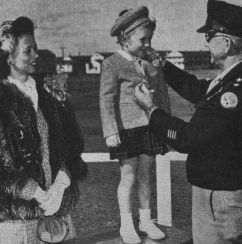
On 4 January 1945 it was announced that Lieutenant Colonel Vance would receive the Medal of Honor posthumously, but the presentation was delayed until 11 October 1946, so that his daughter Sharon — whom he had named his B-24 after — could be awarded her father’s medal.

5-year-old Sharon Vance is presented with her father's Medal of Honor in 1946. US Army Photograph.
5-year-old Sharon Vance is presented with her father’s Medal of Honor in 1946. US Army Photograph.

For some more information on the Cambridge American Cemetery see this publication: http://www.abmc.gov/sites/default/files/publications/Cambridge_Booklet.pdf

The citation for Lt. Colonel Vance’s Medal of Honor reads:

For conspicuous gallantry and intrepidity above and beyond the call of duty on 5 June 1944, when he led a Heavy Bombardment Group, in an attack against defended enemy coastal positions in the vicinity of Wimereaux, France. Approaching the target, his aircraft was hit repeatedly by antiaircraft fire which seriously crippled the ship, killed the pilot, and wounded several members of the crew, including Lt. Col. Vance, whose right foot was practically severed. In spite of his injury, and with 3 engines lost to the flak, he led his formation over the target, bombing it successfully. After applying a tourniquet to his leg with the aid of the radar operator, Lt. Col. Vance, realizing that the ship was approaching a stall altitude with the 1 remaining engine failing, struggled to a semi-upright position beside the copilot and took over control of the ship. Cutting the power and feathering the last engine he put the aircraft in glide sufficiently steep to maintain his airspeed. Gradually losing altitude, he at last reached the English coast, whereupon he ordered all members of the crew to bail out as he knew they would all safely make land. But he received a message over the interphone system which led him to believe 1 of the crewmembers was unable to jump due to injuries; so he made the decision to ditch the ship in the channel, thereby giving this man a chance for life. To add further to the danger of ditching the ship in his crippled condition, there was a 500-pound bomb hung up in the bomb bay. Unable to climb into the seat vacated by the copilot, since his foot, hanging on to his leg by a few tendons, had become lodged behind the copilot’s seat, he nevertheless made a successful ditching while lying on the floor using only aileron and elevators for control and the side window of the cockpit for visual reference. On coming to rest in the water the aircraft commenced to sink rapidly with Lt. Col. Vance pinned in the cockpit by the upper turret which had crashed in during the landing. As it was settling beneath the waves an explosion occurred which threw Lt. Col. Vance clear of the wreckage. After clinging to a piece of floating wreckage until he could muster enough strength to inflate his life vest he began searching for the crewmember whom he believed to be aboard. Failing to find anyone he began swimming and was found approximately 50 minutes later by an Air-Sea Rescue craft. By his extraordinary flying skill and gallant leadership, despite his grave injury, Lt. Col. Vance led his formation to a successful bombing of the assigned target and returned the crew to a point where they could bail out with safety. His gallant and valorous decision to ditch the aircraft in order to give the crewmember he believed to be aboard a chance for life exemplifies the highest traditions of the U.S. Armed Forces.

Domesday Book and Cambridgeshire

One shouldn’t be surprised to find that most of the towns and villages of Cambridgeshire were written about in Domesday Book (middle English for “doomsday book”, the original title was the Liber de Wintonia, Latin for “Book from Winchester”), the great survey of England and Wales commissioned by William I in 1086.  An effort to record the wealth and value of the Kingdom, Domesday Book was a colloquial term used later since doomsday would come before one could escape the taxes of the King.  Amazingly, it was the most comprehensive and exhaustive survey of England until 1873.  Although the original manuscript amazingly still survives in the National Archives at Kew, London, one can access the entire work via the Open Domesday project.

Open Domesday, http://domesdaymap.co.uk, allows you to search for your local town or village and see how it was mentioned in Domesday Book.  We all owe a special thanks to Anna Powell-Smith who built the Open Domesday site using data created by J.J.N. Palmer and his team at the University of Hull.  It is wonderful to discover, as I did, that in 1086 my village had 31 households (26 villagers, 4 small holders and one priest) was worth £10 to the Abbey of St. Benedict in Ramsey, who was the feudal lord, and that it consisted of 60 acres of meadow, the lord’s lands and a church.

Domesday Book is a fascinating snapshot of England and Wales as it was shortly after the Norman Conquest.  Organized not geographically, as a modern survey would undoubtedly be, but by feudal fiefdoms, the book contains 13,418 entries and records a remarkable level of detail.

The entry from Domesday Book for the town of Cambridge is below:

Domesday Book Entry for Cambridge
Domesday Book Entry for Cambridge, from http://domesdaymap.co.uk

Oxburgh Hall: the Wars of Religion in the East of England

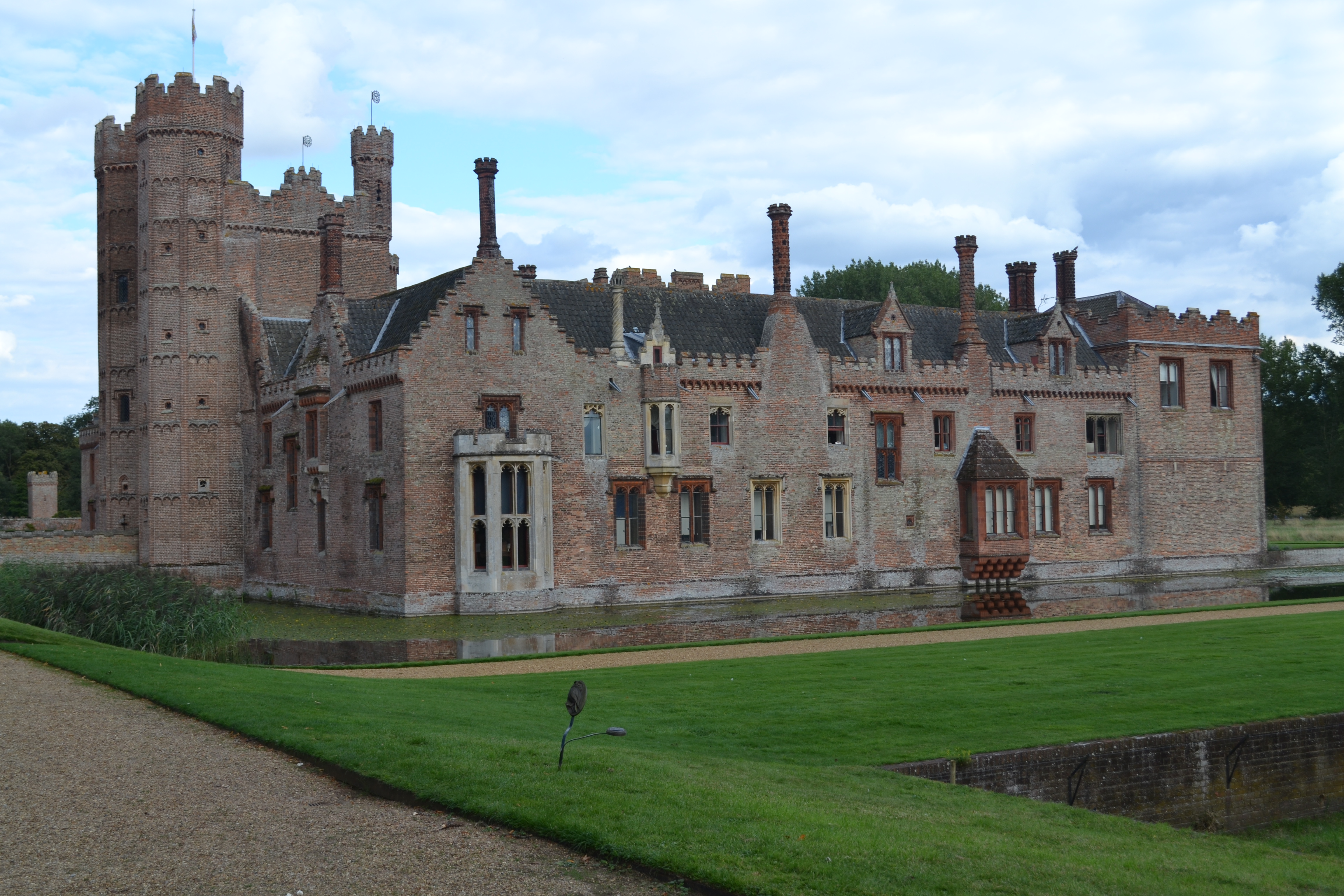
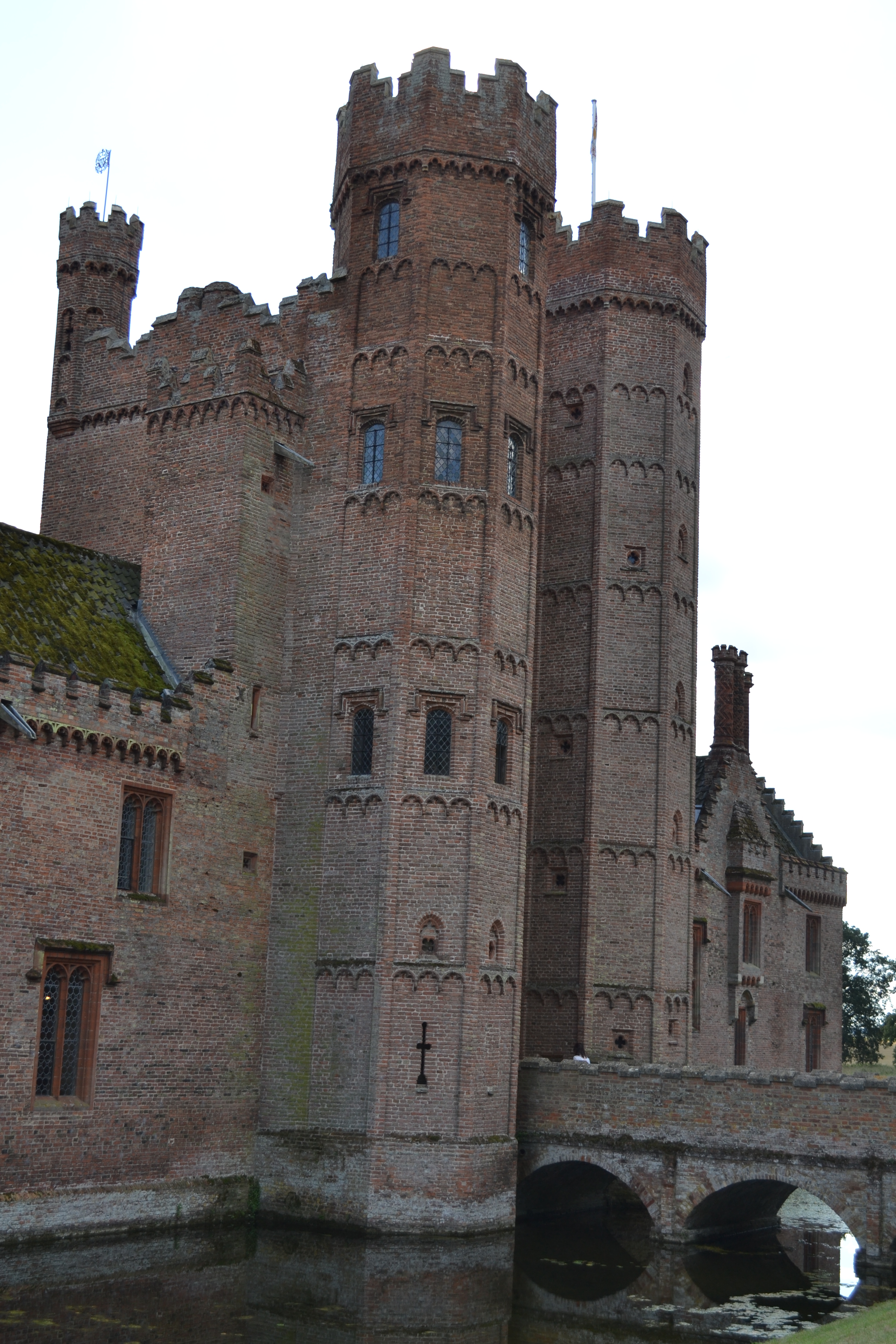
Ancient seat of the Bedingfeld family, whose history stretches to the War of the Roses, Oxburgh Hall rises from the fens of southwest Norfolk.  An ancient fortified manor, which has been reworked and crafted for centuries, it was first conceived of and built in 1482 at the height of the Wars of the Roses.  However, at least back to 1086 Domesday Book records a settlement here named Oxenburch and a description: “a fortified place where oxen are kept”. Through the Wars of Religion, the catholic Bedingfeld family threaded a dangerous line at the Tudor Court and found themselves increasingly persecuted for their faith.  Staunchly royalist, Charles II rewarded the Bedingfelds with a baronetcy in 1661 though failed to repay the sizable loans made to the crown by the family.  As the 17th Century flowed into the 18th, the Bedingfelds found more acceptance of their Catholicism on the continent, and spent much time away from England and persecution.  Amazingly, almost 600 years after construction began, Oxburgh Hall retains its ability to awe and overwhelm, just as Sir Edmund Bedingfeld intended in 1482, and the family still resides in the eastern front of this ancient manor.

Aug-Sept 2014 048
Oxburgh Hall, Norfolk, seat of the Bedingfeld Family, the West Front. © cambridgemilitaryhistory.com, 2014

The violence of the War of the Roses, which demanded a strong defence along with the need to build an impressive manor for a rising family of influence in turbulent times, led to the interesting layout of Oxburgh Hall.  A large gatehouse covers the entrance to the manor, which is surrounded by a moat, and outer walls.  Arrow slits, moderate fields of fire over the approaches, and fortified gates enhance the security of the manor; however, Oxburgh would not have been able to withstand an assault or a siege – it was not a fortress.  Later, during the repression of Catholics during the English Reformation, a Priest Hole was added off the grand bedrooms located high in the gatehouse, to secretly hide a priest from the King or Queen’s soldiers.

Aug-Sept 2014 006
The gatehouse and moat of Oxburgh Hall. The curious blend of late-medieval defensive works are blended with windows and decorative brickwork to add comfort to this fortified manor. © cambridgemilitaryhistory.com, 2014

Oxburgh Hall is maintained by the National Trust and you can tour the inside of the manor, the gardens and the 1836 Catholic Chapel of the Immaculate Conception and St. Margaret on the grounds.  Directions to Oxburgh Hall, just north of Cambridgeshire, signposted 3 miles from the A134, near the village of Swaffham, SATNAV  postcode: PE33 9PS. The National Trust has a website on Oxburgh Hall: http://www.nationaltrust.org.uk/oxburgh-hall

Pax Brittania: The Earl de Grey as First Lord of the Admiralty

Photo by Brandon Wilgus, August 2014
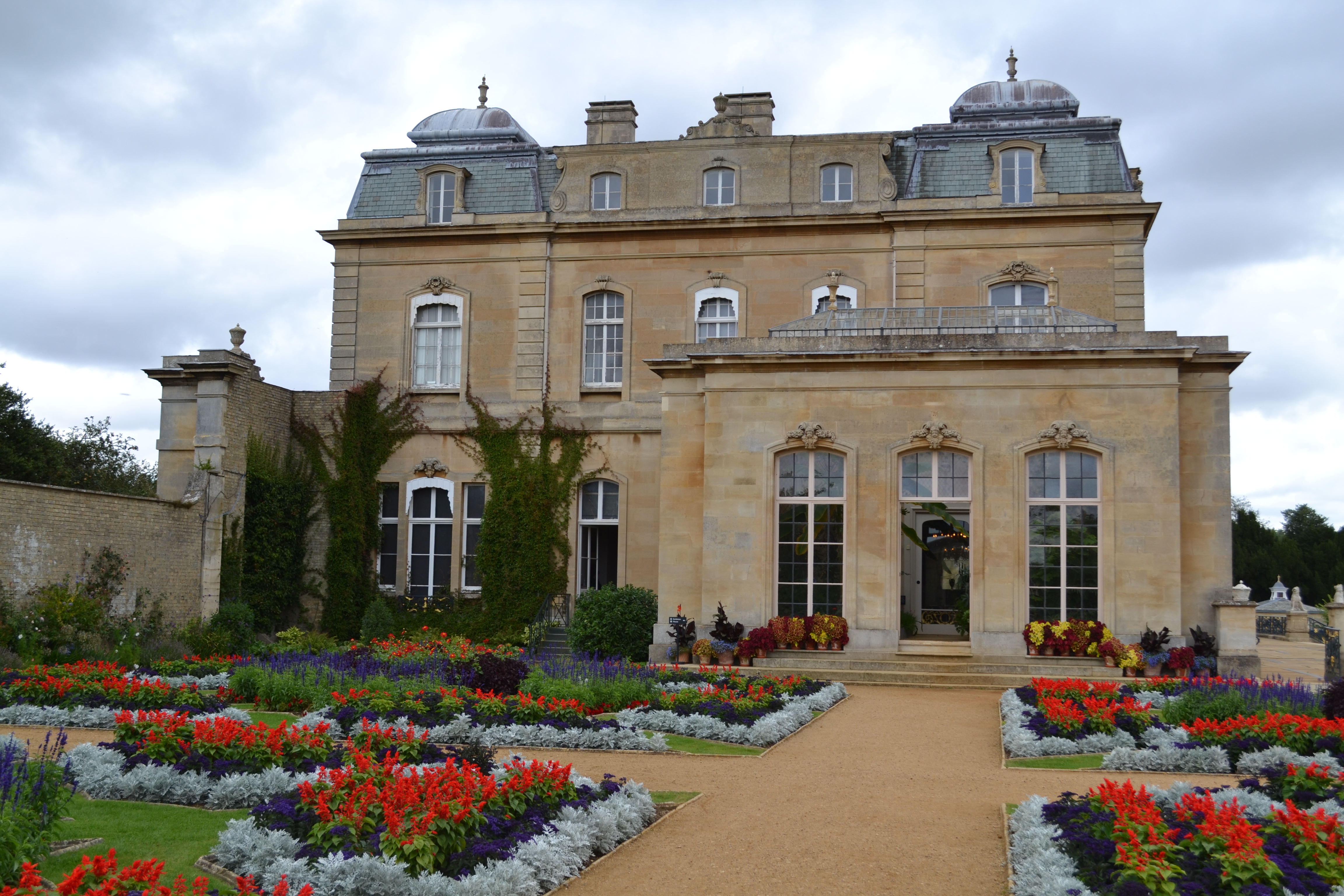
Wrest Park, designed by the Earl de Grey, viewed from the formal gardens, looking at the Boudoir of the Countess de Grey © cambridgemilitaryhistory.com, 2014
Photo by Brandon Wilgus, August 2014
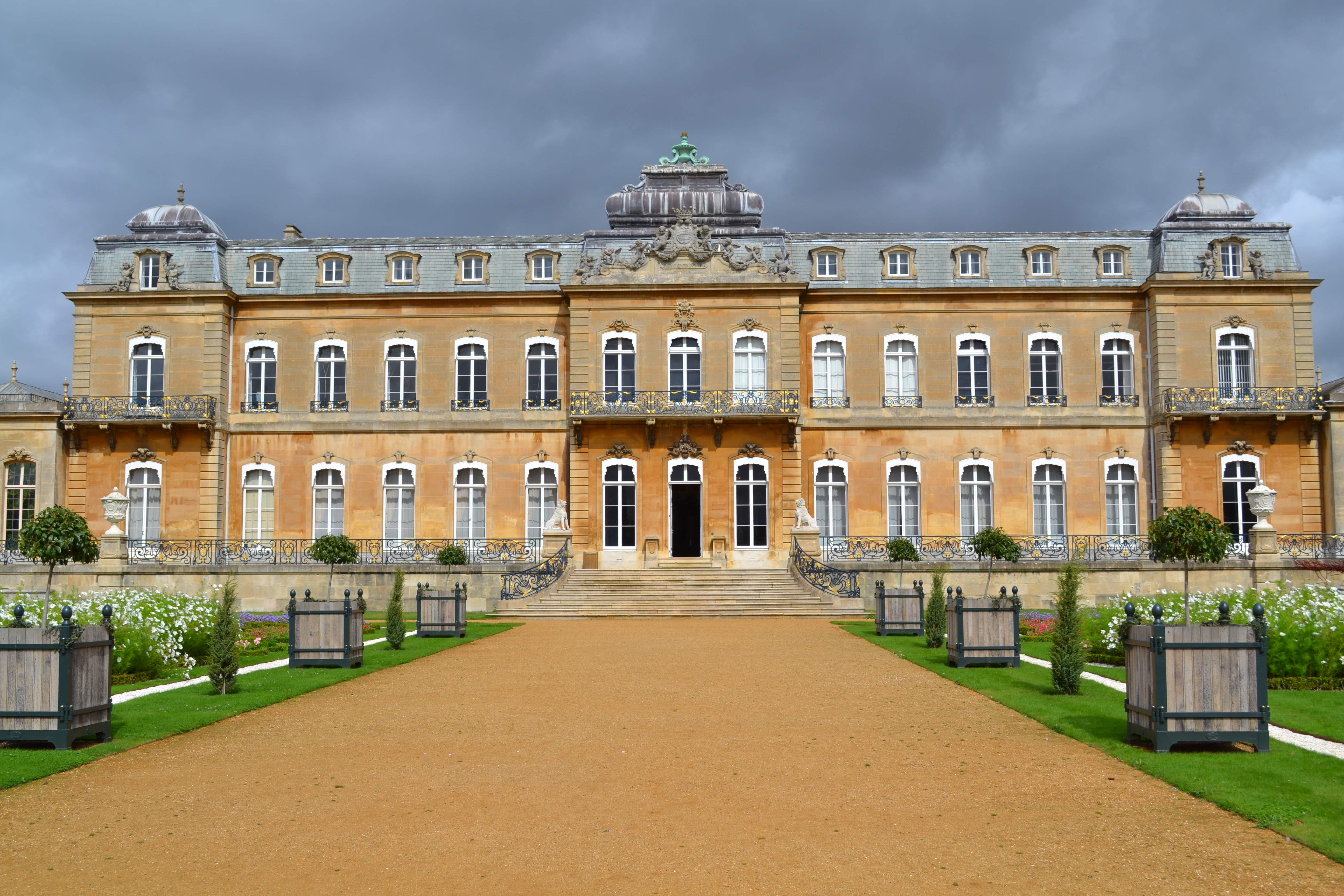
Wrest Park, Bedfordshire, home of Thomas Philip de Grey, called The Lord Grantham from 1786-1833, 1st Lord of the Admiralty from 1834-1835, the Earl de Grey © cambridgemilitaryhistory, 2014

Traveling west across the shire’s border are the rolling hills and farmlands of Bedfordshire, where Thomas Philip de Grey (1781-1859) designed and built his beautiful French-inspired rococo country home at Wrest Park.  The interiors spill onto sunny terraces which open to the formal gardens and riding lanes that fan away from the stately home.  As a Tory politician and peer, Thomas de Grey was involved in the post-Napoleonic era of British naval mastery, and the ordering of Great Power politics in the wake of the Concert of Europe.  Called The Lord Grantham in his youth (one of his many courtesy titles), he studied at St. John’s College, Cambridge, and at the death of his father, became the Second Earl de Grey in 1833.  King William IV made him first Lord of the Admiralty in 1834 and a Privy Counsellor.  In an age dominated by the reformer Lord Melbourne, he served in the Tory Caretaker government of Arthur Wellesley, 1st Duke of Wellington and hero of Waterloo, and then in the Conservative government of Sir Robert Peel before the return of Lord Melbourne in 1835. He was made a Knight of the Garter a decade later, and would remain an influential Tory politician and country gentleman until his death well into Queen Victoria’s reign.  De Grey was man of numerous talents and accomplishments. While running the Admiralty, he remained busy as an amateur architect, drawing the plans for Wrest Park and directly supervising its construction.  He served as the first President of the institute of British Architects in London from 1834 until his death.

Royal Navy in the First Opium War
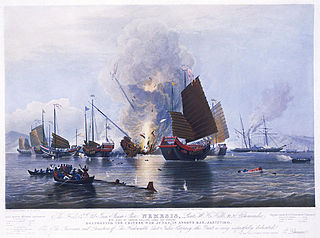
A Royal Navy paddle-wheel steamer in the First Opium War. Thanks to Alina Parazyan, who does not endorse my work, and http://commons.wikimedia.org for the use of the image.

During his time as First Lord of the Admiralty, de Grey presided over the most powerful navy in the world, at a time of uncontested British hegemony on the high seas.  Although there were no major naval engagements from the War of Greek Independence from the Ottomans in 1827 until the first engagements of the Great War in 1914, the Royal Navy formed a vital part of the British power structure in the 19th Century. The Royal Navy was actively engaged bolstering trade, defending the growing empire, clearing the seas of pirates, hunting down slave ships and slave forts, and serving as a vital part of Britain’s strength – the diplomatic power of a mighty Navy ready to respond across the globe.  It was a time of transition, as square-rigged sailing ships were being replaced by iron and steel, and steam propulsion was replacing the reliance on wind. The Opium Wars, demonstrating the global reach and determination of Britain to expand the Empire in the name of trade, however cynically, resulted in the securing of Hong Kong in 1839.  De Grey presided over a fascinating time in the history of the Royal Navy, and one can easily imagine him entertaining over a shooting weekend at Wrest Park, or at his townhouse in London (which is now the Naval and Military Club on St. James’s Square), discussing the move from sail to steam and hammering home the need to innovate and expand the Royal Navy during a time of peace.  His innovations and shepherding the Royal Navy through a time of dramatic change would ensure the Royal Navy’s uncontested supremacy for a Century, only threatened later by the naval race with the German Empire, leading to the Great War.

Wrest Park is managed for the Nation by English Heritage.  The website for Wrest Park is: http://www.english-heritage.org.uk/daysout/properties/wrest-park/ Directions to Wrest Park, which is in the village of Silsoe, Bedfordshire: take the A6 towards Luton, signposted from Silsoe, or SATNAV postcode: MK45 4HR.

A beginning…

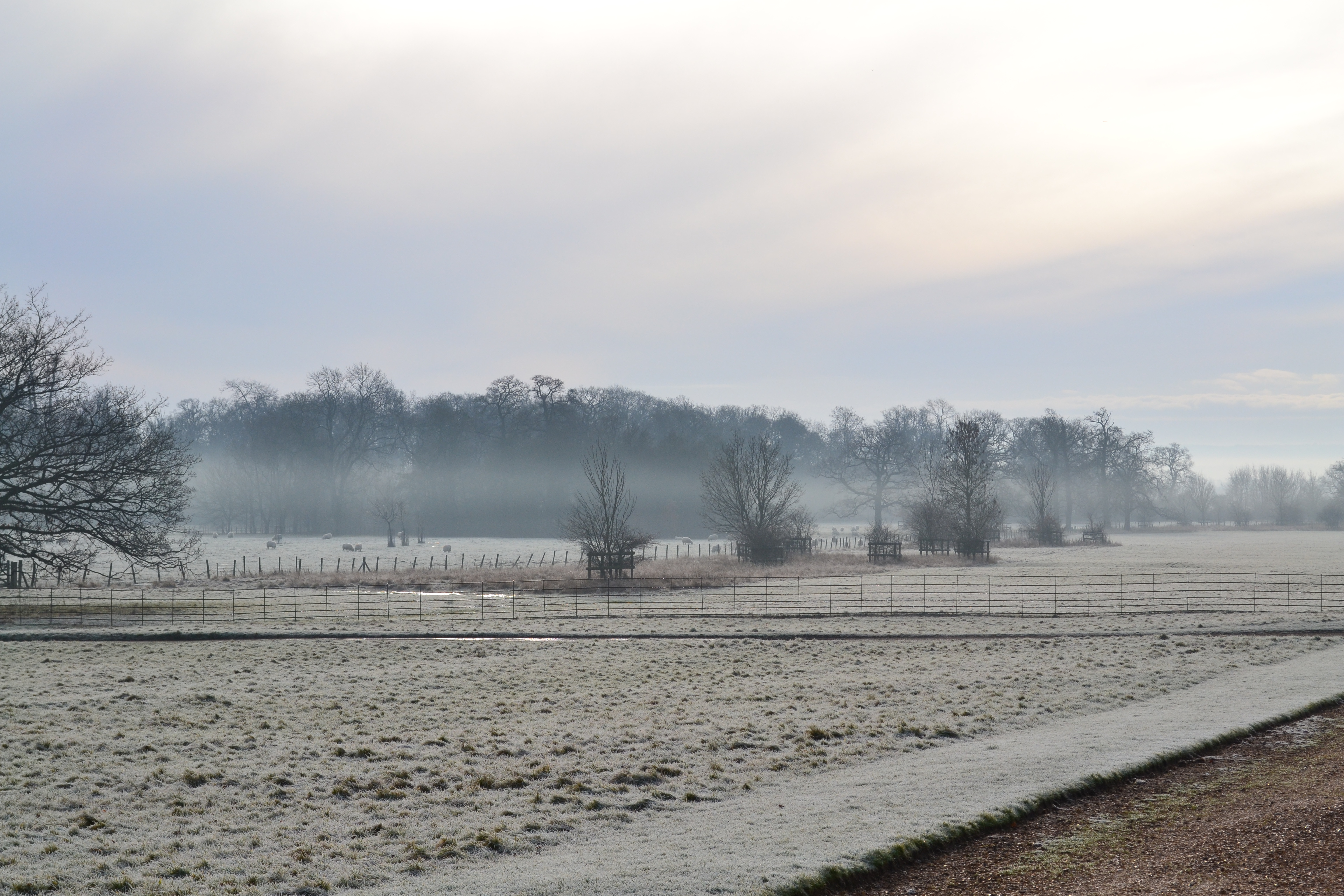
Wimpole Hall Monday 20 January 020
The fields of Wimpole Hall, Cambridgeshire, on a frosty morning, January 2013 © cambridgemilitaryhistory.com

Friends,

Welcome to the Cambridge Military History blog, where we will discover and explore together the rich history of an ancient and beautiful part of England – Cambridgeshire.  From the earliest settlements, through the arrival of the Romans and, as the legions departed, to the coming of the Anglo-Saxons, we will delve together into the past.  From the early political stirrings of a land which would become England, this area has played a key part in this Nation’s history.  With the Viking raids and the Norman conquest, to the heady times of kingship, the rise of parliamentary power and the Civil War, Cambridgeshire has been at the fore.  As we moved into modernity, once more Cambridgeshire loomed over the fortunes of this land as fighters and bombers soared over the flat countryside, defending England, launching contentious and destructive raids on the continent in the Second World War that are still debated to this day.  The study of Cambridgeshire is often an exploration into the wars and battles which have been fought on, and above, this land.  What is waiting to be discovered, researched and brought back to life for you the reader to share with me?  A lifetime could be spent exploring the thousands of years of human struggle: man fighting against nature, famine, and disease, through religious and world wars, against political and military adversaries.  Where will this adventure take us? I am not certain, but surely the journey will be as powerful as the conclusions.

I’m an American, an expat, who has settled here in England after years lived abroad and at sea after a career as a Naval Officer.  Although I have been in Cambridgeshire for many years, my perspective and background may just vary enough to allow a different view on this fascinating part of England.  As the Bard let John of Gaunt eloquently say:

This royal throne of kings, this scepter’d isle,
This earth of majesty, this seat of Mars,
This other Eden, demi-paradise,
This fortress built by Nature for herself
Against infection and the hand of war,
This happy breed of men, this little world,
This precious stone set in the silver sea,
Which serves it in the office of a wall,
Or as a moat defensive to a house,
Against the envy of less happier lands,
This blessed plot, this earth, this realm, this England.

Shakespeare, Richard II, Act II