The Round Church: A Crusader Legacy in Cambridge

On 15 July 1099, Jerusalem fell to the armies of the First Crusade. Their stated goal, as the soldiers poured into the city set on murder, rape, and pillage was to wrest the Church of the Holy Sepulchre and other holy places from the Armies of Islam and establish a Christian Kingdom with its capital at Jerusalem. These Crusader States would stumble on but effectively ended in 1291 when the Kingdom of Jerusalem fell after the siege of Acre. The last stronghold of Outremer (the term used by the Frankish knights, simply French for overseas), Acre fell to the Mamluks and despite numerous additional Crusades, the Levant would remain in the control of a succession of Islamic States until seized by the British and French from the Ottoman Turks in the Great War.
The Church of the Holy Sepulchre was built in the early 4th Century during the reign of Constantine the Great. According to tradition, it contains both Golgotha, the site of Jesus’ crucifixion, and the tomb in which he was buried and rose from the dead. It underwent both Byzantine and Crusader modifications and changes, but its round design was established and known by the Middle Ages across Europe.

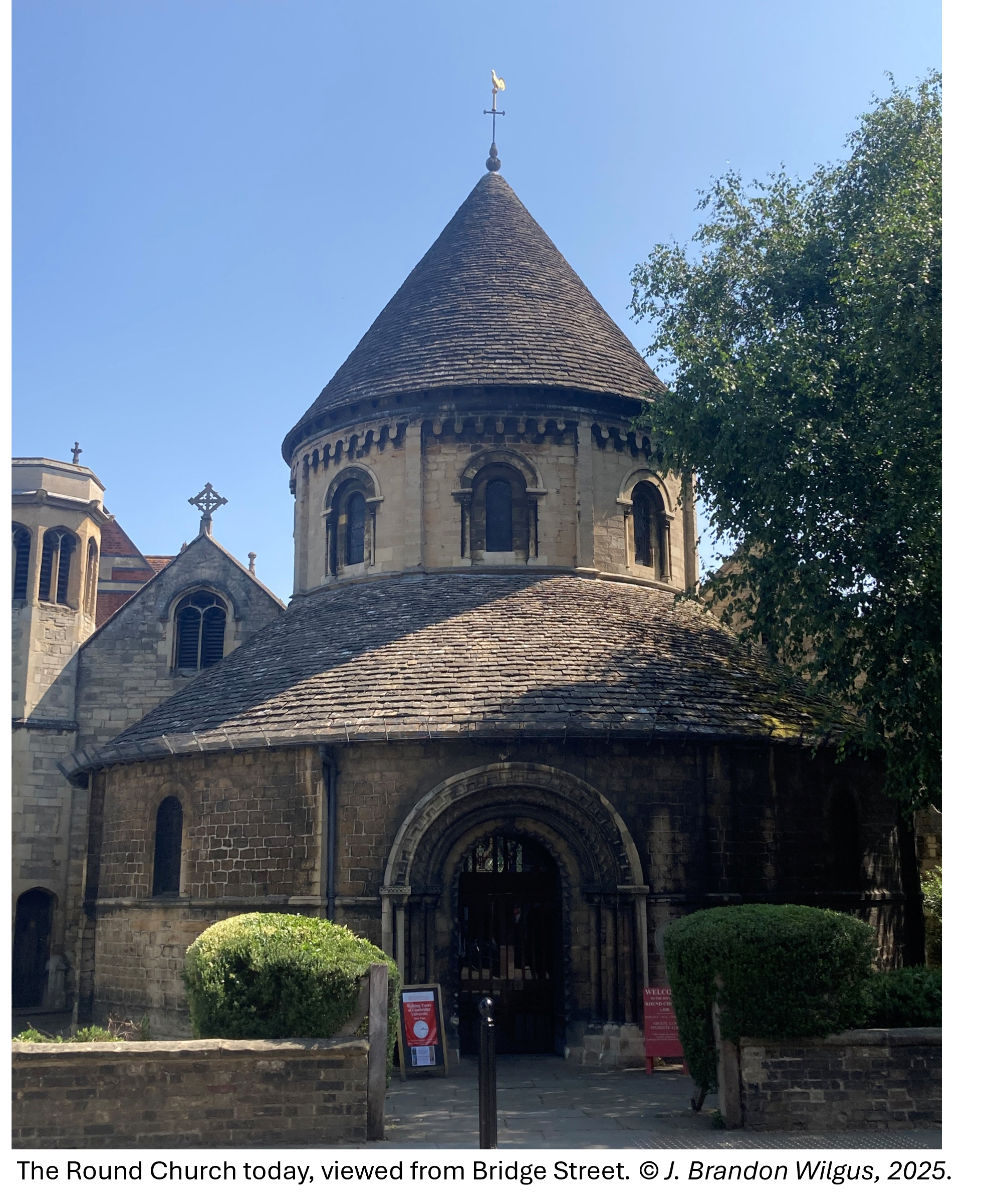
After the First Crusade, newly established religious orders such as the Knights Templar (Poor Fellow Soldiers of Christ and of the Temple of Solomon) and the Knights Hospitaller (Order of the Knights of St. John of Jerusalem), along with pilgrims who had visited Jerusalem, returned to Europe and built churches which emulated the Church of the Holy Sepulchre.  Mimicking the circular shape seen in Jerusalem, a handful of Round Churches were built across England recalling the site in Jerusalem of Christ’s passion and resurrection.

Between 1114 and 1131, only 15 years after the fall of Jerusalem, the Round Church in Cambridge was founded by an obscure group which we know little about which called itself The Fraternity of the Holy Sepulchre. In fact, there is no other record of this group except from this one project, and it was likely formed for the sole purpose of building the Round Church in Cambridge. The Fraternity claimed that the construction was “in honour of God and the Holy Sepulchre”. Consecrated as “The Church of the Holy Sepulchre”, it has been commonly called “St. Sepulchre’s” or simply, “The Round Church” since the 13th Century. This predates Cambridge University by almost a hundred years.

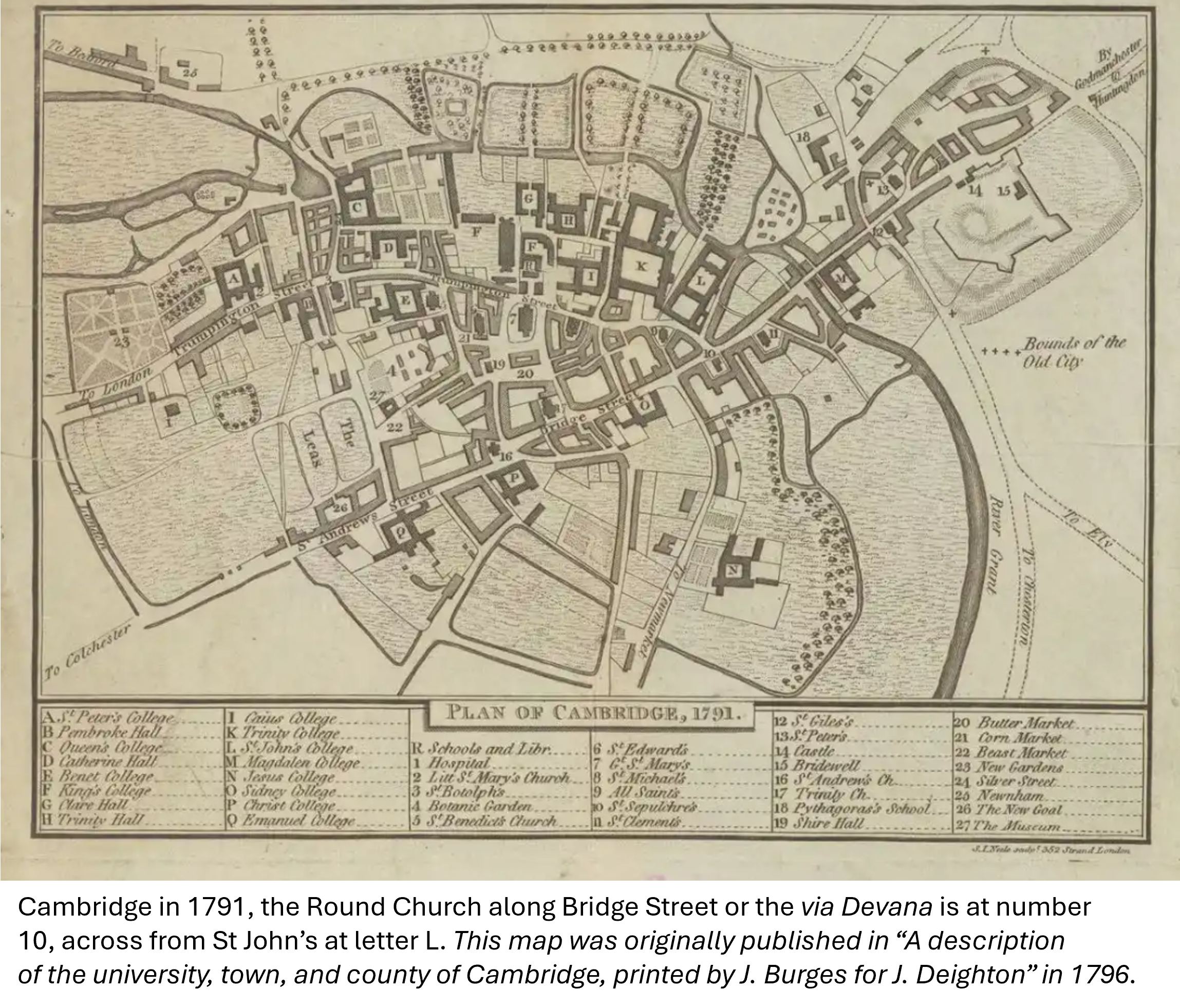
The first vicar of the Round Church was recorded as Geoffrey of Alderhethe in 1272. He was the Master of the Hospital of St. John the Evangelist, a religious hospital which resided across Bridge Street from the Round Church.  (Bridge Street today is the old Roman Road, the via Devana, which ran from Huntingdon to Cambridge, crossed the Cam, and passed the Roman Fort of Duroliponte which is now Castle Hill.) The medieval Hospital is now St. John’s College, part of the University of Cambridge.
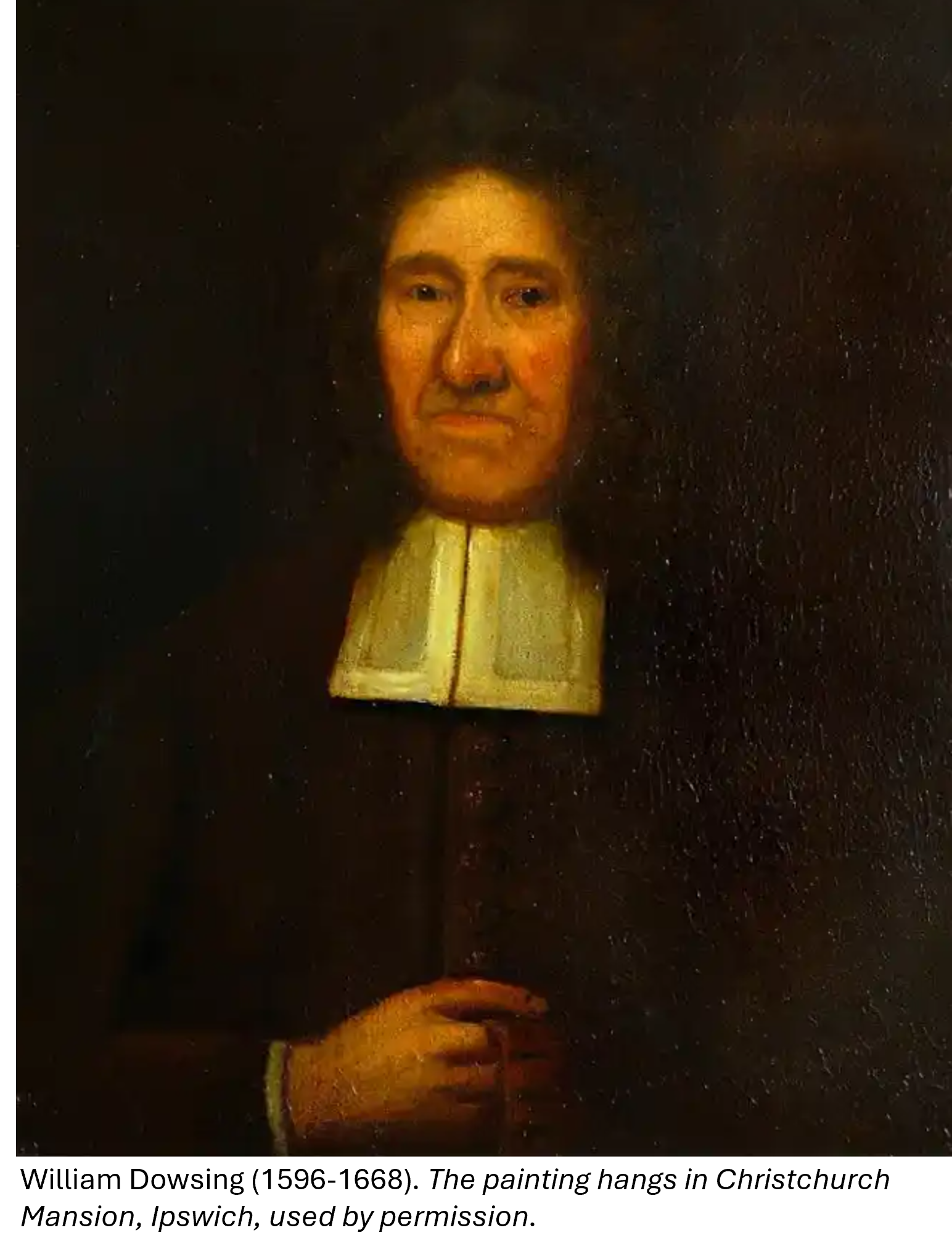
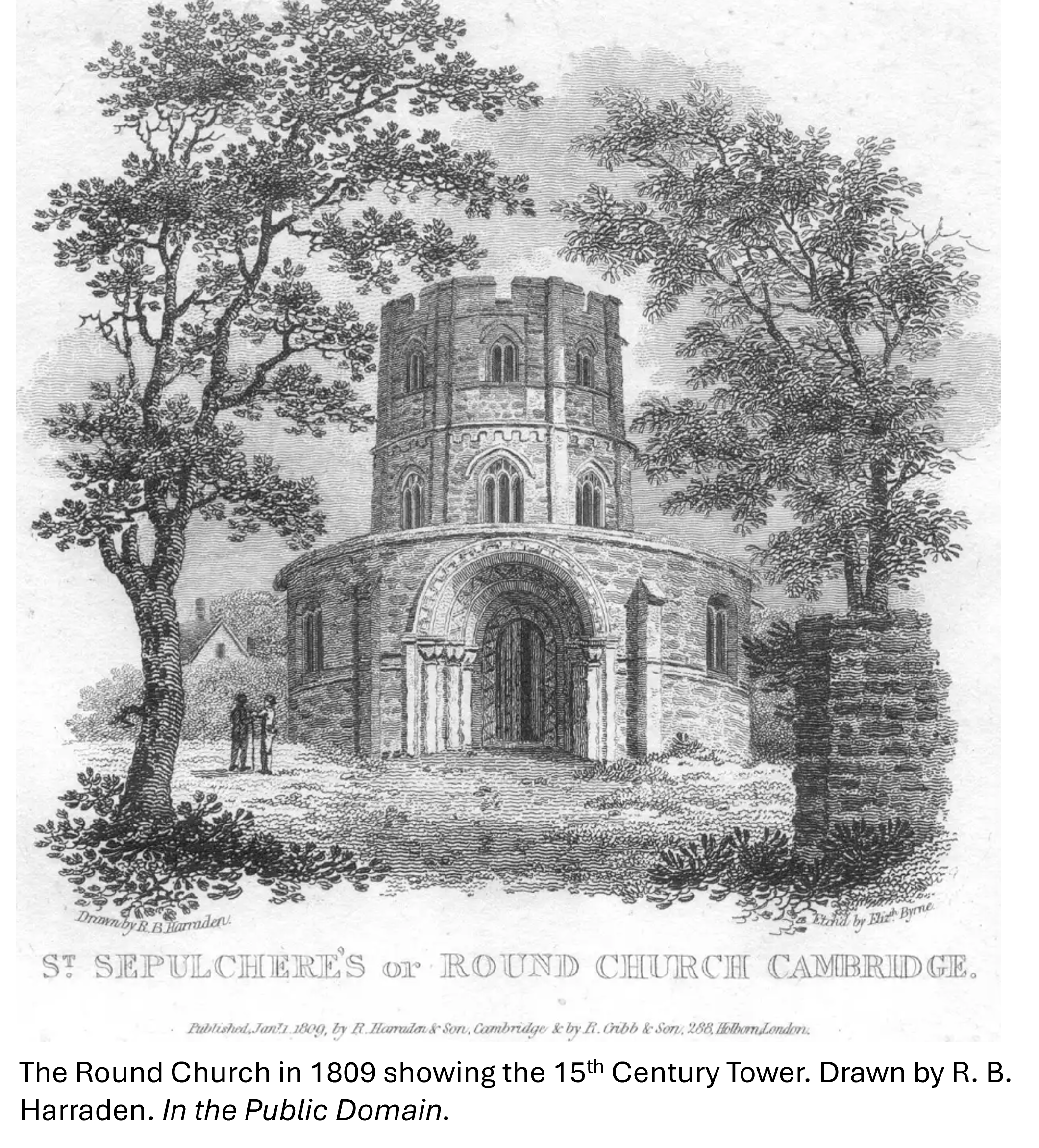
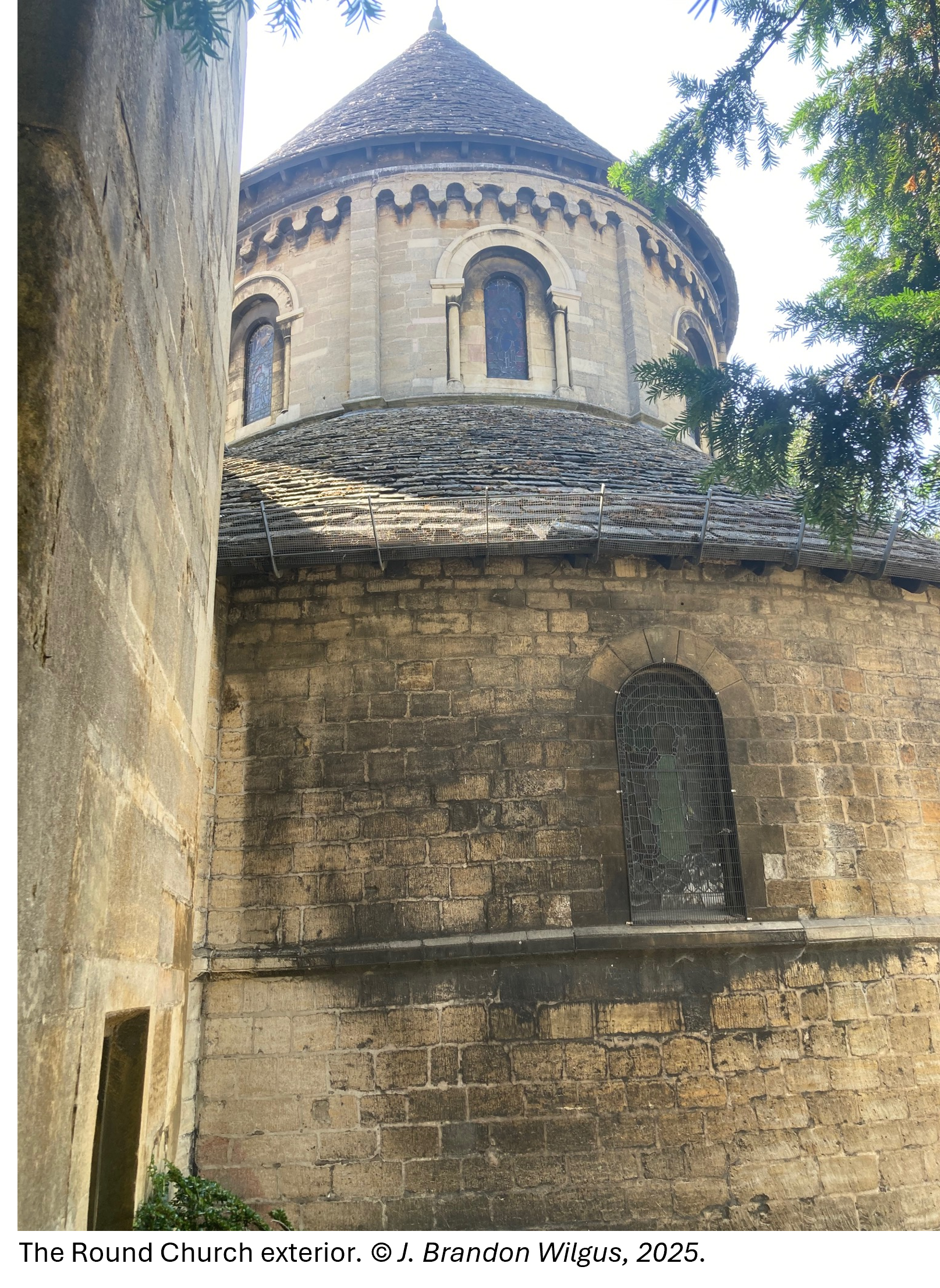
Expansions and extensions occurred over the next centuries, including a crenelated, multi-story tower which was added to the centre of the church in the 15th Century. At the same time, the Norman windows were replaced with larger, arched gothic windows. The church remained mostly undisturbed until 3 January 1644, when the Puritan officer and notorious iconoclast William Dowsing, known as “Smasher Dowsing”, arrived. Following the Parliamentary Ordinance of 28 August 1643 that “all monuments of Superstition and idolatry should be removed and abolished”, he and his soldiers destroyed fourteen pictures in the Round Church during the Civil War.  
In August 1841, the 15th Century tower collapsed, damaging the original structure and threatening the entire church’s existence.  A subscription for public support occurred and money raised for the church to be returned to its former glory.  In October 1843, with Queen Victoria and Prince Albert in attendance, the church was reopened after its reconstruction, returning it much to its original form. The upper portions of the church were returned to their Romanesque origins, the Georgian box pews were removed, and the gothic windows were restored to their original design. However, the reconstruction was not without controversy. The Camden Society, which coordinated the reconstruction, had a stone Altar and Credence Table placed in the nave, which was seen as too High Church, popish and Catholic. A general outcry led to a well-publicized court case and in January 1845 the altar and table were ordered removed and replaced by more humble, wooden tables which can still be seen today.
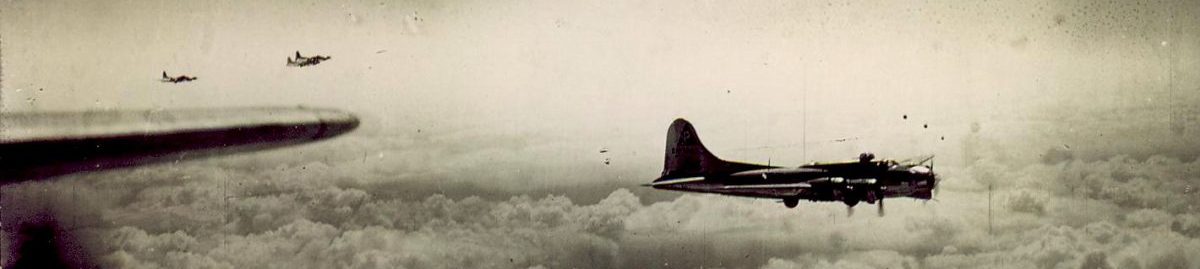
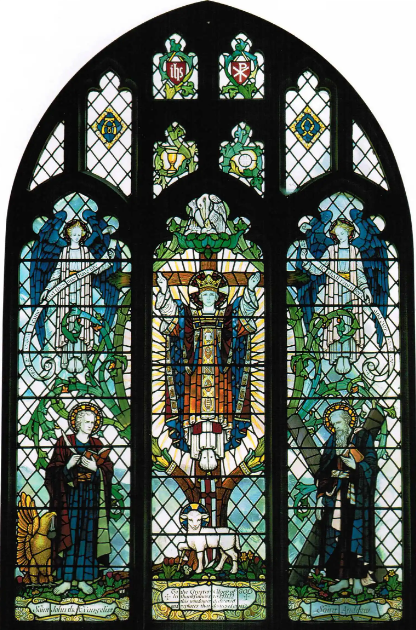
One would have thought there would be no more war damage to the Round Church after the iconoclasm of 1644, but on 28 July 1942 a single German bomber dropped its ordnance of high explosives and incendiaries on Cambridge. The bombs did extensive damage along Bridge and Sidney Streets, killing three people and wounding seven. One bomb struck the Cambridge Union Society Building, which had been built on the Church’s former graveyard, causing the medieval stained glass in the East Window to be blown out and destroyed.  After the war, the window was beautifully replaced with new stained glass showing Christ’s Resurrection, which occurred on the site of the Church of the Holy Sepulchre in Jerusalem.
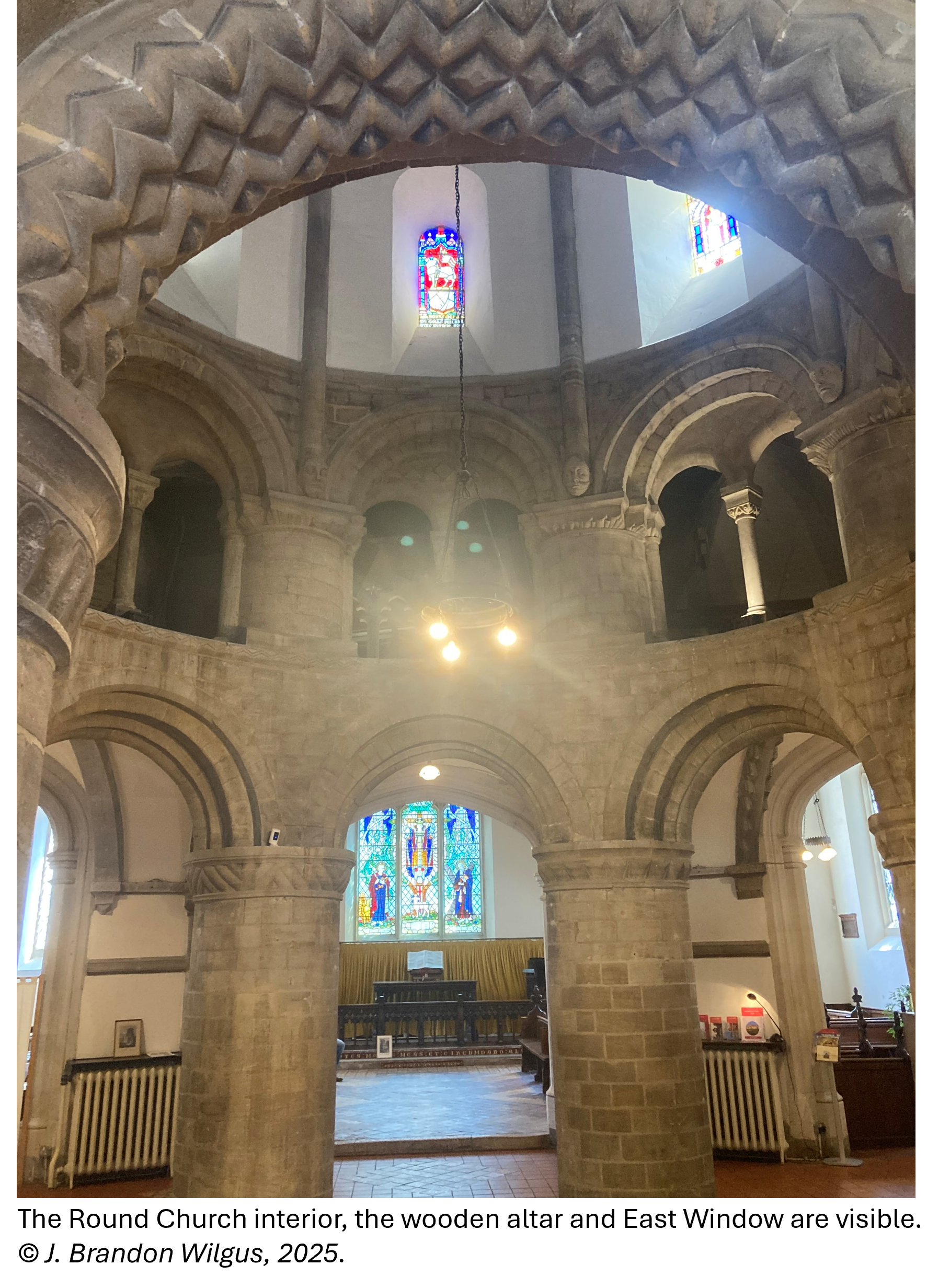
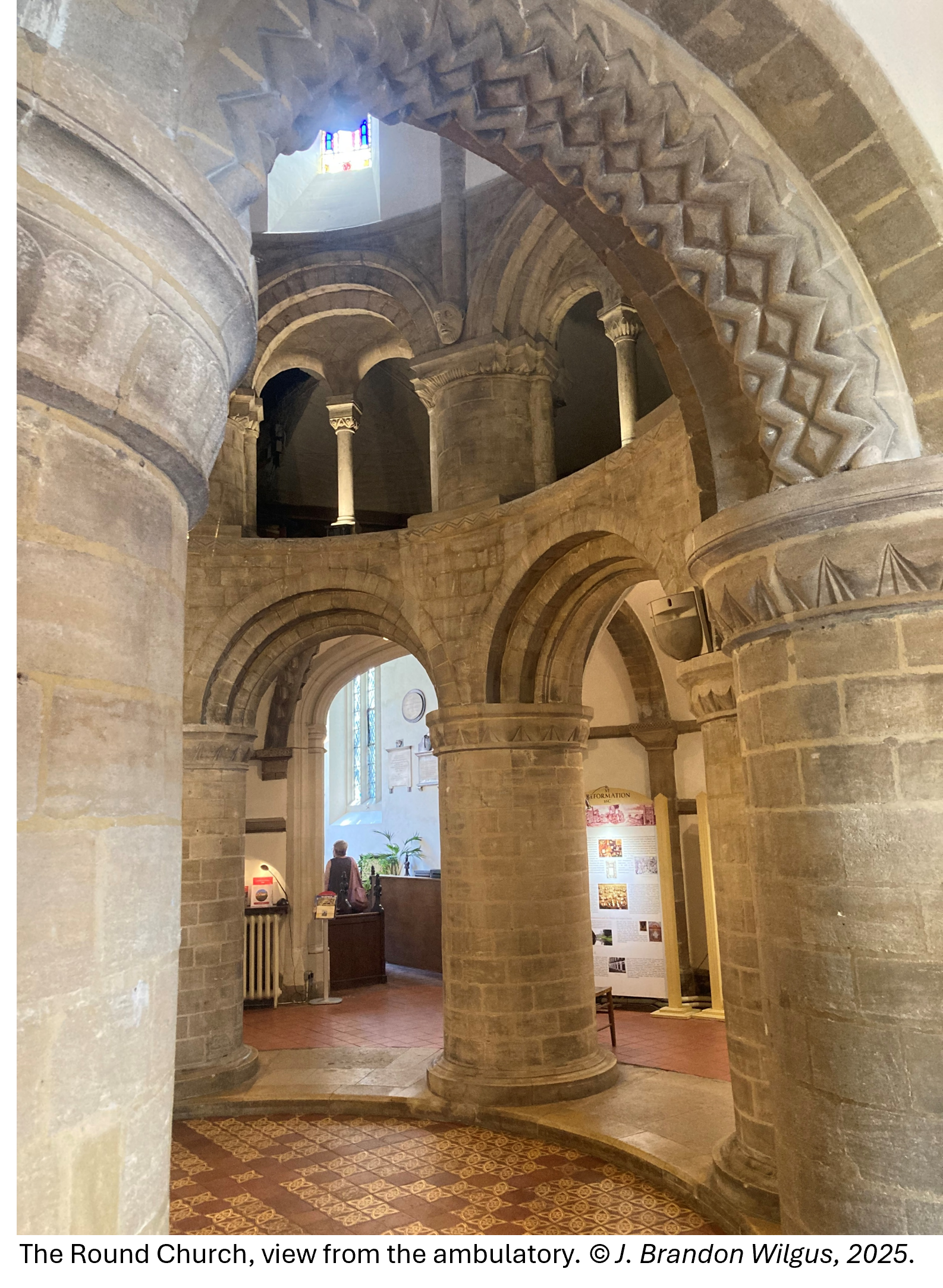
Inside, the church strikes a visitor as both beautiful and small, focused more on the center of the Round Church than the altar which rests in the nave, surrounded by the raised ambulatory. Eight thick Norman columns with round arches break the ambulatory and the nave and hold up an upper floor.  Much of the stained glass is from the Victorian era restoration and from the 1946 window which repaired the German war damage.  The tiled floor, which includes Queen Victoria’s coat of arms, dates from the 1841 restoration.
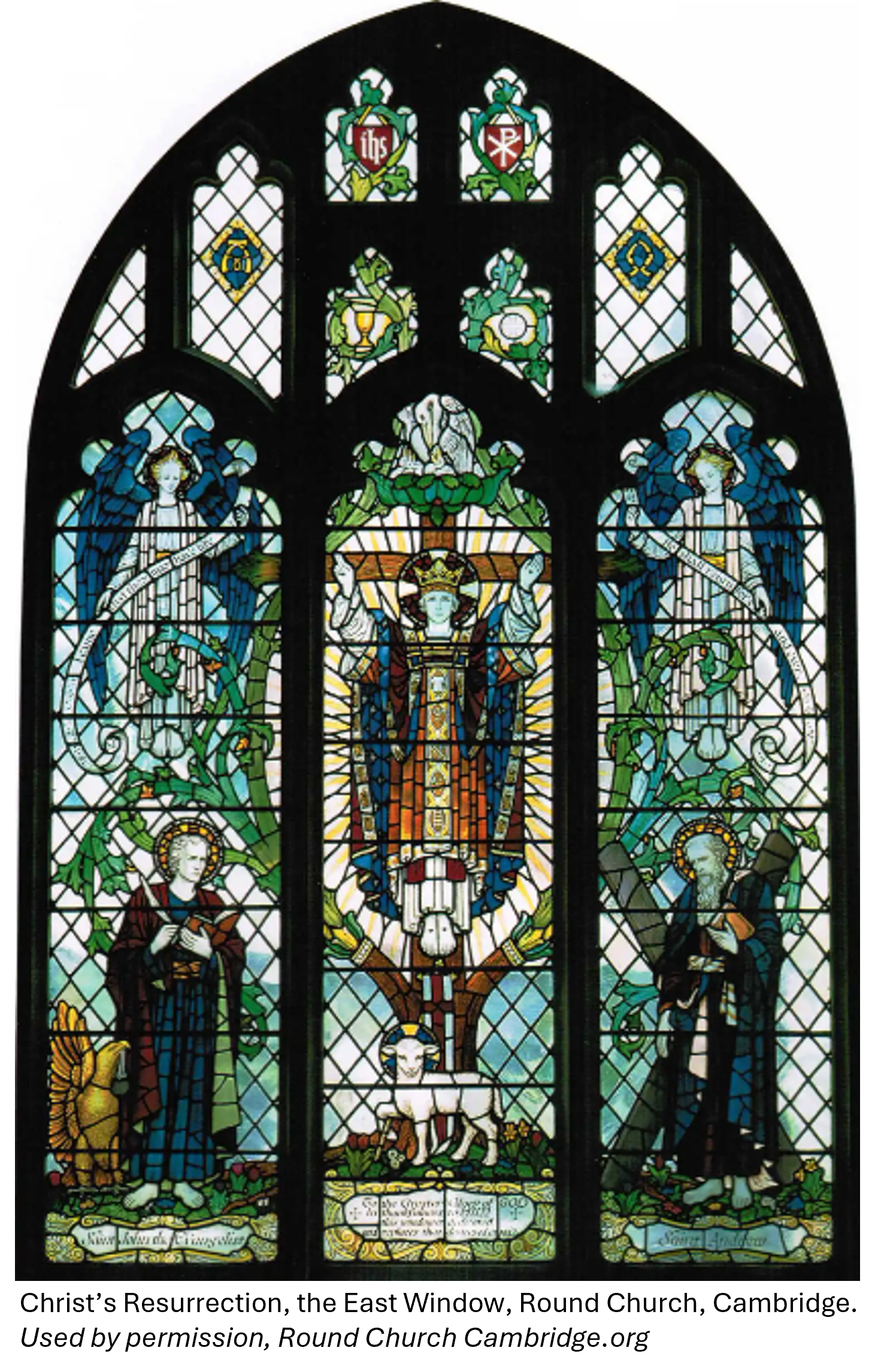
The Round Church Cambridge is one of four remaining medieval round churches in England. The others are the Temple Church in London, The Holy Sepulchre Church in Northhampton, and the Church of St. John the Baptist in Little Maplestead – all beautiful with a fascinating history and worth a visit.

To find out more about the Round Church’s visiting times, walking tours, and events see https://roundchurchcambridge.org/

To learn about its architecture and its evolution over the years, visit: https://drawingmatter.org/the-future-of-the-past/

To learn more about the church’s restoration, see Chris Miele’s “The Restoration of the Round Church, Cambridge”, English Heritage, Historical Analysis & Research Team Reports and Papers (First Series, 5), 1996.

To learn more about the bombing raids on Cambridge during World War II, visit Cambridge Historian: https://cambridgehistorian.blogspot.com/2012/07/world-war-2-air-attacks-on-cambridge.html
1648: The Battle of St Neots

It has been brought to my attention several times that Cambridgeshire has seen few battles and holds no remembered battlefields – a real problem for a historical blog on the military history of Cambridgeshire. Some argue that for all the fighting which has occurred in England, from the Romans to the Danes, through the Civil War, Cambridgeshire has remained an area of relative peace. While there have been consequential battles near Cambridgeshire – one thinks of Naseby (1645) in Northamptonshire or the Battle of Fornham St Genevieve (1173) near Bury St Edmunds in Suffolk – they have all occurred outside the borders of the county. The conventional wisdom is that Cambridgeshire has been spared the war and bloodshed which has been sadly common in English history. This is not true! Allow me to write about one example:

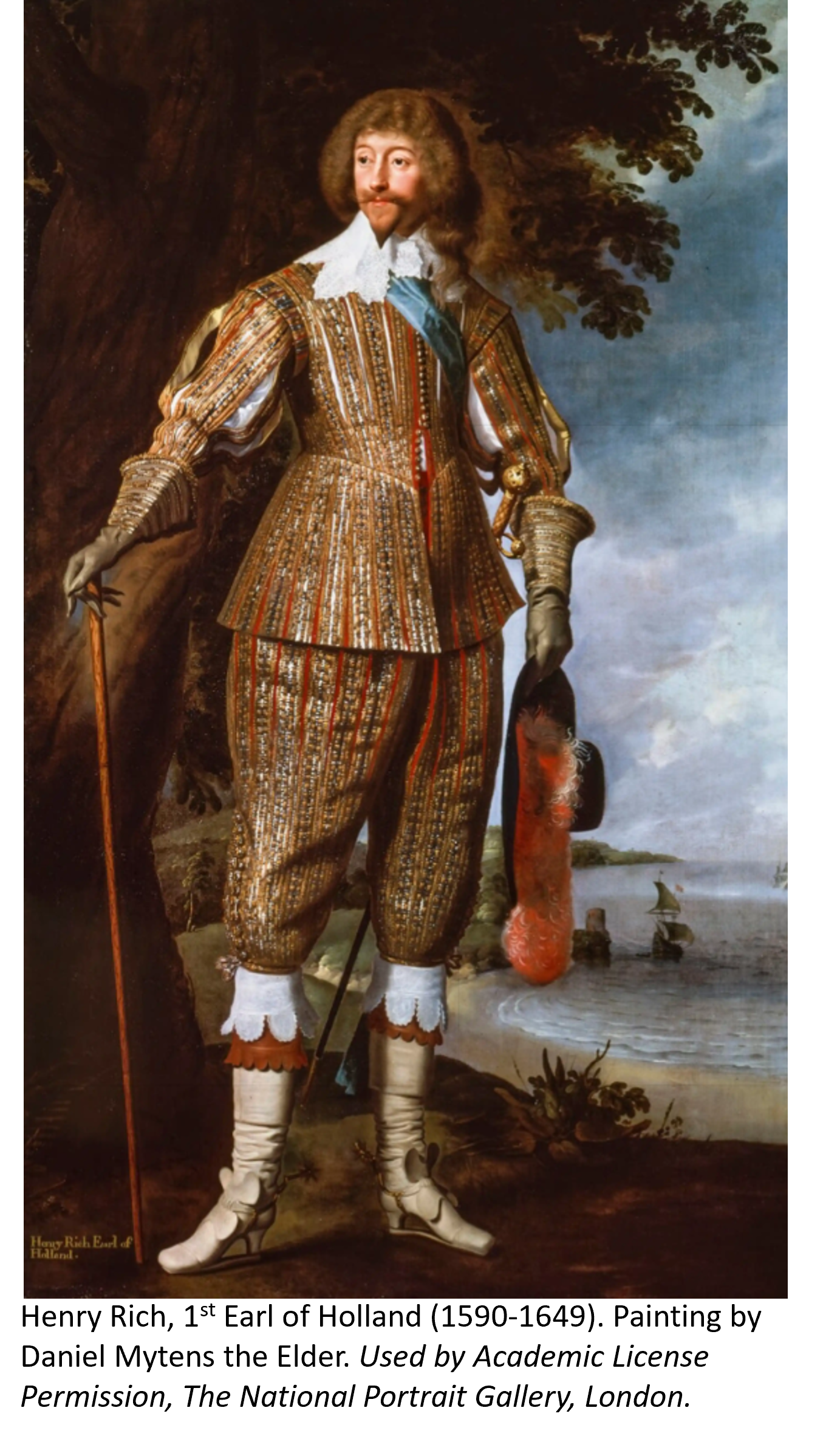
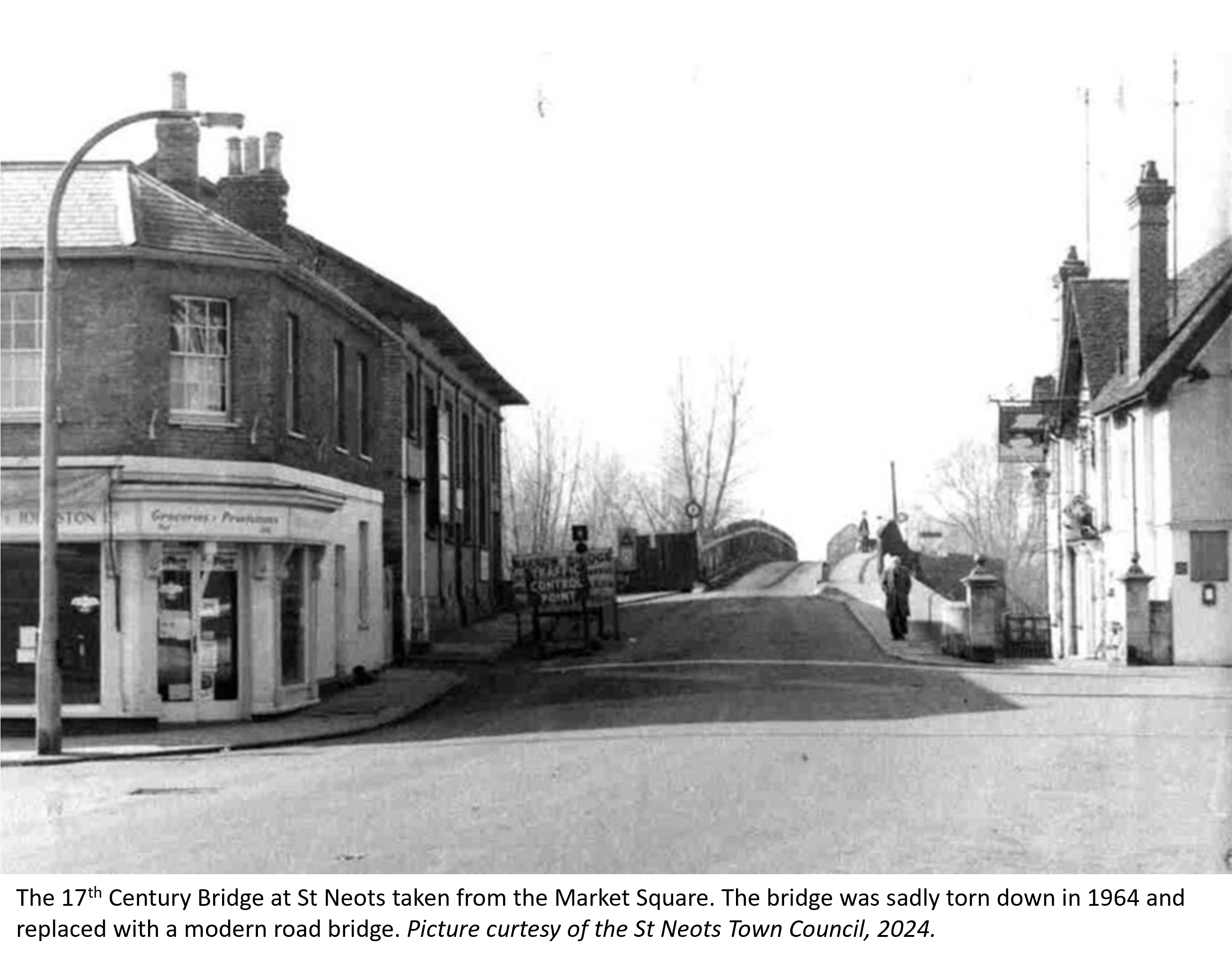
Towards the end of the English Civil War, in July 1648, a battle occurred first along the River Great Ouse and then spilled into the market square of St Neots in Cambridgeshire. Now, you are certainly thinking that the Civil War had concluded with the defeat of King Charles I’s army in May 1646 and that the period between the Spring of 1646 and Charles’ execution at the Banqueting House in London at the end of January 1649 was one of relative peace. Again, not true! After the defeat of the Royalists, England settled into a period of uneasy peace with the restive New Model Army under the leadership of Sir Thomas Fairfax and Oliver Cromwell and the more moderate parliamentarians trying to find a way to maintain the monarchy and negotiating with Charles I. As negotiations broke down, it became obvious that Charles and his advisors were playing for time to seek assistance from Scotland. The Second English Civil War began as uprisings in England and Wales allowed the Scots to rise and invade from the North. During this time, a royalist cavalry troop of several hundred men under Colonel John Dalbier, a German mercenary who had fought with parliament before changing sides, arrived near St Neots after a failed attack on London. The Royalists had two confidants of Charles I in their party: Henry Rich, the Earl of Holland, and George Villiers, the 2nd Duke of Buckingham, both also escaping the recent fighting near London. The approximately 300 Royalists were tired, demoralized and fleeing their failure outside London, chased by parliamentarian dragoons. Once arriving at St Neots on 9 July, Colonel Dalbier posted a few guards at the bridge over the River Great Ouse while his men pitched camp and slept within St Neots’ Market Square. The Earl of Holland and Duke of Buckingham found rooms at an Inn and stayed apart from the men.

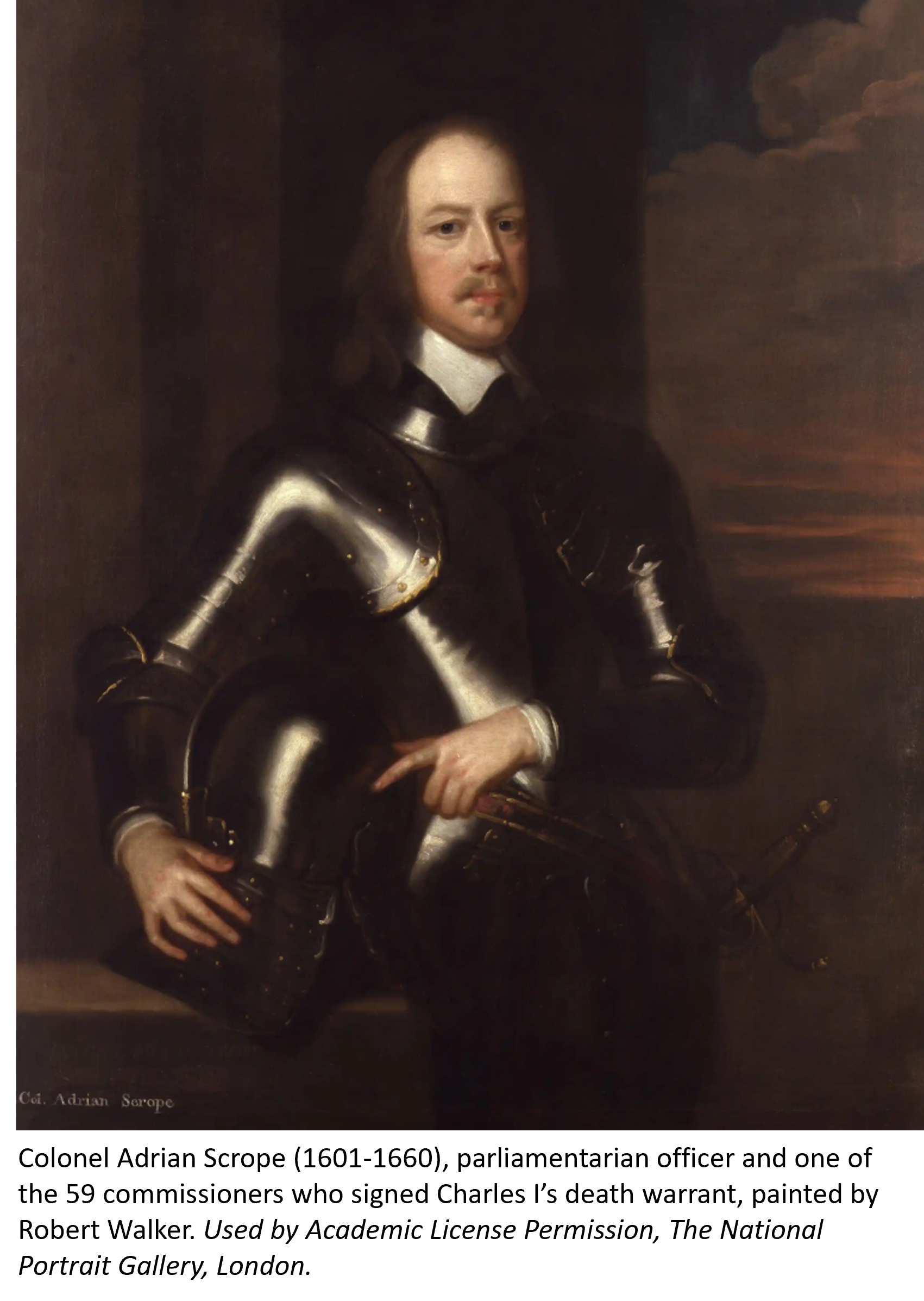
Having defeated the royalist force near London, the leadership of the New Model Army sent parliamentarian Colonel Adrian Scrope with a mounted force of approximately 100 dragoons and foot soldiers to chase and intercept the royalists fleeing London. Having caught up to the royalists at the River Great Ouse, Colonel Scrope’s men waited until the early morning hours to engage. At 2am on the morning of 10 July 1648, the parliamentarians attacked the few awake men of Colonel Dalbier first at the bridge, and then in a moving battle into the heart of St Neots – the Market Square.  Colonel Dalbier died near the bridge along with several of his men, some of whom drowned in the Ouse trying to swim away in the dark.  The Earl of Holland roused his men and fought the parliamentarians in the Market Square, but as his resistance buckled, he fled into the Inn where he had billeted for the night and barricaded himself within. The Inn’s gate was broken down by the attacking soldiers. The parliamentarians stormed the Inn and cornered the Earl in his room, sword drawn, back against the wall. He surrendered once he had received the soldiers’ promise that his life would be spared. He was brought to Colonel Scrope, who had him chained along with five other captured royalist officers and imprisoned in St Mary’s Parish Church. They were taken to Warwick Castle the next day under armed guard.

The Duke of Buckingham escaped, fleeing into the night with some portion of the cavalry in the direction of Huntingdon.  Eventually he would make his way to the Netherlands and would rise to great power during the restoration of Charles II.

After the battle, captured royalist forces were held overnight in St Mary’s Parish Church, though several fled into the dark and dispersed. As mentioned, the Earl of Holland was taken to Warwick Castle the next day where he was held for the next six months.  He had already been pardoned once in 1643 when he changed sides during the Civil War, deserting his friend the King to join parliament, before rejoining the royalist cause. Detested by the more extreme parliament of 1649 and by Colonel Scrope in particular, his machinations finally caught up with him, the Earl of Holland was held for six months before being tried for treason and executed on 9 March, shortly after Charles I.   

Colonel Scrope went on to sign Charles I’s death warrant as one of the 59 commissioners and served as the head of security during the King’s trial. He was promised clemency during the Restoration of the Monarchy in 1660, but was arrested as a regicide and hanged, drawn and quartered at Charing Cross, London on 12 October 1660.

Today, the St Neots Market Square where the royalist forces camped and most of the fighting occurred is still the centre of the town and easy to visit with ample parking. The St Neots Museum is a few steps away along New Street and worth a visit. Sadly, the 17th Century stone bridge where Colonel Dalbier stood watch was torn down and replaced in 1964. St. Mary the Virgin Parish Church, which has been called the Cathedral of Huntingdonshire, is stunning. Built mostly during the 15th Century, though there are earlier sections, the church is beautiful and worth a visit to appreciate its late medieval architecture and 128-foot tower; however, I was unable to find any memories of the royalist soldiers, their officers, and the Earl of Holland who were held there in 1648 after the Battle of St Neots.

For more information, visit the St Neots Museum, which is open Tuesday through Saturday each week.  The Museum is located at The Old Court, 8 New Street, St Neots, PE19 1AE. 01480214163.

As is the case with most churches in Cambridgeshire, St Mary’s Parish Church is open daily for visits.

Oxburgh Hall: the Wars of Religion in the East of England

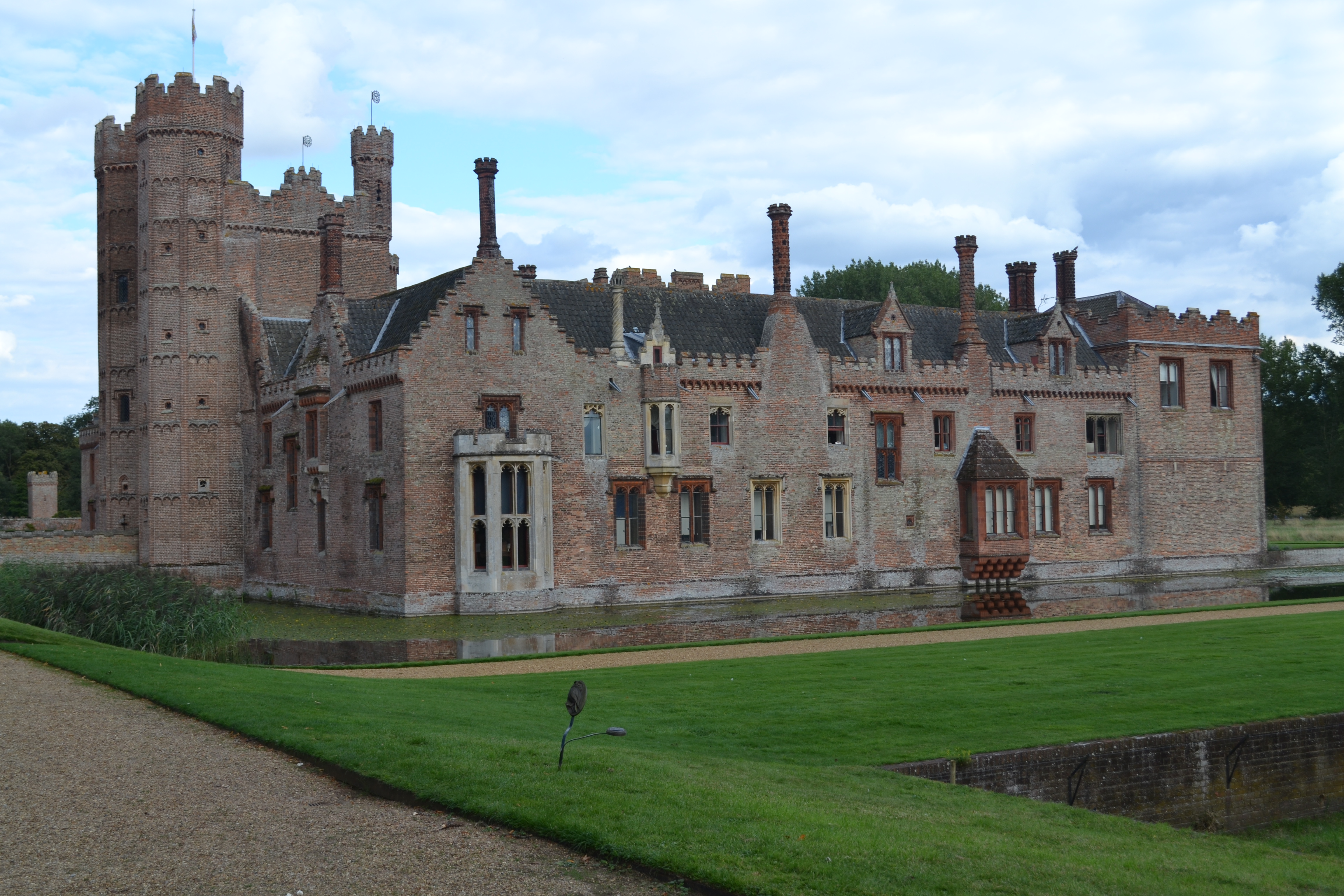
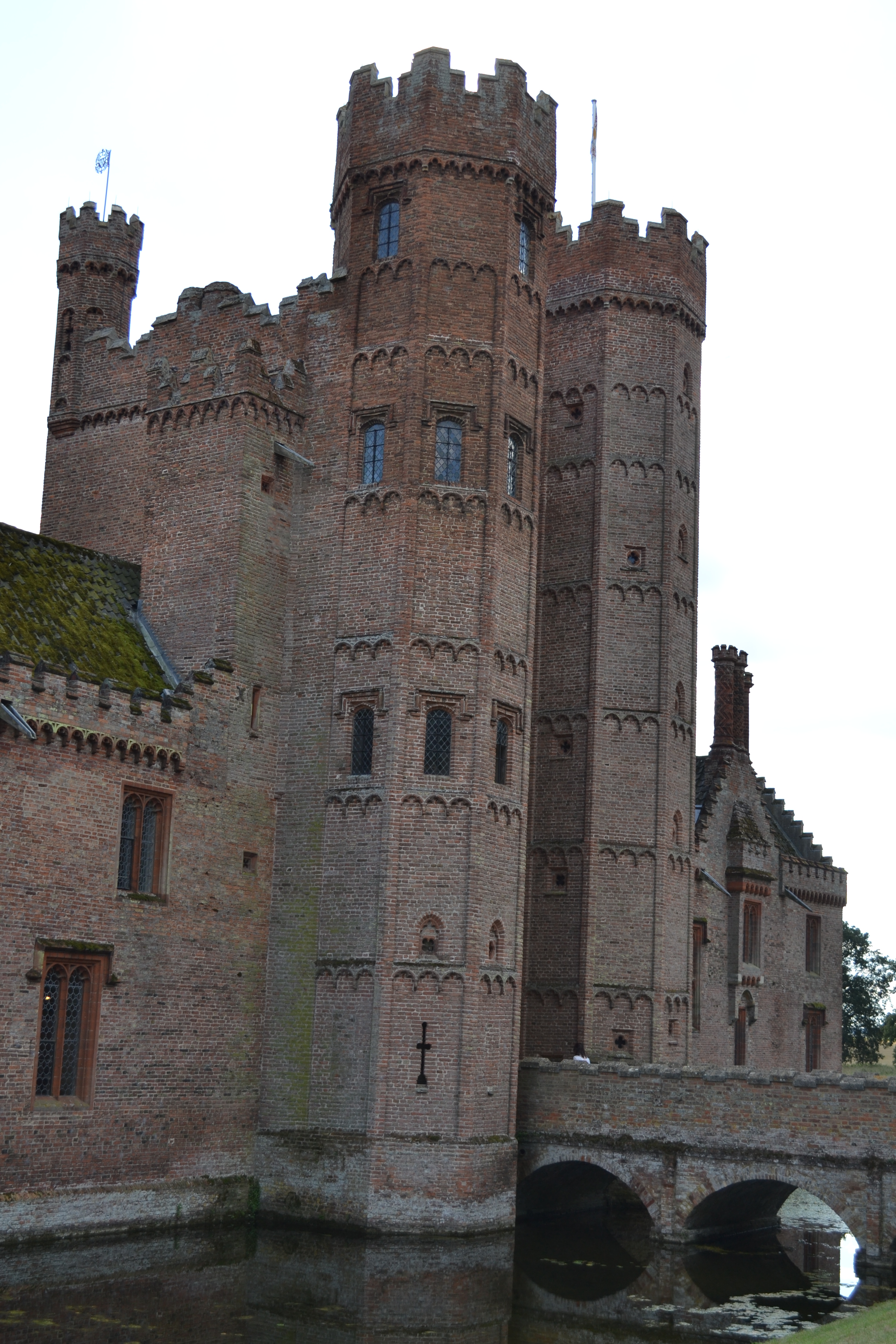
Ancient seat of the Bedingfeld family, whose history stretches to the War of the Roses, Oxburgh Hall rises from the fens of southwest Norfolk.  An ancient fortified manor, which has been reworked and crafted for centuries, it was first conceived of and built in 1482 at the height of the Wars of the Roses.  However, at least back to 1086 Domesday Book records a settlement here named Oxenburch and a description: “a fortified place where oxen are kept”. Through the Wars of Religion, the catholic Bedingfeld family threaded a dangerous line at the Tudor Court and found themselves increasingly persecuted for their faith.  Staunchly royalist, Charles II rewarded the Bedingfelds with a baronetcy in 1661 though failed to repay the sizable loans made to the crown by the family.  As the 17th Century flowed into the 18th, the Bedingfelds found more acceptance of their Catholicism on the continent, and spent much time away from England and persecution.  Amazingly, almost 600 years after construction began, Oxburgh Hall retains its ability to awe and overwhelm, just as Sir Edmund Bedingfeld intended in 1482, and the family still resides in the eastern front of this ancient manor.

Aug-Sept 2014 048
Oxburgh Hall, Norfolk, seat of the Bedingfeld Family, the West Front. © cambridgemilitaryhistory.com, 2014

The violence of the War of the Roses, which demanded a strong defence along with the need to build an impressive manor for a rising family of influence in turbulent times, led to the interesting layout of Oxburgh Hall.  A large gatehouse covers the entrance to the manor, which is surrounded by a moat, and outer walls.  Arrow slits, moderate fields of fire over the approaches, and fortified gates enhance the security of the manor; however, Oxburgh would not have been able to withstand an assault or a siege – it was not a fortress.  Later, during the repression of Catholics during the English Reformation, a Priest Hole was added off the grand bedrooms located high in the gatehouse, to secretly hide a priest from the King or Queen’s soldiers.

Aug-Sept 2014 006
The gatehouse and moat of Oxburgh Hall. The curious blend of late-medieval defensive works are blended with windows and decorative brickwork to add comfort to this fortified manor. © cambridgemilitaryhistory.com, 2014

Oxburgh Hall is maintained by the National Trust and you can tour the inside of the manor, the gardens and the 1836 Catholic Chapel of the Immaculate Conception and St. Margaret on the grounds.  Directions to Oxburgh Hall, just north of Cambridgeshire, signposted 3 miles from the A134, near the village of Swaffham, SATNAV  postcode: PE33 9PS. The National Trust has a website on Oxburgh Hall: http://www.nationaltrust.org.uk/oxburgh-hall